
When shopping for replacement transmission parts for your scooter, coming across a component labeled as an 1101 CVT set can raise immediate questions about fitment and performance. The “1101” designation is typically a manufacturer-specific part number, a dimension-based code, or a kit identifier rather than a universal industry standard. Because scooter transmissions rely on precise belt lengths, widths, and pulley angles to function correctly, understanding what this number represents is the first step toward a successful installation.
Failing to verify the exact specifications of your replacement parts can lead to immediate belt failure, poor acceleration, or severe engine damage. A Continuously Variable Transmission (CVT) system is highly sensitive to dimensional changes. Even a minor deviation in belt length or pulley angle can alter your scooter’s gear ratios, causing the engine to work harder or fail to transfer power efficiently to the rear wheel. To ensure your scooter remains reliable and safe, you must cross-reference any aftermarket parts with your vehicle’s original equipment manufacturer (OEM) specifications before making a purchase.
Decoding the "1101" Marking on CVT Belts and Sets
Alphanumeric codes printed on CVT belts, such as “1101,” usually indicate specific manufacturer part numbers, pitch length in millimeters, or a combination of width and angle codes. Different brands use distinct naming conventions; for some, “1101” might refer to a belt with an effective length of 1101mm, while for others, it is simply an internal catalog number for a complete transmission kit.
Products mentioned in this guide
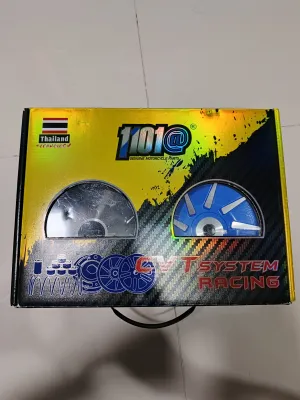
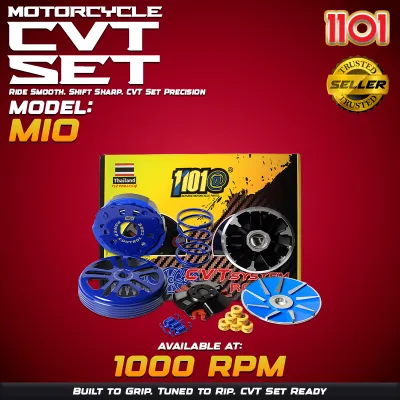
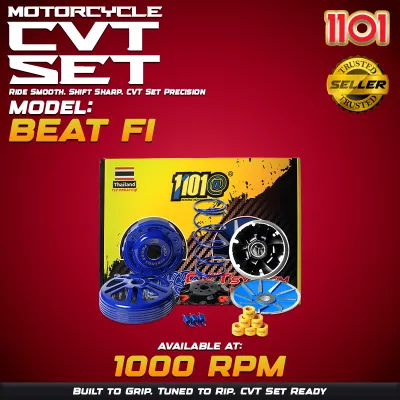
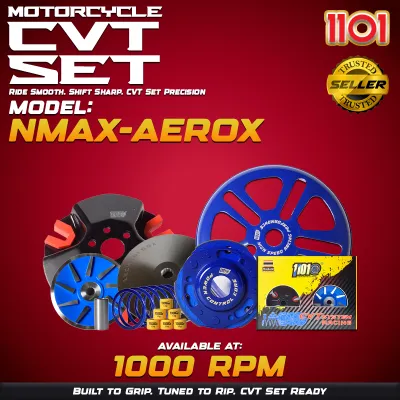
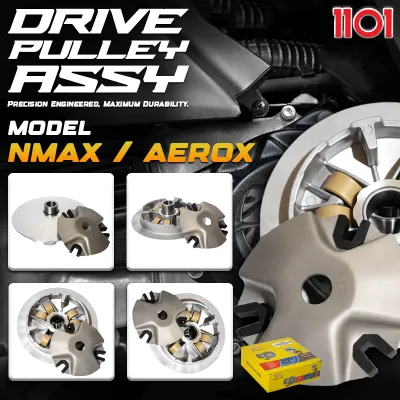
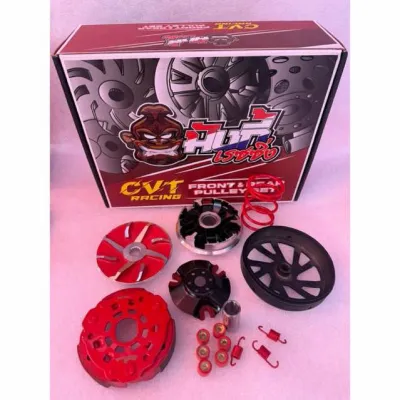
Prices are valid at publication and may change. Please refer to the product page for the latest price.
To find these markings on your existing setup, you will need to inspect the belt itself. These numbers are typically stamped or printed on the flat back or the inner ribbed side of the rubber belt. Over time, friction and heat can wear these markings away, which is why checking them before the belt degrades entirely is highly recommended.
When you purchase a full “CVT set,” the package generally includes more than just the drive belt. A complete kit often bundles the belt with roller weights, a variator pulley, slider pieces, and sometimes the clutch assembly or torque spring. In these cases, “1101” may serve as the model code for the entire aftermarket kit, meaning the individual components inside are tuned to work together for specific scooter models.
It is vital to read the exact alphanumeric string on the part, as slight variations in numbers can indicate entirely different specifications. For example, a belt marked “1101” may have a completely different width, thickness, or cog profile than one marked “1101S” or “1102.” Mixing up these codes can result in a belt that sits too deep or too high in the pulley sheaves, disrupting your scooter’s shifting behavior.
Step-by-Step Guide to Verifying Scooter Compatibility
To confirm whether a specific 1101 CVT set fits your exact scooter make, model, and production year, you must follow a systematic verification process. Never infer compatibility from a generic category term or online product title, as manufacturers frequently update transmission dimensions between model years.

Inspect the OEM Part Begin by removing your scooter’s transmission cover to access the CVT casing. Locate the original factory belt and write down any printed numbers, width measurements, and angle specifications. If the markings have faded, you can use a vernier caliper to measure the outer width and a flexible measuring tape to determine the outer circumference, comparing these physical dimensions to the specifications listed for the 1101 set.
Cross-Reference Official Data Always check your scooter’s owner manual or the manufacturer’s official parts catalog for the exact CVT belt dimensions and approved part numbers. If you find a mismatch between the manual’s recommendations and the specifications of the aftermarket 1101 set, prioritize the manufacturer’s official guidelines to maintain vehicle safety and warranty coverage.
Check Variator and Clutch Specs Aftermarket CVT sets often include modified roller weights or altered variator ramp angles designed to change acceleration characteristics. You must verify that these components match your scooter’s engine displacement (e.g., 110cc, 125cc, or 150cc) and power output. Installing roller weights that are too light or too heavy for your specific engine will result in poor shifting, excessive engine roaring, or sluggish take-offs.
Understand the Risks Installing an incorrectly sized or specified belt carries severe risks. A belt that is too long will slip against the pulleys, causing rapid heat buildup, glazing, and eventual snapping. Conversely, a belt that is too short or narrow will restrict your pulley travel, leading to low top speeds, high fuel consumption, and excessive strain on the crankshaft and transmission bearings.
Diagnosing CVT Wear: Does Your Scooter Actually Need a New Set?
Before investing in a new 1101 CVT set, which typically ranges from ₱1,200 to ₱4,500 in the local market depending on the brand quality, you should diagnose whether your current transmission components are actually worn out. CVT degradation shows clear, observable symptoms that indicate when a replacement is necessary.
Common warning signs include a noticeable hesitation or “shuddering” during initial acceleration from a complete stop. You might also experience belt slippage, where the engine RPMs scream loudly but the scooter fails to gain speed. Additionally, listen for unusual rattling, clicking, or squealing noises coming from the transmission case, which often point to flat-spotted roller weights or a loose belt.
The tropical climate and intense stop-and-go traffic in the Philippines accelerate transmission wear. Navigating flooded streets, dusty bypass roads, and daily gridlock in high ambient temperatures causes rapid rubber hardening, cracking, and clutch glazing. Under these harsh operating conditions, heat buildup inside the transmission casing is significantly higher than in temperate climates.
To prevent sudden roadside breakdowns, perform a visual inspection of your CVT belt and rollers every 5,000 to 10,000 kilometers, or according to your manufacturer’s specific maintenance schedule. Look closely for cracks along the teeth of the belt, fraying cords on the edges, and flat spots on the round roller weights.
Safety and Installation Rules for CVT Replacements
Replacing a CVT set involves working with high-tension springs and rotating components connected directly to the engine’s crankshaft. Because of the safety risks and potential for costly mechanical damage, you must prioritize original-vehicle instructions and use the proper tools before starting any disassembly.
Always use specialized tools, such as a variator holding tool (Y-spanner) and a calibrated torque wrench, to secure the variator and clutch nuts. Never use an impact wrench without knowing the exact torque specifications, as over-tightening can strip the crankshaft threads or crush the oil seals, while under-tightening can cause the pulley to fly off while riding.
When installing a new belt, avoid the temptation to reuse worn rollers, damaged plastic sliders, or scored pulley faces. A worn pulley face with deep grooves will quickly chew through a brand-new belt, causing premature failure. Always check the applied product’s label and the treated item’s manufacturer instructions; if the instructions conflict, stop immediately and consult a qualified professional.
If you lack the specific tools, workspace, or mechanical experience, it is highly recommended to have the CVT set installed at a trusted local motorcycle repair shop. Professional mechanics can ensure correct torque specs, inspect your clutch bell for glazing, and verify that the belt tension is set perfectly.
Finally, remember that new CVT belts require a gentle break-in period. For the first 50 to 100 kilometers of riding, avoid sudden full-throttle acceleration and high-speed runs. This allows the rubber compound to seat properly into the pulley angles, maximizing the lifespan and grip of your new transmission components.
Frequently Asked Questions (FAQ)
Can I mix a new CVT belt with my stock roller weights?
While it is physically possible to install a new belt while keeping your stock roller weights, doing so is highly discouraged if the rollers show any signs of wear. Worn or flat-spotted roller weights prevent the variator from sliding smoothly, which leads to erratic shifting, poor acceleration, and uneven wear on your new belt. For optimal performance and durability, always replace the belt, roller weights, and sliders as a complete set.
Does the tropical climate affect CVT belt lifespan?
Yes, the high ambient temperatures and humidity common in the Philippines significantly shorten the lifespan of rubber transmission parts. Extreme heat causes the rubber compounds in CVT belts to dry out, harden, and crack prematurely, while high humidity can introduce moisture that leads to temporary belt slippage. To extend the life of your CVT set, clean the transmission air filter regularly to ensure proper cooling airflow and avoid prolonged idling in heavy traffic whenever possible.
Community discussion
Share your experience or ask a question. Comments are reviewed before publication.