
Choosing between a 2-jaw and a 3-jaw bearing puller depends on the spatial clearance around the component and the symmetry of the part you need to remove. While a 3-jaw puller is the standard choice for most balanced, round automotive components due to its superior stability and even force distribution, a 2-jaw puller is indispensable when working in tight, restricted spaces where a third arm simply cannot fit.
In the humid, tropical climate of the Philippines, where road moisture and seasonal rains often lead to stubborn rust and seized suspension or engine parts, having the correct puller configuration is the difference between a successful DIY repair and a damaged component. Selecting the wrong tool can warp pulleys, chip bearings, or cause the puller to slip violently under tension. Understanding how these tools distribute mechanical force allows you to make an informed decision for your specific vehicle repair needs.
Understanding Bearing Puller Mechanics and Core Differences
At its core, a mechanical bearing puller operates on a simple principle: converting rotational force from a center lead screw into axial pulling force through adjustable jaws. The number of jaws directly dictates how this pulling force is distributed across the circumference of the target component.
Products mentioned in this guide
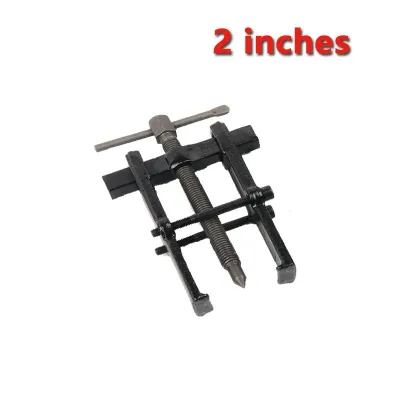
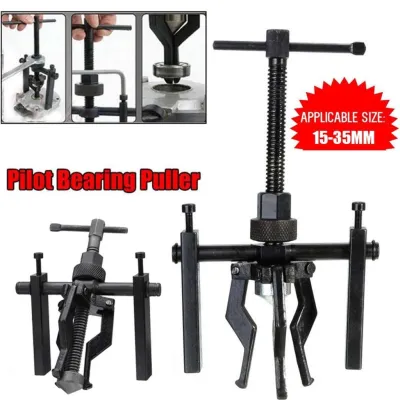
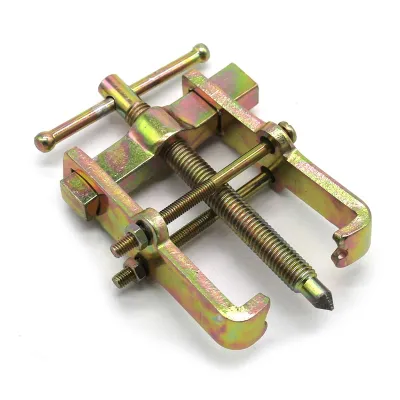
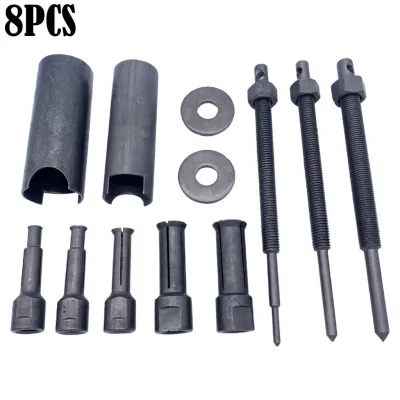
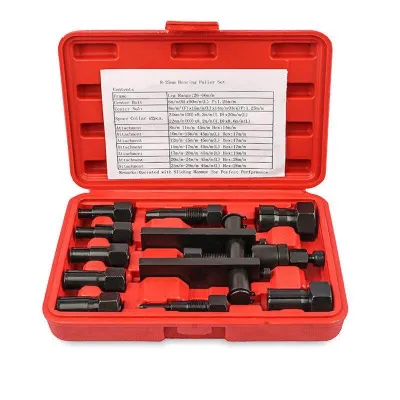
Prices are valid at publication and may change. Please refer to the product page for the latest price.
A 3-jaw puller establishes contact at three equidistant points, spaced 120 degrees apart. This triangular geometry naturally centers the lead screw over the shaft, ensuring that the pulling force remains perfectly aligned with the axis of the bearing. This self-centering behavior minimizes lateral movement, reducing the likelihood of the tool tilting or slipping off during operation.
Conversely, a 2-jaw puller grips the component at two opposing points, spaced 180 degrees apart. Because there is no third point to stabilize the assembly sideways, the tool lacks inherent self-centering properties. Any slight misalignment of the center screw can cause the puller to tilt, requiring the operator to manually balance and align the tool as tension is applied.
The mechanical advantage also differs in terms of load distribution. With three jaws, the total pulling force is divided into three parts, reducing the stress concentrated on any single point of the bearing’s outer or inner race. A two-jaw configuration concentrates the entire load onto just two points, which increases the localized stress on the component being pulled.
It is critical to note that jaw thickness, material composition, and overall load limits vary significantly by manufacturer. You should never assume that all pullers of a certain size share the same load capacity. Always check the manufacturer’s stamped specifications or product labels to verify the maximum tonnage and spread limits before attempting a heavy-duty pull.
When to Choose a 2-Jaw Bearing Puller for Car Repairs
The primary advantage of a 2-jaw bearing puller is its ability to operate in highly restricted spaces. Modern engine bays are increasingly compact, leaving very little radial clearance around pulleys, alternators, and steering pumps. In these tight quarters, finding room to position three separate jaws is often physically impossible.

A 2-jaw puller requires access to only two opposing sides of a component. This makes it the ideal choice for removing alternator bearings, air conditioning compressor clutch pulleys, or power steering pump pulleys where nearby brackets, hoses, or frame rails block access. If you can only reach the left and right sides of a pulley, a 2-jaw tool is your only viable mechanical option.
This configuration is also highly effective for components that are not perfectly round or feature specific flat spots, slots, or ears designed for pulling. For example, certain drive shaft yokes or specialized gears have dedicated slots on opposing sides. A 2-jaw puller can slip directly into these slots to pull the part cleanly without needing a uniform circular edge.
However, the concentrated two-point pressure introduces a distinct risk of component distortion. When pulling fragile, thin-walled, or cast-aluminum parts, the intense force applied to just two narrow areas can bend, warp, or crack the component. Before using a 2-jaw puller on delicate parts, carefully assess the structural integrity of the material and ensure the jaws are seated as deeply as possible to distribute the load.
When to Choose a 3-Jaw Bearing Puller for Car Repairs
For most standard automotive repairs involving symmetrical, circular components, a 3-jaw bearing puller is the preferred and safest option. The addition of the third jaw fundamentally changes the stability of the tool under load, making it far less likely to slip off or damage the workpiece.
Typical applications for a 3-jaw puller include removing wheel hub bearings, large harmonic balancers, crankshaft pulleys, and heavy-duty transmission gears. These parts are designed to be perfectly balanced, and removing them requires an equally balanced pulling force to prevent them from binding on their shafts.
The three-point contact configuration distributes the pulling force evenly across the circumference of the part. This even distribution prevents the bearing or pulley from cocking or jamming on the shaft during removal, which is a common issue when using two-jaw pullers. Furthermore, spreading the load across three points reduces the risk of marring or chipping the edges of expensive components.
The main trade-off when using a 3-jaw puller is the spatial requirement. Because the jaws must be positioned at 120-degree intervals, you must have clear, unobstructed radial space entirely around the component. If a nearby engine mount, radiator shroud, or suspension member blocks even one of the three angles, you will not be able to secure the tool properly, forcing you to look for alternative solutions.
Decision Matrix: Matching the Puller to the Automotive Task
To simplify your tool selection in the garage, you can follow a straightforward decision framework based on the physical layout of your vehicle’s components and the specific part you need to service.
Choose a 2-Jaw Puller if:
- The component is located in a cramped engine bay with obstructions blocking one or more sides.
- The part features specific opposing flat edges, slots, or ears designed for a two-point grip.
- You are servicing smaller, low-torque components like small alternator bearings or windshield wiper arms.
Choose a 3-Jaw Puller if:
- The component is completely round, symmetrical, and has ample radial clearance all around it.
- The part is tightly pressed onto the shaft and requires significant force to break free.
- You are working on heavy-duty components like wheel hubs, harmonic balancers, or large gears where stability is paramount.
Verify first if:
- The component material (such as cast aluminum or plastic) can withstand concentrated pulling forces without warping.
- The puller's reach and spread dimensions are compatible with the target part's diameter and depth.
The following comparison table outlines the key operational differences to help you match the tool to your specific repair task:
| Feature / Parameter | 2-Jaw Puller | 3-Jaw Puller | Verification Check |
|---|---|---|---|
| Spatial Clearance Required | Low (requires access to two opposing sides) | High (requires 360-degree radial access) | Check surrounding engine bay obstructions |
| Grip Stability | Moderate (requires manual balancing to prevent tilt) | High (inherently self-centering and stable) | Inspect jaw alignment before applying torque |
| Risk of Part Distortion | Higher (force is concentrated on two points) | Lower (force is distributed across three points) | Assess component material strength |
| Typical Applications | Alternator pulleys, tight steering components, wiper arms | Wheel hubs, harmonic balancers, crankshaft pulleys | Consult vehicle service manual for part details |
| Tonnage & Spread Capacity | Variable by model | Variable by model | Check manufacturer label on the tool |
Before committing to any tool or applying force, always verify the puller’s maximum load capacity against the requirements of the specific vehicle repair. Consult your vehicle’s official service manual to understand the force required or any specific procedures recommended for removing the target component.
Safety Boundaries and Operational Best Practices
Working with mechanical pullers involves managing immense kinetic energy. Under high tension, a slipping jaw or a failing tool can release suddenly, launching metal fragments or the tool itself with dangerous force. Prioritizing safety is essential for every home mechanic and professional technician.
Before beginning any work, always check your vehicle’s service manual and the puller manufacturer’s label to confirm the maximum load and spread limits. Never attempt to exceed these rated capacities. If you are working in a humid environment, inspect the puller’s lead screw threads for rust or debris, and apply a light coat of lubricating oil to ensure smooth operation and prevent thread galling.
Always wear high-impact safety glasses and heavy work gloves during the pulling process. Keep your hands, face, and body clear of the tension zone—the direct line of the lead screw and the path of the jaws. If a jaw slips under load, it happens instantaneously, leaving no time to react.
If the bearing or pulley does not yield smoothly after applying reasonable force, stop immediately. Do not use improvised cheater bars or pipe extensions on your wrench to force the tool, as this easily exceeds the puller’s design limits and can cause catastrophic tool failure. Avoid using unauthorized heat sources like blowtorches on suspension or engine components, as uncontrolled heat can ruin the heat treatment of the metal, melt nearby rubber seals, or ignite grease. Instead, stop and consult a qualified professional mechanic or explore specialized hydraulic removal options.
Frequently Asked Questions (FAQ)
Can I use a 3-jaw puller on a 2-jaw application by removing one jaw?
No, you should never attempt to use a three-jaw puller as a two-jaw tool by simply removing one of the jaws. Doing so completely compromises the mechanical alignment of the tool. The remaining two jaws will be positioned at a 120-degree angle rather than the necessary 180-degree opposing angle, causing the center lead screw to push sideways rather than straight down the shaft. This uneven load distribution will cause the tool to slip violently, potentially damaging the shaft threads, warping the component, or causing personal injury. If you need a two-jaw configuration, use a dedicated two-jaw puller or a convertible puller set specifically designed and rated by the manufacturer to transition safely between both configurations.
What should I do if the bearing puller jaws keep slipping off the component?
If the jaws of your puller repeatedly slip off the component, stop immediately to prevent damage or injury. Slipping is typically caused by incorrect jaw orientation, insufficient lip depth, or using a puller with an inadequate spread range for the part’s diameter. First, verify that the jaws are assembled correctly; many pullers feature reversible jaws with different hook profiles for internal versus external gripping. Ensure the jaws are seated fully and squarely on the flat shoulder of the component, not on a rounded or tapered edge. If the part lacks a proper gripping lip, you may need to use a specialized bearing splitter attachment, which clamps securely behind the bearing to provide a flat, solid surface for the puller jaws to pull against.
Community discussion
Share your experience or ask a question. Comments are reviewed before publication.