
Upgrading the front brake disc of your Yamaha Aerox to a larger 267mm rotor is one of the most effective ways to improve stopping power, heat management, and overall safety on Philippine roads. Whether you are navigating the congested, stop-and-go traffic of Metro Manila or tackling the steep, winding descents of the Marilaque Highway, your braking system faces intense thermal and physical demands. However, finding the right brand is not about chasing marketing hype or choosing the most expensive option. Instead, it requires a systematic evaluation of material specifications, rotor designs, and physical compatibility with your specific Aerox model year.
Because a brake upgrade directly impacts your safety, making an informed decision means looking past generic product listings on e-commerce platforms. A high-quality 267mm disc must be paired with the correct caliper bracket, high-grade mounting hardware, and compatible brake pads to function safely and effectively. By understanding the engineering differences between standard fixed rotors and premium floating designs, you can select a brake disc that matches your daily riding conditions, budget, and performance expectations.
Verifying 267mm Compatibility for Your Yamaha Aerox
Before purchasing any aftermarket 267mm brake disc, you must confirm that the rotor is physically compatible with your specific Yamaha Aerox generation. The Yamaha Aerox 155 has gone through multiple design iterations, including the Version 1 (V1) and Version 2 (V2/Connected) models, which may feature subtle differences in wheel hub designs and sensor configurations. You must consult your official owner’s manual or measure your stock wheel hub to verify the exact bolt pattern, mounting hole diameter, and rotor offset before committing to an upgrade.
Products mentioned in this guide
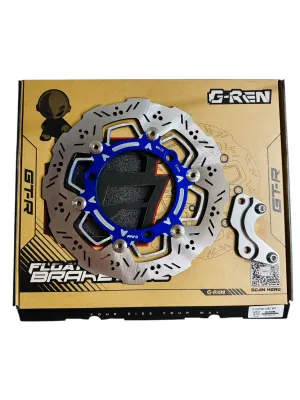
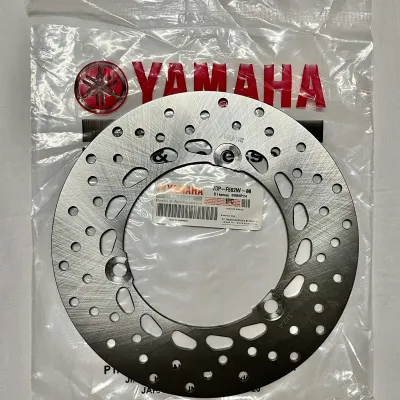
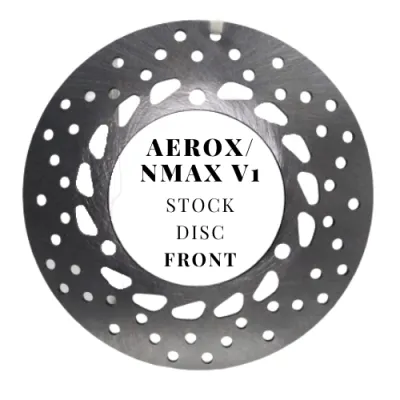
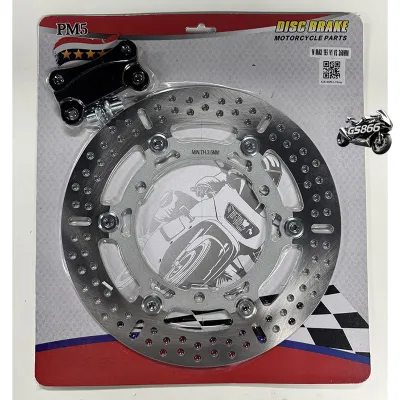
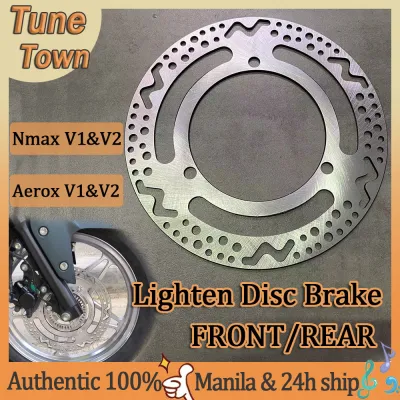
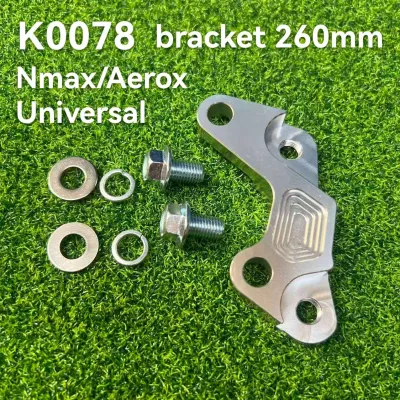
Prices are valid at publication and may change. Please refer to the product page for the latest price.
The stock front brake disc on a Yamaha Aerox is typically 230mm in diameter. Upgrading to a 267mm disc means the outer edge of the rotor will sit significantly further away from the wheel axle. Consequently, your stock brake caliper will no longer align with the new rotor without modification. To bridge this gap, you must install a dedicated caliper adapter bracket designed specifically for the Aerox fork legs and a 267mm rotor size. Ensure this bracket is machined from high-strength billet aluminum to prevent flexing under hard braking.
Another critical compatibility factor is the Anti-lock Braking System (ABS). If your Yamaha Aerox is an ABS-equipped variant, the front wheel hub utilizes a slotted speed sensor ring to monitor wheel rotation. The aftermarket 267mm brake disc you choose must have the correct mounting provisions to securely hold this ABS sensor ring in its precise factory position. Any misalignment, warping, or incorrect spacing of the sensor ring can cause the ABS module to read incorrect wheel speeds, triggering an error light on your dashboard or causing the system to malfunction when you need it most.
Core Metrics for Comparing Brake Disc Brands
Evaluating aftermarket brake discs requires looking closely at the materials used in their construction. Most entry-level and mid-range brake discs are manufactured from standard stainless steel alloys, such as SUS420. This material offers excellent corrosion resistance, which is highly beneficial in the humid, salt-laden air of coastal regions in the Philippines. However, for high-performance applications, some premium brands utilize high-carbon steel alloys. High-carbon rotors provide a higher coefficient of friction and superior thermal stability, though they require protective coatings on non-contact surfaces to prevent surface rust during the rainy season.

The physical design of the rotor plays a massive role in how it handles heat and environmental debris. Fixed rotors are constructed from a single piece of stamped or machined metal, making them highly durable, structurally simple, and cost-effective. However, under prolonged, heavy braking, a fixed rotor can experience uneven thermal expansion, leading to temporary or permanent warping. Floating rotors solve this issue by separating the outer friction ring from the inner carrier hub using metal buttons or bobbins. This two-piece construction allows the outer ring to expand and contract independently as temperatures rise, maintaining a flat contact surface with the brake pads and preventing lever pulsation.
Additionally, you must consider the surface pattern of the disc. Solid rotors offer the maximum surface area for pad contact but struggle to shed heat and water. Drilled rotors feature holes that allow heat, gas, and water to escape quickly, which is essential for maintaining stopping power during sudden tropical downpours. Slotted rotors use shallow channels to scrape away glazed pad material and debris, ensuring a clean contact patch at the cost of slightly faster pad wear. Finally, pay attention to the rotor thickness; a thicker disc has a higher thermal capacity but adds unsprung weight, which can subtly slow down your front suspension’s response over rough roads.
Evaluating Market Options: OEM vs. Aftermarket Brands
When shopping for a 267mm brake disc in the Philippines, you will generally choose between genuine OEM replacements, premium aftermarket brands, and budget-friendly alternatives. Genuine Yamaha OEM parts are the gold standard for reliability, precise fitment, and hassle-free installation. However, because Yamaha does not produce a stock 267mm front disc for the Aerox, going this route means sticking to the stock 230mm size. If you are determined to upgrade to 267mm, you must look to the aftermarket, where verifying brand authenticity and manufacturing standards becomes your primary responsibility.
Premium aftermarket brands often justify their higher price tags by providing clear material certifications, precise CNC machining, and robust warranty coverage. When evaluating these brands at local motorcycle shops or authorized dealers, look for physical indicators of quality, such as laser-etched minimum thickness specifications, clean chamfered edges on drilled holes, and high-quality anodizing on the inner carriers of floating discs. Reputable brands will also package their products with detailed installation instructions and torque specifications, reflecting a commitment to rider safety.
Conversely, e-commerce platforms and online marketplaces are flooded with cheap, unbranded 267mm discs that pose significant safety risks. Many of these budget options are manufactured from low-grade cast iron or scrap steel without proper heat treatment. Red flags to watch out for include suspiciously low prices (such as discs retailing for under ₱800), a complete lack of brand markings, rough or sharp edges around the cooling holes, and painted friction surfaces designed to hide material flaws. Investing in a cheap, uncertified brake disc to save a few pesos can result in catastrophic rotor cracking or warping under emergency braking conditions.
Installation Safety and Brake System Maintenance
Because your motorcycle’s front brake provides up to seventy percent of your total stopping power, installing a new 267mm brake disc is a safety-critical task. If you do not have the proper tools, mechanical experience, or a calibrated torque wrench, you should have the installation performed by a qualified motorcycle mechanic. Every mounting bolt holding the disc to the wheel hub must be tightened in a star pattern to the exact torque specification recommended in your Yamaha Aerox service manual. Additionally, applying a medium-strength thread-locking compound to the bolt threads is essential to prevent them from backing out due to engine vibrations.
When installing a new 267mm rotor, you must never reuse your old brake pads. Old pads will have uneven wear patterns, ridges, and embedded road grit that will quickly score and damage the pristine surface of your new disc, severely reducing your initial braking efficiency. Always pair a new rotor with a fresh set of high-quality brake pads. For daily commuting, organic or semi-metallic pads offer a good balance of quiet operation and gentle rotor wear. For aggressive riding or heavy loads, sintered copper pads provide superior bite and fade resistance, though they run hotter and accelerate rotor wear.
Once the new disc and pads are installed, you must perform a proper bedding-in procedure to ensure optimal performance and longevity. Find a quiet, flat stretch of road and perform a series of ten to fifteen controlled decelerations from approximately 50 km/h down to 10 km/h, applying moderate, progressive pressure to the brake lever. Do not bring the motorcycle to a complete stop during this process, as doing so can create uneven pad deposits on the hot rotor. This process transfers a microscopic, uniform layer of pad material onto the disc surface, maximizing friction and preventing future brake squeal or judder.
Decision Framework: Matching the Disc to Your Riding Needs
To make the right choice, you must match the technical specifications of the 267mm brake disc to your primary riding environment and style. If your daily routine consists of navigating heavy city traffic, running errands, or commuting short distances at moderate speeds, a high-quality, fixed stainless steel 267mm disc is highly practical. This setup provides a noticeable increase in stopping power over the stock 230mm rotor while remaining highly durable, resistant to rust, and easy to maintain. Pair it with semi-metallic pads for a reliable, cost-effective braking system that performs consistently in both dry and wet conditions.
For riders who use their Yamaha Aerox for long-distance touring, weekend sport riding, or carrying heavy cargo and pillion passengers over mountainous terrain, a premium floating 267mm disc is the superior investment. The floating design is specifically engineered to handle the extreme thermal expansion generated by continuous downhill braking, ensuring your brake lever remains firm and responsive when descending steep roads. Look for a floating disc with a slotted or drilled pattern to quickly clear away water during sudden downpours, and pair it with high-quality semi-metallic or sintered pads from a verified manufacturer.
Finally, remember that upgrading your brake disc is only one part of a balanced braking system. If you decide to install a larger 267mm rotor, monitor how the increased stopping power affects your front suspension and tire grip. If you plan to make further modifications, such as upgrading to a multi-piston aftermarket caliper, installing braided stainless steel brake lines, or changing the master cylinder, always consult with an experienced mechanic. A balanced, professionally maintained braking system is your best defense against the unpredictable hazards of daily riding in the Philippines.
Frequently Asked Questions (FAQ)
Can I use a 267mm brake disc from another motorcycle model on my Aerox?
No, you should never attempt to install a brake disc designed for another motorcycle model on your Yamaha Aerox without explicit, professional verification. Even if the outer diameter is a matching 267mm, other critical dimensions—such as the bolt circle diameter, the number of mounting holes, the center hub bore diameter, and the rotor offset—vary significantly between different motorcycle makes and models. Attempting to force a non-compatible disc onto your wheel hub can lead to severe alignment issues, caliper binding, or catastrophic structural failure of the wheel hub while riding.
Do drilled or slotted brake discs wear out brake pads faster?
Yes, drilled and slotted brake discs generally cause faster brake pad wear compared to solid, smooth rotors. The edges of the drilled holes and the machined slots act like mild scrapers, continuously shaving away glazed material from the brake pad surface to ensure a fresh, high-friction contact patch. While this self-cleaning action improves braking response and prevents gas buildup under heavy use, it also generates more brake dust and shortens the lifespan of your pads, requiring more frequent visual inspections and replacements.
How do I know when my 267mm brake disc needs replacement?
You should inspect your 267mm brake disc regularly for physical signs of wear and damage. Key indicators that your rotor needs immediate replacement include deep circular grooves or scoring on the friction surface, severe blue or dark discoloration indicating extreme overheating, and a noticeable pulsing sensation in the brake lever when slowing down, which points to a warped disc. Additionally, use a micrometer or digital caliper to measure the thickness of the rotor at several points; if the thickness falls below the minimum limit stamped on the disc face (typically around 3.0mm to 3.5mm), the rotor must be replaced immediately to prevent cracking.
Community discussion
Share your experience or ask a question. Comments are reviewed before publication.