
While a dash cam’s spec sheet lists impressive numbers, real-world parking surveillance relies on low-light video clarity, reliable trigger mechanisms, and sustainable power management. A high megapixel count alone does not guarantee protection. Instead, the effectiveness of the 70mai T400 as a parking sentinel depends on how its optical components handle high-contrast night scenes, how its sensors detect threats, and how its power architecture survives intense heat. Translating these technical specifications into practical decisions helps you configure the optimal setup for continuous vehicle security.
Image Sensor and Lens Specs: Capturing Plates in the Dark
The optical hardware of the 70mai T400 determines whether your recorded footage is clear evidence or a blurry, unusable sequence. When reviewing the camera’s specifications, verify the exact sensor model and maximum resolution—typically in the 1440p (2K) range—documented in the official product manual. While high resolution provides sharp images under bright daylight, parking surveillance often takes place in dimly lit areas where resolution alone is insufficient.
For night-time monitoring, a wider aperture (indicated by a lower f-number, such as f/1.8 or f/2.0) is far more critical than high megapixel counts. A wider aperture allows more physical light to reach the image sensor, which, when combined with larger individual sensor pixels, dramatically improves low-light performance. This optical capability is supported by Wide Dynamic Range (WDR) or High Dynamic Range (HDR) technology. HDR balances extreme lighting contrasts, preventing bright streetlights or headlights from overexposing the footage and washing out crucial details like license plates.
Products mentioned in this guide
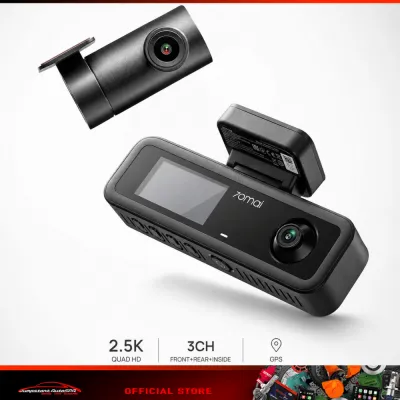

Prices are valid at publication and may change. Please refer to the product page for the latest price.
In the tropical climate of the Philippines, environmental factors heavily influence optical performance. High humidity can lead to temporary lens fogging when transitioning between air-conditioned cabins and hot outdoor air, while intense cabin heat can introduce digital noise into the sensor’s image processing. To mitigate these issues, physical installation placement is key. Mount the camera high on the windshield, ideally behind the rearview mirror where the vehicle’s sun visor or ceramic tint strip offers partial shade, reducing direct thermal stress on the lens and preserving image clarity.
Trigger Mechanisms: Radar, G-Sensors, and Motion Detection
A dash cam’s parking mode is only as useful as its ability to wake up and record when a threat arises. The 70mai T400 utilizes different trigger mechanisms to initiate recording, and understanding how these sensors operate is vital for setting up effective surveillance.

The most basic trigger is the built-in triaxial G-sensor, which detects physical impacts or sudden vibrations, such as a hit-and-run collision. The primary limitation of a G-sensor-only setup is that it operates reactively; the camera remains in a low-power sleep state and only wakes up to record after the impact has occurred, often missing the critical seconds leading up to the crash.
To bridge this gap, advanced parking modes incorporate optical motion detection or microwave radar. Optical motion detection analyzes changes in the camera’s field of view to trigger a recording when someone approaches. While this captures the lead-up to an incident, it is highly prone to false alarms. In busy Philippine parking areas, passing pedestrians, stray animals, or even heavy tropical downpours can continuously wake the camera, leading to excessive power consumption.
In contrast, microwave radar detection (which may require a specific external sensor or hardware module depending on your exact T400 package) offers a more sophisticated solution. Radar uses electromagnetic waves to detect moving physical masses, offering a wider, more accurate range with significantly fewer false positives from rain or light changes. Before purchasing optional radar accessories, verify the exact hardware compatibility on your specific T400 unit. Regardless of the trigger method, you should adjust the sensitivity settings in the companion mobile app to find a balance that captures genuine threats without draining your battery on false alerts.
Power Management and Hardwire Kits: Sustaining Long-Term Surveillance
To keep the 70mai T400 operating while your vehicle’s engine is turned off, you must understand its power architecture and thermal limits. Dash cams rely on either a built-in lithium-ion battery or a supercapacitor for temporary power backup. In the Philippines, where parked cabin temperatures can exceed 60°C, supercapacitors are vastly superior. They withstand extreme thermal environments without the risk of swelling or leaking, which are common failure points for lithium-ion batteries under intense heat. If your specific model utilizes a lithium-ion battery, park in shaded areas or use windshield sunshades to protect the internal battery cell.
Continuous parking surveillance requires a dedicated hardwire kit to draw power directly from the vehicle’s battery when the ignition is switched off. This kit provides constant power and monitors battery voltage. To prevent a dead battery, the hardwire kit features an integrated low-voltage cutoff. This setting automatically shuts down the dash cam if your car battery drops below a specified threshold—typically adjustable between 11.8V, 12.0V, or 12.4V for standard 12V systems. Setting this threshold correctly ensures you always have enough cranking power to start your vehicle, especially if the car remains parked for several days, preventing a dead battery and the unexpected replacement cost of several thousand Pesos (₱).
To optimize power consumption and storage efficiency, the T400 supports time-lapse recording. Instead of continuous, high-bitrate video, time-lapse mode captures footage at a reduced rate of one frame per second. This compresses hours of parking surveillance into a few minutes of fast-play video, drastically reducing both the electrical draw on your car battery and the storage space required on your memory card.
Safety Boundary: Installing a hardwire kit requires tapping directly into your vehicle’s passenger compartment fuse box. Before proceeding, you must consult your vehicle’s official owner’s manual to identify the correct fuse slots. Always use a dedicated fuse tap and connect only to non-safety-critical accessory circuits (such as the cigarette lighter or accessory ports). Never tap into safety-critical systems, including the airbags (SRS), anti-lock braking system (ABS), or engine control unit (ECU). If you are unfamiliar with automotive electrical systems or do not possess a digital multimeter to test fuse polarity, seek professional installation from a qualified auto electrician to avoid damaging your vehicle’s wiring harness or voiding its warranty.
Storage and File Management: Ensuring Critical Footage Survives
The reliability of your parking surveillance is ultimately bound to the quality of your storage media. Continuous recording places immense thermal and write-cycle stress on memory cards. Standard microSD cards designed for smartphones will quickly degrade and fail under these conditions. For the 70mai T400, you must use a high-endurance microSD card rated at least Class 10, U3, and V30. High-endurance cards utilize robust NAND flash memory specifically engineered to survive thousands of write-and-overwrite cycles in high-temperature environments.
The T400 manages storage through an automated loop-recording system, but it treats parking surveillance files differently to prevent critical evidence from being lost. When a G-sensor or motion trigger is activated, the camera saves the resulting video clip into a dedicated, write-protected folder. These files are locked and will not be overwritten by normal, daily driving footage.
When planning your storage capacity, consider the mathematical trade-offs of card sizes. A 64GB high-endurance card is generally sufficient if you rely primarily on event-triggered parking mode, which only records short clips when motion or impact is detected. However, if you enable continuous 24-hour time-lapse recording, a 128GB or 256GB card is highly recommended. At a typical parking mode compression rate, a 128GB card can safely store several days of time-lapse footage alongside your standard driving recordings before loop-overwriting begins, ensuring you have ample time to retrieve footage after a weekend away.
Frequently Asked Questions (FAQ)
Does the 70mai T400 drain the car battery in parking mode?
When properly installed with an official 70mai hardwire kit, the system is designed to prevent complete battery depletion. The kit’s low-voltage cutoff switch will automatically disconnect power to the dash cam if your car battery’s charge falls below your pre-selected safety limit (such as 11.8V or 12.0V). However, if your vehicle has an aging or weak battery, a faulty alternator, or if the car is left parked for several consecutive days without being driven to recharge, the battery can still experience deep discharge. For vehicles parked long-term, disabling motion detection and relying solely on G-sensor impact triggers is recommended to minimize power draw.
Can the T400 record both the front and rear in parking mode?
Dual-channel (front and rear) parking surveillance is possible only if your specific 70mai T400 model supports a rear camera attachment and you have installed a compatible dual-channel hardwire kit. When recording both channels, the system’s power consumption increases because the internal processor must encode two video streams simultaneously. This higher power draw will cause the hardwire kit’s low-voltage cutoff to trigger sooner, reducing the total duration of your active parking surveillance. Additionally, dual-channel recording writes twice as much data to your microSD card, meaning you will need a larger, high-endurance memory card (ideally 128GB or larger) to prevent older parking files from being overwritten too quickly.
Community discussion
Share your experience or ask a question. Comments are reviewed before publication.