
Finding the best full body decal sets for your Honda XRM 125 in the Philippines requires balancing aesthetic appeal with material durability capable of withstanding harsh tropical conditions. Because the Honda XRM 125 is a legendary underbone motorcycle known for its ruggedness on both paved roads and rough provincial terrain, its body panels are frequently exposed to intense sunlight, heavy monsoon rains, mud, and physical abrasions. Selecting a high-quality decal set is not just about choosing an eye-catching design; it is about finding a kit made from premium, laminated vinyl that resists UV fading, fits the specific contours of your bike’s variant, and utilizes a strong, residue-free adhesive.
To make an informed decision, you must evaluate the material specifications, verify the exact generation and model year of your motorcycle, and carefully vet online sellers to avoid low-grade imitations. This comprehensive guide provides a structured framework to help you navigate the selection process, ensure a perfect fit, and achieve a professional-grade installation that keeps your motorcycle looking pristine for years.
What to Look for in XRM 125 Full Body Decals
To ensure your Honda XRM 125 decals remain vibrant and intact, you must understand the materials used in their production. Most aftermarket decals are printed on vinyl, but the grade of vinyl makes a significant difference in longevity. Cheap decals often use monomeric vinyl, which is highly prone to shrinking, cracking, and peeling at the edges when exposed to the intense heat of the Philippine sun. For a motorcycle that is frequently parked outdoors or ridden daily, look for polymeric vinyl or cast vinyl. Polymeric vinyl contains plasticizers that allow it to conform better to curved surfaces and resist shrinkage over time, while cast vinyl offers the highest durability and flexibility, making it the gold standard for complex vehicle wraps.
Products mentioned in this guide
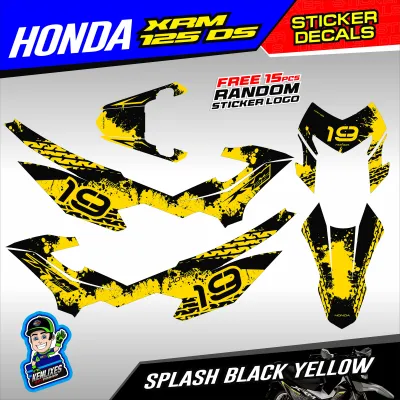
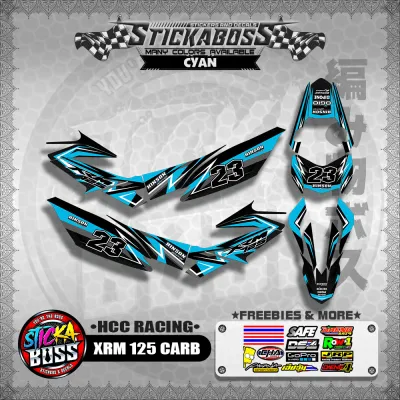
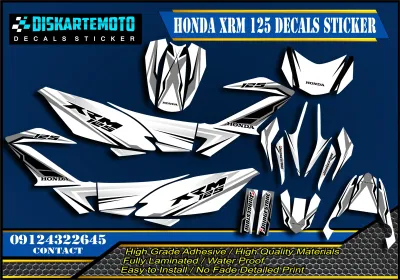
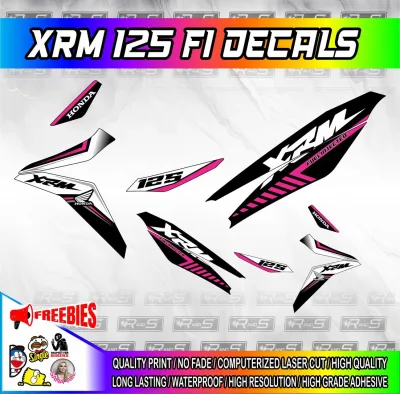
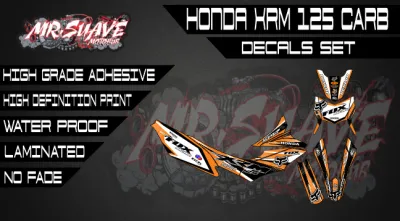
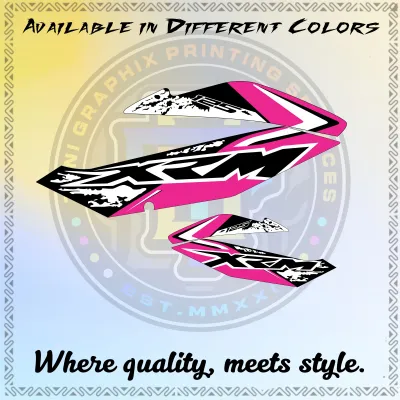
Prices are valid at publication and may change. Please refer to the product page for the latest price.
Lamination is another non-negotiable feature for high-quality decals. An unlaminated sticker will quickly lose its design as the printed ink rubs off from knee friction, road debris, and routine washing. A proper full body decal set features a clear protective lamination layer over the printed design. This lamination is typically available in gloss, matte, or specialized finishes like holographic or 3D carbon fiber textures. Beyond aesthetics, the lamination layer adds crucial thickness—usually measured in microns or mils—which acts as a physical shield against scratches and UV radiation. When browsing product listings, check the specifications for terms like “UV-protected lamination” or “anti-scratch clear coat” to verify that the decals are built to last.
Print resolution directly affects how sharp and professional the graphics look on your motorcycle. Low-quality prints often exhibit visible pixelation, color banding, or blurry edges, which can ruin the overall look of your bike. High-quality decal sets are produced using advanced digital printers with eco-solvent or UV-curable inks. These inks penetrate deep into the vinyl substrate, ensuring rich color saturation and excellent color fastness. Look for sellers who specify their printing technology or highlight the use of high-definition (HD) graphics in their product descriptions.
Finally, consider how the design style matches your Honda XRM 125’s existing hardware and color scheme. Decal sets generally fall into three categories: OEM replicas, racing graphics, and custom art. OEM replicas are designed to mimic the original factory decals, making them ideal for riders who want to restore their motorcycle to its showroom appearance. Racing graphics feature sporty patterns, sponsor logos, and aggressive lines that give the bike a high-performance look. Custom art sets offer unique themes, ranging from camouflage and geometric patterns to abstract illustrations. When choosing a design, ensure the base colors of the decals complement the painted parts of your bike that will remain exposed, such as the frame, engine, and wheels.
How to Verify Fitment and Panel Coverage
The Honda XRM 125 has undergone several design evolutions since its introduction, meaning that body panels vary significantly across different model years and variants. The older generations, often referred to as the XRM 125 Trinity or the classic Dual Sport, feature rounder, more bulbous body panels and a distinct headlight cowl. In contrast, the newer fuel-injected (FI) generations, including the XRM 125 DS, DSX, and Motard variants, sport much sharper, more aggressive bodywork with angular lines and redesigned headlight visors. Purchasing a decal set designed for a 2015 model will result in major fitment issues if you attempt to apply it to a 2023 model. Always identify your motorcycle’s exact model year and variant before making a purchase.

A true “full body” decal set should provide comprehensive coverage for all major plastic panels on your motorcycle. However, some sellers use the term “full body” loosely, offering kits that only cover the main side covers and tank shrouds while omitting other crucial areas. A complete kit should ideally include decals for the front fender, the headlight cowl or visor, the left and right tank shrouds, the side body covers, the rear cowl or tail section, and sometimes even the front fork guards or swingarm. Carefully read the product description and examine the included parts list to confirm that every panel you intend to customize is covered by the kit.
To prevent fitment failures, look for listings that display a template diagram of the decal layout. These diagrams show the exact shapes of the individual sticker pieces, allowing you to compare them visually with the physical panels on your Honda XRM 125. Pay close attention to the placement of mounting holes, indicator cutouts, and panel seams. If the seller does not provide a template diagram, it is highly recommended to send them a direct message containing clear photos of your motorcycle from multiple angles. A reputable seller will be able to confirm whether their templates match your specific variant, saving you the hassle of dealing with misaligned decals during installation.
Finding Reliable Sellers on E-commerce Platforms
Navigating online marketplaces in the Philippines requires a strategic approach to filter out low-quality listings and find reputable decal manufacturers. When searching for products, use highly specific search queries rather than broad terms. Instead of searching for “XRM stickers,” try terms like “Honda XRM 125 full body decals laminated,” “XRM 125 Motard custom decals,” or “XRM 125 FI decals premium.” These targeted keywords will help you bypass generic sticker sheets and direct you toward specialized print shops that produce dedicated, pre-cut decal kits.
Once you find potential listings, evaluate the store’s overall performance metrics. Look for stores with a rating of 95% or higher and a high chat response rate, which indicates that the seller is active and willing to assist customers with inquiries. The volume of positive reviews is a strong indicator of reliability, but you should look beyond the star rating. Focus on reviews that include photo or video evidence uploaded by actual buyers. These real-world images allow you to assess the true color vibrancy, material thickness, and fit accuracy of the decals when applied to a real Honda XRM 125, which often differs from the polished digital mockups shown in product listings.
Be vigilant against common red flags when browsing online marketplaces. One major warning sign is the use of watermarked photos belonging to other established print shops, which suggests the seller is copying designs and may deliver a low-quality, pixelated print. Vague product descriptions that fail to mention the material type, lamination status, or thickness should also be avoided. Furthermore, be cautious of extremely low prices; a full body decal set priced significantly below the market average is likely printed on thin, unlaminated paper that will fade and peel within a few weeks. Finally, ensure the seller has a clear return or exchange policy in case you receive a kit with printing defects or incorrect panel cuts.
Surface Preparation and Installation Guidelines
The longevity and appearance of your new decal set depend heavily on the preparation of your motorcycle’s body panels. Before beginning the installation, the panels must be meticulously cleaned to remove any contaminants that could compromise the adhesive bond. Start by washing the motorcycle thoroughly with a strong dishwashing liquid to strip away road grime, mud, and grease. Avoid using motorcycle shampoos that contain wax or gloss enhancers, as these leave a slick residue. After drying the bike completely, wipe down every panel with isopropyl alcohol and a clean microfiber cloth. This step is crucial for removing stubborn oils, fingerprints, and silicone-based polish products that are commonly used in the Philippines and will prevent the decals from adhering properly.
Deciding whether to attempt a DIY installation or hire a professional depends on your patience, experience, and the complexity of the decal design. Applying large vinyl decals to curved surfaces, such as the angular tank shrouds of the Honda XRM 125, can be challenging. The process requires a heat gun or a high-wattage hair dryer to gently warm the vinyl, making it pliable enough to stretch and conform to deep crevices and sharp bends without creasing. You will also need a felt-tipped squeegee to smooth out air bubbles as you apply the decal from the center outward. If you have never worked with vinyl wrap before, or if your kit features complex, multi-piece graphics, paying a local professional wrapper or motorcycle detailer to perform the installation is often a wise investment that guarantees a flawless, bubble-free finish.
Once the decals are successfully applied, proper post-application care is essential to ensure the adhesive cures completely. Keep the motorcycle in a dry, shaded area for at least 24 to 48 hours after installation, avoiding direct exposure to intense sunlight or rain during this critical curing period. When washing your motorcycle in the future, avoid using high-pressure water sprays directly on the edges of the decals, as the high pressure can force water underneath the vinyl and cause it to lift. Instead, hand-wash the decaled panels using a soft sponge and mild soap, wiping gently along the seams to preserve the integrity of the adhesive for years to come.
Frequently Asked Questions (FAQ)
Will removing full body decals damage the XRM 125's original paint?
Removing a full body decal set from your Honda XRM 125 is generally safe and will not damage the original paint, provided the motorcycle still retains its factory-applied clear coat. Factory paint is baked on at high temperatures, creating a highly durable bond with the plastic panels. However, if your motorcycle has been repainted using aftermarket acrylic or polyurethane paints, there is a higher risk that the paint or clear coat may lift during removal, especially if the surface preparation was poor. The age of the decals and their exposure to the sun also play a role; older, sun-baked decals can become brittle, making them harder to peel. To minimize the risk of damage, always use a heat gun or hair dryer to gently warm the vinyl before peeling it off. The heat softens the adhesive, allowing the decal to lift smoothly. If you encounter stubborn adhesive residue, use a dedicated adhesive remover or rubbing alcohol, and avoid scraping the panels with sharp metal tools.
Can I mix and match decal pieces from different sellers?
Mixing and matching decal pieces from different sellers is generally not recommended if you want to achieve a cohesive and uniform look on your Honda XRM 125. Different print shops use varying printing technologies, ink formulations, and lamination materials, which can result in noticeable differences in color calibration, gloss levels, and overall thickness. For example, a red decal from one seller might have a warm, orange undertone, while a red piece from another seller might lean toward a cool, blue-toned crimson. Additionally, different manufacturers use distinct template designs, meaning the seams and cutouts may not align perfectly if you combine pieces from separate kits. Purchasing a complete, single-source full body decal set ensures that all panels feature consistent color matching, uniform material quality, and precise alignment across the entire motorcycle.
Community discussion
Share your experience or ask a question. Comments are reviewed before publication.