
When riding a motorcycle on Philippine roads, securing your child with a certified helmet is both a legal mandate and a critical safety measure. To ensure the highest level of protection, any helmet worn by a child passenger must carry either a Philippine Standard (PS) quality mark or an Import Commodity Clearance (ICC) sticker. These certifications, regulated by the Bureau of Philippine Standards (BPS) under the Department of Trade and Industry (DTI), guarantee that the headgear has passed rigorous safety evaluations. When shopping for a reliable helmet for kids boy, parents must look past bright cartoon designs or cheap novelty labels and verify these official seals first.
Navigating the local market can be challenging due to the influx of uncertified products sold online and in informal physical shops. Understanding what these safety marks mean, how to verify their authenticity, and how to perform crucial physical safety checks will help you make an informed decision that protects your child’s life.
Why Safety Certifications Matter for Child Riders
A child’s physical development makes them exceptionally vulnerable during a motorcycle ride. A child’s skull is thinner and more pliable than an adult’s, and their neck muscles and cervical spine are still developing. In the event of a sudden stop or an impact, the forces exerted on a young rider’s head are disproportionately high, making specialized protection essential.
Products mentioned in this guide
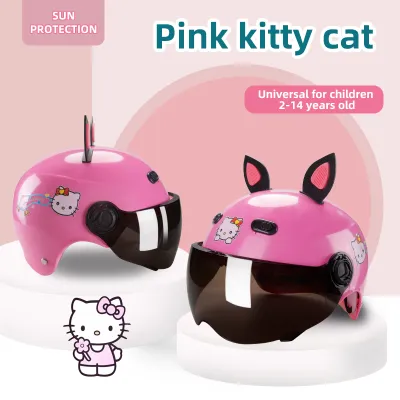
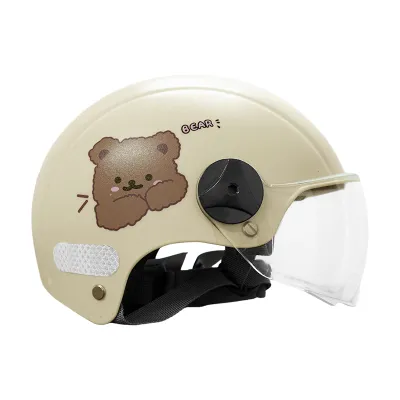
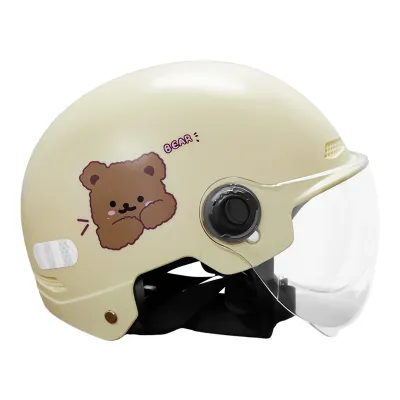
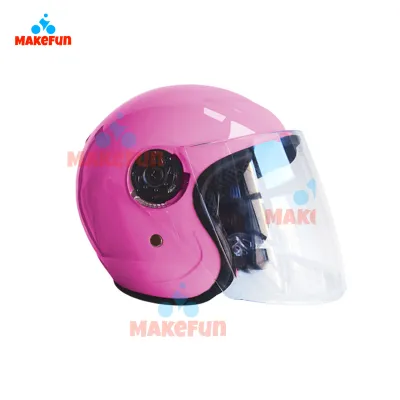
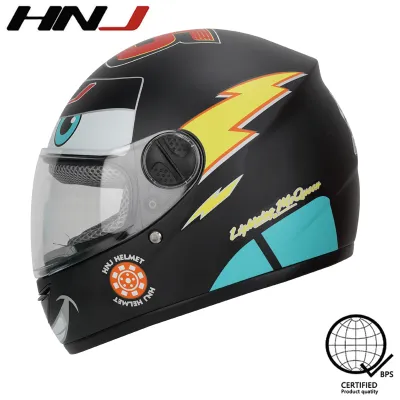
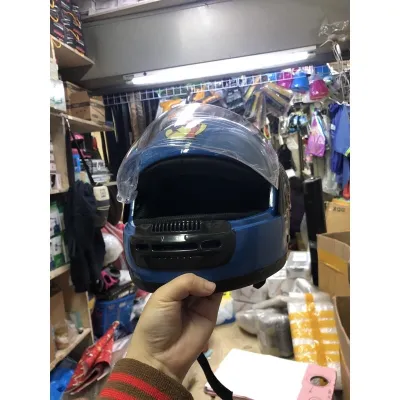
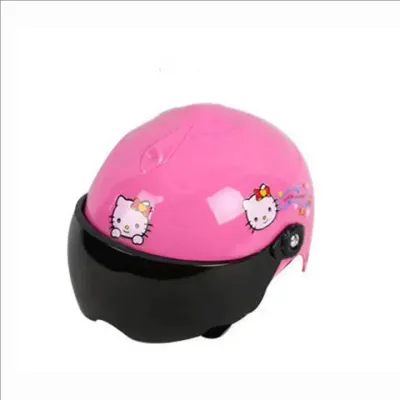
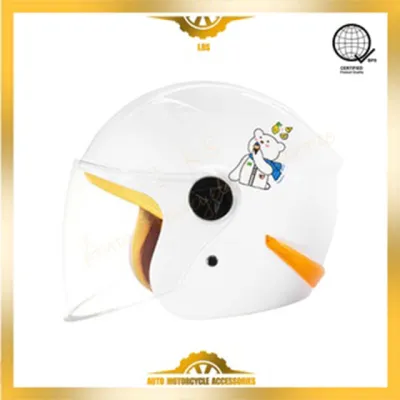
Prices are valid at publication and may change. Please refer to the product page for the latest price.
Many parents mistakenly purchase toy or novelty headgear, thinking it offers sufficient protection for short trips around the neighborhood. These novelty items are typically made of thin, brittle plastic shells lined with cheap, low-density packaging foam. They are designed for play, not for road safety, and they can easily shatter or fail to absorb impact energy during a crash.
Certified riding helmets undergo strict laboratory testing to ensure they can withstand real-world crash forces. Regulatory bodies in the Philippines filter out substandard gear by subjecting helmets to impact attenuation tests, penetration tests, and chin strap retention evaluations. Choosing a certified helmet ensures that your child is protected by materials engineered to absorb and dissipate destructive energy.
Decoding PSB and ICC Marks on Motorcycle Helmets
To identify a legally compliant and safe helmet in the Philippines, you must look for two primary certification marks issued by the government. These marks indicate that the product has met the stringent requirements of Philippine National Standards.

The Philippine Standard (PS) Quality Certification Mark is typically issued to locally manufactured helmets. It signifies that the manufacturer’s production process has undergone thorough audits by the Bureau of Philippine Standards (BPS). This mark assures parents that the product is consistently manufactured to meet national safety benchmarks.
The Import Commodity Clearance (ICC) sticker is mandatory for all imported helmets entering the Philippine market. Because the vast majority of motorcycle helmets sold locally are manufactured abroad, the ICC sticker is the seal you will encounter most frequently. Each genuine ICC sticker features a unique serial number and a holographic background that shifts color when tilted.
To locate these marks, inspect the rear exterior shell of the helmet. The ICC or PS sticker is usually affixed directly to the lower back portion of the helmet’s outer shell. Additionally, reputable manufacturers often stitch a fabric label containing safety compliance details onto the chin strap or print certification information directly onto the comfort liner inside the helmet.
Legal Requirements and Road Safety for Minors
Operating or riding a motorcycle in the Philippines is governed by strict national laws designed to protect all road users, with specific provisions aimed at safeguarding children. Understanding these legal boundaries is essential for every riding family.
Republic Act No. 10054, also known as the Motorcycle Helmet Act of 2009, mandates that all motorcycle riders—both drivers and passengers—must wear standard protective motorcycle helmets at all times on public roads. This law applies regardless of the distance of the travel or the speed of the vehicle.
For families riding with children, Republic Act No. 10666, or the Children’s Safety on Motorcycles Act of 2015, sets clear safety conditions. Under this law, a child is only permitted to ride as a passenger on a motorcycle traveling along public roads if the following three conditions are met:
- The child's feet can comfortably reach the standard foot pegs of the motorcycle.
- The child's arms can fully reach around and clasp the waist of the driver.
- The child is wearing a standard protective helmet that bears the official PS or ICC certification seal.
These regulations apply to all public roads, including national highways, provincial roads, and busy municipal streets. While enforcement may vary on private properties or gated subdivisions, the physical risks remain the same; parents should maintain the same safety standards regardless of where the motorcycle is operated. For specific clarifications regarding age limits, physical capacity, or local ordinances, parents should consult the Land Transportation Office (LTO) or local traffic enforcement units.
International Safety Standards That Complement Local Marks
While the local PS and ICC marks are the only legally required certifications for road use in the Philippines, high-quality helmets often carry international safety ratings. These global standards provide an extra layer of assurance regarding the helmet’s engineering and protective capabilities.
The Department of Transportation (DOT) standard, specifically FMVSS No. 218, is the baseline safety standard in the United States. It is a self-certification system where manufacturers test their own products to ensure compliance, backed by random government testing. A DOT-certified helmet offers reliable protection and is widely available among imported brands.
The Economic Commission for Europe (ECE) standard, currently ECE 22.05 or the newer ECE 22.06, is highly regarded worldwide. Unlike the DOT system, ECE certification requires independent batch testing in certified laboratories before any helmet can be sold to the public. The ECE 22.06 standard includes advanced testing for rotational forces and multi-directional impacts, making it one of the most rigorous safety standards available.
The Snell Memorial Foundation is a voluntary, non-profit organization that sets premium safety standards exceeding basic government requirements. Snell testing is exceptionally demanding, focusing on extreme impact resistance and stability, and is highly favored by racing enthusiasts.
When buying an imported child’s helmet, look for these international labels molded or painted onto the rear of the shell. A premium helmet will often feature a DOT or ECE mark alongside the mandatory local ICC holographic sticker, indicating that the product meets both global and local safety benchmarks.
How to Verify Authenticity and Avoid Counterfeit Helmets
The popularity of motorcycle travel has led to a rise in counterfeit safety gear, including fake ICC and PS stickers. Using a helmet with a counterfeit sticker exposes your child to extreme risk, as the helmet itself has not undergone any legitimate safety testing.
To verify the authenticity of a helmet’s certification, you can cross-reference the brand and model with the official registries maintained by the Bureau of Philippine Standards (BPS). The BPS regularly updates its online database of approved helmet brands and certified importers, allowing you to confirm if a specific model is legally recognized.
Perform a careful physical inspection of the certification sticker. Genuine ICC stickers are made of high-quality, tamper-evident material with clear, sharp micro-printing and a distinct holographic overlay that reflects light dynamically. Fake stickers are often flat, poorly printed, off-center, or easily peeled off without tearing or leaving a pattern behind.
To minimize the risk of purchasing a counterfeit product, buy exclusively from authorized brand dealers, official physical motorcycle accessory shops, or verified official brand stores on online marketplaces. Avoid purchasing helmets from unverified third-party sellers, informal roadside stalls, or discount online shops where counterfeit stickers and substandard materials are common.
Selecting a Certified Helmet for Kids Boy: Fit and Physical Safety Checks
Even the most highly certified helmet will fail to protect your child if it does not fit correctly. Ensuring a proper physical fit is just as important as verifying the PS or ICC certification marks.
To find the correct size, measure your child’s head circumference using a soft measuring tape. Wrap the tape horizontally around the widest part of the head, approximately 2.5 centimeters (one inch) above the eyebrows and ears. Use this measurement in centimeters to consult the specific manufacturer’s size chart, as sizing can vary significantly between brands.
Once the helmet is on, perform a thorough fit evaluation to ensure it sits securely:
- Crown Contact: The inner liner must make contact with the top of the child's head without leaving gaps.
- Cheek Pad Snugness: The cheek pads should press snugly against the cheeks, preventing excessive movement without causing pain or forcing the mouth closed.
- The Roll-Off Test: Fasten the chin strap securely, allowing only one or two fingers to fit between the strap and the throat. Gently try to pull the helmet forward and off from the back of the shell. If the helmet slips forward over the eyes or comes off, it is too large or the strap is too loose.
Consider the overall weight of the helmet relative to your child’s physical strength. Children’s neck muscles fatigue quickly under heavy loads, and an excessively heavy helmet can increase the risk of neck injuries during sudden stops. Look for dedicated youth helmets designed with lightweight shells, typically weighing under 1,200 grams, rather than forcing an adult small helmet onto a child.
Finally, inspect the integrity of the Expanded Polystyrene (EPS) foam liner. The EPS liner is the thick, hard foam layer beneath the comfort padding designed to crush and absorb impact energy. Never use hand-me-down helmets or those that have been dropped or involved in a minor crash. Once the EPS foam is compressed during an impact, it loses its protective capacity permanently, even if the outer plastic shell appears completely undamaged.
Frequently Asked Questions (FAQ)
Can a child use a certified bicycle helmet for motorcycle riding?
No, a bicycle helmet must never be used as a substitute for a motorcycle helmet. Bicycle helmets are designed to protect against low-speed falls and do not offer the full-face coverage, high-density EPS foam, or impact and abrasion resistance required to withstand the high-speed forces of a motorcycle accident. Using a bicycle helmet on a motorcycle is both highly dangerous and illegal under Philippine law.
How often should a growing child's motorcycle helmet be replaced?
A child’s helmet must be replaced as soon as they outgrow it, as a tight helmet causes discomfort and a loose one will fail to protect them in a crash. Additionally, even if the child has not outgrown the helmet, manufacturers generally recommend replacing any motorcycle helmet every three to five years. Over time, exposure to tropical heat, humidity, sweat, and hair oils naturally degrades the protective resins, adhesives, and internal EPS foam.
Is it safe to buy a second-hand helmet with valid certification stickers?
No, purchasing a second-hand helmet is highly discouraged. It is impossible to verify the helmet’s complete history, and it may have suffered internal EPS foam damage from a drop or crash that is invisible from the outside. Furthermore, certification stickers can be easily counterfeited or transferred from a discarded helmet, making new purchases from authorized dealers the only reliable way to ensure your child’s safety.
Community discussion
Share your experience or ask a question. Comments are reviewed before publication.