
Deciding on the right braking components for your motorcycle is one of the most critical safety choices you will make as a rider. For daily commuters navigating the dense, stop-and-go traffic of Philippine cities, finding a balance between reliable stopping power and cost-effectiveness is a constant challenge. The Adeline Brake Master brand, along with its associated brake pads and caliper components, has emerged as a popular aftermarket option for riders looking to upgrade or replace their stock setups. However, determining whether these components are the right fit for your daily ride requires looking beyond marketing claims and focusing on verifiable product specifications.
Without independent laboratory testing data, evaluating the performance of Adeline brake pads compared to other popular brands relies on a systematic approach. You must verify the friction material label on the packaging, check exact vehicle compatibility, and match the pad’s compound to your typical riding conditions. In a tropical climate characterized by intense summer heat and sudden monsoon downpours, your brake pads must handle extreme temperature cycles without fading or losing their initial bite.
Understanding the Adeline Brake Master and Market Alternatives
To make an informed choice, it is essential to understand where the Adeline Brake Master and its corresponding brake pads sit in the wider motorcycle parts market. The local market is generally divided into Original Equipment Manufacturer (OEM) parts and aftermarket alternatives. OEM parts are the exact components that came with your motorcycle from the factory. They are designed to meet strict manufacturer standards for general use, but they often carry a premium price tag at authorized dealerships.
Products mentioned in this guide
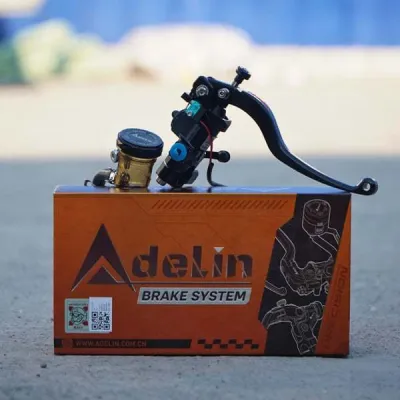
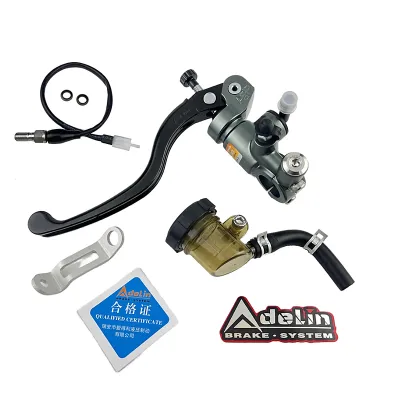
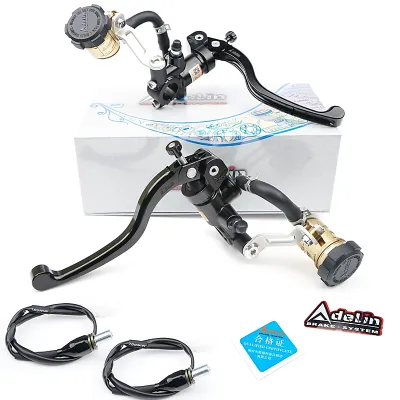
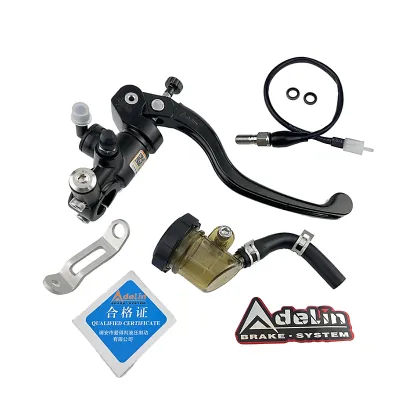
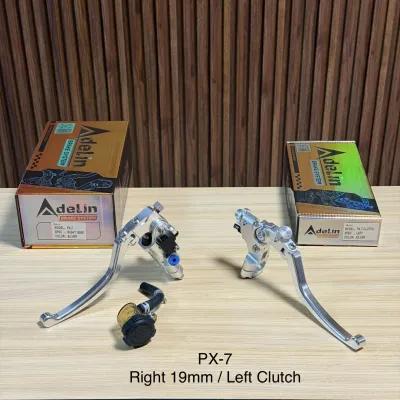
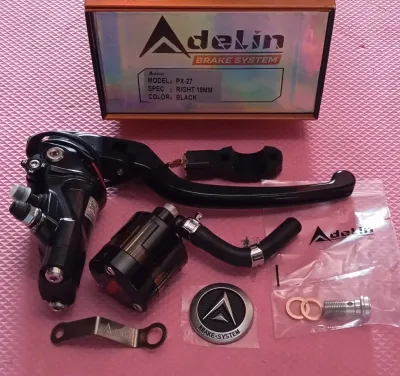
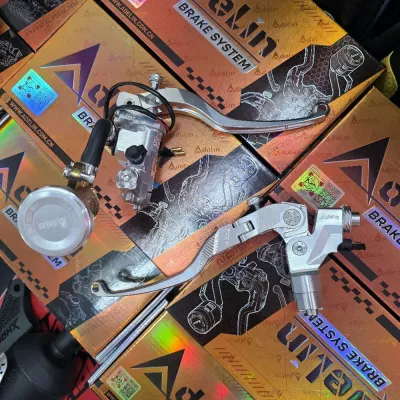
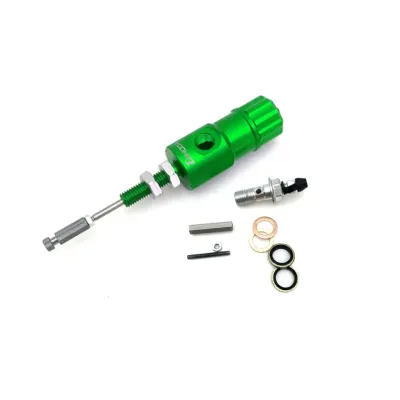
Prices are valid at publication and may change. Please refer to the product page for the latest price.
Aftermarket options, such as those offered by Adeline and other competing brands, provide alternative choices for riders seeking different performance characteristics or lower price points. Some aftermarket brands focus on budget-friendly replacements, while others specialize in high-performance compounds. The Adeline Brake Master product line is widely positioned as an accessible aftermarket upgrade, often chosen by riders who want to customize their braking feel or replace worn-out factory components without paying OEM prices.
For daily commuting in congested urban areas, your braking system faces unique demands. Unlike highway riding where brakes are used sparingly, city commuting involves constant, rapid cycles of acceleration and deceleration. This stop-and-go pattern requires brake pads that offer a reliable initial bite even when cold, efficient heat management to prevent brake fade during prolonged traffic crawls, and reasonable wear resistance so you do not have to replace them every few months. Before purchasing any Adeline brake pads, you should carefully inspect the product packaging and official labels to verify the specific friction compound, ensuring it matches these daily commuting demands.
Key Comparison Dimensions for Daily Commuting
When comparing brake pads, the most critical factor is the friction material compound. Brake pads generally fall into three categories: organic, semi-metallic, and sintered. Organic pads offer a smooth, quiet bite and minimal rotor wear, making them suitable for light commuting, though they wear down faster under high heat. Semi-metallic pads blend organic materials with metallic fibers for a stronger bite and better heat dissipation, though they produce more dust. Sintered pads provide exceptional stopping power and heat tolerance, but they can cause rapid wear on standard rotors if mismatched.

Heat dissipation is another vital dimension for riders in tropical climates. Repeated braking in heavy traffic generates intense thermal energy. If your pads cannot dissipate this heat, the caliper assembly temperature rises, leading to brake fade—a dangerous condition where the lever feels spongy and stopping distances increase. Evaluating how different compounds handle thermal buildup is essential; semi-metallic and sintered compounds generally offer superior thermal stability compared to pure organic pads, but they require compatible rotors to function safely.
Brake dust and noise are practical considerations that affect your daily maintenance routine and riding comfort. High-dust compounds can quickly coat your wheels in a dark, stubborn residue, requiring frequent cleaning to prevent corrosion or staining on alloy rims. Additionally, some high-performance pads produce a high-pitched squeal or noticeable vibration during light braking. When shopping for aftermarket options like Adeline, check the product labels or user manuals for noise-reduction features, such as chamfered edges or built-in shims, which help dampen vibrations and ensure a quieter, more comfortable ride through city streets.
Evaluating Value and Compatibility
Balancing your budget with safety is key. In the local market, budget aftermarket options, including some entry-level Adeline pads, typically cost under ₱500. Mid-range aftermarket options and standard OEM pads generally range from ₱500 to ₱1,500, providing a balance of durability and performance. Premium aftermarket brands, especially those offering high-performance sintered compounds, can exceed ₱1,500. Choosing the cheapest option without verifying its specifications can lead to higher long-term costs.
Physical compatibility is non-negotiable. You must verify your motorcycle’s exact make, model, year, and caliper mounting specifications before purchasing. Even within the same model line, manufacturers often update caliper designs between model years. Never attempt to modify a brake pad’s backing plate or force an ill-fitting pad into a caliper.
Improper fitment or poor material matching can quickly outweigh initial savings. For instance, installing highly abrasive sintered pads on a soft OEM rotor can cause premature rotor wear, forcing an expensive replacement. Furthermore, mismatched components can lead to uneven wear, reduced braking efficiency, or binding calipers.
Decision Framework: Which Brake Pad Fits Your Ride?
To choose the right brake pad, evaluate your riding habits, budget, and vehicle configuration. If your primary goal is a budget-friendly replacement for a small-displacement scooter or underbone motorcycle used for light urban commuting, the Adeline Brake Master line can be a viable choice. Before buying, confirm that the packaging specifies an organic or semi-metallic compound designed for daily street use.
Conversely, opt for OEM parts or established premium brands if your daily commute involves carrying heavy passenger loads, delivering cargo, or riding at higher speeds. These situations demand guaranteed factory-matched performance and consistent wet-weather bite. If you frequently ride during the heavy downpours common in the local rainy season, investing in a premium compound with proven wet-weather stability is a critical safety measure.
Finally, assess your motorcycle’s mechanical setup. If your bike has modified calipers, oversized rotors, or custom brake lines, standard catalog listings may not apply. You must measure your existing pads and consult the caliper manufacturer’s specifications. Additionally, if your route includes steep, mountainous terrain, your brakes will experience prolonged downhill friction, making high-quality semi-metallic or sintered pads the safer choice.
Installation and Safety Boundaries
Installing new brake pads is a critical maintenance task. Before riding, you must perform a proper bedding-in procedure. This involves making a series of gentle, controlled stops from moderate speeds to transfer a thin, even layer of friction material onto the rotor. Skipping this step can lead to rotor glazing, where the rotor surface becomes polished and slick, resulting in a hard lever feel but severely reduced stopping power.
Before sliding the new pads into place, inspect your brake disc. Use a micrometer or caliper to check that the rotor thickness is above the minimum limit stamped on the disc. Inspect the surface for deep grooves, scoring, or warping. Installing brand-new pads onto a worn or warped rotor prevents full contact, leading to poor performance, rapid wear, and vibration.
Always recognize the limits of DIY maintenance. If you notice that the caliper slider pins are seized, the rubber piston seals are torn, or the brake fluid is dark and contaminated, stop immediately. These issues require a caliper rebuild or a professional flush. If the new pads do not slide easily into the bracket, or if you must use excessive force to compress the pistons, do not force them. Consult a qualified mechanic to ensure safety.
Frequently Asked Questions (FAQ)
How can I tell if my current brake pads need replacement?
You can determine if your brake pads need replacement by performing a visual inspection of the friction material. Most modern brake pads feature a built-in wear indicator groove cut into the center of the pad; if the material has worn down to the level of this groove, or if the remaining pad thickness is less than two millimeters, it is time for a replacement. Additionally, listen for any unusual sounds, such as a high-pitched squeal or a harsh metallic scraping noise when applying the brakes, which indicates the friction material is completely gone and the metal backing plate is grinding against the rotor. A spongy feeling in the brake lever or a noticeable increase in the distance required to come to a complete stop are also clear signs that your braking system needs immediate inspection. Always consult your motorcycle’s owner manual for the manufacturer’s recommended inspection intervals to catch wear before it damages other components.
Is it safe to use aftermarket brake pads on a motorcycle with ABS?
Yes, it is safe to use aftermarket brake pads on a motorcycle equipped with an Anti-lock Braking System (ABS), provided you select the correct compound. An ABS system operates by using wheel speed sensors and an electronic control unit to detect wheel lockup, rapidly modulating hydraulic pressure to prevent skidding; it does not rely on a specific brand of brake pad to function. However, the system is calibrated based on the expected friction characteristics of the original braking setup. To maintain safe and predictable ABS intervention, you must choose aftermarket pads that meet or exceed the original friction coefficient of your OEM pads. Installing pads with significantly lower grip can delay the system’s ability to slow the motorcycle, while overly aggressive pads might trigger premature ABS activation. Always check the pad manufacturer’s specifications, product labels, or compatibility charts to ensure the compound is explicitly rated for use with ABS-equipped motorcycles.
Community discussion
Share your experience or ask a question. Comments are reviewed before publication.