
Finding the right 360 degree car phone holder depends entirely on your vehicle’s specific interior layout, air conditioning design, and dashboard materials. There is no single best mounting type for every car. Air vent mounts offer quick installation but may block airflow; suction cups provide superior visibility but require flat, heat-resistant surfaces; and magnetic mounts prioritize one-handed convenience but demand careful placement to avoid interior damage. This guide breaks down the mechanical differences, stability trade-offs, and safety checks to help you select the most secure and practical mount for your daily commute.
Understanding How 360° Mounting Mechanisms Actually Work
To choose the right accessory, distinguish between how a mount grips your car and how it grips your phone. Every 360 degree car phone holder consists of a base anchor and a phone attachment interface. The base anchor secures the unit to your vehicle, typically using a mechanical clip, a suction pad, or an adhesive disc.
The phone attachment interface holds your mobile device. This can be a spring-loaded cradle, a gravity clamp, or a magnetic array. For instance, a magnetic mount is frequently paired with either an air vent clip or a suction cup base to secure itself to the car.
Products mentioned in this guide
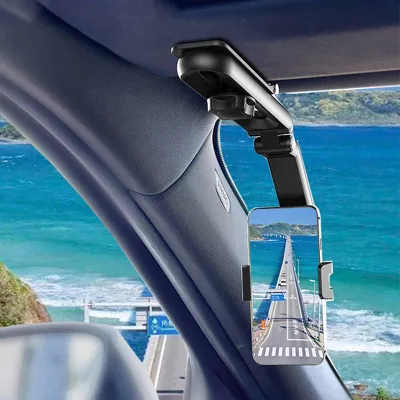
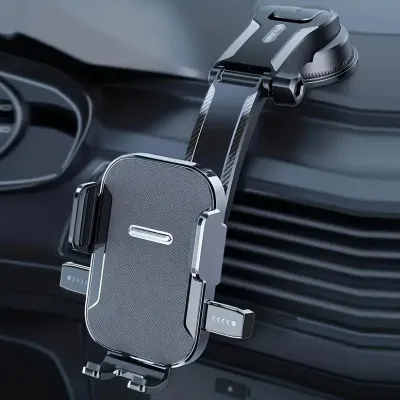
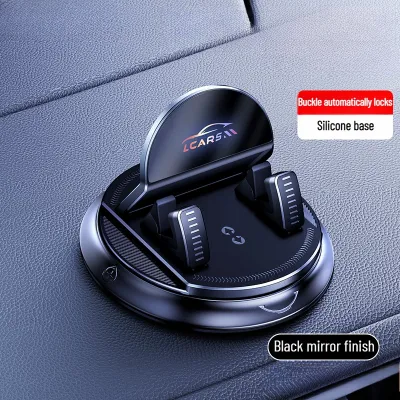
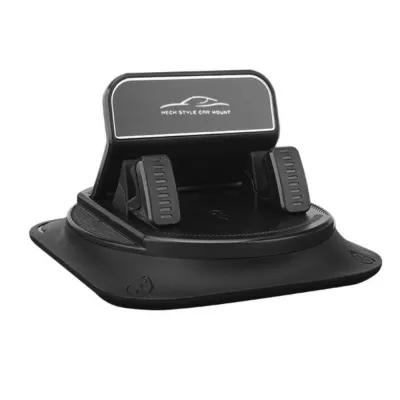

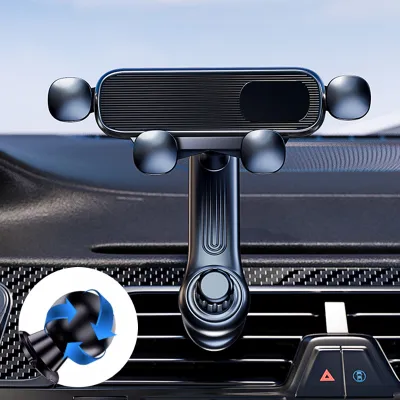
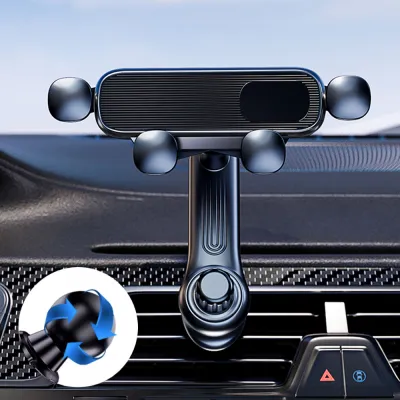
Prices are valid at publication and may change. Please refer to the product page for the latest price.
Connecting these two parts is the critical 360-degree ball joint. This mechanical component consists of a spherical pivot housed inside a tightening collar. By loosening the collar, you can tilt, rotate, and swivel your phone to any angle, allowing for quick transitions between portrait and landscape modes. Tightening the collar locks the phone into your preferred viewing angle.
Comparing Stability, Visibility, and Dashboard Impact
Each mounting style offers distinct trade-offs in terms of where your phone sits, how much it vibrates while driving, and the potential wear and tear it inflicts on your vehicle’s cabin.

Air Vent Mounts
Air vent mounts keep your phone within arm’s reach without blocking your view of the road. Because they clip directly into the air conditioning louvers, they position your device lower down, keeping your windshield completely clear. This lower placement also makes it easier to plug in charging cables without dangling wires across your dashboard.
However, placing your phone directly in front of an air vent comes with environmental consequences. During hot days, blocking a major vent can reduce the cabin’s cooling efficiency. Conversely, if you use your vehicle’s heater, the continuous flow of hot air directly onto the back of your phone can lead to rapid overheating or temporary device shutdowns.
Stability relies entirely on the strength and thickness of your vent slats. On bumpy roads, the weight of a heavy smartphone can cause the vent louvers to sag downward or wobble. Over time, the constant leverage and vibration can weaken or even crack plastic vent components, especially in older vehicles.
Suction Cup Mounts
Suction cup mounts provide versatile positioning options, allowing you to mount your phone high on the windshield or directly on top of the dashboard. This elevated position keeps your navigation map closer to your natural line of sight, reducing the time your eyes spend off the road. Most suction models feature telescoping arms that let you pull the phone closer to your steering wheel.
To maintain a reliable vacuum seal, suction cups require a completely smooth, non-porous surface. While glass is the ideal candidate, dashboard mounting requires a flat, non-textured plastic section. Many modern suction mounts feature a sticky polyurethane gel pad on the cup to help fill minor textures, but these still struggle on heavily curved or grained surfaces.
Thermal exposure is the primary enemy of suction mounts. When parked under direct sunlight, the temperature behind a windshield can rise dramatically. This extreme heat can dry out the sticky gel, expand the air trapped inside the suction chamber, and cause the mount to suddenly detach while you are driving.
Magnetic and Adhesive Bases
Magnetic mounts offer unmatched convenience for drivers who frequently get in and out of their vehicles. Instead of fumbling with spring-loaded side arms or manual clamps, you simply place your phone against the magnetic face, and it snaps into place instantly. This seamless, one-handed operation makes them incredibly popular for daily commuters.
These mounts typically use either a vent clip base or a small, semi-permanent adhesive puck. Adhesive bases use high-strength double-sided tape to stick directly to flat surfaces on your dashboard or center console. While this creates a low-profile and stable mounting point, removing the adhesive later carries a high risk of peeling, staining, or tearing soft-touch plastics, vinyl, or genuine leather surfaces.
It is also important to consider how the magnet interacts with your phone. If your device does not have built-in magnetic alignment, you must stick a metal plate to the back of your phone or case. This metal plate can block wireless charging coils, preventing you from using desktop wireless chargers unless you remove the case entirely.
Matching the Mount to Your Car's Interior and Climate
Before purchasing a 360 degree car phone holder, perform a physical inspection of your vehicle’s cabin to avoid buying an incompatible design. Start by examining the shape and design of your air vents. Standard horizontal and vertical rectangular vents work well with most clip designs. However, circular vents, turbine-style vents, or deeply recessed vents often lack the flat surface area required for a clip to grab securely, causing the mount to twist or fall off.
Next, evaluate the texture and material of your dashboard. Run your hand over the surface where you plan to place a suction cup or adhesive mount. If the plastic feels rough, heavily textured, or soft and padded, a suction cup will struggle to maintain a vacuum seal, and adhesive tape will fail to bond properly. Leather dashboards should never be subjected to adhesive mounts or heavy suction cups, as the pressure and glue can permanently stretch or discolor the material.
Local climate conditions in the Philippines play a massive role in mount longevity. The combination of intense tropical heat and high humidity creates a challenging environment for adhesives and suction gels. When a car is parked outdoors, cabin temperatures can easily exceed safe limits for standard glues. If you live in a high-heat region, look for mounts that specify high-temperature resistance, or opt for a windshield-mounted suction cup that can be easily removed and stored in the glovebox when the car is parked in the sun.
Which 360° Car Phone Holder Should You Choose?
To make the right decision, match your driving habits and vehicle specifications against the following scenarios:
- Choose an Air Vent Mount if: Your vehicle has sturdy, traditional horizontal vent slats, you want to keep your windshield completely unobstructed, and you do not mind losing the airflow from one of your central air conditioning vents.
- Choose a Suction Cup Mount if: You rely heavily on GPS navigation and need your phone positioned high near your line of sight, you have a flat dashboard or are willing to mount the device directly to your windshield, and you want the flexibility to move the mount between different vehicles.
- Choose a Magnetic or Adhesive Mount if: You prioritize speed and want to mount your phone with a simple one-handed motion, your phone or case is already equipped with magnetic alignment rings, and you have a solid, non-leather dashboard surface that can safely accommodate a semi-permanent adhesive base.
Always verify your vehicle’s interior dimensions and material specifications before making a final purchase. If your car features unique design elements, such as motorized vent louvers, leather-wrapped dashboards, or deeply curved windshields, standard universal mounts may not fit. In these cases, specialized vehicle-specific mounting brackets that clip into factory panel gaps may be necessary.
Safe Installation and Daily Maintenance Checks
Proper installation is crucial to protect your vehicle’s interior and ensure your phone does not become a dangerous projectile during a sudden stop. Before applying any adhesive or suction cup, clean the target surface thoroughly. Use isopropyl alcohol on hard plastics or glass to remove oils, dust, and dashboard polish residues. Avoid using harsh household solvents or glass cleaners containing ammonia on your dashboard, as these can strip away protective UV coatings and cause premature fading.
When choosing a mounting location, safety must be your absolute priority. Never place a phone holder on or near airbag deployment zones, such as the passenger-side dashboard panel or the steering wheel hub. Ensure the mounted phone does not block your view of the road, side mirrors, or critical instrument clusters. Dangling charging cables should be routed neatly around the console using small cable clips to prevent them from tangling with your gear shifter, steering wheel, or pedals.
Finally, establish a weekly routine to inspect your mount’s structural integrity. Check the tension of vent clips to ensure they have not wiggled loose from road vibrations. For suction cups, gently pull on the base to verify the vacuum seal is still strong, especially after your car has been parked in the sun. If you notice any lifting, cracking, or adhesive failure, remove the mount immediately and clean or replace the mounting interface to prevent your phone from falling while you are on the road.
Frequently Asked Questions (FAQ)
Will a magnetic 360° car phone holder damage my phone's internal components?
No, the magnets used in consumer car mounts will not damage your smartphone’s screen, processor, or internal storage. Modern mobile devices use solid-state flash memory, which is unaffected by the static magnetic fields produced by these accessories. However, unshielded magnets can temporarily interfere with your phone’s internal digital compass or magnetometer, which might cause minor calibration issues in navigation apps. Additionally, if a metal plate is placed directly over your phone’s wireless charging coil, it will block the inductive transfer of power and can cause the plate to heat up during charging. To avoid this, ensure your magnetic mount is compatible with your phone’s wireless charging standards or place the metal plate away from the charging coil.
How do I prevent a suction cup mount from falling off in hot weather?
To maximize suction adhesion in hot climates, start with a pristine surface by cleaning the glass or dashboard with rubbing alcohol to remove invisible grease and dust. When installing, press the suction cup firmly against the surface before engaging the locking lever to force out as much air as possible. If your mount uses a sticky gel pad, you can periodically restore its tackiness by rinsing it under warm water, washing away accumulated dust, and letting it air dry completely before reinstallation. To protect the mount from extreme heat degradation, try to park in shaded areas, use a reflective front windshield sunshade, or temporarily detach the suction cup when leaving your car parked under direct sunlight for extended periods.
Community discussion
Share your experience or ask a question. Comments are reviewed before publication.