
Finding the right way to secure your smartphone in your vehicle is essential for safe navigation, hands-free calling, and minimizing driver distraction. While the market offers countless options, the core decision usually comes down to how the device attaches to your car’s interior. There is no single “best” mount, as the ideal choice depends on your vehicle’s interior layout, HVAC design, and your personal line-of-sight preference. Suction cups generally offer the highest stability on glass, air vent clips suit space-constrained dashboards, and magnetic bases excel in quick, one-handed operation. Understanding how these base attachment methods interact with a ball joint phone holder—which provides the critical 360-degree rotation and angle adjustment—is the key to choosing a setup that remains secure on every journey.
Understanding the Base Mounting Options
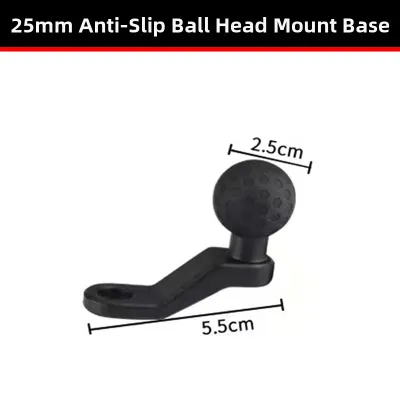
To make an informed choice, you must first understand the physical mechanics of how each holder type anchors itself to your vehicle. A ball joint phone holder consists of two primary components: the base mount that grips the car, and the cradle or magnetic head that holds the phone, connected by a spherical pivot. This ball joint is secured by a threaded collar or locking nut, allowing you to tilt, swivel, and rotate your phone to the perfect viewing angle.
The difference lies entirely in how the base connects to your car. Air vent clips use mechanical claws, spring-loaded clamps, or hook-and-latch mechanisms to grip the individual plastic louvers of your vehicle’s heating, ventilation, and air conditioning (HVAC) vents. Suction cups rely on atmospheric vacuum pressure, often enhanced by a sticky polyurethane gel pad, to seal tightly against smooth, non-porous surfaces like glass or polished plastic. Magnetic bases use high-strength magnets integrated into a compact mount that adheres to the dashboard via a semi-permanent adhesive tape, or they combine magnetic heads with vent-clipping bases.
Products mentioned in this guide
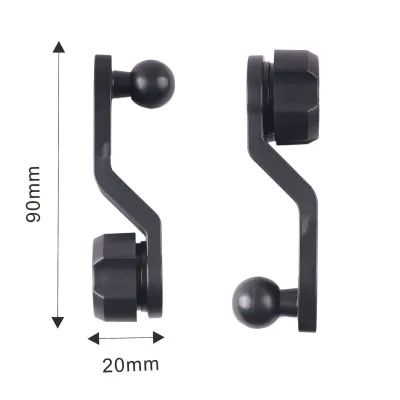
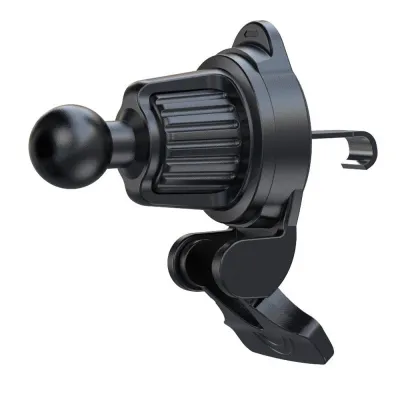
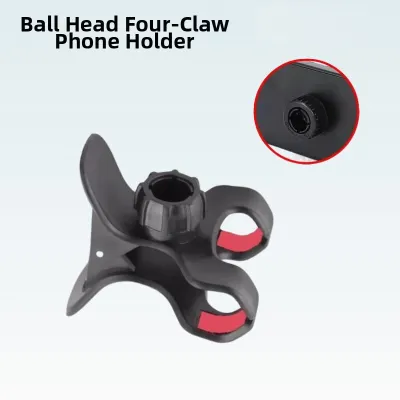
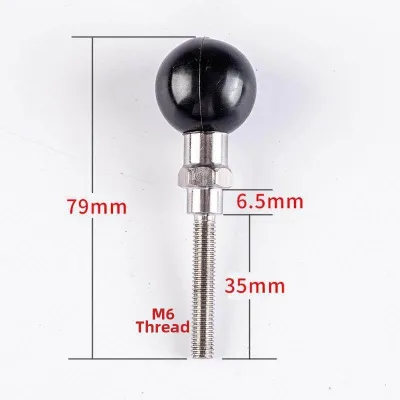


![[COD] WHPHous Ship within 24 hours 1 Set 2.3cm Ball Clamp Bracket For Motorbike Phone Holder PJ10 PJ13 PJ18 Motorcycle Handlebar Mount Base Kit Accessories](https://img.lazcdn.com/g/p/70d8264107bd9c7b09469453ecfff473.jpg_400x400q80.jpg_.webp)
Prices are valid at publication and may change. Please refer to the product page for the latest price.
Evaluating Stability and Vibration Resistance
Road vibrations, speed bumps, and sudden stops test the limits of any car mount. A shaky screen is not only difficult to read but can also distract you from the road. Suction cups mounted directly to the windshield generally offer the most rigid anchor point. Because glass does not flex or compress, a high-quality suction cup minimizes screen shake, making it highly reliable for rough roads or long highway drives. However, if the mount features a long, flexible extension arm, that arm can act as a lever, amplifying minor engine vibrations into noticeable screen movement.

Air vent mounts present a different set of stability challenges. Their performance depends heavily on the thickness, depth, and rigidity of your car’s vent louvers. Heavy smartphones can cause the vent slats to sag downward, and driving over uneven pavement can cause the entire assembly to bounce. If your vehicle has loose or delicate vent mechanisms, the constant movement can wear down the plastic louvers over time.
Magnetic dashboard mounts rely entirely on the bond between the adhesive pad and the dashboard surface. On smooth, flat surfaces, this bond is incredibly strong. However, if the phone is exceptionally heavy or enclosed in a thick, rugged case, the leverage exerted on the ball joint can cause the phone to tilt downward. Furthermore, if the magnetic attraction between the mount and the metal plate on your phone is weak, a sudden jolt can cause the phone to slide off entirely.
Assessing Visibility and Driving Safety
Where you position your phone directly impacts your situational awareness and driving safety. Windshield-mounted suction cups offer excellent eye-level visibility. They keep your navigation maps directly within your peripheral vision, reducing the time your eyes are off the road. However, this high placement can obstruct your forward view, creating dangerous blind spots. In many regions, including the Philippines under the Anti-Distracted Driving Act, mounting any device within the direct line of sight of the windshield is heavily restricted. Drivers must verify local traffic regulations to ensure their mount placement is legally compliant.
Air vent mounts keep the phone positioned lower, typically level with the steering wheel or center console. This keeps your windshield completely clear, but it requires you to look further down to check directions. It can also block your access to essential climate controls, hazard buttons, or infotainment screens.
Dashboard-mounted adhesive or magnetic holders offer a middle ground, allowing you to position the device just above the dashboard line. When choosing this placement, you must carefully map out your vehicle’s safety features. Never install a phone holder on or near passenger airbag deployment zones, as a deploying airbag can turn the mount and your phone into dangerous high-speed projectiles. Always refer to your vehicle’s owner’s manual to identify airbag boundaries before sticking any mount to the dashboard.
Comparing Installation and Daily Convenience
The ease of setting up your mount and using it daily is a major factor in long-term satisfaction. Suction cups and adhesive-backed magnetic mounts require a meticulous initial installation process. To ensure a secure bond, you must thoroughly clean the mounting surface with isopropyl alcohol to remove dust, dashboard protectants, and oils. Adhesive bases typically require a curing period—often up to 24 hours—before you can safely mount your phone. Rushing this process almost always results in the adhesive peeling off prematurely.
In contrast, air vent clips offer instant installation. You simply slide or clamp the mount onto the vent louver, tighten the mechanical mechanism, and it is ready for immediate use. This makes vent mounts highly portable and ideal for travelers who frequently use rental cars.
For daily operation, magnetic holders are unmatched in convenience. They allow for true one-handed operation; you simply bring the phone close to the mount, and the magnetic force snaps it into place. Mechanical cradles, which are common on suction and vent mounts, often require two hands to squeeze the side clamps open, though some premium models feature one-touch quick-release buttons or gravity-assisted auto-clamping arms. Adjusting the viewing angle via the ball joint also varies by mount type. If the ball joint is stiff, attempting to adjust the angle on a vent mount can pull the clip off the louver, whereas a windshield suction cup provides a much sturdier base for on-the-fly adjustments.
Checking Compatibility With Your Vehicle's Interior
Before purchasing a ball joint phone holder, you must evaluate your vehicle’s specific interior design, as certain cabin layouts will automatically rule out specific mounting styles. Air vent clips are highly dependent on louver geometry. Standard horizontal or vertical rectangular vents work beautifully with most clips. However, if your car features circular, cross-shaped, or deeply recessed vents, standard clips may fail to grip securely or may block the vent’s movement entirely.
Dashboard materials also dictate your options. Modern vehicle interiors often feature soft-touch plastics, textured vinyl, or leather-wrapped surfaces. These textured and porous materials prevent suction cups from forming a vacuum seal and prevent adhesive pads from making full contact. If your dashboard lacks a smooth, hard plastic section, a windshield suction cup or a vent mount is a much safer choice.
Furthermore, environmental factors play a significant role, especially in tropical climates. High cabin temperatures from parking under the direct sun can soften the adhesive backing on dashboard mounts, causing them to slide off and leave a sticky residue. In humid conditions, blasting cold air from an active HVAC vent directly onto the back of a warm phone can cause condensation to form inside the phone’s casing, potentially damaging sensitive electronics. Conversely, using a vent mount in cold climates while running the car’s heater can cause the phone to overheat rapidly, triggering thermal shutdown protocols.
Quick Comparison Matrix
| Mounting Type | Best For | Stability | Visibility | Installation Effort | Potential Drawbacks |
|---|---|---|---|---|---|
| Suction Cup | Windshields & smooth surfaces | High (on glass) | High (eye-level) | Medium (requires surface prep) | Can block road view; vacuum can fail in extreme heat |
| Air Vent Clip | Rental cars & textured dashboards | Moderate (depends on louvers) | Medium (lower profile) | Low (instant clamp) | Blocks airflow; risk of phone condensation or overheating |
| Magnetic Adhesive | Quick one-handed mounting | High (on flat plastic) | Flexible | High (requires adhesive cure time) | Semi-permanent; adhesive can degrade in high cabin heat |
How to Choose the Right Mount for Your Car
To finalize your decision, use this structured framework to match a ball joint phone holder to your specific driving habits and vehicle layout:
- Choose a Suction Cup Mount if:
- You prioritize maximum screen stability and want your navigation maps kept at eye level.
- Your vehicle has a deep windshield that allows placement without obstructing your forward view of the road.
- Your dashboard is heavily textured, preventing adhesives from sticking, but you still want a dashboard-style view using a mounting disc.
- Choose an Air Vent Mount if:
- You want an instant, tool-free installation that can be easily moved between different vehicles.
- Your car has standard, rigid horizontal or vertical vent louvers that can support the weight of your phone.
- You prefer to keep your windshield completely clear of obstructions to comply with local traffic safety laws.
- Choose a Magnetic Adhesive Mount if:
- You value ultimate daily convenience and want to mount or remove your phone with a quick, one-handed motion.
- Your dashboard features a flat, smooth, hard plastic surface away from any passenger airbag deployment zones.
- You want a low-profile, minimalist mount that does not block your air conditioning vents or clutter your dashboard.
Before making your final purchase, always verify your vehicle’s specific vent shape, dashboard material, and local road safety regulations regarding device placement.
Frequently Asked Questions (FAQ)
Will a ball joint loosen over time and cause the phone to droop?
Yes, ball joints can loosen over time due to mechanical wear and friction. Plastic ball joints are particularly susceptible to wearing down as the smooth surface of the ball grinds against the socket during adjustments. To prevent your phone from drooping, regularly check and tighten the threaded locking collar or nut behind the mounting head. If the threads become stripped or the plastic socket cracks from over-tightening, the joint will lose its gripping power permanently, indicating that it is time to replace the mount.
Can I use a suction cup mount on a textured dashboard?
Standard vacuum suction cups will not hold securely on a textured, porous, or soft-touch dashboard because air leaks through the microscopic gaps in the texture, breaking the vacuum seal. To mount a suction cup on these surfaces, you must use a specialized adhesive gel pad or a rigid, smooth dashboard mounting disc that adheres to the textured surface using semi-permanent adhesive. Be aware that applying strong adhesives to soft-touch plastics or leather dashboards carries a risk of leaving permanent residue or tearing the material upon removal.
Community discussion
Share your experience or ask a question. Comments are reviewed before publication.