
Navigating busy highways, managing daily commutes through urban congestion, and relying on real-time GPS routing have made mobile devices indispensable tools behind the wheel. However, holding a phone while driving is both highly dangerous and legally restricted. Selecting a reliable car holder for car dashboards, windshields, or vents is a critical decision that directly impacts your safety, convenience, and device longevity.
There is no single mounting solution that fits every driver. The ideal choice depends on your vehicle’s interior layout, the physical design of your dashboard and air vents, and your specific smartphone model. By understanding the structural and thermal trade-offs of air vent, suction cup, and magnetic mounts, you can choose a secure setup that keeps your focus entirely on the road.
To make an immediate decision, you can evaluate your needs against these three primary configurations:
Products mentioned in this guide
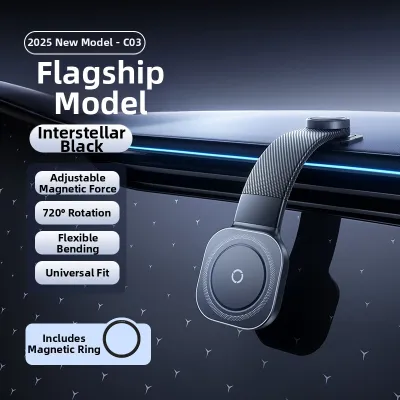
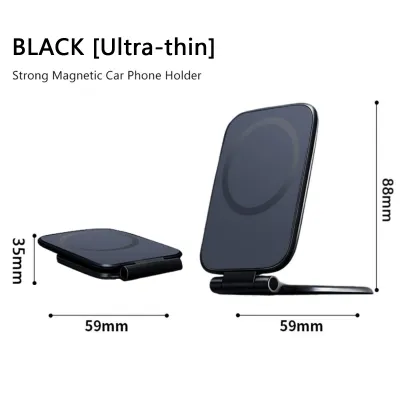
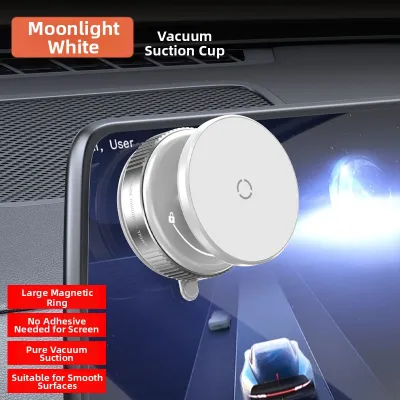
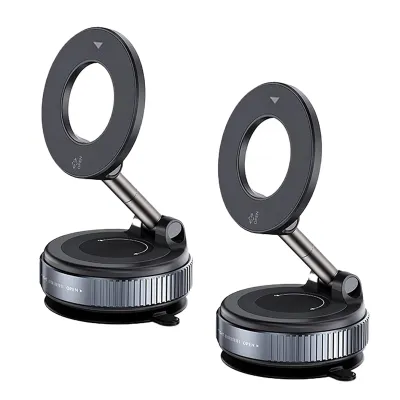
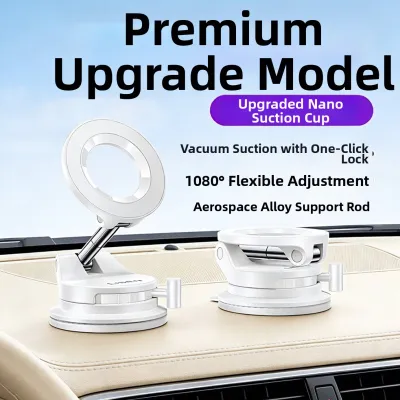
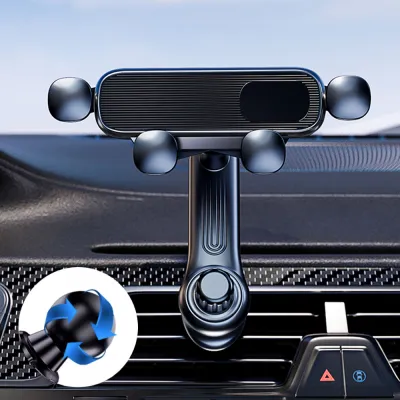
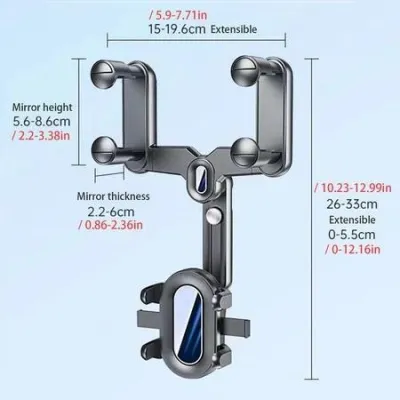
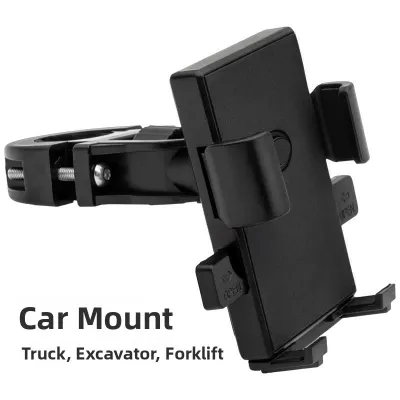
Prices are valid at publication and may change. Please refer to the product page for the latest price.
- Air Vent Mounts: Best for drivers seeking a low-profile, highly stable setup that keeps the smartphone cool during long navigation sessions, provided the vehicle features sturdy, horizontal air vent louvers.
- Suction Cup Mounts: Ideal for those who require highly adjustable viewing angles or have non-standard air vents, allowing secure attachment to the windshield or flat, non-porous dashboard surfaces.
- Magnetic Mounts: Perfect for drivers prioritizing rapid, one-handed attachment and detachment, utilizing either native magnetic arrays or thin adhesive metal plates.
It is important to distinguish between the vehicle-anchoring base and the phone-gripping mechanism. While “air vent” and “suction cup” describe how the mount attaches to your car, “magnetic” describes how the holder grips your phone. Many modern magnetic holders actually use an air vent clip or a suction cup base to secure themselves to the vehicle cabin.
Air Vent Phone Holders: A Compact Car Holder for Car Vents
Air vent mounts represent a highly popular, minimalist approach to device placement. These holders utilize a mechanical clip, clamp, or hook mechanism that attaches directly to the individual plastic slats, known as louvers, of your vehicle’s air conditioning vents. By utilizing existing cabin structures, they eliminate the need for adhesives or windshield obstructions.
One of the most significant advantages of an air vent mount is device temperature regulation, especially in tropical climates. Running high-demand applications like GPS navigation while simultaneously charging a phone generates substantial internal heat. In hot climates, such as in the Philippines, this combination can quickly lead to thermal throttling, battery degradation, or sudden device shutdown. Positioning the phone directly in front of an active air conditioning vent provides continuous passive cooling, maintaining optimal operating temperatures.
Additionally, vent mounts keep the dashboard and windshield entirely clear. This low-profile placement ensures that your forward field of view remains completely unobstructed, helping you maintain a clean line of sight through the glass.
However, these benefits come with distinct physical trade-offs. The weight of a modern, heavy smartphone combined with the leverage of a protruding mount puts constant mechanical stress on the thin plastic louvers of the air vent. Over time, or when hitting sudden potholes and speed bumps, this stress can crack or snap the delicate vent mechanisms. Furthermore, clipping a mount to the vent restricts your ability to adjust the direction of cabin airflow, potentially blocking cool air from reaching the driver or front passenger.
There is also a risk of localized overheating if you use the vehicle’s heating system during cooler weather or high-altitude drives. If hot air is directed through the vent holding the phone, it can accelerate battery wear. Conversely, if the air conditioning is turned off entirely while the phone runs demanding applications under direct sunlight, the lack of airflow combined with the restricted space behind the phone can cause rapid heat buildup.
Air Vent Verification Checklist:
- Inspect Louver Orientation: Ensure your vehicle features standard, rigid horizontal or vertical louvers. Circular, turbine-style, or deeply recessed vents are generally incompatible with standard clip-on mounts and can easily break under pressure.
- Assess Slat Thickness and Depth: Measure the depth of your vent slats to ensure the mount's clip or hook mechanism can grip the structural support frame rather than just the fragile outer edge.
- Evaluate Phone Weight: If you use a heavy, ruggedized phone or a large-format device, choose a vent mount that features an additional lower support leg to distribute the weight across the surrounding dashboard panel.
Suction Cup Phone Holders: Positioning and Dashboard Impact
Suction cup mounts offer exceptional placement flexibility by utilizing a physical vacuum seal to anchor the holder to smooth surfaces. Most modern suction mounts feature a flexible polyurethane or thermoplastic polyurethane (TPU) suction pad combined with a mechanical lever. When the lever is engaged, it pulls the center of the pad upward, creating a low-pressure vacuum chamber that holds the mount firmly in place. Many designs also incorporate a sticky polyurethane gel layer on the cup to help seal minor surface textures.

This mounting type is highly valued for its adjustability. Most suction mounts are built with telescoping arms, rotating ball joints, and pivoting hinges, allowing you to position your phone at the exact height, distance, and angle required for comfortable viewing. Because they do not rely on air vents, they are compatible with virtually any vehicle interior, regardless of vent shape or console layout.
Despite their versatility, suction cup mounts face severe challenges when exposed to extreme heat and direct sunlight. When a vehicle is parked in an open lot under intense tropical sun, cabin temperatures can easily exceed 50°C. This extreme heat causes the air trapped inside the suction vacuum chamber to expand, reducing the pressure differential and causing the mount to suddenly fall off the windshield. Over time, constant UV exposure degrades the flexible TPU material, making it brittle and permanently reducing its sealing capability.
Mounting a suction cup on the dashboard also carries risks for your car’s interior materials. While hard, flat ABS plastic surfaces handle suction cups well, soft-touch vinyl, synthetic leather, or genuine leather dashboards are highly vulnerable. The sticky polyurethane gel used on many suction bases can leach plasticizers from the dashboard material, leaving permanent dark rings, sticky residue, or even tearing the delicate surface skin when removed.
Furthermore, placing a large suction mount directly on the windshield can create a dangerous blind spot. In many jurisdictions, including the Philippines under the Anti-Distracted Driving Act (Republic Act No. 10913), placing electronic devices or mounts within the driver’s direct line of sight through the windshield is legally restricted. Mounts must be positioned carefully to avoid blocking your view of the road.
Suction Cup Verification Checklist:
- Analyze Dashboard Materials: Check if your dashboard is made of hard, textured plastic or a delicate, padded soft-touch material. Avoid using sticky gel suction cups on leather or premium vinyl dashboards.
- Review Windshield Regulations: Position the mount low on the windshield or in the corner to ensure it does not encroach on your primary viewing arc, keeping your installation fully compliant with local road safety laws.
- Prepare the Surface: Prior to installation, thoroughly clean the target area with isopropyl alcohol to remove dust, oils, and dashboard dressings, allowing the vacuum seal to cure on a completely dry surface.
Magnetic Car Phone Holders: Convenience and Phone Compatibility
Magnetic car phone holders have transformed how drivers interact with their devices by replacing mechanical side clamps with high-strength magnetic attraction. These systems typically use an array of rare-earth neodymium magnets (often rated N52 for maximum pull force) arranged in a circular pattern. This magnetic head aligns with a corresponding metal plate attached to the phone or integrated directly into a magnetic-compatible phone case.
The primary benefit of a magnetic holder is its unmatched speed and ease of use. You can mount or retrieve your phone with a simple, one-handed motion, requiring no manual adjustment of spring-loaded side arms or bottom feet. This seamless interaction is highly convenient for drivers who frequently enter and exit their vehicles during daily errands or delivery routes. Additionally, because there are no bulky plastic clamps surrounding the device, magnetic mounts offer a clean, unobtrusive aesthetic that blends naturally with modern car cabins.
However, the performance of a magnetic mount is entirely dependent on the physical connection between the magnet and the metal receiver. If you use a thick, heavy protective case without an integrated magnetic ring, the distance between the mount’s magnetic head and the metal plate inside the case will weaken the magnetic pull. On severely bumpy roads, deep potholes, or gravel tracks, the vertical shear forces can cause a heavy phone to slide off the mount entirely.
Device compatibility is another critical consideration. If your phone supports wireless charging, placing a traditional solid metal adhesive plate directly over the internal induction coil will block the wireless energy transfer. It can also cause the metal plate to heat up rapidly during charging, posing a safety risk to the phone’s battery. To avoid this, you must use a specialized, hollow ring-shaped adapter or a dedicated magnetic-compatible phone case that aligns perfectly with the wireless charging coils.
It is also worth noting that while the magnetic head holds the phone, the mount itself must still attach to the car. You must carefully evaluate the base of the magnetic holder—whether it uses a vent clip, a suction cup, or an adhesive pad—to understand how that base will interact with your vehicle’s interior.
Magnetic Holder Verification Checklist:
- Verify Wireless Charging Compatibility: If you charge your phone wirelessly, ensure the mount uses a ring-style magnetic configuration rather than a solid metal plate that blocks induction.
- Assess Case Thickness: Confirm that your phone case is specifically designed with built-in magnets, or apply the adhesive metal ring directly to the exterior of the case for maximum holding strength.
- Match Phone Weight to Magnet Grade: For larger, heavier phone models, verify that the manufacturer specifies the use of high-grade neodymium magnets to prevent the phone from slipping off on rough roads.
Head-to-Head Comparison: Vent vs Suction Cup vs Magnetic
To choose the right mounting setup, it is helpful to directly compare how these three options perform across key daily driving dimensions. Each mounting type excels in specific scenarios while presenting distinct trade-offs in others.
When evaluating a magnetic mount, remember that its overall performance is heavily influenced by its base. For example, a magnetic mount that utilizes a suction cup base will inherit all of the heat-related vulnerabilities of a standard suction cup, even though the phone detachment mechanism remains incredibly fast and convenient.
Stability on rough roads also varies across these designs. A vent mount is highly stable under vibration, but its ultimate safety is limited by the structural strength of the plastic vent louvers. A suction cup mount provides a highly rigid connection, but extreme cabin heat can cause the vacuum seal to fail without warning. A magnetic head offers excellent stability for average-sized phones, but heavy devices in thick cases may shift or fall when subjected to sharp, sudden vertical impacts.
| Feature | Air Vent Mount | Suction Cup Mount | Magnetic Mount (Head) |
|---|---|---|---|
| Installation Ease | Quick clip-on installation; requires no tools or surface curing. | Requires thorough surface cleaning, positioning, and vacuum locking. | Depends entirely on the base type (adhesive, vent, or suction cup). |
| Stability on Bumpy Roads | High, provided the vent louvers are thick and structurally sound. | High, but can drop suddenly if extreme heat compromises the vacuum seal. | Moderate to High; depends on magnet grade and phone case thickness. |
| Impact on Car Interior | May restrict AC airflow or crack fragile plastic vent louvers. | Sticky gel pads can damage soft-touch, vinyl, or leather dashboards. | Adhesive dashboard bases may leave permanent residue or discoloration. |
| Phone Cooling | Excellent; active AC airflow directly cools the phone during use. | Neutral; the phone is exposed to ambient cabin air and direct sunlight. | Neutral; cooling depends on the specific base placement and AC proximity. |
| Device Fit | Universal clamp style; accommodates most standard phone widths. | Universal clamp style; easily adjusts to fit various phone sizes. | Requires a magnetic-compatible phone, case, or an adhesive metal ring. |
How to Choose the Best Car Holder for Your Specific Setup
Selecting the right mounting system requires matching the physical layout of your vehicle with your daily driving habits and device specifications. By analyzing your cabin materials and route conditions, you can select a holder that offers long-term reliability.
Choose an Air Vent Mount If:
- Your vehicle is equipped with sturdy, standard horizontal or vertical air vent louvers.
- You frequently drive in hot, sunny conditions and need to prevent your phone from overheating while running GPS navigation and charging.
- You prefer a clean, low-profile dashboard setup that keeps your windshield completely clear of obstructions.
Choose a Suction Cup Mount If:
- Your vehicle has circular, turbine-style, or highly fragile air vents that cannot support a clip-on mount.
- You require highly adjustable viewing angles, a telescoping arm, or need to position the phone higher up near your line of sight.
- Your dashboard is made of hard, non-porous plastic, or you plan to mount the holder directly onto the flat glass of your windshield.
Choose a Magnetic Mount If:
- Your smartphone has built-in magnetic capabilities, or you use a high-quality magnetic-compatible protective case.
- You prioritize maximum convenience and want to mount or remove your phone with a quick, one-handed motion during short trips.
- You want a sleek, modern, and minimalist holder that does not add bulky plastic clamps to your vehicle's console.
Critical Verification Steps Before Purchase:
Before finalizing your purchase, take a moment to inspect your vehicle’s dashboard. If your dashboard features soft, textured synthetic leather or delicate vinyl, avoid using sticky polyurethane suction pads or strong chemical adhesives directly on those surfaces; instead, opt for a windshield suction placement or a secure vent-clip design. If you rely on wireless charging pads at home or in the office, ensure that any metal plates or rings applied to your phone are hollow and perfectly aligned with your phone’s charging coil to prevent dangerous heat buildup.
Ultimately, the most effective car holder is one that integrates seamlessly into your daily routine, keeping your device secure and accessible without distracting you from the road. Prioritize structural compatibility and clear visibility to ensure a safe, comfortable, and compliant driving experience.
Frequently Asked Questions (FAQ)
Do magnetic car phone holders damage your phone's battery or compass?
Modern smartphones are designed to operate safely around the magnetic fields generated by standard consumer car mounts. The high-strength neodymium magnets used in these holders will not damage your phone’s battery, solid-state storage, or screen. However, placing a solid, non-aligned metal plate directly over the phone’s internal digital compass or wireless charging coil can cause temporary sensor inaccuracies or block inductive charging. Using a properly aligned, ring-shaped magnetic adapter prevents these issues.
How do I stop my suction cup car mount from falling off in the heat?
To maximize the hold of a suction cup mount in warm climates, start by thoroughly cleaning both the suction pad and the mounting surface with isopropyl alcohol to remove dust, grease, and interior dressings. Ensure the surface is completely dry before pressing the cup down firmly and engaging the mechanical locking lever. For vehicles parked regularly under direct sunlight, mounting the suction cup on a cool windshield rather than a hot, textured dashboard can help maintain the vacuum seal. Alternatively, consider switching to a high-quality vent mount to avoid heat-related suction failures entirely.
Can I use an air vent phone holder if my car has circular air vents?
Standard clip-on air vent mounts are engineered specifically for flat, rigid, horizontal or vertical louvers and are generally incompatible with circular, turbine-style, or rotating vents. Attempting to force a standard clip onto a circular vent can damage the directional adjustment mechanisms or snap the delicate plastic slats. If your vehicle features circular vents, it is highly recommended to use a suction cup mount on a flat section of the dashboard or windshield, or an adhesive-based dashboard mount.
Community discussion
Share your experience or ask a question. Comments are reviewed before publication.