
Finding the right way to secure your smartphone while driving is more than a matter of convenience; it is a critical safety and compliance decision. Navigating busy metropolitan roads or provincial highways requires clear focus, and a reliable phone holder for cars ensures your hands remain on the wheel while GPS navigation stays within your peripheral vision. However, choosing the best mounting mechanism is rarely a one-size-fits-all decision.
There is no single “best” mount that suits every driver or vehicle. The ideal choice depends on your vehicle’s dashboard architecture, the design of your air conditioning vents, and your personal priorities regarding stability, ease of use, and interior aesthetics. Air vent mounts excel in compact cabins, keeping your device cool during long drives in tropical climates. Suction cup and dashboard mounts offer unmatched adjustability and heavy-device stability, though they occupy more physical space. Magnetic mounts deliver the fastest, most seamless one-handed operation but require specific phone compatibility or hardware modifications.
When selecting a mounting location, safety must remain your primary constraint. Any phone holder for cars must be positioned so that it does not obstruct your windshield view, interfere with your physical control of the vehicle, or block the deployment paths of your vehicle’s airbags. Understanding the mechanical strengths, physical limitations, and operational risks of each mounting type will help you select the perfect accessory for your daily drive.
Products mentioned in this guide
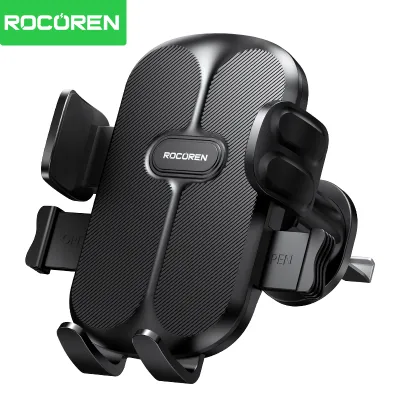
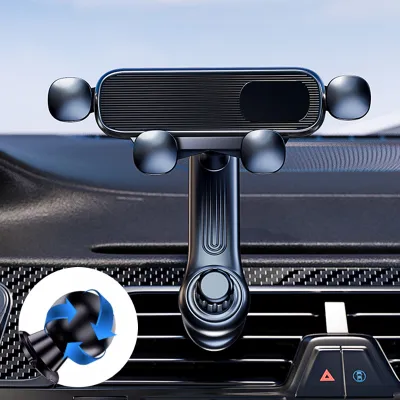
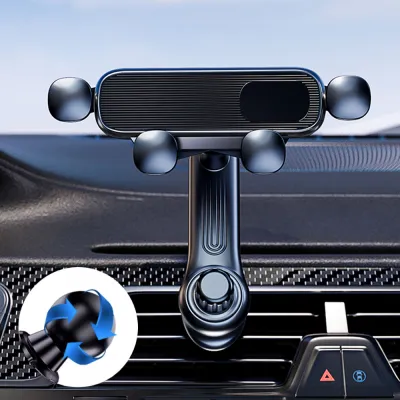
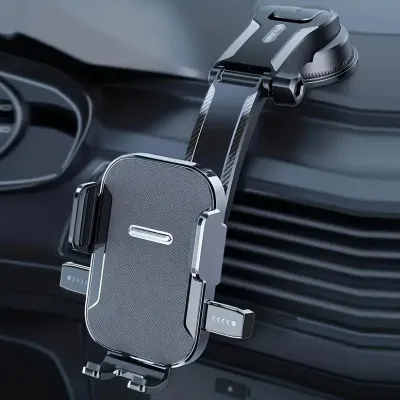
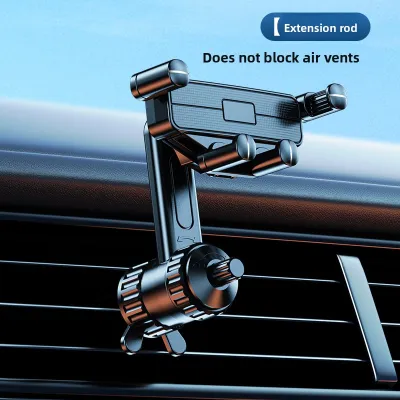
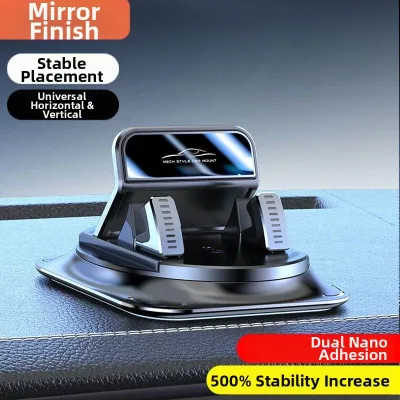

Prices are valid at publication and may change. Please refer to the product page for the latest price.
Air Vent Mounts: Best for Cooling and Compact Dashboards
Air vent mounts attach directly to the slats of your vehicle’s climate control system. Most designs utilize a rubberized, spring-loaded tension clip or a mechanical screw-tightened hook that loops behind a single horizontal vent louver. By anchoring the phone directly to the dashboard’s existing structures, these mounts eliminate the need for adhesives or windshield suction cups, maintaining a clean, unobstructed view of the road ahead.
One of the most significant advantages of an air vent mount is its thermal management capability. Running GPS navigation, cellular data, and screen backlighting simultaneously generates substantial internal heat in a smartphone. In tropical regions characterized by high ambient temperatures and intense sunlight, devices mounted on the windshield can easily overheat, leading to thermal throttling, battery degradation, or sudden shutdowns. Placing your phone directly in front of an active air conditioning vent provides continuous active cooling, keeping the device running at optimal temperatures even during extended road trips.
Despite these benefits, air vent mounts present distinct trade-offs. The physical weight of a modern, large-format smartphone puts continuous mechanical stress on the plastic louvers of your air vent. Over time, constant road vibrations can weaken or crack fragile vent components. Additionally, mounting a phone in this position partially or fully blocks the airflow to the cabin, which can compromise passenger comfort on exceptionally hot days.
Before purchasing an air vent mount, you must inspect your vehicle’s specific vent configuration. These mounts are highly compatible with standard, rigid horizontal or vertical slats. However, they are generally incompatible with circular, turbine-style, or deeply recessed vents, as the clips cannot find a secure purchase on rotating or angled outer rings. Attempting to force a standard clip onto an incompatible vent can permanently damage the directional adjustment mechanism.
Furthermore, be mindful of seasonal or regional climate control settings. While keeping the phone in front of cold air is highly beneficial, exposing your device to direct, high-heat airflow—such as when running the vehicle’s heater during cold mountain drives in elevated regions—can rapidly overheat the phone’s battery and internal processors. Always close the specific vent behind the phone mount if you need to run the vehicle’s heating system.
Suction Cup and Dashboard Mounts: Best for Flexible Viewing Angles
Suction cup and dashboard mounts rely on physical pressure and surface adhesion to secure your device. Windshield mounts use a heavy-duty polyurethane suction cup, often paired with a manual vacuum lever that pulls the center of the cup upward to create a powerful low-pressure seal against glass. Dashboard variations often combine this suction mechanism with a sticky, semi-permanent polyurethane gel pad, or utilize a dedicated 3M adhesive base to bond directly to textured plastic or vinyl surfaces.

These mounts are favored for their exceptional adjustability. Most models feature telescopic arms, ball-and-socket joints, and rotating cradles that allow you to position your phone at the exact height, distance, and angle that suits your driving posture. By raising the device closer to your natural line of sight, you can read navigation prompts with minimal eye deviation from the road, keeping your hands free and your focus forward.
However, environmental factors play a major role in the long-term reliability of suction and adhesive mounts. Intense solar radiation and high cabin humidity can rapidly degrade the vacuum seal of windshield suction cups. When parked under direct sunlight, the glass temperature can soar, causing the air inside the suction chamber to expand and the flexible gel to soften, leading to sudden mount failure. Similarly, strong chemical adhesives can degrade over time, leaving behind a sticky residue or, worse, permanently discoloring or tearing delicate soft-touch plastics, vinyl, and leatherette dashboard wraps upon removal.
To ensure a secure and lasting bond, proper surface preparation is mandatory. Before applying a suction cup or adhesive pad, thoroughly clean the target area with isopropyl alcohol to remove all dust, dashboard protectants, and oils. Allow the surface to dry completely. If you are mounting on a textured dashboard, use the smooth plastic mounting disk often provided by manufacturers to give the suction cup a completely flat surface to seal against.
Finally, you must observe a critical safety boundary when positioning a dashboard mount. Never install a phone holder, arm, or cable directly over or within the deployment zone of any passenger or driver airbag. Airbags deploy with explosive force; placing a rigid plastic mount or a heavy smartphone in these zones turns the accessory into a dangerous high-velocity projectile in the event of a collision. Consult your vehicle’s owner’s manual to identify the exact boundaries of all dashboard-mounted safety systems.
Magnetic Mounts: Best for One-Handed Convenience and Minimalism
Magnetic car mounts simplify the docking process by replacing mechanical side clamps with high-strength magnets. The mount itself contains an array of rare-earth neodymium magnets (typically N52 grade), which pull against a thin, ferromagnetic steel plate attached to your phone or integrated directly into its chassis. These mounts can be adapted to various base configurations, including air vent clips, adhesive dashboard pads, or windshield suction arms.
The defining benefit of a magnetic system is its unmatched convenience. You can mount or retrieve your phone in a single, fluid motion without fumbling with spring-loaded clamps, release buttons, or gravity-locking arms. This ease of use encourages consistent docking, reducing the temptation to hold the phone in your hand while driving. Because the mounting face is incredibly compact, these holders maintain a minimalist aesthetic that blends seamlessly into modern car interiors when not in use.
This simplicity, however, introduces specific hardware requirements. Standard smartphones require you to adhere a thin metal plate directly to the back of the device or place it between the phone and its protective case. If you prefer a clean phone back, this plate can be an aesthetic drawback. For devices equipped with integrated magnetic arrays, such as Apple’s MagSafe system, you must ensure the car mount is specifically designed to align with that internal magnetic ring to achieve a secure hold without aftermarket plates.
Road conditions also dictate the performance of magnetic mounts. While neodymium magnets provide exceptional holding power under normal driving conditions, heavy smartphones can slip or fall when subjected to severe vertical impacts, such as hitting a deep pothole or driving over rough, unpaved provincial roads. To mitigate this risk, choose a mount with a high-friction silicone face that prevents the phone from sliding laterally off the magnetic sweet spot.
Additionally, consider potential electromagnetic and physical interference. Modern smartphone components, including solid-state storage and screens, are unaffected by the static magnetic fields of consumer mounts. However, strong magnets can temporarily disrupt your phone’s internal digital compass and magnetometer, requiring a quick recalibration once the phone is removed. You must also avoid placing credit cards, transit passes, or hotel key cards in phone-case wallets directly behind the magnetic contact point, as the magnetic field can demagnetize their magnetic strips.
Feature Comparison: Stability, Convenience, and Vehicle Fit
To help you weigh these options, the following matrix compares the three primary mounting types across critical performance and compatibility dimensions.
| Feature | Air Vent Mount | Suction Cup / Dash Mount | Magnetic Mount |
|---|---|---|---|
| Installation Ease | Extremely High; instant clip-on installation | Moderate; requires surface cleaning and positioning | High; simple base setup and instant phone attachment |
| Viewing Angle Flexibility | Low to Moderate; limited by the angle of the vent slats | Extremely High; features telescopic arms and pivoting joints | High; allows instant 360-degree rotation |
| Heavy Phone Stability | Moderate; heavy phones can sag or strain plastic vent louvers | High; robust mechanical arms support larger devices | Moderate; requires strong magnets to prevent slipping on bumps |
| Dashboard Space Used | Minimal; leaves the dashboard surface completely clear | High; occupies physical space on the dash or windshield | Minimal; compact footprint preserves interior lines |
| Potential Vehicle Damage | Low risk of superficial scratches on plastic vent louvers | Moderate to High; adhesives can damage soft dash materials | Low to Moderate; depends on the chosen base mounting type |
| Wireless Charging Compatibility | Unaffected; standard mounting does not block coils | Unaffected; standard cradles do not block phone backs | Highly Variable; metal plates can block inductive charging coils |
While this table provides a foundational comparison, remember that potential vehicle damage is highly dependent on your specific car’s interior build quality. A rigid, hard-plastic dashboard will tolerate adhesives much better than a delicate, hand-stitched leatherette surface. Always cross-reference the physical dimensions and weight limits of the phone holder with your vehicle’s layout and your smartphone’s specifications before making a purchase.
Final Verdict: How to Choose the Right Mount for Your Car
Selecting the right mount comes down to matching your vehicle’s physical layout with your daily driving habits. Use the following decision rules to identify your ideal configuration:
- Choose an Air Vent Mount if: Your vehicle features traditional, sturdy horizontal vent louvers, you prioritize keeping your windshield completely clear of obstructions, and you want an active cooling solution to prevent your phone from overheating under intense tropical sun.
- Choose a Suction Cup or Dashboard Mount if: You require maximum adjustability to keep your navigation map at eye level, you drive a vehicle with fragile or circular air vents, or you use a heavy, large-format smartphone that requires robust mechanical cradle support.
- Choose a Magnetic Mount if: You prioritize rapid, one-handed mounting convenience, prefer a minimalist cabin aesthetic, and use a phone with built-in magnetic compatibility or do not mind applying a thin metal plate to your device.
Before finalizing your purchase, verify your vehicle’s interior materials. If your dashboard features a soft-touch, vinyl, or leatherette finish, avoid aggressive adhesive pads; instead, opt for a windshield-mounted suction cup or an air vent clip to preserve your car’s resale value. If your vehicle has unique, circular, or deeply recessed climate control vents, bypass standard vent mounts entirely.
If you are uncertain about airbag deployment zones, physical clearance, or local traffic safety regulations regarding windshield mounts, stop and consult your vehicle’s owner’s manual or reach out to your local transport authority for precise placement guidelines.
Frequently Asked Questions (FAQ)
Do magnetic car phone holders damage smartphone batteries or screens?
No, the high-strength neodymium magnets used in car phone mounts will not damage modern smartphone screens, batteries, or internal flash memory. Modern mobile devices rely on solid-state storage and components that are unaffected by consumer-grade static magnetic fields. However, strong magnets can temporarily interfere with your phone’s internal digital compass (magnetometer), which may require a brief recalibration after you remove the phone from the mount. Additionally, if you use a steel plate for mounting, ensure it is positioned away from your phone’s wireless charging coil, as metal plates can block inductive charging and cause safe but excessive heat buildup during wireless charging sessions.
How do I safely remove adhesive residue from my car dashboard?
To remove stubborn adhesive residue without damaging your vehicle’s interior, start with the gentlest method. Soak a clean microfiber cloth in warm, soapy water and hold it against the residue for several minutes to soften the bond, then gently wipe it away. For tougher adhesives, use a dedicated automotive interior cleaner or a mild, citrus-based adhesive remover that is explicitly labeled safe for plastics and vinyl. Apply a small amount to the cloth rather than spraying the dashboard directly. Never use harsh solvents like acetone, nail polish remover, or abrasive scrubbing pads, as these chemicals will permanently strip protective coatings, discolor vinyl, and melt soft plastics.
Is it legal to mount a phone holder on the windshield in the Philippines?
Under Republic Act No. 10913, also known as the Anti-Distracted Driving Act in the Philippines, drivers are permitted to use mobile phones for navigation hands-free, provided the device is mounted safely. The law specifies that the phone and its holder must not be placed within the driver’s direct line of sight. This means mounting a phone holder high on the center of the windshield where it obstructs your view of the road is illegal. To remain fully compliant with Land Transportation Office (LTO) guidelines, position your phone holder lower on the dashboard, in an air vent, or near the instrument panel so that it sits below the dashboard line and does not block your clear view of the road and surrounding traffic.
Community discussion
Share your experience or ask a question. Comments are reviewed before publication.