
The Short Answer: Evaluating Benkia's Tropical Performance
Evaluating the breathability of a Benkia riding jacket in the intense heat and humidity of the Philippines requires looking beyond simple product labels. Because the local climate regularly combines ambient temperatures exceeding 30 degrees Celsius with relative humidity levels above 80 percent, a riding jacket must facilitate rapid heat dissipation to prevent rider fatigue and heat exhaustion.
The short answer is that the brand’s suitability for tropical riding depends entirely on the specific model’s materials and structural design. Benkia offers a diverse lineup of riding gear, ranging from full-mesh summer jackets to heavy-duty textile and leather hybrids. While their summer-oriented models are engineered specifically to maximize airflow, other models designed for touring or cooler climates may trap heat and feel suffocating during a typical Philippine commute.
Riders must carefully inspect the construction of individual models rather than assuming any jacket labeled as “breathable” will perform adequately in heavy traffic. Finding the right balance requires evaluating your typical riding speeds, routes, and personal tolerance for heat, ensuring that your choice keeps you cool without compromising critical impact and abrasion protection.
Products mentioned in this guide
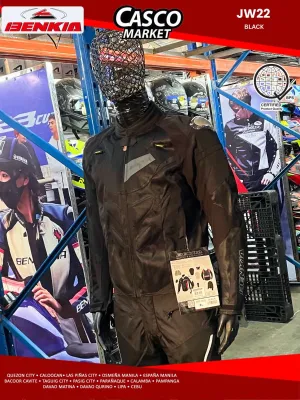
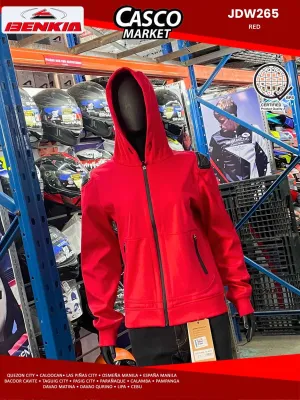
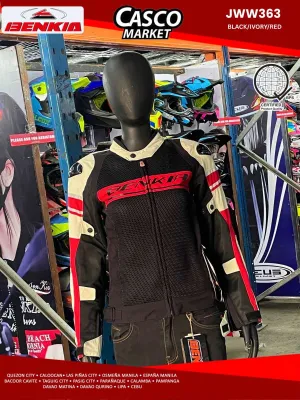
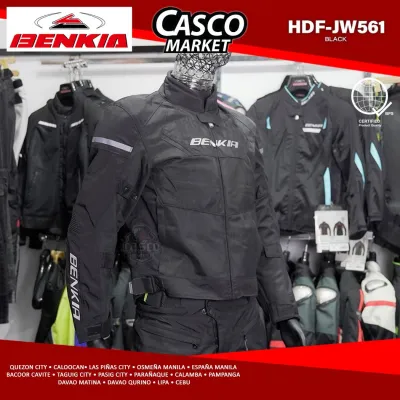
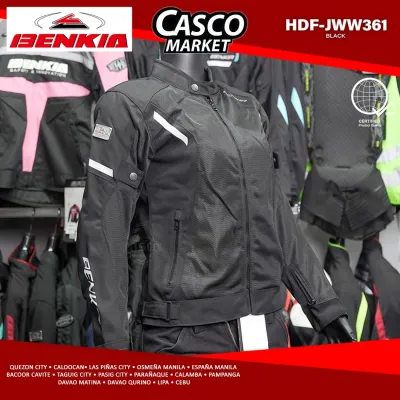
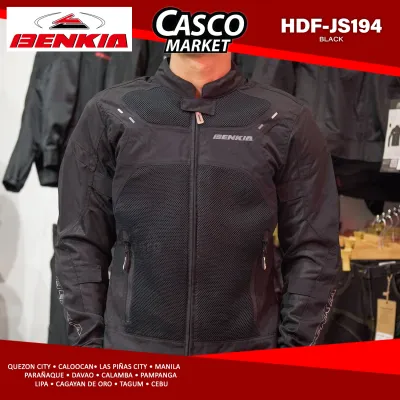
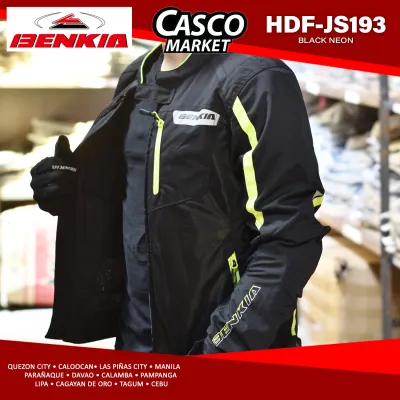
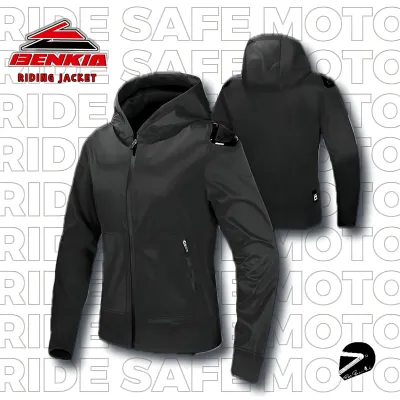
Prices are valid at publication and may change. Please refer to the product page for the latest price.
Key Ventilation Features to Look for in Benkia Jackets
To understand how a Benkia jacket will perform in hot weather, you must examine the specific physical features that facilitate passive and active airflow. Passive ventilation relies on materials that allow air to pass through naturally, even when you are moving at low speeds or idling at a red light. The most effective passive feature is high-density exterior 3D mesh, which is woven to create a porous surface that lets ambient air flow directly to your body while maintaining structural integrity.

Perforated textile or leather zones represent another common ventilation method. These zones feature thousands of tiny, laser-cut holes that allow heat to escape without completely sacrificing the abrasion resistance of solid panels. While perforated materials do not offer the unrestricted airflow of open mesh, they provide a more robust barrier against road friction in high-impact areas.
Active ventilation features, by contrast, require vehicle motion to function effectively. These include intake zippers on the chest, shoulders, or forearms, paired with exhaust vents on the upper back. As you ride, air is forced into the front intakes, circulates around your torso, and is pulled out through the rear exhaust vents by the low-pressure pocket created behind your body. This aerodynamic process, known as the venturi effect, is highly efficient at highway speeds but offers minimal relief during slow-moving city commutes.
Beyond the outer shell, the inner lining plays a critical role in how breathable a jacket feels. A high-quality summer jacket should feature a lightweight, moisture-wicking mesh inner lining that prevents the outer chassis from sticking to your skin when you sweat. If a jacket uses a solid, non-breathable polyester lining, it will trap heat and moisture against your body, regardless of how much mesh is on the exterior.
Finally, the overall cut and fit of the jacket directly influence its ventilation efficiency. A jacket that is too tight compresses the mesh panels against your body, closing the gaps in the fabric and trapping hot air next to your skin. Conversely, a jacket that is too loose can cause the integrated armor inserts to shift away from your elbows and shoulders during a fall, rendering them useless. When trying on a jacket, ensure there is enough clearance for air to circulate, but not so much that the protective elements lose their proper alignment.
Balancing Airflow and Safety in Humid Conditions
Selecting a riding jacket for a tropical environment always involves a direct trade-off between ventilation and physical protection. While a lightweight, full-mesh jacket offers the highest level of cooling comfort, synthetic mesh fibers generally provide lower abrasion resistance during a high-speed slide compared to thick leather or heavy-duty, high-denier textiles. Understanding this balance is vital for configuring your gear safely for local road conditions.
To ensure your jacket provides adequate impact protection, you must verify the safety credentials of its integrated armor. Look for impact protectors that carry official CE (Conformité Européenne) certification markings, which are typically stamped directly onto the shoulder, elbow, and back inserts. These markings, such as EN 1621-1 for limbs and EN 1621-2 for back protectors, indicate that the armor has undergone standardized testing to measure its ability to absorb and dissipate impact forces.
For riders seeking both cooling and robust protection, hybrid jacket designs offer an effective compromise. These jackets strategically place highly breathable mesh panels in low-impact, high-sweat zones—such as the chest, underarms, and central back—while utilizing heavy-duty, abrasion-resistant textiles like 600-denier (600D) polyester on high-impact zones like the shoulders, elbows, and outer arms. This configuration ensures that the areas most likely to contact the asphalt during a slide are heavily reinforced, while the rest of the jacket remains open to cooling breezes.
Before purchasing, riders should check the manufacturer’s detailed specifications for the denier rating of the textile chassis. A higher denier number indicates thicker, stronger threads that offer greater resistance to tearing and friction. For highway riding or fast-paced provincial touring, prioritizing a hybrid jacket with certified Level 2 armor and reinforced impact zones is highly recommended, even if it means sacrificing a small amount of airflow.
Matching the Jacket to Your Philippine Riding Scenario
Your daily riding environment should dictate the specific type of ventilation and jacket construction you choose. For instance, a rider navigating the daily stop-and-go gridlock of metropolitan areas like Manila or Cebu faces a very different thermal challenge than someone touring provincial highways. In slow, congested city traffic, wind velocity is minimal, making maximum passive ventilation—such as a dedicated, lightweight full-mesh jacket—the most practical choice to prevent overheating.
Conversely, if your routes primarily consist of open highways or provincial roads, such as the Marilaque Highway or expressway networks, you will experience sustained higher speeds. In these conditions, a full-mesh jacket can actually lead to rapid dehydration as the constant wind blast evaporates sweat too quickly. For highway speeds, a hybrid jacket with adjustable active ventilation zippers allows you to regulate the airflow, keeping you comfortable without exposing your skin to excessive wind fatigue.
The dual-season climate of the Philippines, characterized by a distinct dry season and a wet monsoon season (habagat), also demands careful consideration. A pure mesh jacket offers no protection against sudden tropical downpours, leaving you instantly soaked and cold once speeds pick up. To address this, look for versatile jacket models that include a removable waterproof or windproof inner liner.
These multi-layer configurations provide excellent adaptability. During hot, dry days, you can remove the liner completely to enjoy maximum mesh ventilation. If you encounter a sudden rainstorm or ride into cooler, high-altitude regions like Baguio or Tagaytay, you can quickly zip the inner liner back in to block water and wind. Evaluating your primary riding hours, typical weather patterns, and average speeds will help you determine whether a dedicated summer mesh jacket or a highly adaptable multi-season textile jacket is the better long-term investment.
Maintaining Your Riding Gear in High Humidity
The combination of sweat, road grime, and high relative humidity in the Philippines creates an ideal environment for bacteria, mold, and mildew to thrive. Without proper care, a riding jacket can quickly develop unpleasant odors, and the moisture can degrade the synthetic fibers, reflective strips, and protective coatings over time. Implementing a consistent, low-risk maintenance routine is essential to preserve both the hygiene and structural integrity of your gear.
After every ride, especially during the hot dry season, do not leave your jacket packed away in a gear bag or stored in a damp, unventilated closet. Instead, hang the jacket and any removable liners on a wide, sturdy hanger in a well-ventilated indoor area away from direct sunlight. Allowing the jacket to air-dry naturally prevents the buildup of mold and preserves the shape of the shoulder and elbow areas. Direct sunlight should be avoided, as prolonged exposure to ultraviolet (UV) rays can weaken synthetic fibers and fade high-visibility colors.
When the jacket requires washing, always begin by consulting the manufacturer’s care label stitched inside the garment. Before cleaning, remove all impact armor inserts from their internal pockets, as washing machines and detergents can degrade the protective foam or polyurethane materials. Hand-washing is generally the safest method for mesh and textile jackets; use cool water and a mild, neutral detergent.
Never use harsh chemical detergents, fabric softeners, or bleach, as these substances can break down the specialized coatings on waterproof liners, damage reflective piping, and weaken the delicate mesh weave. If using a washing machine, select a gentle cycle and place the jacket inside a mesh laundry bag to prevent the straps and zippers from snagging. Once washed, allow the jacket to drip-dry completely in a shaded, airy space before reinserting the armor. Store your clean, dry jacket in a cool, dry wardrobe to ensure it remains fresh and ready for your next ride.
Frequently Asked Questions (FAQ)
Is a full-mesh jacket safe for highway riding in the Philippines?
A full-mesh jacket provides excellent cooling but offers limited abrasion resistance compared to solid leather or heavy-duty textiles. For frequent highway riding at higher speeds, it is safer to choose a hybrid jacket that features high-denier textile panels (such as 600D polyester) on the shoulders and elbows, combined with mesh panels on the chest and back. Always verify that the jacket contains certified CE Level 1 or Level 2 impact armor in the elbows, shoulders, and back.
How do I prevent my riding jacket from smelling bad in the humidity?
To prevent odor buildup, wear a lightweight, moisture-wicking base layer under your jacket to absorb sweat before it reaches the jacket’s inner lining. After riding, immediately hang the jacket in a well-ventilated room to air-dry completely. Regularly remove and wash the inner mesh liner according to the manufacturer’s care instructions, and avoid storing damp gear in enclosed, unventilated spaces.
Community discussion
Share your experience or ask a question. Comments are reviewed before publication.