
Evaluating the safety of an EVO helmet for your child requires looking beyond striking graphics and brand popularity to verify official regulatory certifications. EVO kids’ helmets are safe for road use, provided they carry genuine, verified safety marks from the Bureau of Philippine Standards and are fitted correctly to your child’s unique physical proportions. Brand reputation alone cannot shield a young passenger from the forces of an impact; instead, safety relies on rigorous testing standards and proper physical fit.
Always consult the official EVO manufacturer instructions for specific sizing, adjustment, and maintenance guidelines before allowing a child to ride. If the helmet’s user manual is unavailable, or if you are unsure of the fit, consult a qualified motorcycle safety professional to verify that the gear is safe for road use.
Why Proper Safety Standards Matter for Kids' Helmets
Children are not simply smaller versions of adults, and their physiological structure presents unique vulnerabilities during a motorcycle ride. A child’s head-to-body ratio is significantly larger than an adult’s, while their neck muscles, ligaments, and cervical spine are still developing. This means that in the event of sudden braking or an accident, a child’s neck is subjected to intense rotational and whip-like forces. A helmet that is too heavy, poorly balanced, or uncertified can actually exacerbate these injuries rather than prevent them.
Products mentioned in this guide
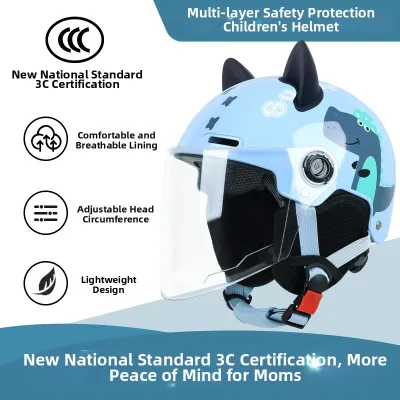
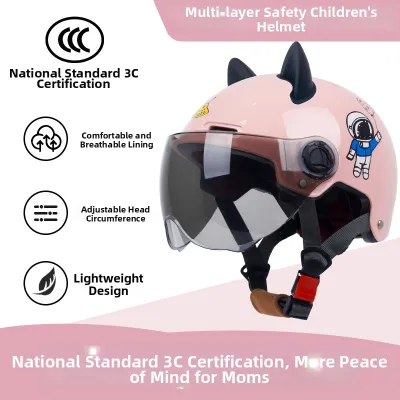
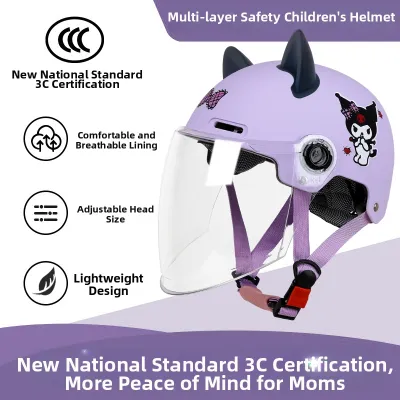
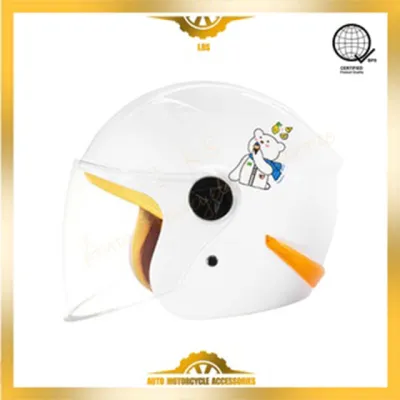
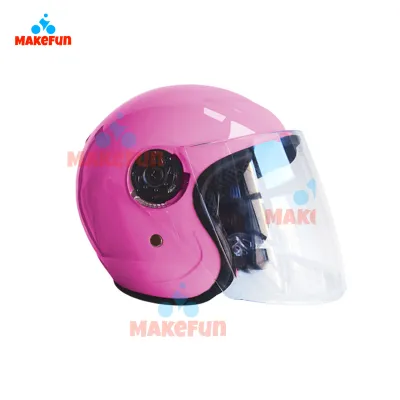
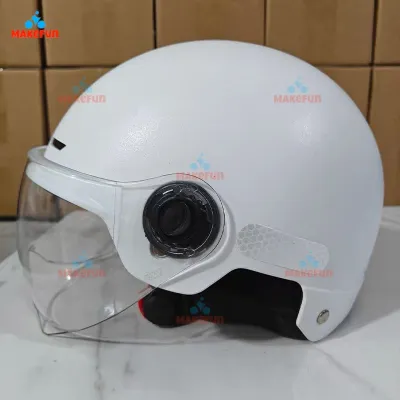
Prices are valid at publication and may change. Please refer to the product page for the latest price.
In the Philippines, the Department of Trade and Industry – Bureau of Philippine Standards (DTI-BPS) strictly regulates protective headgear to address these specific safety risks. Every motorcycle helmet sold or used on public roads must undergo stringent evaluation to ensure it can absorb impact energy without transferring destructive forces to the wearer’s skull and neck. Relying on aesthetic appeal or a popular logo is a dangerous gamble when it comes to a child’s safety.
Official regulatory compliance is the only objective proof that a helmet can perform under pressure. Without these certified benchmarks, there is no guarantee that the materials used in the helmet’s shell or energy-absorbing liner can withstand a collision. Ensuring your child wears a certified helmet is a fundamental safety boundary that every riding parent must respect.
Decoding the PS and ICC Certification Marks
To navigate the market safely, you must understand the two primary safety marks mandated by Philippine law: the Philippine Standard (PS) quality mark and the Import Commodity Clearance (ICC) sticker. The PS mark is issued to manufacturers whose production facilities are located within the Philippines and undergo regular audits to ensure consistent compliance with the Philippine National Standard (PNS) for protective helmets. This mark guarantees that the production line itself meets strict quality control guidelines.

Conversely, the ICC sticker is mandatory for imported helmets, which constitutes the majority of aftermarket riding gear sold locally, including many EVO products. This sticker proves that a specific batch of imported helmets has successfully passed rigorous physical tests conducted by the DTI-BPS or accredited testing laboratories. These evaluations are not mere formalities; they subject the helmet to extreme conditions to test its performance limits.
Key Testing Areas for Certification:
- Impact Attenuation: Measures how well the helmet absorbs and shock-absorbs heavy impacts.
- Penetration Resistance: Ensures sharp objects cannot easily pierce the outer shell.
- Retention System Strength: Verifies that the chin strap and buckle remain securely fastened under extreme pulling forces.
- Peripheral Vision: Guarantees the helmet design does not dangerously block the rider's field of view.
Unfortunately, the market is flooded with counterfeit stickers designed to make substandard helmets look compliant. Genuine DTI-BPS marks are typically holographic, highly detailed, and feature unique serial numbers that make them incredibly difficult to replicate or peel off intact. Knowing how to spot these differences is essential for protecting your child.
How to Verify Authentic ICC and PS Marks on EVO Helmets
Verifying the authenticity of the safety marks on an EVO kids’ helmet requires a systematic physical inspection before you allow your child to wear it on the road. First, locate the ICC or PS sticker, which is typically affixed to the lower rear or side of the outer helmet shell. It should be clean, clearly printed, and not covered by aftermarket decals or decorative paint.
When you inspect the sticker closely, look for the characteristic holographic sheen that shifts color when tilted under direct light. A genuine sticker is designed with tamper-evident adhesive; if someone attempts to peel it off to transfer it to an uncertified helmet, the sticker will tear, delaminate, or leave a distinct residue behind. If a sticker looks like a simple paper printout or peels off easily in one piece, it is likely counterfeit.
Next, look past the outer shell and inspect the interior of the helmet. Peel back the comfort padding to find the permanent manufacturer’s label stitched or glued directly to the EPS liner or the inner fabric. This label must display critical tracking information, including the manufacturer’s name, the specific model designation, the manufacturing date, the helmet size in centimeters, and references to the safety standards it meets.
To minimize the risk of purchasing a counterfeit product, always buy from authorized EVO dealers, official brand stores, or established physical motorcycle gear shops in the Philippines. Avoid buying from unverified online listings or informal roadside vendors who cannot provide proof of an official distribution agreement. If you are ever in doubt about a sticker’s serial number, you can cross-reference it by contacting the DTI-BPS consumer protection hotline to confirm the batch clearance.
Essential Physical Safety Checks Beyond the Sticker
While official certification is non-negotiable, a sticker alone does not guarantee that a specific helmet is safe for your child. You must perform several physical checks to ensure the helmet suits their physical needs. Start by assessing the overall weight of the helmet. Even a certified helmet can be dangerously heavy for a child’s neck if it is not specifically engineered for youth riders. When your child puts the helmet on, observe their posture; if their head droops forward, tilts to the side, or if they complain of neck fatigue within a few minutes, the helmet is too heavy and should not be used.
Next, inspect the expanded polystyrene (EPS) liner, which is the dense foam layer beneath the fabric comfort padding. Remove the inner lining if it is detachable and examine the EPS foam for any signs of cracking, deep indentations, or uneven density, as any pre-existing structural damage will compromise its ability to absorb impact. If you notice any defects, do not use the helmet.
Testing the Retention and Fit:
- Strap Security: Ensure the chin strap is fully adjustable and fits snugly against the underside of the child's jaw without choking them.
- Buckle Integrity: The buckle, whether a double-D ring or a micrometric quick-release system, must lock securely and remain fastened when pulled firmly, yet remain easy for an adult to release in an emergency.
- The "Shake Test": Once the helmet is securely buckled, ask your child to gently shake their head from side to side and nod up and down. The helmet should move with their head without sliding down over their eyes or rotating independently.
- Cheek Pressure: The cheek pads should press gently against their cheeks, similar to a firm hug, without causing pain or pressure points.
Finally, check the visor and ventilation ports. The visor must offer clear, undistorted peripheral vision, and the ventilation channels must be fully functional to keep air flowing, which is crucial for preventing heat exhaustion and visor fogging in the hot, humid tropical climate of the Philippines. For maintenance, clean the helmet shell and visor only with mild soap and water as recommended by the manufacturer; harsh chemical cleaners can degrade the polycarbonate shell and EPS liner.
When to Retire or Replace Your Child's Helmet
Knowing when to take a helmet out of service is just as important as choosing the right one initially. The most critical rule of helmet safety is the post-impact replacement policy. If your child’s helmet is involved in any motorcycle crash, or if it is dropped from a significant height (such as off a table or a parked motorcycle onto concrete), it must be replaced immediately. Even if the outer plastic shell looks completely undamaged, the internal EPS liner is designed to compress upon impact to absorb energy. Once compressed, that specific section of foam loses its protective capability permanently.
Beyond physical accidents, natural material degradation requires periodic replacement. The materials that make up a helmet—including the outer shell resins, the EPS foam, and the internal adhesives—gradually degrade over time when exposed to intense UV sunlight, sweat, hair oils, and the high humidity levels common in the Philippines. As a general safety guideline, check the manufacturer’s manual and the manufacturing date on the inner label; most helmet manufacturers recommend replacing protective headgear every three to five years from the date of first use.
Lastly, keep a close eye on your child’s growth. Children grow rapidly, and a helmet that fit perfectly last year may now be dangerously tight. If the helmet leaves deep red marks on their forehead, causes headaches, or is difficult to put on, it is time to upgrade to a larger size. Conversely, never buy a helmet that is too large with the intention of letting your child “grow into” it, as a loose helmet can easily slip off or shift during an accident, leaving their head completely unprotected.
Frequently Asked Questions (FAQ)
Can a child safely wear a small adult helmet instead of a kids' model?
No, a child should never wear an adult helmet, even if it is an extra-small (XS) size. Adult helmets are engineered for adult physiology, meaning they utilize larger, heavier outer shells and thicker EPS liners designed to absorb the higher kinetic energy of an adult’s body weight. Placing this excessive weight on a child’s head puts immense strain on their delicate neck muscles and cervical spine, significantly increasing the risk of severe neck injuries during sudden stops or impacts. Kids’ specific helmets are constructed with smaller, lighter shells and internal geometry tailored to the unique proportions and physical limits of a developing child.
Is it legal to ride without a PS or ICC certified helmet in the Philippines?
No, riding a motorcycle without a certified helmet is strictly illegal under Republic Act No. 10054, also known as the Motorcycle Helmet Act of 2009. This law mandates that all motorcycle riders, including back-riders or pillion passengers of all ages, must wear a standard protective motorcycle helmet that bears the official PS or ICC mark. Operating a motorcycle with a child passenger who is wearing an uncertified helmet, a bicycle helmet, or no helmet at all is a direct traffic violation that carries heavy fines and potential driver’s license suspension. More importantly, it exposes your child to catastrophic safety risks on the road.
Community discussion
Share your experience or ask a question. Comments are reviewed before publication.