
Quick Diagnosis: Are Boots Motocross Right for Your Daily Ride?
If you are looking for the absolute peak of lower-leg protection, investing in high-quality boots motocross riders trust seems like a logical step. However, these highly specialized pieces of gear are designed for extreme off-road impacts, making them a double-edged sword for everyday riders. While they offer unmatched structural defense, they are often heavy, rigid, and completely unventilated—qualities that can turn a simple street ride into an uncomfortable chore.
To determine whether these boots are right for you, apply the “80% Rule” checklist. Ask yourself: does at least 80% of your riding take place on loose dirt, gravel, or dedicated off-road trails? If the answer is yes, then the rigid protection of a motocross boot is non-negotiable. If more than 80% of your time is spent on paved roads, highways, or navigating tight city streets, the extreme stiffness of these boots will likely hinder your control and comfort more than they protect you.
The fundamental trade-off of motocross footwear lies between maximum impact defense and daily usability. To prevent severe crush injuries and ankle hyperextension on the trail, these boots utilize thick plastic armor, steel-reinforced soles, and rigid ankle hinges. On a paved road, however, this same rigidity severely limits your ability to walk, traps heat in tropical climates, and reduces your tactile feel of the motorcycle’s controls.
Products mentioned in this guide
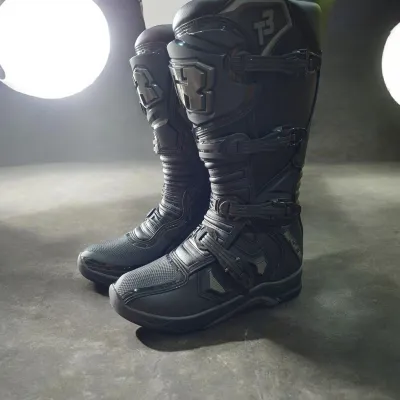
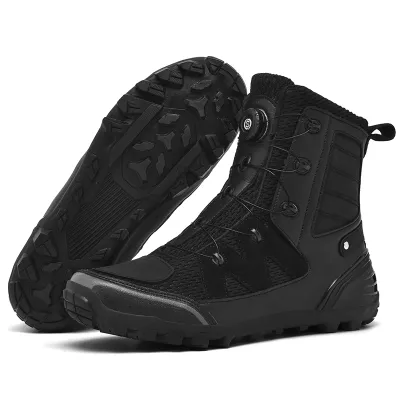
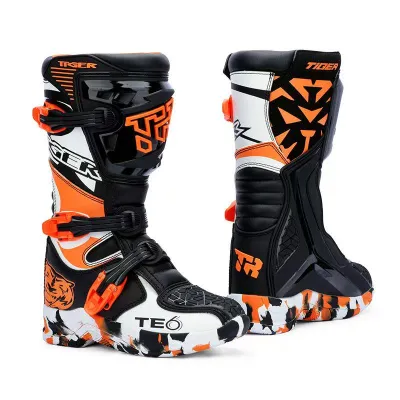
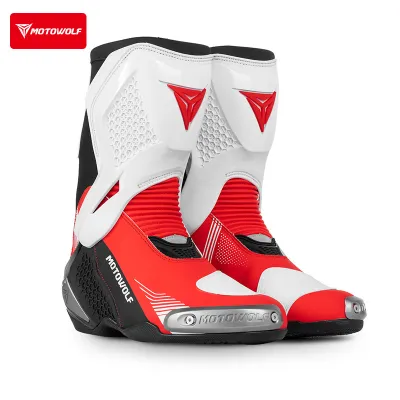
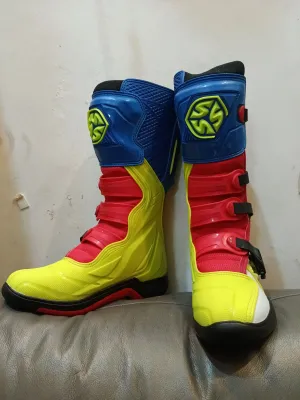
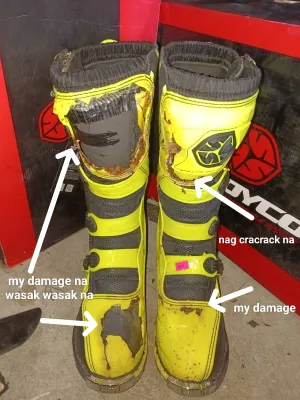
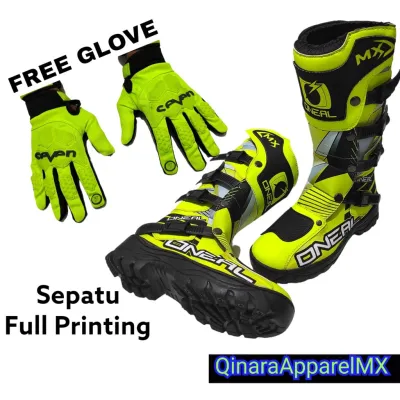
Prices are valid at publication and may change. Please refer to the product page for the latest price.
Daily City Commuting: Protection vs. Walking Comfort
Urban riding presents a unique set of hazards that might tempt you to wear the most heavy-duty gear available. In dense, stop-and-go city traffic, such as navigating the congested lanes of Metro Manila or Cebu, the risk of low-speed collisions, side-swipes, or having your foot pinned under a falling scooter is remarkably high. In these specific scenarios, the thick shin guards, reinforced toe boxes, and rigid lateral support of motocross boots provide an unmatched shield against crushing forces from other vehicles.

Despite this superior protection, the practical drawbacks of wearing motocross boots for a daily commute are significant. The flat, ultra-stiff soles are designed to rest securely on metal off-road footpegs, which makes walking on concrete sidewalks or office floors feel incredibly awkward, stiff, and loud. Furthermore, these boots feature minimal to no ventilation to keep out mud and water; in a hot, humid tropical environment, your feet will quickly sweat, leading to severe discomfort during your workday. There is also the aesthetic and convenience challenge of trying to fit bulky shin armor and thick buckles underneath standard office trousers or casual jeans.
The verdict for daily commuters is clear: unless your commute involves riding a dedicated dirt bike directly to an off-road park, motocross boots are highly impractical for the city. For daily office runs or casual city trips, you are far better off choosing reinforced urban riding sneakers or short, flexible street boots. These alternatives provide targeted ankle and heel protection while remaining comfortable enough to wear all day at your destination, allowing you to walk naturally and keep your feet cool.
Long-Distance Touring: Highway Ergonomics and Weather Limits
When embarking on long-distance highway tours, your physical comfort directly impacts your safety. Spending hours in the saddle requires gear that supports a natural riding posture without causing premature fatigue. Because motocross boots are engineered for standing on footpegs rather than sitting for extended periods, their rigid construction can quickly become a liability on long highway stretches. The thick, unyielding sole limits your ankle’s range of motion, making it difficult to maintain light, precise pressure on the footpegs and reducing your overall ergonomics.
This lack of flexibility also compromises your control over the motorcycle’s vital inputs. Shifting gears and operating the rear brake pedal require subtle ankle articulation, which is heavily restricted by the stiff chassis of a motocross boot. Over hundreds of kilometers, you may find yourself having to lift your entire leg to shift gears or press the brake, which slows down your reaction times and increases muscle fatigue in your thighs and hips. Additionally, the lack of a curved sole makes walking around at highway rest stops or tourist destinations an exhausting endeavor.
Weather protection is another critical limitation of traditional motocross boots during long tours. Most off-road boots are designed to shed water temporarily but do not feature breathable, waterproof membranes like Gore-Tex or proprietary liners. During sudden tropical downpours or when riding through damp, high-altitude mountain passes, water will inevitably seep through the seams and buckle areas, leaving you with heavy, waterlogged boots that can take days to dry. For long-distance touring, dedicated adventure-touring or street-touring boots—which feature flexible soles, built-in waterproof membranes, and adjustable calf closures—are a much safer, drier, and more ergonomic investment.
Dedicated Off-Road: When Maximum Protection is Non-Negotiable
When you leave the pavement behind, the riding environment changes drastically, making maximum lower-limb protection absolutely non-negotiable. Off-road riding exposes your feet and legs to severe hazards, including flying rocks kicked up by other bikes, hidden tree roots, deep ruts, and the constant threat of the motorcycle landing on your leg during a fall. Without the structural integrity of a dedicated motocross boot, a minor tip-over on a rocky trail can easily result in a fractured ankle or a crushed foot.
To ensure you are getting the necessary protection, always verify the technical specifications and product labels of the boots before purchasing. Look for models featuring a mechanical, hinged ankle system that allows natural forward and backward flexing while completely blocking dangerous lateral twisting and hyperextension. The sole must contain a built-in steel or composite shank to prevent the boot from folding in half under high impact, and the toe box and heel cup should be reinforced with heavy-duty, impact-resistant polyurethane. Secure, adjustable cam-lock buckles are also essential to keep the boot firmly clamped to your leg, even under extreme stress.
The fit of an off-road boot must be exceptionally snug and locked-in to provide the necessary control over your motorcycle. When standing on the pegs, your heel should not lift inside the boot, and your ankle should feel completely supported with zero side-to-side play. While these boots require a break-in period to allow the internal padding to mold to your foot shape, this process should never compromise the outer plastic shell’s structural rigidity. If a boot feels soft or highly flexible right out of the box, it will not provide the necessary defense against high-velocity trail impacts.
The final verdict for off-road enthusiasts is absolute: if your riding involves trails, enduro tracks, motocross courses, or loose gravel paths, dedicated motocross boots are mandatory safety gear. Attempting to ride off-road in soft street boots or hiking shoes is an open invitation to severe, career-ending lower-leg injuries.
The Mixed Rider: When to Choose Adventure Boots Instead
For riders who do not fit neatly into a single category, choosing the right footwear requires a careful balancing act. The “mixed rider” profile typically includes dual-sport and adventure motorcycle owners who use their bikes for weekday highway commuting but spend their weekends exploring rugged mountain trails and unpaved provincial roads. If you fit this description, wearing a rigid motocross boot on the highway will feel miserable, while wearing a soft street boot on a rocky trail is highly dangerous.
Fortunately, the motorcycle gear market offers an excellent compromise in the form of adventure (ADV) or dual-sport boots. These hybrid boots are specifically designed to bridge the gap between street comfort and off-road protection. They typically feature robust ankle armor, plastic shin guards, and reinforced soles to handle moderate trail impacts, but they incorporate more flexible midsoles and treaded rubber outsoles that allow you to walk comfortably. Furthermore, most high-quality adventure boots are equipped with integrated waterproof membranes, making them highly resilient against unpredictable weather and deep puddle crossings.
When deciding whether a single pair of ADV boots is sufficient, evaluate the intensity of your off-road riding. If your weekend adventures consist of well-maintained gravel roads, light dirt paths, and scenic fire trails, a quality pair of adventure boots will serve you perfectly as an all-in-one solution. However, if you plan to tackle steep, rocky single-tracks, deep mud, or high-speed jumps, the flexible nature of an ADV boot will not provide enough crush protection. In that case, the safest approach is to invest in two separate pairs: a comfortable, waterproof street boot for your daily commute, and a rugged, heavily armored motocross boot reserved strictly for your dedicated dirt sessions.
Frequently Asked Questions (FAQ)
Can I wear motocross boots on a street motorcycle?
While it is physically possible to wear motocross boots on a street motorcycle, doing so introduces significant ergonomic compromises that can affect your riding safety. The thick, rigid soles and stiff ankle construction greatly reduce your tactile feedback, making it difficult to feel the rear brake pedal or the gear shifter. This lack of sensory input can lead to accidental rear-wheel lockups or missed gear changes, both of which are highly dangerous in street traffic. Additionally, the bulkiness of the toe box may make it difficult to slip your foot underneath the gear lever of a standard street bike without adjusting the lever height.
How should motocross boots fit around the calf and ankle?
A proper motocross boot must fit snugly and securely around both your ankle and calf to prevent the boot from rotating or slipping off during a high-speed crash. When trying on boots, ensure there is minimal heel lift when you walk or mimic a standing riding position. The calf area should have adjustable straps or buckles that allow you to achieve a tight seal, whether you choose to tuck your riding pants inside the boot or wear over-the-boot style pants. Always check the manufacturer’s sizing guide and ensure there are no painful pressure points, especially around the ankle bones, while maintaining a firm, locked-in feel.
How do I clean and maintain motocross boots after a muddy ride?
To extend the lifespan of your boots and maintain their protective qualities, proper post-ride care is essential. Start by removing the internal insoles and shaking out any trapped dirt or debris. Use a soft-bristled brush to gently scrub away dried mud and grime from the plastic panels, buckles, and soles. Wipe down the exterior surfaces with a damp microfiber cloth; avoid using harsh chemical solvents or high-pressure washers, which can damage the synthetic leather materials and strip away necessary lubricants from mechanical hinges. Finally, allow the boots to air dry completely in a well-ventilated indoor area, keeping them away from direct sunlight, heaters, or open flames, which can warp the plastic and dry out the adhesives. Regularly inspect the pivot points, buckles, and straps for any signs of wear or debris buildup to ensure they function correctly on your next ride.
Community discussion
Share your experience or ask a question. Comments are reviewed before publication.