
If you are planning to upgrade your motorcycle’s exhaust system, you must understand the legal boundaries established by Philippine traffic laws. Installing a loud aftermarket exhaust, colloquially known in the local riding community as a “gala pipe,” is generally illegal on public roads if it exceeds national noise limits or lacks proper muffling components. While these modifications are popular among enthusiasts seeking a more aggressive sound, they frequently lead to heavy fines, roadside apprehensions, and failed vehicle inspections.
It is crucial to distinguish between your motorcycle’s brand and the aftermarket parts you choose to install. For instance, Rusi motorcycles are fully street-legal and compliant with all local regulations when equipped with their original, factory-installed mufflers. However, replacing the stock system with a non-compliant rusi gala pipe or any open-spec exhaust alters the vehicle’s legal status and immediately exposes you to regulatory penalties.
The Land Transportation Office (LTO) and local government units maintain strict guidelines regarding vehicle modifications. Any exhaust system that bypasses standard sound-dampening baffles, lacks a functional silencer, or alters the original emission control design without official certification is considered unauthorized. Before purchasing or installing any aftermarket exhaust, you must verify its compliance with both national environmental laws and local city ordinances.
Products mentioned in this guide
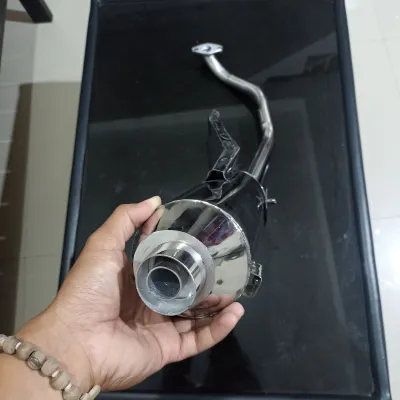
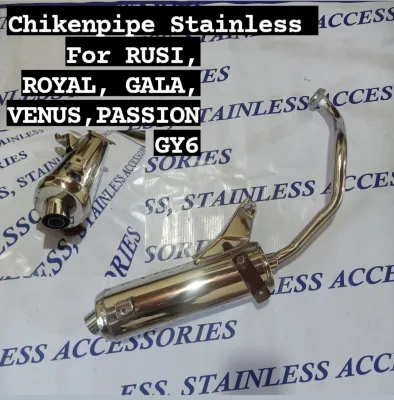
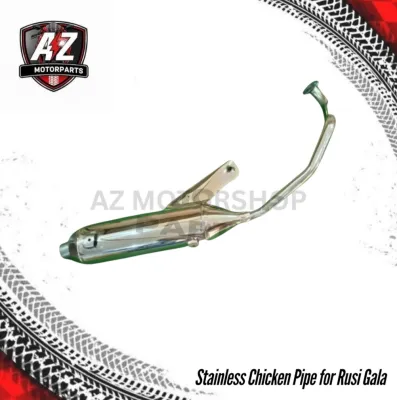
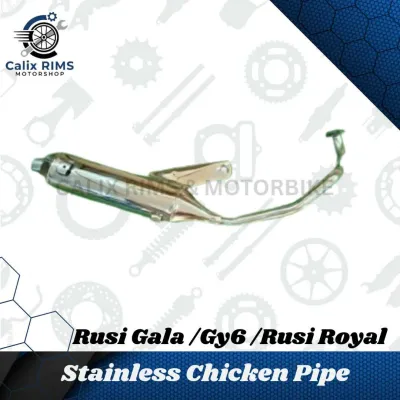
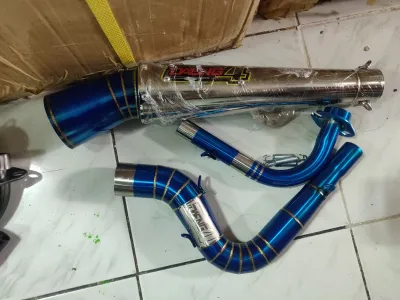
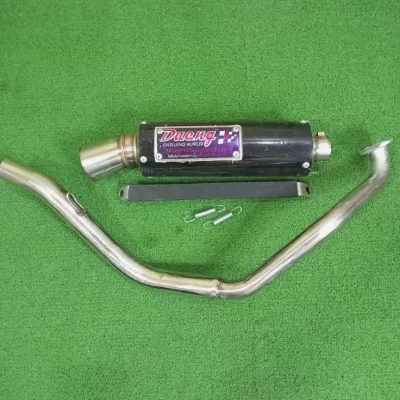
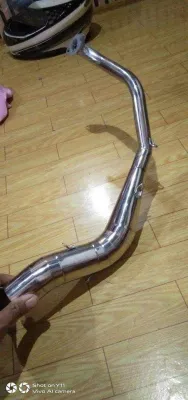
Prices are valid at publication and may change. Please refer to the product page for the latest price.
What Is a "Gala Pipe" in Motorcycle Culture?
In the vibrant motorcycle culture of the Philippines, the term “gala pipe” or “gala” has become synonymous with open-spec, straight-through, or heavily modified exhaust systems. These pipes are specifically designed to maximize exhaust gas flow and produce a loud, high-decibel, and crackling sound. Many riders associate this aggressive exhaust note with sportier performance, leading to its popularity among small-displacement underbone and scooter owners.
Unlike standard factory mufflers, which utilize complex internal chambers, baffles, and fiberglass packing to dampen sound waves, a gala pipe typically features a straight, unobstructed tube. This design allows exhaust gases and sound waves to exit the engine with minimal resistance. While this can theoretically reduce exhaust backpressure, it also releases raw, unmuffled engine noise directly into the surrounding environment.
The term “gala” itself often refers to the practice of cruising around or traveling, implying that these pipes are meant for show or recreational riding. However, because they lack internal sound-reduction components like a dedicated decibel killer (dB killer) or silencer, they are inherently louder than standard street-legal exhausts. This lack of muffling capability is the primary reason why these systems face intense scrutiny from traffic law enforcement agencies.
Philippine Regulations on Motorcycle Exhausts and Noise Pollution
The legal framework governing motorcycle exhaust systems in the Philippines is established through a combination of national laws, administrative orders, and local ordinances. The foundational law is Republic Act No. 4136, also known as the Land Transportation and Traffic Code. Section 34(j) of this act explicitly mandates that every motor vehicle must be equipped with a muffler to prevent unnecessary, unusual, or excessive noise.

To implement these statutory requirements, the LTO enforces Department Order No. 2010-32 and Joint Administrative Order (JAO) No. 2014-01. These regulations prohibit any modification that alters the original manufacturer specifications of a vehicle without proper authorization. Under these rules, installing an aftermarket exhaust that significantly increases noise output or bypasses emission control systems is classified as an illegal modification.
Environmental standards are set by the Department of Environment and Natural Resources (DENR) under Presidential Decree No. 1152, the Philippine Environmental Code. The DENR establishes maximum allowable decibel limits for motor vehicles to combat noise pollution in urban areas. While national guidelines historically reference a maximum limit of 99 decibels (dB) measured at a specific distance and engine speed, riders must remain aware that enforcement methods and exact testing parameters can vary.
In addition to national regulations, local government units (LGUs) across the country have enacted their own anti-muffler ordinances. Cities within Metro Manila, such as Quezon City, Manila, and Pasig, as well as major provincial cities, actively enforce strict local noise limits. These local ordinances often set much lower decibel thresholds, sometimes restricting motorcycle noise to 80 or 85 dB in residential zones, and authorize local traffic enforcers to conduct targeted operations.
The Metropolitan Manila Development Authority (MMDA) and local police forces frequently set up roadside checkpoints to monitor compliance. During these operations, enforcers utilize sound level meters (decibel meters) to test passing motorcycles. If your exhaust system fails to meet the specific criteria established by the local government or the LTO, you will face immediate citation and potential vehicle impoundment.
Legal Risks and Penalties for Using a Rusi Gala Pipe
Operating a motorcycle with an illegal rusi gala pipe or any non-compliant exhaust system carries severe consequences that can disrupt your daily commute and strain your finances. The most immediate risk is roadside apprehension by LTO officers, the Philippine National Police Highway Patrol Group (PNP-HPG), or municipal traffic enforcers. These law enforcement agencies conduct regular anti-noise operations, especially along major highways and popular riding routes.
Under the current LTO fine matrix, specifically JAO 2014-01, the penalty for driving a vehicle with an unauthorized modification or a defective muffler starts at a substantial ₱5,000. For many riders, this fine represents a significant financial burden. Furthermore, local ordinances may impose additional fines, community service, or require the immediate confiscation of the non-compliant exhaust part before the motorcycle can be released.
In many cases, traffic enforcers will impound your motorcycle if you are caught riding with an open exhaust. To retrieve your vehicle, you must not only pay the required fines but also present your motorcycle for a reinspection with the original stock exhaust reinstalled. This process involves additional costs for towing, storage, and purchasing a replacement stock pipe if you no longer have the original one.
Another major obstacle is the annual registration renewal process at the LTO. All motor vehicles must undergo inspection through the Motor Vehicle Inspection System (MVIS) or an authorized Private Motor Vehicle Inspection Center (PMVIC). A motorcycle equipped with an open gala pipe will fail both the visual inspection and the sound level test, preventing you from renewing your registration and legally operating your bike.
How to Keep Your Motorcycle Exhaust Street-Legal
Fortunately, you can enjoy riding your motorcycle while remaining fully compliant with Philippine laws. The most reliable way to avoid legal trouble is to retain your motorcycle’s stock exhaust system. Original factory exhausts are precision-engineered to balance engine performance, fuel efficiency, emission controls, and noise reduction, ensuring hassle-free travel through any checkpoint or inspection center.
If you decide to purchase an aftermarket exhaust system, you must select certified, high-quality products from reputable manufacturers. Look for exhaust pipes that are specifically designed for your motorcycle model and include a removable, high-quality decibel killer (dB killer) or baffle. Ensure the product documentation explicitly states that it complies with standard noise regulations when the silencer is properly installed.
Before hitting the road with a new exhaust, you should actively monitor its noise output. You can perform a preliminary test using a digital decibel meter or a calibrated mobile application in an open, quiet environment. Position the meter at a 45-degree angle, approximately 0.5 meters away from the exhaust outlet, and check the decibel level at idle and at half of your engine’s rated RPM. If the reading exceeds legal limits, you must reinstall or upgrade the silencer.
Always prioritize professional installation when modifying any part of your motorcycle’s exhaust system. Incorrect mounting can lead to exhaust leaks, which not only increase noise levels but can also damage engine valves and affect fuel sensor readings. A qualified mechanic will ensure that all gaskets, brackets, and sensors are properly aligned and torqued according to your vehicle manufacturer’s specifications.
Finally, practicing responsible riding habits is essential for avoiding complaints and maintaining community harmony. Avoid excessive or unnecessary engine revving, particularly when traveling through quiet residential areas, school zones, hospital surroundings, or during late-night hours. Respecting your neighbors and fellow road users reduces the likelihood of barangay-level complaints and targeted local enforcement operations.
Frequently Asked Questions (FAQ)
Can I use a loud exhaust if I only ride on weekends or outside the city?
National traffic laws and environmental regulations in the Philippines apply universally to all public roads, highways, and streets. There are no legal exemptions for weekend riding, holiday travel, or rural areas. LTO enforcers, PNP-HPG units, and local barangay officials maintain the authority to apprehend riders with non-compliant exhaust systems regardless of the location, day of the week, or time of day.
Will my Rusi motorcycle warranty be voided if I install a gala pipe?
Yes, installing an aftermarket gala pipe or any unauthorized exhaust modification will almost certainly void your manufacturer’s warranty. Original vehicle warranties typically cover defects in materials and workmanship under standard operating conditions. Modifying the exhaust system alters engine backpressure, fuel-to-air ratios, and operating temperatures, which can lead to premature wear or severe engine damage that Rusi’s authorized service centers will not cover. Always consult your official warranty booklet or contact an authorized dealer before making any mechanical modifications.
Community discussion
Share your experience or ask a question. Comments are reviewed before publication.