
Selecting the correct automatic transmission fluid is one of the most critical maintenance decisions you can make for your vehicle. Automatic transmissions rely on fluid not just for lubrication, but also as a hydraulic medium to facilitate gear shifts and as a coolant to manage extreme internal heat. For many vehicle owners, especially those driving models from major Asian manufacturers, the owner’s manual will specify a fluid standard known as ATF SP3.
In tropical climates like the Philippines, where high humidity, intense heat, and dense stop-and-go traffic are daily realities, transmission fluid is subjected to severe thermal stress. Using a fluid that does not meet the exact engineering requirements of your gearbox can lead to poor shifting performance, accelerated wear, and expensive repairs. Understanding what the ATF SP3 specification means and how to verify if your vehicle requires it is essential for protecting your transmission and ensuring a smooth drive.
Understanding the ATF SP3 Specification
ATF SP3 is a specific performance standard originally developed for automatic transmissions used by certain Asian vehicle manufacturers, most notably Mitsubishi, Hyundai, and Kia. It was formulated to address the unique design characteristics of these transmissions, which require precise friction control to manage gear transitions smoothly.
Products mentioned in this guide
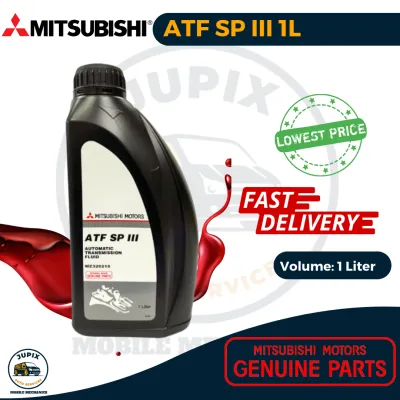
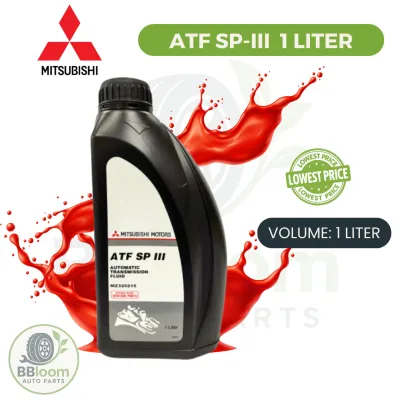
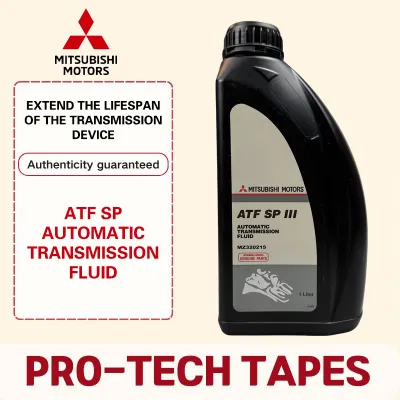
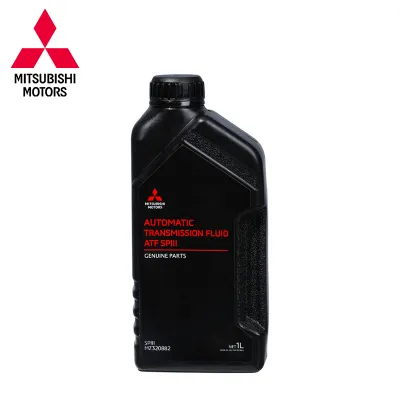
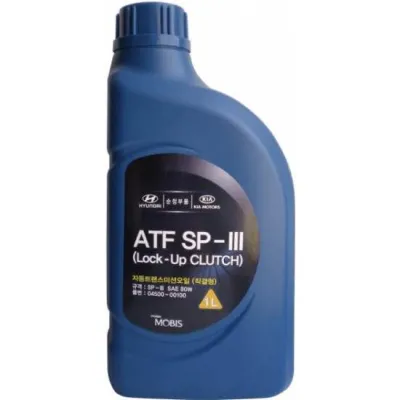
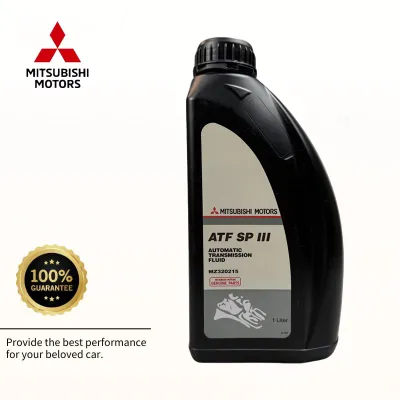
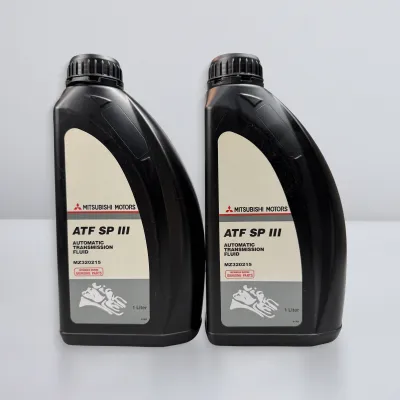
Prices are valid at publication and may change. Please refer to the product page for the latest price.
It is important to understand that “SP3” is a performance specification rather than a single brand or a proprietary, universal formula. This means that multiple lubricant manufacturers produce fluids designed to meet the SP3 standard. When shopping for transmission fluid, you will find various aftermarket options that list SP3 compatibility on their labels.
The key performance characteristics of an SP3 fluid include specialized friction modifiers and high oxidation stability. The friction modifiers ensure that the internal clutches grip and release with the exact amount of slip intended by the vehicle’s engineers. Meanwhile, oxidation stability prevents the fluid from breaking down, thickening, or forming harmful sludge when subjected to continuous heat and pressure.
Key Viscosity and Performance Characteristics
The viscosity profile of a transmission fluid determines how easily it flows at different temperatures, which directly impacts both cold-start protection and high-temperature durability. In the Philippines, where ambient temperatures remain high year-round, the fluid must maintain sufficient thickness, or viscosity, to prevent metal-on-metal contact inside the gearbox during long drives or heavy traffic.

Conversely, even in a warm climate, the fluid must flow quickly upon startup to protect vital components before the transmission reaches its normal operating temperature. ATF SP3 is engineered to provide a stable viscosity index, meaning its thickness remains relatively consistent across a wide range of operating conditions.
Another critical characteristic of SP3 fluids is their anti-shudder performance. Modern automatic transmissions utilize slip-controlled torque converter clutches to improve fuel efficiency. If the fluid lacks the necessary friction durability, these clutches can slip unevenly, causing a physical vibration or “shudder” that drivers can feel through the vehicle.
Because exact chemical compositions and numerical viscosity values can vary slightly between different lubricant brands, you should always verify these details. Check the specific product’s technical data sheet and compare it with the requirements outlined in your vehicle’s documentation to ensure a proper match.
How to Determine If Your Vehicle Requires ATF SP3
Determining whether your vehicle requires ATF SP3 should never involve guesswork or assumptions. The most reliable method is to consult your vehicle’s owner’s manual. Navigate to the index and look for sections labeled “Capacities and Specifications,” “Recommended Fluids,” or “Scheduled Maintenance.” This section will explicitly state the required transmission fluid specification for your exact engine and transmission combination.
In addition to the manual, you can often find physical indicators directly on the vehicle. Many manufacturers stamp the required fluid type onto the transmission dipstick handle or print it on the transmission fluid filler cap. Locate the dipstick under the hood, wipe it clean with a lint-free cloth, and inspect the metal or plastic handle for any embossed lettering.
It is highly risky to assume compatibility based solely on the vehicle’s make or model year. For instance, a manufacturer might specify ATF SP3 for a vehicle built in the mid-2000s, but transition to a lower-viscosity fluid like SP4 for a newer generation of the same model to meet stricter fuel economy standards. These fluids are often not backward-compatible.
If your owner’s manual is missing, or if the markings on the dipstick are worn away and unreadable, do not attempt to add fluid. Operating a transmission with the wrong fluid can cause immediate damage. Stop and consult a qualified mechanic or an authorized dealership to verify the correct specification using your vehicle’s Vehicle Identification Number (VIN).
Risks of Using the Incorrect Transmission Fluid
Using an incorrect or incompatible transmission fluid can lead to severe mechanical issues that compromise both safety and vehicle longevity. One of the first symptoms of a fluid mismatch is poor shift quality. You may experience harsh shifting, where the gears engage with a sudden jerk, or slipping, where the engine revs up but the vehicle fails to accelerate promptly.
These symptoms occur because the friction modifiers in the incorrect fluid do not match the design of the transmission’s internal clutch packs. Over time, this friction mismatch causes excessive heat and accelerated wear on the clutch friction material, which can eventually lead to complete transmission failure.
Furthermore, using the wrong fluid can cause the torque converter clutch to engage roughly, resulting in a persistent shuddering sensation during acceleration. In severe cases, incompatible fluids can react chemically with the transmission’s internal seals, causing them to shrink, harden, or leak.
If you suspect that the wrong fluid has been added to your transmission, a simple top-up will not resolve the issue. Mixing incompatible fluids can cause foaming and rapid fluid degradation. A professional assessment is required, and a qualified technician will typically need to perform a complete fluid exchange to thoroughly flush out the incorrect fluid and protect the internal components from further damage, preventing repairs that could cost tens of thousands of pesos ₱.
Frequently Asked Questions (FAQ)
Can I mix ATF SP3 with other transmission fluids?
Mixing ATF SP3 with other transmission fluid specifications is generally not recommended. Each transmission fluid standard is formulated with a highly specific balance of chemical additives, friction modifiers, and base oils designed for particular clutch materials and operating pressures.
When you mix different specifications, you risk disrupting this chemical balance. This can lead to reduced lubrication efficiency, accelerated wear on internal components, and unpredictable shifting behavior. If your transmission fluid level is low and you cannot source an SP3-compliant fluid immediately, it is safer to have the vehicle serviced by a professional who can perform a complete fluid exchange rather than topping up with an incompatible fluid.
Is ATF SP3 the same as Dexron or Mercon?
No, ATF SP3 is not the same as Dexron or Mercon. Dexron (primarily developed by General Motors) and Mercon (primarily developed by Ford) are distinct transmission fluid specifications with their own unique viscosity profiles, friction characteristics, and performance requirements.
Using a standard Dexron or Mercon fluid in a transmission that explicitly requires ATF SP3 can result in severe shifting issues, clutch slippage, and potential mechanical damage. Always read the product label carefully before purchasing to ensure that the fluid explicitly states compliance with the ATF SP3 specification.
Community discussion
Share your experience or ask a question. Comments are reviewed before publication.