
If you are preparing to service your vehicle’s automatic transmission, you may have encountered the term “ATF T4” (often written as ATF Type T-IV). This is a highly specific automatic transmission fluid standard originally developed for Toyota, Lexus, and Scion vehicles, as well as certain other makes utilizing Aisin-Warner transmissions. It is engineered to meet the exact frictional and thermal requirements of these gearboxes.
Using the correct transmission fluid is one of the most critical maintenance decisions you can make. In a tropical climate like the Philippines, where heavy traffic and high ambient temperatures accelerate transmission wear, choosing an incorrect fluid can lead to costly mechanical failures. This guide explains what the ATF T4 specification is, how to determine if your vehicle requires it, and the risks of using an incorrect alternative.
What Is the ATF T4 Specification?
The ATF T4 specification is a proprietary formulation designed primarily for slip-controlled lock-up automatic transmissions. Originally established by Toyota as “Type T-IV” (and codified under specifications like JWS 3309), this fluid is engineered to support the complex hydraulic and mechanical demands of traditional stepped automatic transmissions. It is not a generic, one-size-fits-all lubricant, but a highly targeted chemical solution.
Products mentioned in this guide
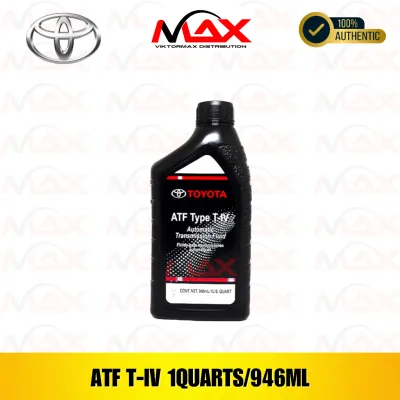
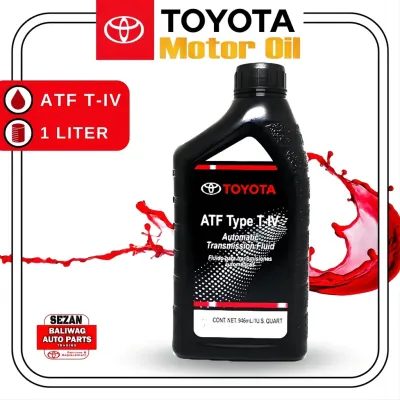
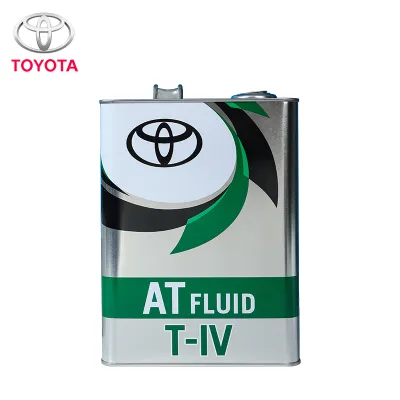
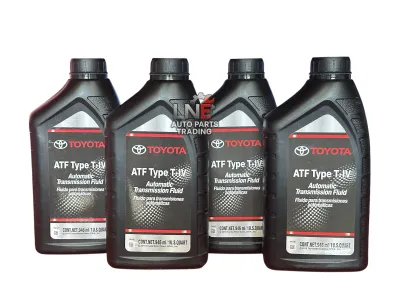
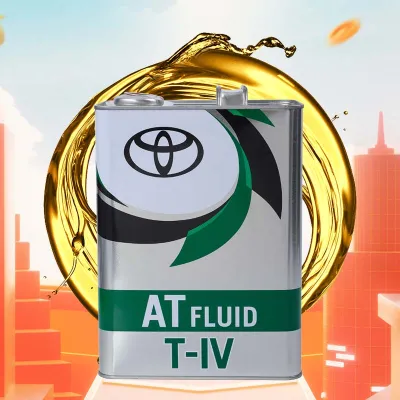
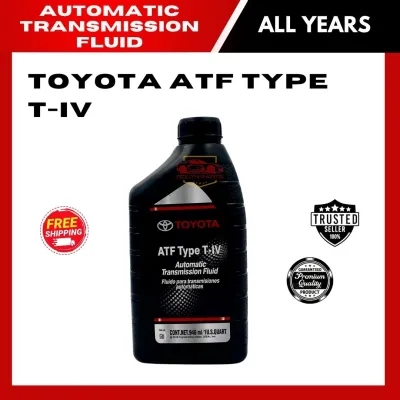
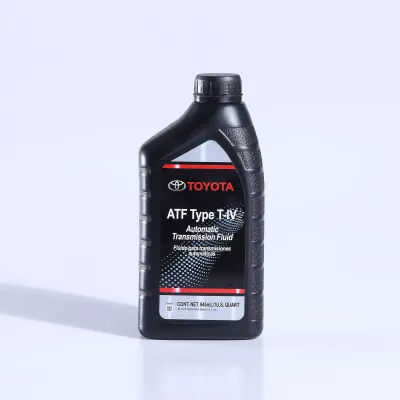
Prices are valid at publication and may change. Please refer to the product page for the latest price.
From an engineering standpoint, ATF T4 delivers precise friction characteristics. Automatic transmissions rely on internal clutch packs that must engage and disengage smoothly without slipping or shuddering. ATF T4 contains specific friction modifiers that ensure these clutches grab with the exact amount of force intended by the vehicle manufacturer.
Viscosity and thermal stability are also central to the T4 standard. The fluid must maintain a stable viscosity under extreme operating pressures and high temperatures to ensure the hydraulic control body can direct fluid accurately. Additionally, the additive package in ATF T4 provides critical anti-wear protection, anti-foaming properties, and heat dissipation, which are vital for preserving the longevity of the transmission’s internal components.
While many modern “multi-vehicle” or synthetic automatic transmission fluids claim to meet or exceed T4 standards, the baseline specification remains a distinct chemical profile. Some universal fluids may not replicate the exact frictional coefficient of a dedicated T4 fluid across all operating temperatures. Therefore, understanding whether your vehicle’s transmission was engineered specifically around this chemical profile is the first step toward proper maintenance.
How to Verify if Your Vehicle Needs ATF T4
Determining whether your vehicle requires ATF T4 is a straightforward process, but it requires careful verification. Before purchasing any fluid or performing maintenance, always check the applied product’s label and the treated item’s manufacturer instructions. If instructions conflict, the vehicle’s transmission is unidentified, or the use is not covered, stop and consult the manufacturer or a qualified professional.

To safely confirm your vehicle’s requirements, follow these verification steps:
Check the Owner’s Manual: The owner’s manual is the ultimate authority. Locate the “Capacities and Specifications” or “Maintenance” section to find the exact fluid designation, such as “Toyota Genuine ATF Type T-IV” or “JWS 3309.”
Inspect the Dipstick or Filler Cap: On vehicles equipped with a traditional transmission dipstick, the required fluid type is often stamped directly onto the metal blade or molded into the plastic handle.
Identify the Transmission Model: If the manual is missing, locate the transmission identification plate on the gearbox housing (common on Aisin-Warner units) and cross-reference it with official dealer documentation.
Avoid Assumptions: Never assume compatibility based solely on the vehicle’s make, model year, or engine size. Manufacturers frequently use different transmissions and fluid specifications across different trims or mid-generation production runs.
Risks of Using the Wrong Transmission Fluid
Automatic transmission fluids are highly specialized chemical compounds, and they are not interchangeable. Different specifications, such as Dexron, Mercon, CVT fluids, and ATF T4, feature distinct viscosity indexes, shear stabilities, and friction modification levels designed for entirely different mechanical architectures.
If you introduce a non-compliant fluid into a transmission designed for ATF T4, you will likely experience immediate operational issues. The mismatch in friction characteristics can cause the internal clutch packs to slip, leading to harsh shifting, delayed gear engagement, or a noticeable shudder when the torque converter lock-up clutch engages. Over time, this slippage generates excessive heat, which degrades the remaining fluid and accelerates the wear of the clutch friction materials.
A common and dangerous misconception among some car owners is that “all red fluids are the same.” The red color of automatic transmission fluid is simply a dye added by manufacturers to help identify leaks and distinguish it from engine oil or coolant. The color has absolutely no bearing on the chemical composition, viscosity, or friction properties of the fluid.
If you are considering a multi-vehicle fluid, do not rely on vague marketing phrases such as “recommended for Asian vehicles.” The product label must explicitly state compliance with the Toyota Type T-IV, JWS 3309, or ATF T4 specification. Without this explicit certification, the fluid may not provide the precise friction control required, putting your gearbox at risk of premature failure.
Purchasing and Replacing ATF T4
When you are ready to purchase ATF T4, your priority should be verifying the product’s authenticity and specification compliance. In the Philippines, the automotive aftermarket features a wide range of imported and locally distributed fluids, making careful shopping essential.
Label Verification: Always read the physical label on the back of the fluid bottle before buying. Look for explicit statements of compliance, such as “Meets or exceeds Toyota Type T-IV” or “Approved for JWS 3309 applications.” Avoid products that only feature generic claims without listing the specific standard on the packaging.
Sourcing Authentic Products: To avoid counterfeit, contaminated, or sub-standard fluids, purchase your transmission fluid from authorized brand dealerships, official online brand stores, or highly reputable physical auto supply shops. While unverified online marketplaces may offer lower prices, the risk of receiving counterfeit oil is high. In the Philippines, genuine ATF T4 or high-quality compliant equivalents generally range from ₱400 to ₱800 per liter. Spending slightly more on guaranteed authentic fluid is a minor investment compared to the cost of a transmission rebuild.
Service Procedures: Understand the difference between a simple “drain and refill” and a complete “fluid flush.” A drain and refill typically replaces only about one-third to one-half of the total fluid volume, as a significant portion remains trapped inside the torque converter and valve body. A flush uses specialized equipment to replace nearly all the fluid. Always follow your vehicle manufacturer’s recommended service intervals and specific procedures for your driving conditions.
Professional Assistance: Many modern vehicles do not feature a traditional transmission dipstick, requiring a sealed-system service procedure. These systems often require checking the fluid level at a highly specific transmission operating temperature using diagnostic scanning tools. If your vehicle lacks a dipstick, or if you are unsure of the correct safety protocols, lift points, or torque specifications, always have the service performed by a qualified mechanic.
Frequently Asked Questions (FAQ)
Can I mix ATF T4 with other transmission fluids?
You should strongly avoid mixing ATF T4 with other types of transmission fluids, even if they share a similar red appearance. Mixing different fluid specifications alters the carefully balanced chemistry and friction modifiers. This can lead to unpredictable shifting behavior, accelerated wear on clutch plates, and reduced thermal protection. If you are topping off your transmission and are unsure of the fluid currently inside, the safest course of action is to perform a complete drain and refill using verified ATF T4.
Is ATF T4 the same as CVT fluid?
No, ATF T4 and CVT (Continuously Variable Transmission) fluids are fundamentally different and are never interchangeable. Traditional automatic transmissions use planetary gear sets and wet clutch packs, which require the specific friction properties of ATF T4 to engage smoothly. CVTs, on the other hand, rely on metal belts or chains riding on variable pulleys, requiring specialized CVT fluids designed to prevent metal-on-metal slippage under extreme pressure. Using ATF T4 in a CVT, or CVT fluid in a traditional automatic, will cause rapid, catastrophic transmission failure.
Community discussion
Share your experience or ask a question. Comments are reviewed before publication.