
To keep your Kawasaki Barako 175 running reliably on Philippine roads, choosing the right replacement cylinder head requires careful evaluation of engine generation compatibility, casting material quality, and assembly completeness. As the workhorse of local transport—frequently subjected to heavy tricycle loads, stop-and-go traffic, and intense tropical heat—the Barako 175 demands an engine top-end that can withstand extreme thermal and mechanical stress. Selecting a replacement is not just about finding a part that matches the 175cc displacement; it is about verifying precise physical dimensions, choosing between original equipment manufacturer (OEM) and aftermarket options, and ensuring the internal valve components are built to last.
Quick Answer: Essential Checklist for Barako 175 Cylinder Heads
Before purchasing a replacement cylinder head, keep this practical checklist in mind to ensure you get a high-quality, compatible part:
- Verify Engine Code: Check the crankcase stamp (typically starting with BC175) to match the exact model generation (Barako I, II, or III).
- Determine Assembly Type: Decide if you need a bare cylinder head (casting only) or a complete assembly (includes pre-installed valves, springs, and seals).
- Inspect Metallurgy: Choose high-grade aluminum alloy castings with uniform cooling fins to ensure optimal heat dissipation in tropical climates.
- Check Machining Quality: Look for clean, smooth mating surfaces, precise thread paths for spark plugs and studs, and the absence of casting porosity.
- Select Sourcing Channels: Buy from reputable local dealers or highly rated online marketplace sellers with clear return policies and positive feedback from Filipino riders.
Visual inspection of machining quality and cooling fin uniformity is your first line of defense against poor-quality aftermarket parts. Taking the time to verify these details beforehand prevents costly installation delays and protects your engine from premature failure.
Products mentioned in this guide
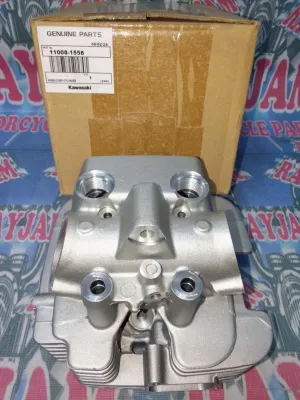
Prices are valid at publication and may change. Please refer to the product page for the latest price.
Verifying Engine Compatibility and Fitment
The Barako 175 has undergone several updates over its production lifespan in the Philippines. While the core engine design remains a robust single-cylinder four-stroke, slight variations exist between the original Barako I, the updated Barako II, and the newer Euro-compliant Barako III models. These updates often involve modifications to emission control systems, secondary air injection ports, or subtle changes in mounting configurations.

To avoid purchasing an incompatible part, locate the unique engine serial number stamped on the lower crankcase of your motorcycle. This code, along with the original equipment manufacturer (OEM) part number found in your official parts catalog, serves as the definitive reference point. Cross-referencing this data prevents the common mistake of buying a head designed for an older model that lacks the mounting points or ports required for newer emissions equipment.
Physical dimensions require meticulous verification before any purchase is finalized. Pay close attention to the cylinder stud bolt pattern, as even a millimeter of deviation will prevent the head from sliding onto the cylinder block. You must also verify the size and alignment of the oil feed passages, which are critical for delivering lubrication from the oil pump to the overhead camshaft and rocker arms.
Other key physical checkpoints include the camshaft bearing journal diameters and the spark plug thread specifications. Some aftermarket heads may use different spark plug thread pitches or lengths, which can cause installation issues or alter combustion chamber clearance. Additionally, check the intake and exhaust port angles and bolt spacings to ensure your existing carburetor manifold and exhaust pipe flange align perfectly without requiring custom fabrication.
Never assume that any generic “175cc” cylinder head will fit your Barako 175. The motorcycle market features numerous engines with similar displacements, but their internal architectures, valve angles, and stud layouts are completely different. Relying solely on a broad displacement label or a superficial visual match in online product listings frequently results in costly return shipping fees, project delays, or severe engine damage if a mismatched part is forced into place.
Evaluating Material Quality and Casting Integrity
Motorcycle cylinder heads are manufactured from aluminum alloys because of the material’s excellent thermal conductivity and lightweight properties. In the hot and humid climate of the Philippines, where a Barako 175 might pull a heavy sidecar under the midday sun, rapid heat dissipation is vital to prevent engine knocking, power loss, and premature component wear. However, simply knowing a head is made of aluminum is not enough; the quality of the casting process determines its ultimate durability.
When inspecting a cylinder head in person or evaluating high-resolution product photos, look closely for signs of casting porosity. Porosity manifests as tiny pinholes or air bubbles on the surface of the metal, which occur when gas becomes trapped in the molten alloy during manufacturing. These microscopic voids weaken the structural integrity of the head, creating potential failure points that can crack under the intense pressure and thermal cycling of daily operation.
Examine the cooling fins carefully, as they are the primary mechanism for keeping this air-cooled engine within safe operating temperatures. The fins should be uniform in thickness, perfectly straight, and free from chips, cracks, or casting flash (excess metal leftover from the mold). Damaged or poorly cast cooling fins restrict airflow across the head, leading to localized hot spots that can warp the cylinder head or damage the head gasket.
While some general guides mention water jackets for liquid-cooled engines, the Barako 175 is strictly air-cooled, making the outer cooling fins and internal oil passages your primary areas of concern. The flat mating surface where the cylinder head meets the head gasket is the most critical sealing area of the engine. Even a minor deviation from perfect flatness will allow combustion gases, compression, and engine oil to escape, resulting in a blown head gasket and lost engine performance.
To verify this flatness, place a machinist’s straight edge across the mating surface in multiple directions (diagonal, longitudinal, and transverse) and attempt to slide a feeler gauge beneath it. Refer to the manufacturer’s service manual for the maximum allowable warpage limit, which is typically extremely tight (often around 0.05 mm). Any part exceeding this limit must be rejected or professionally machined before installation.
Inspecting Key Specifications and Included Components
When shopping for a Barako 175 cylinder head, you will encounter two primary configurations: bare castings and complete assemblies. A bare cylinder head is simply the metal shell, devoid of any internal moving parts. Choosing a bare head means you must either transfer the valves, springs, retainers, keepers, and valve stem seals from your old head or purchase all of these components separately.
A complete cylinder head assembly comes pre-assembled with the valves, heavy-duty valve springs, spring retainers, valve keepers, and valve stem seals already installed. While a complete assembly is more expensive upfront, it saves significant time and reduces the risk of assembly errors during installation. For most daily commuters and tricycle operators, a complete assembly offers the most straightforward path to getting the motorcycle back on the road quickly.
If you opt for a complete assembly, perform a thorough inspection of the pre-installed components before mounting the head on your engine. Inspect the exposed portions of the valve stems for any signs of scoring, pitting, or corrosion, which can quickly ruin new valve stem seals and lead to oil consumption. Ensure the valve springs are seated squarely and show no signs of distortion or uneven coil spacing, as weak or damaged springs can cause valve float at high engine speeds.
If you decide to reuse your old valves in a new bare cylinder head, you must ensure they are properly prepped. Reusing valves is not a simple drop-in process; the valve faces and the new head’s valve seats must be hand-lapped using a specialized grinding compound to establish a perfect, gas-tight seal. Additionally, you must replace the valve stem seals with new, high-quality rubber seals to prevent engine oil from leaking down the guides into the combustion chamber, which causes blue exhaust smoke and carbon buildup.
For standard daily commuting and commercial tricycle use, always stick to OEM-specification combustion chamber volumes and port dimensions. While larger intake or exhaust ports can theoretically increase high-RPM horsepower, they often reduce low-end torque—the exact pulling power that a Barako 175 relies on to haul heavy loads. Maintaining stock specifications ensures the engine retains its signature fuel efficiency, easy starting characteristics, and reliable power delivery.
OEM vs. Aftermarket: Making the Right Choice
Original Equipment Manufacturer (OEM) cylinder heads, sourced directly from authorized Kawasaki parts distributors, represent the gold standard for quality and fitment. These parts are manufactured to the exact metallurgical specifications and dimensional tolerances established by the factory. When you buy an OEM head, you receive a part that is guaranteed to bolt on perfectly, dissipate heat efficiently, and deliver the same service life as the original component that came with your motorcycle.
The primary trade-off with OEM parts is their cost and availability. An OEM cylinder head for a Barako 175 generally sits in a higher price bracket, often ranging from ₱4,000 to over ₱8,000 depending on whether it is a bare casting or a complete assembly. Furthermore, finding OEM parts may require visiting authorized dealerships in urban centers or waiting for backordered parts to arrive, which can be highly inconvenient if your motorcycle is a primary source of daily income.
Aftermarket cylinder heads offer a highly accessible and budget-friendly alternative, typically priced between ₱1,500 and ₱3,500. These parts are widely stocked by local motorcycle spare parts shops (“tindahan ng piyesa”) and various online e-commerce platforms. While the lower price point is highly attractive, the quality of aftermarket parts can vary dramatically, requiring buyers to exercise a high level of scrutiny during the selection process.
To mitigate the risks associated with aftermarket parts, focus on established, recognizable brands that specialize in motorcycle engine components. Avoid unbranded or suspiciously cheap listings that lack clear manufacturer markings, as these are often made from lower-grade aluminum alloys prone to premature warping under high operating temperatures. Read verified customer reviews carefully, paying close attention to feedback regarding bolt hole alignment, thread durability, and long-term reliability on Barako 175 units used for commercial purposes.
If your Barako 175 is used as a commercial tricycle or a heavy-duty delivery vehicle where daily reliability is directly tied to your livelihood, investing in an OEM cylinder head is highly recommended for long-term peace of mind. However, if you are working within a strict budget and your motorcycle is used primarily for light personal commuting, a high-quality aftermarket head from a reputable brand can be a viable choice—provided you thoroughly inspect the casting, threads, and mating surfaces before installation.
Installation Safety and Professional Verification
Installing a cylinder head is a highly precise mechanical procedure that directly impacts the safety, performance, and lifespan of your motorcycle’s engine. This task involves critical steps such as aligning the timing chain, setting the correct valve clearances, and ensuring a perfect seal at the head gasket. Because the Barako 175 is an overhead cam (SOHC) engine, any mistake in timing alignment or bolt torquing can lead to catastrophic mechanical interference between the valves and the piston.
When performing the installation, you must consult the official Kawasaki Barako 175 service manual for the exact torque specifications and the recommended cross-pattern tightening sequence for the cylinder head bolts. Never attempt to tighten these bolts by feel or using generic torque values. Under-tightening can lead to compression leaks and blown head gaskets, while over-tightening can strip the threads in the aluminum crankcase or stretch the cylinder studs, leading to expensive repairs.
Unless you possess advanced mechanical skills, a calibrated torque wrench, and specialized engine tools, we strongly recommend having the cylinder head installed by a qualified motorcycle mechanic. A professional technician can verify that the valve lash (clearance) is adjusted perfectly to factory specifications, ensure the timing marks are aligned precisely, and perform a leak test to confirm the engine has optimal compression before you hit the road. This small investment in professional labor protects your new parts and ensures your safety during daily operation.
Frequently Asked Questions (FAQ)
Can I use a cylinder head from a different 175cc motorcycle on my Barako?
No, you cannot use a cylinder head from another 175cc motorcycle model on your Barako 175 unless it is explicitly confirmed as a compatible cross-reference part by the manufacturer. Even though multiple motorcycles might share a 175cc engine displacement, their internal designs are completely distinct. Differences in cylinder bore and stroke, valve angles, camshaft drive mechanisms, oil passage locations, and cylinder stud spacing mean that a head from a different model will not physically fit or function. Always verify compatibility using your specific Barako model year and the corresponding OEM part number to prevent engine damage.
How can I tell if my current cylinder head is warped or cracked?
You can identify a damaged cylinder head through several common engine symptoms and physical inspection methods. On an air-cooled engine like the Barako 175, key warning signs include persistent oil leaks around the head gasket area, a sudden loss of engine compression making the kickstarter easy to push down, and unusual ticking or popping noises indicating escaping combustion gases. To confirm physical damage once the head is removed, clean the mating surface thoroughly and place a machinist’s straight edge across it, checking for gaps with a feeler gauge. Hairline cracks, particularly around the spark plug threads or between the valve seats, can be detected using a spray-on dye penetrant kit or by taking the head to a professional machine shop for pressure testing.
Community discussion
Share your experience or ask a question. Comments are reviewed before publication.