
Choosing the right 70mai dash cam for your vehicle in the Philippines requires a clear understanding of how local road conditions impact consumer electronics. With intense tropical heat, dense urban traffic, and poorly lit provincial highways, a basic camera might fall short when you need reliable video evidence. To find the best model for your daily drive, you must evaluate key hardware specifications—such as power storage technology, resolution, and night-vision capabilities—and match them to your specific commuting routes.
Investing in a high-quality 70mai dash cam helps protect you against fraudulent insurance claims, road rage incidents, and unexpected collisions. However, because different models prioritize different features, identifying your primary driving environment is the first step toward making an informed purchase.
Identifying Your Route's Biggest Dash Cam Challenges
Daily driving in the Philippines presents a unique set of challenges that can quickly degrade or overwhelm low-end dashboard cameras. For many drivers, the daily commute involves parking in exposed outdoor areas under direct sunlight for hours, followed by crawling through slow, bumper-to-bumper urban traffic. Others frequently navigate unlit provincial highways or narrow, dark inner-city streets during late-night hours. Each of these scenarios demands specific hardware capabilities from your recording device.
Products mentioned in this guide
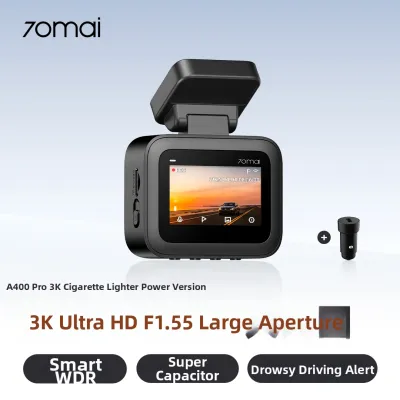
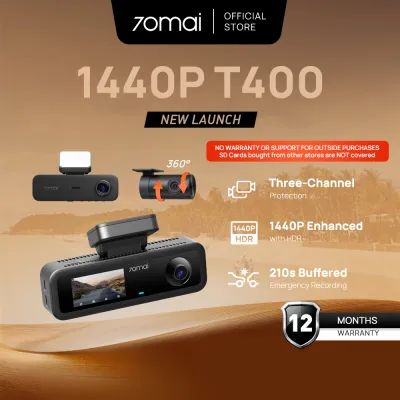
![[New Launch]70mai T800E Dash Cam 4K 3-Channel 360° Rotatable Car Camera HDR GPS With Night Vision](https://img.lazcdn.com/g/p/afff0f8e69b03ac80e5e447d08c94b3a.jpg_400x400q80.jpg_.webp)
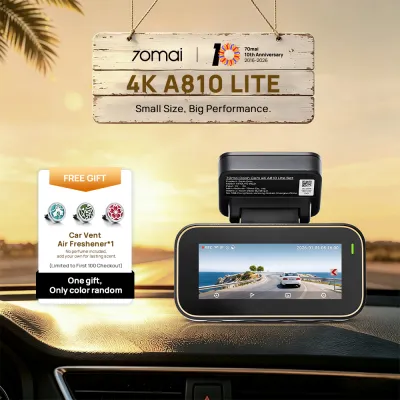
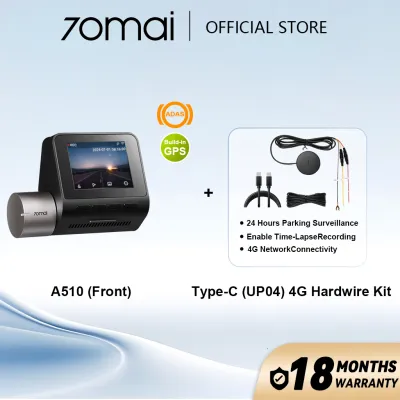
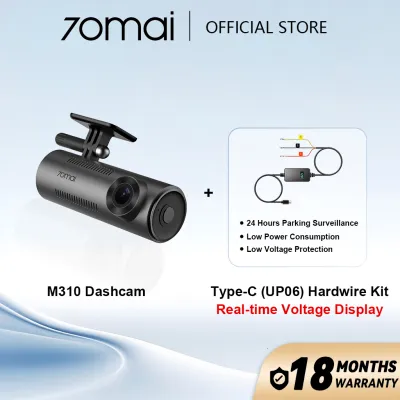
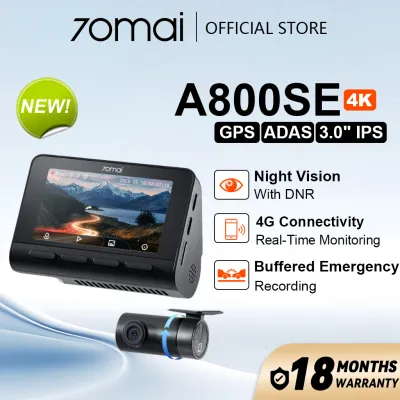
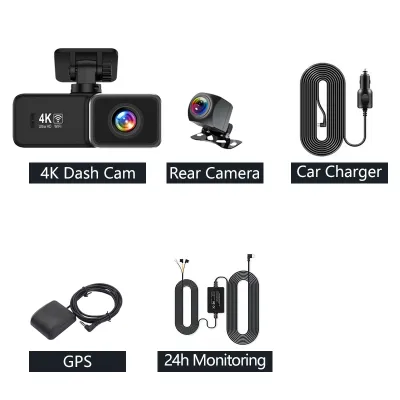
Prices are valid at publication and may change. Please refer to the product page for the latest price.
To streamline your selection process, start by ranking your primary driving pain points. If your vehicle is regularly left in uncovered parking lots in commercial districts, heat tolerance should be your absolute priority. If you spend hours on highly congested roads like EDSA or C5, you will need a camera that excels at capturing sharp details at close range, even when vehicles are tightly packed. For those who frequently travel outside major metropolitan areas after dark, superior low-light sensitivity is non-negotiable. Identifying these factors beforehand ensures you do not overpay for unnecessary features while missing out on critical protections.
Beating the Heat: Power Storage and Temperature Limits
During the peak of the Philippine dry season, cabin temperatures in a parked car can easily exceed 60°C. This extreme heat poses a direct threat to the internal components of any dash cam, particularly its power storage system. Dash cams generally rely on either traditional lithium-ion batteries or supercapacitors to save the final video file safely when the vehicle is turned off.

Lithium-ion batteries are sensitive to high temperatures; prolonged exposure to extreme cabin heat can cause them to swell, degrade in capacity, or fail entirely over time. Supercapacitors, on the other hand, do not store energy to run the camera independently for long periods, but they are highly resilient to thermal stress. They handle extreme heat cycles much more reliably, making them the preferred choice for vehicles parked outdoors in tropical climates. When browsing different options, always check the official product specifications or user manual to verify whether the model uses a lithium battery or a supercapacitor.
Additionally, pay close attention to the manufacturer’s stated operating and storage temperature ranges. Most heat-resistant models are rated to operate safely up to 60°C or 65°C. If you plan to use parking mode features, which keep the camera active while the vehicle is stationary, the device will generate its own internal heat on top of the ambient cabin temperature.
To mitigate this risk, verify if the camera and its compatible hardwire kit support automatic thermal shutdown features. Because hardwiring requires connecting directly to your vehicle’s fuse box, always consult your vehicle’s owner manual and seek qualified professional installation. A certified automotive technician can ensure the hardwire kit is safely integrated without compromising your vehicle’s electrical system, warranty, or airbag deployment zones.
Navigating Heavy Traffic: Field of View and Resolution
In dense, slow-moving traffic, minor scrapes, motorcycle lane-splitting incidents, and sudden stops are common. Capturing these events clearly requires a careful balance between the camera’s Field of View (FOV) and its recording resolution. A wider lens is not always better, and higher resolution is often necessary to make sense of crowded scenes.
- Field of View (FOV): Most modern cameras offer an FOV between 130° and 140°. This range is generally optimal because it captures multiple lanes of traffic and sidewalks without causing excessive edge distortion. While an ultra-wide FOV (such as 170°) might seem appealing, it often introduces a severe "fisheye" effect that makes license plates in the center of the frame appear smaller and much harder to read.
- Video Resolution: To reliably read license plates of nearby vehicles in bumper-to-bumper traffic, higher resolution is incredibly beneficial. A standard 1080p (Full HD) resolution is the absolute baseline, but upgrading to 1440p (2K) or 2160p (4K) provides the pixel density required to zoom in on distant or small text during post-incident review.
- Frame Rates: Standard video is recorded at 30 frames per second (fps). Some models offer 60fps recording at slightly lower resolutions, which helps reduce motion blur for fast-moving objects. However, in heavy urban traffic where speeds are low, prioritizing higher resolution over high frame rates is usually the more effective strategy for capturing legible license plates.
Poorly Lit Roads: Evaluating Night Vision Capabilities
Many roads in the Philippines, from provincial highways to residential barangay streets, lack consistent overhead lighting. Driving in these areas at night requires a dash cam designed specifically to handle low-light environments. Relying on marketing terms like “super night vision” can be misleading; instead, you should evaluate the physical hardware specifications.
First, check the camera’s sensor size and aperture value on the official specification sheet. A larger image sensor (such as a 1/2.8-inch or 1/1.8-inch sensor) has larger physical pixels that can capture more ambient light. Combine this with a wide aperture—represented by a lower f-number like f/1.8, f/1.6, or f/1.5—to allow the maximum amount of light to reach the sensor. A wide aperture is crucial for maintaining clear video quality when your headlights are the only source of illumination.
Second, look for models equipped with High Dynamic Range (HDR) or Wide Dynamic Range (WDR) technology. These processing features are essential for balancing extreme exposure differences. On dark roads, oncoming LED headlights or bright streetlights can easily blind a standard camera, turning license plates into blank white rectangles. HDR works by combining multiple exposures in real-time to preserve details in both the brightest highlights and the darkest shadows.
Finally, remember that fine-tuning is often required depending on your vehicle’s windshield tint. Dark aftermarket tints can drastically reduce the amount of light reaching the camera lens. Verify if your chosen model allows you to adjust exposure values or toggle specific night-enhancement algorithms through the companion mobile application to compensate for your specific windshield setup.
Matching 70mai Dash Cam Tiers to Your Daily Commute
To simplify your decision, you can categorize the 70mai lineup into three distinct tiers based on their hardware capabilities, price points, and intended use cases. This allows you to match your budget and route requirements directly to the appropriate product tier.
Essential and Compact Tier
These entry-level models (typically ranging from ₱1,500 to ₱3,000) offer a streamlined, often screenless design. They record in 1080p or 1296p and generally rely on internal lithium batteries. This tier is best suited for budget-conscious drivers, secondary family vehicles, or those who primarily commute during the day and park in shaded or indoor garages. While reliable for basic daytime recording, they may struggle with extreme heat exposure over long periods and offer basic low-light performance.
Mid-Range Tier
Positioned as the sweet spot for most daily commuters (typically ranging from ₱3,000 to ₱6,000), these models feature built-in screens, 2K or 2.7K resolution, and integrated GPS for speed and route logging. Many models in this tier support dual-channel (front and rear) recording. This tier is highly recommended for daily city drivers who need a reliable balance of clear resolution for license plate capture, rear-end collision protection, and moderate heat resistance.
Flagship Tier
Designed for maximum performance (typically ranging from ₱6,000 to ₱12,000 or more), flagship models deliver true 4K resolution, advanced low-light sensors, and robust supercapacitor power storage. They feature sophisticated dual-channel HDR processing and extensive parking surveillance options. This tier is ideal for long-distance highway commuters, night-shift workers, professional drivers, and anyone who regularly parks in exposed, high-heat outdoor environments.
Before purchasing, always verify the latest model specifications, warranty terms, and authorized local retail presence on the official 70mai website or authorized online marketplaces to ensure you are getting an authentic product designed for the local market.
Installation and Upkeep in a Tropical Climate
Proper installation and routine maintenance are essential to ensure your camera functions reliably under demanding tropical conditions. Even the most robust hardware can fail prematurely if it is poorly positioned or neglected.
When mounting your camera, choose a position high on the windshield, ideally behind or next to the rearview mirror. This placement provides an optimal, centered view of the road while keeping the device out of your direct line of sight. Crucially, ensure the camera and its wiring do not obstruct or cross the deployment paths of your vehicle’s airbags. Refer to your vehicle’s owner manual to identify airbag locations before running any cables.
Because dash cams write data continuously, the high-heat environment inside a car can quickly degrade standard memory cards. Always use a high-endurance microSD card rated specifically for continuous write cycles in dash cams. To prevent file corruption and extend the card’s lifespan, format the card directly through the camera’s menu or companion app at least once a month.
Lastly, perform quick, low-risk physical maintenance. Dust, humidity residue, and fingerprint smudges can accumulate on the lens and windshield, severely degrading image quality over time. Periodically wipe the camera lens and the windshield area directly in front of it with a clean, dry microfiber cloth. Avoid using harsh chemical glass cleaners directly on the camera lens, as they can strip away protective optical coatings.
Frequently Asked Questions (FAQ)
Should I use parking mode during the Philippine dry season?
Using continuous parking mode under direct sunlight during the hot dry season is not recommended unless absolutely necessary. The combination of ambient solar heat and the internal heat generated by continuous recording can cause the camera to overheat and shut down. If you require parking protection, configure your camera to use collision detection or time-lapse mode instead of continuous recording, and verify that your hardwire kit features an automatic low-voltage and thermal cutoff to protect both the camera and your vehicle’s battery.
Do I need a rear camera for provincial highway driving?
Yes, a dual-channel (front and rear) setup is highly beneficial for provincial highway driving. Rear-end collisions, aggressive overtaking, and close-following motorcycles are common occurrences on open roads. A rear-facing camera provides crucial context and evidence if you are hit from behind or sideswiped during an overtaking maneuver. If you choose a dual-channel system, verify that your selected model’s rear camera is also rated for high-temperature exposure and that your vehicle’s rear windshield tint is not too dark to compromise night visibility.
Community discussion
Share your experience or ask a question. Comments are reviewed before publication.