
Selecting the correct automatic transmission fluid (ATF) for your Hyundai vehicle in the Philippines is one of the most critical maintenance decisions you can make. The tropical climate, characterized by intense heat and high humidity, combined with the demanding stop-and-go traffic of major metropolitan areas, places immense thermal stress on your car’s transmission. To ensure smooth gear shifts and prevent catastrophic internal wear, you must identify and use an ATF that strictly complies with the exact technical specification designated by Hyundai for your specific model and year. Using an incompatible fluid can lead to immediate shifting issues, accelerated clutch wear, and costly transmission failure.
Understanding Hyundai Transmission Fluid Specifications
To find the precise ATF required for your Hyundai, your first step must always be to consult the vehicle’s owner’s manual. This document contains a dedicated section for capacities and fluid specifications, detailing the exact standard required for your transmission. For older Hyundai models, particularly those equipped with four-speed or five-speed automatic transmissions, the standard is typically SP-III. Newer models featuring six-speed or eight-speed automatic transmissions generally require SP-IV, SP-IV-M, or SP-IV-RR fluids. If you do not have the physical manual, you can often find the specification stamped directly onto the transmission dipstick under the hood, or printed on the filler cap in some models.
Understanding why precise specification matching is critical requires a look at how modern automatic transmissions operate. An automatic transmission relies on ATF not just as a lubricant, but as a hydraulic fluid to actuate gear changes and a coolant to dissipate extreme heat. Hyundai transmissions are engineered with specific friction materials on the clutch plates that require precise friction modifiers in the fluid to grab and release smoothly. If the fluid’s viscosity or friction coefficient deviates even slightly from the factory specification, the clutches may slip, causing the transmission to overheat and degrade rapidly.
Products mentioned in this guide
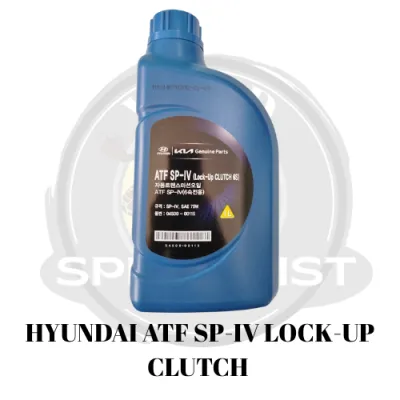
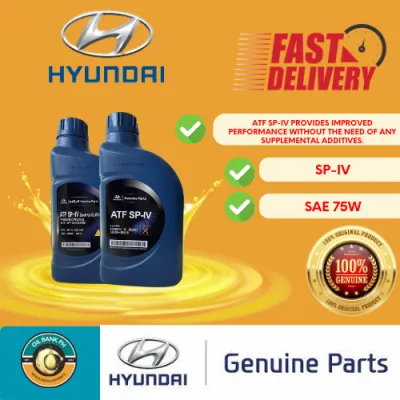
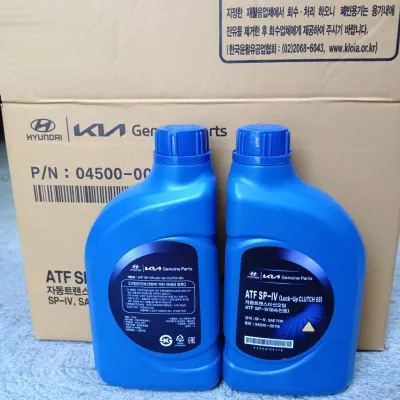
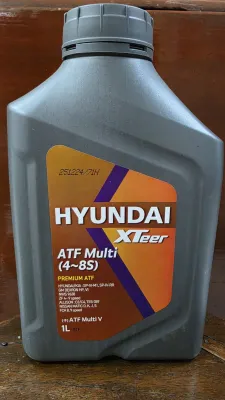
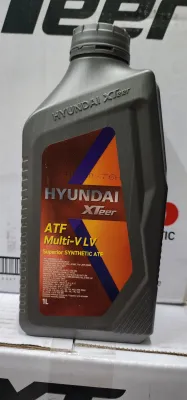
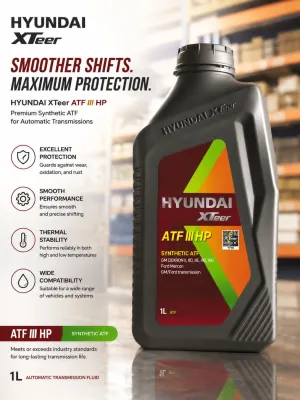
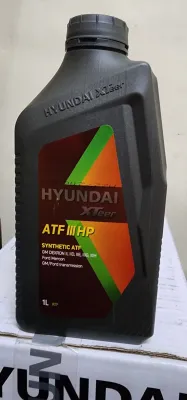
Prices are valid at publication and may change. Please refer to the product page for the latest price.
It is vital to recognize that the vehicle brand name “Hyundai” is not a fluid specification in itself. Many vehicle owners mistakenly purchase any bottle labeled “for Asian vehicles” or “universal ATF,” assuming it will work safely. However, generic fluids often attempt to balance conflicting friction requirements of multiple manufacturers, which can compromise performance in your specific gearbox. You must look for the explicit technical standard, such as SP-III or SP-IV, rather than relying on broad marketing terms or generic category labels.
OEM vs. Aftermarket ATF: Evaluating Compatibility and Labels
When choosing between genuine Original Equipment Manufacturer (OEM) fluids and aftermarket alternatives, safety and compatibility must remain your primary concerns. Genuine Hyundai OEM transmission fluid is formulated specifically for the brand’s gearboxes, offering the most reliable baseline for performance and longevity. Using OEM fluid ensures that the chemical composition matches the factory fill exactly, which is particularly crucial if your vehicle is still covered by the manufacturer’s warranty. Authorized service centers will typically insist on OEM fluids to maintain warranty compliance, protecting you from out-of-pocket expenses should a transmission component fail.

However, reputable aftermarket manufacturers also produce high-quality fluids that can safely service Hyundai transmissions, provided you perform a strict label verification. When evaluating aftermarket ATF, you must read the back label carefully to confirm that the product explicitly states written compliance with your required Hyundai standard, such as “Approved for Hyundai SP-IV” or “Meets Hyundai SP-III specifications.” Avoid products that use vague, non-committal language like “recommended for use in applications where SP-IV is required” without formal certification or clear manufacturer backing.
Relying on unverified multi-vehicle or “universal” claims carries significant risks. While some multi-vehicle fluids are highly engineered, others use broad formulations that may not provide the precise viscosity index or shear stability required by Hyundai’s sensitive hydraulic valves. A fluid that is too thick can cause sluggish shifting in cold starts, while a fluid that is too thin may fail to maintain adequate hydraulic pressure under the intense heat of Philippine midday traffic. Always prioritize fluids that list your specific standard as a primary, tested compatibility.
Before purchasing any fluid, whether OEM or aftermarket, you must inspect the physical packaging for signs of authenticity and quality control. Check that the container’s safety seals are intact, with no signs of tampering, leaking, or resealing. Look for clearly printed batch codes, manufacturing dates, and expiration dates on the bottle, which indicate professional manufacturing standards. Counterfeit or poorly stored fluids can contain contaminants or lack essential additives, leading to rapid transmission wear or immediate hydraulic failure.
Sourcing Authentic Transmission Fluid in the Philippines
Sourcing authentic transmission fluid in the Philippines requires a cautious and deliberate purchasing strategy to avoid counterfeit products. The most secure method is to purchase your ATF directly from authorized Hyundai dealerships or certified service centers. While dealership prices may be higher than independent retailers, buying from these official channels guarantees that you are receiving genuine OEM fluid stored under proper conditions. This approach eliminates the risk of introducing substandard lubricants into your vehicle’s highly sensitive transmission system.
If you choose to purchase aftermarket fluids or prefer sourcing OEM fluids outside the dealership network, you should rely on reputable auto parts retailers with established physical stores. In the Philippines, well-known automotive supply chains and authorized distributors are reliable sources because they maintain direct supply lines with manufacturers. When shopping on major e-commerce platforms, always look for official brand flagship stores or verified preferred sellers. Avoid buying from unverified third-party merchants who cannot provide proof of product origin or authorized distribution.
Identifying red flags for counterfeit fluids is essential when navigating the local market. Be highly suspicious of prices that are significantly lower than the average market rate; if a deal seems too good to be true, it is likely a counterfeit or expired product. Misspelled words on the label, blurry printing, poorly aligned stickers, and the absence of a holographic seal or batch code are clear indicators of a fake product. Additionally, avoid purchasing fluids from sellers who store their inventory in direct sunlight or high-heat environments, as prolonged exposure to extreme temperatures can degrade the fluid’s chemical additives before it even reaches your transmission.
Maintenance Boundaries: Checking, Topping Up, and Professional Servicing
Maintaining your Hyundai’s transmission involves understanding the strict boundaries between simple DIY checks and tasks that require professional intervention. To safely check your transmission fluid level and condition, park your vehicle on a flat, level surface, engage the parking brake, and allow the engine to idle until it reaches normal operating temperature, as specified in your owner’s manual. Locate the transmission dipstick—if your model has one—wipe it clean with a lint-free cloth, reinsert it fully, and pull it out again to read the level. Observe the fluid’s color and smell: healthy ATF is typically bright red or pinkish, while dark brown or black fluid accompanied by a burnt odor indicates severe oxidation and requires immediate professional attention.
It is critical to distinguish between a simple DIY top-up and a comprehensive transmission service. If your fluid level is slightly low, you can carefully add a small amount of the exact matching fluid through the dipstick tube using a clean funnel. However, performing a full transmission flush or fluid exchange is a complex procedure that requires specialized equipment to safely extract the old fluid and pump in the new fluid without introducing air pockets or damaging internal seals. Attempting a full flush at home without professional tools can lead to incomplete fluid replacement or hydraulic system contamination.
The dangers of mixing incompatible fluids or overfilling your transmission cannot be overstated. Mixing different specifications, such as adding SP-III to a transmission designed for SP-IV, alters the fluid’s viscosity and frictional properties, which can cause severe clutch slippage and erratic shifting. Overfilling the transmission is equally hazardous; excess fluid can become aerated by the rotating internal components, turning into a frothy foam. Foamy fluid cannot maintain the hydraulic pressure required to operate the clutches, leading to rapid overheating, fluid expansion, and catastrophic transmission failure.
For many modern Hyundai models, the transmission is a “sealed” unit without a traditional dipstick, making DIY fluid checks and top-ups nearly impossible. In these cases, or if your vehicle is still under factory warranty, you must stop all DIY attempts and consult a qualified mechanic or an authorized service center. Professional technicians have the diagnostic scanners required to monitor transmission fluid temperature precisely during a fluid level check, ensuring the service is performed safely and in strict accordance with Hyundai’s engineering guidelines.
Frequently Asked Questions (FAQ)
Can I mix different ATF brands if they meet the same Hyundai specification?
While different brands may claim to meet the same Hyundai specification, mixing them is generally not recommended by manufacturers. Different chemical blenders use distinct additive packages, friction modifiers, and anti-foaming agents to achieve the required standard. Mixing these unique chemical formulations can lead to unpredictable interactions, potentially reducing the fluid’s overall thermal stability and performance. If you must switch to a different brand of ATF, the safest practice is to perform a complete fluid exchange rather than topping up, ensuring your transmission runs on a single, consistent formulation.
How do I know when my Hyundai transmission fluid needs replacing?
You should always refer to your Hyundai owner’s manual for the recommended maintenance schedule, which often distinguishes between normal and severe driving conditions—with the tropical, high-traffic environment of the Philippines typically qualifying as severe. Beyond mileage intervals, you should inspect the fluid’s physical condition; a transition from bright red to dark brown, or the presence of a burnt smell, indicates that the fluid has oxidized and lost its protective qualities. Additionally, if you experience delayed gear engagement, slipping clutches, or unusual whining noises from the gearbox, you should seek a professional inspection immediately.
Is it safe to use a higher-specification ATF than what my Hyundai manual requires?
It is a common misconception that newer or higher-specification fluids are automatically backward-compatible and beneficial for older transmissions. For example, using SP-IV in an older transmission designed strictly for SP-III can lead to severe operational issues, as SP-IV has a lower viscosity engineered for modern, high-efficiency gearboxes. This lower viscosity may fail to maintain adequate hydraulic pressure or provide sufficient wear protection in older gear designs. You must always adhere strictly to the exact fluid specification designated in your vehicle’s manual, as transmission components are engineered specifically around those fluid dynamics.

Community discussion
Share your experience or ask a question. Comments are reviewed before publication.