
Customizing your Kawasaki Barako II (commonly known as the Barako 2) with decals and stickers is one of the most cost-effective ways to personalize your motorcycle while protecting its body panels. The best options on the market balance aesthetic appeal with high durability, specifically utilizing UV-resistant, waterproof automotive-grade vinyl that can withstand the harsh tropical climate of the Philippines. Whether you want a complete aesthetic overhaul with a full-body decal kit, enhanced nighttime visibility with reflective safety stickers, or a subtle premium touch using textured carbon fiber accents, selecting the right material and fitment is crucial for achieving a professional, long-lasting finish.
How to Choose the Right Decals for Your Barako 2
Riding in the Philippines exposes your motorcycle to extreme environmental conditions, ranging from intense, high-UV sunlight during the dry season to torrential rains and high humidity during the monsoon months. Standard paper stickers or cheap, non-automotive vinyl will quickly fade, crack, or peel under these conditions. When searching for a barako 2 decals sticker, you must prioritize materials explicitly labeled as UV-resistant, waterproof, and weatherproof. High-grade polymeric or cast vinyl is highly recommended for motorcycle applications because it resists shrinkage and maintains its color pigments even when subjected to prolonged sun exposure.
The adhesive backing of the decal is just as important as the vinyl face itself. High-quality motorcycle decals utilize pressure-activated, semi-permanent acrylic adhesives that provide a strong bond without damaging the motorcycle’s factory clear coat upon removal. In contrast, unverified cheap alternatives often use low-grade permanent adhesives that can chemically bond with the clear coat, leading to paint peeling or leaving behind a stubborn, sticky residue that requires harsh solvents to clean. Always check the manufacturer’s product specifications to ensure the adhesive is formulated for automotive paint and is designed to be cleanly removable with the application of moderate heat.
Products mentioned in this guide
Prices are valid at publication and may change. Please refer to the product page for the latest price.
To help you navigate the common materials available in local print shops and online marketplaces, the table below outlines the differences in durability, finish, and ideal applications for various decal types:
| Decal Material Type | Typical Durability | Finish Type | Best Use Cases |
|---|---|---|---|
| Standard Gloss Vinyl | 2 to 3 years | High gloss, smooth | Daily commuter graphics, OEM replica stripes, and side cover accents. |
| Reflective Vinyl | 3 to 5 years | Retroreflective, semi-gloss | Wheel rim stripes, fork tubes, and rear fender safety accents for night riding. |
| Carbon Fiber Vinyl | 3 to 5 years | Textured, matte/satin | Fuel tank protectors, high-wear side panel zones, and key-ignition surrounds. |
| Heavy-Duty Laminate | 5+ years | Ultra-thick gloss or matte | Full-body off-road style kits, heavy mudguard protection, and commercial use. |
Best Decal Styles and Materials for Barako 2 Customization
The Kawasaki Barako 2 features a robust, utilitarian design with distinct body panels, including the fuel tank, side covers, front cowl, and rear tail section. Customizing these areas requires a thoughtful approach to ensure the decals complement the motorcycle’s natural lines rather than clashing with them. Different styles of decals serve distinct visual and functional purposes, allowing you to tailor your motorcycle to your specific daily riding needs.

Full Body Decal Kits for Complete Makeovers
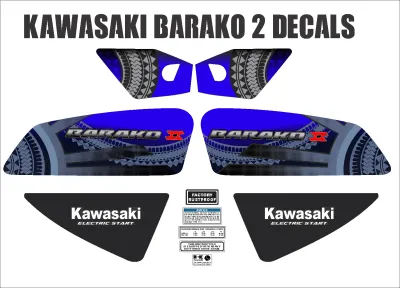
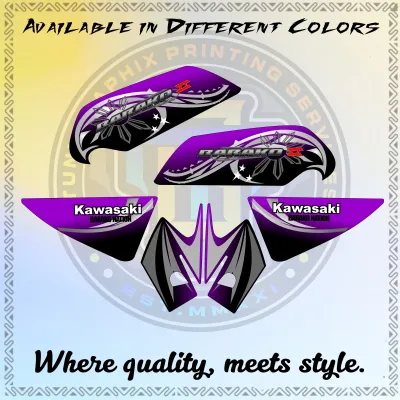
For riders seeking a dramatic transformation without the high cost and permanence of a custom paint job, full-body decal kits offer an excellent solution. These comprehensive kits are pre-cut to match the specific dimensions of the Barako 2’s fairings, covering the front fender, fuel tank sides, side covers, and tail cowl. When purchasing a full-body kit, it is vital to verify that the package includes pieces for your exact model variation, as minor panel differences can exist between production runs.
Installing a full-body kit requires a moderate to high level of patience and skill. Because you are working with large sheets of vinyl over curved surfaces, avoiding air bubbles and wrinkles is a primary challenge. It is highly recommended to use a wet-application method or seek professional assistance at a local detailing shop if you are not confident in your vinyl-wrapping abilities. Additionally, be cautious of generic, poorly measured kits sold online; any misalignment in the pre-cut edges can force you to trim the vinyl manually, which often compromises the clean lines of the design.
Reflective and Safety Stickers for Night Visibility
If you frequently commute during early mornings, late nights, or through heavy rainstorms where visibility is severely compromised, reflective stickers are a highly functional upgrade. These decals utilize retroreflective technology, meaning they bounce light directly back to its source, such as the headlights of oncoming or trailing vehicles. Applying reflective stripes along the wheel rims, front fork tubes, and the sides of the rear fender significantly enhances your side-profile visibility on dark roads.
Integrating these safety elements into your Barako 2 does not mean sacrificing style. Many reflective decals are designed to look like standard colored stripes during the day, only revealing their bright, luminous properties under direct light at night. Keep in mind that reflective vinyl is typically thicker and stiffer than standard decorative vinyl due to the embedded glass beads or microprisms. Consequently, applying them to tight, complex curves requires extra patience, steady pressure, and the careful application of heat to ensure the edges seal properly and do not lift over time.
Carbon Fiber and Textured Accents for Subtle Upgrades
For a more sophisticated, understated aesthetic, textured vinyl decals—such as 3D or 4D carbon fiber and brushed metal finishes—are highly effective. These materials feature a physical, tactile texture that mimics high-end composite materials, adding depth and a premium feel to the utilitarian Barako 2. They are particularly useful when applied to high-wear areas that are prone to scratching, such as the top and sides of the fuel tank where your knees or riding gear make frequent contact.
Textured decals are best used strategically as accent pieces rather than full-body wraps. Covering small sections, such as the side panel inserts, chain guards, or instrument cluster surrounds, creates a balanced, modern look without overwhelming the eyes. When selecting textured carbon fiber decals, pay close attention to the direction of the weave pattern across different panels; aligning the pattern consistently across both sides of the motorcycle is key to achieving a cohesive, factory-installed appearance.
Minimalist and Custom Graphics for Personal Expression
If you prefer a clean, uncluttered look, minimalist graphics such as racing stripes, small brand logos, or custom typography can provide just the right amount of personalization. These individual die-cut stickers allow you to highlight specific areas of your Barako 2, such as the front mudguard, the swingarm, or the lower engine cowl, without covering up the original factory paint. They are highly versatile and can be combined to match your personal interests, whether you prefer a sporty racing look or a classic retro vibe.
Die-cut stickers are incredibly beginner-friendly because they do not require complex alignment over massive panels. However, because these stickers have exposed, intricate edges, their longevity depends heavily on the quality of the edge-cutting process. Low-quality die-cut stickers often have rough, jagged edges that easily catch on cleaning cloths or lift when exposed to high-velocity wind and rain. Prioritize decals with clean, rounded corners, as these shapes distribute physical stress more evenly and are far less likely to peel prematurely.
How to Verify Fitment and Panel Compatibility
Before purchasing any barako 2 decals sticker, verifying physical compatibility with your specific motorcycle is the most critical step to avoid wasted money and installation frustration. The Kawasaki Barako series has undergone several subtle design updates over its production lifespan. While the core frame remains highly consistent, variations in the plastic side covers, fuel tank badges, and mounting bolt locations can differ between older model years and the newer Barako II iterations. Never assume a decal kit labeled “universal motorcycle stickers” or simply “Barako decals” will fit your panels perfectly without modification.
To guarantee a precise fit, start by identifying the exact manufacturing year and model variant of your motorcycle. Take physical measurements of the panels you intend to cover, focusing on the maximum length and width of flat areas, as well as the placement of physical obstructions. These obstructions include:
- Factory-installed metal badges or plastic emblems
- Mounting bolts, screws, and panel rivets
- Frame clearance zones and seat cushion contact points
- Reflectors and signal light mounts
If your chosen decal kit requires you to apply vinyl directly over these areas, you must decide whether to temporarily remove the obstacles (such as unscrewing bolts or heating and prying off factory badges) or to carefully cut relief holes in the decal during installation.
When shopping on e-commerce platforms or consulting with local print shops, always request a detailed template layout with written dimensions. Compare these measurements directly against your physical motorcycle panels. If a seller claims a product is a “universal fit,” treat this with caution; universal decals almost always require custom trimming with a utility knife, which increases the risk of accidentally scratching your motorcycle’s underlying paint.
Installation and Care Tips for Long-Lasting Decals
The longevity and final appearance of your motorcycle decals depend heavily on the preparation of the surface and the care you provide after application. Even the highest-grade automotive vinyl will fail prematurely if applied to a dirty, oily, or dusty surface. Before beginning the installation process, ensure you are working in a clean, wind-free environment to prevent airborne dust particles from settling on your freshly cleaned panels.
Follow these systematic steps to prepare your Barako 2 for decal application:
- Thorough Wash: Wash the entire motorcycle with a wax-free motorcycle shampoo or mild dish soap to remove road grime, dirt, and mud. Avoid shampoos that contain gloss enhancers or liquid waxes, as these leave behind a slick silicone film that prevents the adhesive from bonding.
- Degrease and Decontaminate: Wipe down the target panels using a clean microfiber cloth dampened with a 70% isopropyl alcohol solution. This step is crucial for removing stubborn grease, chain lube fling, and residual wax. Safety Check: Always test a small, hidden area of your plastic fairings first to ensure the alcohol does not dull or discolor the finish, and follow any specific care instructions provided by your motorcycle's manufacturer.
- Complete Drying: Ensure the panels are 100% dry. Pay close attention to deep panel seams, bolt holes, and edges where water tends to pool, as trapped moisture will ruin the adhesive backing instantly.
During the application process, using a heat gun or a standard household hairdryer on a low-to-medium setting can be incredibly helpful. Gentle heat softens the vinyl, making it highly pliable and allowing it to conform smoothly to the curved surfaces of the fuel tank and side covers. Keep the heat source moving constantly at a distance of at least 15 to 20 centimeters from the surface; applying excessive, concentrated heat in one spot can easily warp the plastic fairings or scorch the vinyl material. Use a felt-tipped squeegee or a soft microfiber-wrapped card to smooth out the vinyl from the center outward, pushing away any trapped air bubbles.
Once your decals are installed, proper maintenance will extend their lifespan significantly. When washing your motorcycle, avoid aiming high-pressure water washers directly at the edges of the decals, as the intense pressure can easily lift the vinyl and compromise the adhesive bond. Instead, use a gentle hand-wash method with a soft microfiber mitt. Avoid using harsh chemical solvents, abrasive polishes, or heavy degreasers on or near the decals, as these substances can degrade the protective top laminate, causing the colors to fade and the edges to curl.
Frequently Asked Questions (FAQ)
Will removing decals damage the Barako 2's original paint?
Removing decals from a Barako 2 is highly safe for the original factory paint, provided the paint is in healthy, intact condition with its original clear coat. To remove them safely, apply gentle heat using a hairdryer to soften the adhesive, then slowly peel the vinyl back at a sharp angle. Avoid pulling decals off faded, peeling, or aftermarket single-stage paint, as the adhesive may lift the loose paint layers along with the sticker.
Can I apply Barako 2 decals over existing scratches?
You can apply decals over minor surface imperfections, but the type of vinyl you choose determines the final look. Standard glossy vinyl is thin and highly reflective, meaning it will actually highlight deep scratches, gouges, or dents underneath. If you want to mask light scuffs and swirl marks, opt for thicker, textured vinyls like carbon fiber or matte-finished decals, and ensure you lightly polish or clean the area first to create a smooth bonding surface.
How long do motorcycle decals typically last in tropical weather?
In the tropical climate of the Philippines, premium UV-resistant automotive vinyl decals typically last between 3 to 5 years before showing signs of fading or edge lifting. However, cheaper, non-UV-rated promotional stickers may begin to discolor, crack, or peel within six to twelve months of daily exposure to intense sunlight and heavy monsoon rain. Investing in high-quality materials ensures your custom look remains vibrant and intact for years.
Community discussion
Share your experience or ask a question. Comments are reviewed before publication.