
When tackling automotive repairs, selecting the correct puller bearing remover is one of the most critical decisions you will make in your garage. The “best” bearing puller is not a single, all-purpose tool; rather, it is the one that matches the specific geometry, spatial clearance, and mechanical resistance of the component you need to extract. For standard external components like pulleys, gears, and harmonic balancers with open access, a robust 3-jaw external puller is the ideal choice due to its superior stability and even force distribution. However, when working in the cramped engine bays of modern compact cars, a 2-jaw puller becomes necessary to squeeze into tight clearances.
For bearings pressed deeply into blind housings, steering knuckles, or transmission casings where no outer edge is exposed, an internal or blind-hole puller kit is non-negotiable. Matching the tool to the specific physical constraints of the job prevents costly damage to both your vehicle and your toolset. This guide will help you navigate these options, ensuring you select the safest and most efficient tool for your specific repair scenario.
Understanding Bearing Puller Types and Their Core Functions
To choose the right tool for your garage, you must first understand how different pullers engage mechanically with automotive components. Each design is engineered to solve a specific physical challenge, utilizing mechanical advantage to overcome high-friction interference fits.
Products mentioned in this guide
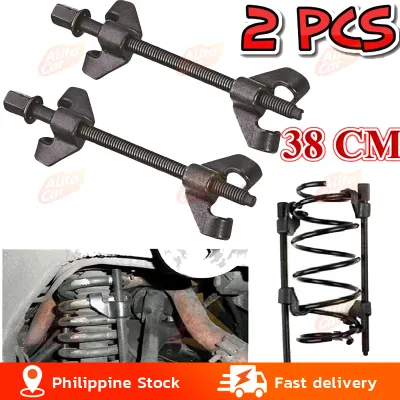
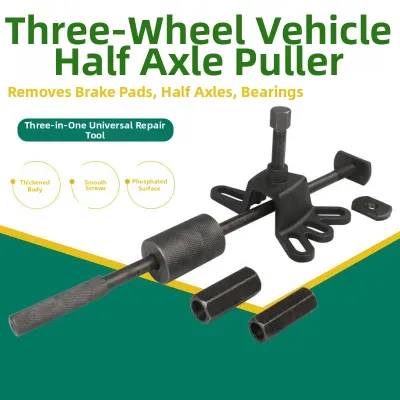
Prices are valid at publication and may change. Please refer to the product page for the latest price.
External Pullers (2-Jaw and 3-Jaw)
External pullers are the workhorses of automotive maintenance, designed to grip the outer diameter of a component and pull it off a central shaft. These tools consist of a central forcing screw (or center bolt), a cross-arm (or yoke), and adjustable jaws that hook behind the part. As you tighten the forcing screw against the end of the shaft, the rotational torque is converted into massive axial pulling force, drawing the component outward.
When choosing between configurations, a 3-jaw puller is always the preferred option when space allows. The three jaws are positioned at 120-degree intervals, creating an equilateral triangle of force distribution. This balanced geometry minimizes the risk of “cocking”—where the component tilts slightly on the shaft, causing it to bind and score the metal surfaces. It also reduces localized stress on cast or plastic pulleys, preventing them from warping or cracking under tension.
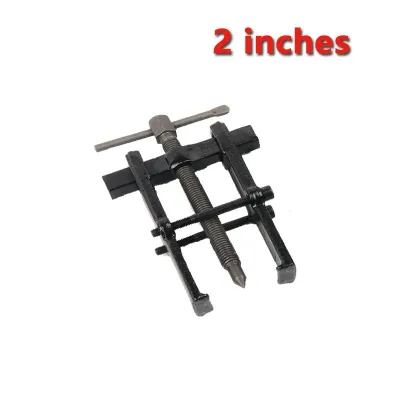
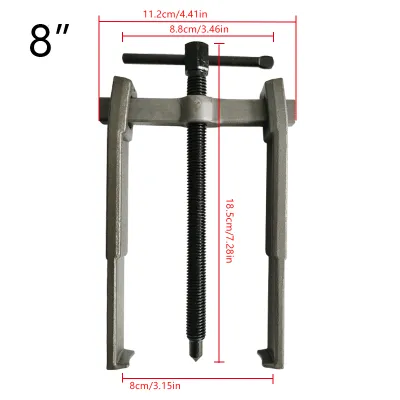
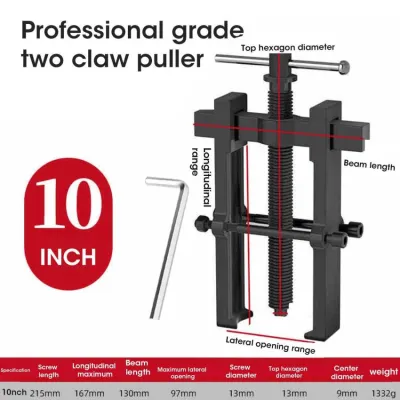
However, automotive engine bays are notoriously cramped, especially in modern front-wheel-drive vehicles. When surrounding components like frame rails, steering racks, or air conditioning lines physically block the path of a third jaw, a 2-jaw puller is the practical alternative. While a 2-jaw configuration requires careful alignment to prevent slipping, its narrow profile allows it to fit into tight, flat spaces where a 3-jaw tool cannot physically expand.
Internal and Blind Hole Pullers
Many automotive bearings are not pressed onto exposed shafts; instead, they are pressed into recessed cavities or housings. Examples include flywheel pilot bearings, suspension control arm bushings, and internal gearbox bearings. Because there is no exposed back face for external jaws to grip, these components require internal or blind hole pullers.
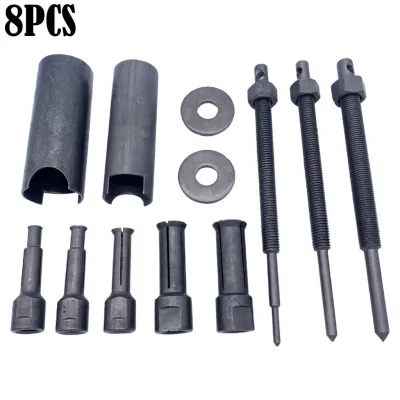
These specialized tools utilize expanding collets that are inserted directly into the inner bore of the bearing. Once the collet is positioned inside the inner race, a tapered pin is threaded or driven down the center of the collet, forcing its segmented outer walls to expand and lock firmly against the inner diameter or behind the bearing balls.
Once the collet is anchored, the puller utilizes one of two extraction methods: a slide hammer or a bridge frame assembly. A slide hammer relies on kinetic energy, using a heavy steel weight slid along a shaft to strike a stop block, delivering sharp, outward shocks that break the bearing free. A bridge frame, by contrast, spans across the opening of the housing and uses a threaded forcing screw to pull the collet upward with smooth, controlled mechanical leverage. This method is highly effective for deep-seated bearings that require steady, high-tonnage force to extract.
Key Comparison Dimensions for a Puller Bearing Remover
Selecting a puller bearing remover requires analyzing specific technical dimensions to ensure the tool can handle the physical demands of your repair. Before purchasing any tool kit, evaluate these four critical dimensions against your vehicle’s specifications.

- Tonnage and Force Capacity: A puller's tonnage rating dictates the maximum mechanical force it can safely apply before failing. Standard DIY mechanical pullers are typically rated for 2 to 5 tons, which is sufficient for small pulleys, alternators, and steering wheels. Heavy-duty tasks like pulling rusted wheel hubs or seized suspension bushings often require 10 to 20 tons of force. In tropical, high-humidity climates like the Philippines, road grime, coastal salt air, and heavy seasonal rains accelerate galvanic corrosion between steel bearings and aluminum housings, significantly increasing the breakaway force required. Attempting to use an under-rated tool can strip the forcing screw threads or cause the jaws to shatter under tension.
- Reach and Spread: "Spread" refers to the maximum outer diameter the jaws can span to grip a component, while "reach" is the maximum linear distance from the tip of the forcing screw to the hook of the jaws. You must measure your target component before starting. If you are extracting a large harmonic balancer, a puller with a 4-inch spread will slip off or fail to wrap around the outer rim. Conversely, if the reach is too short, the forcing screw will bottom out and run out of threads before the bearing is fully disengaged from the shaft.
- Jaw Design and Grip: Jaws are engineered with different profiles for specific tasks. Reversible jaws feature a wide, flat hook on one end for general-purpose pulling and a narrow, aggressive hook on the other for tight clearances. For components with virtually zero clearance behind them, a bearing splitter (or puller plate) is required. This tool features two wedge-shaped halves that bolt together tightly behind the bearing, converting lateral clamping force into an axial wedge that pushes the bearing forward, creating a secure flange for a standard puller to grip.
- Forcing Screw Mechanism: The standard manual forcing screw relies on fine-pitch Acme threads to multiply manual torque from a wrench or socket. These screws must be regularly lubricated with high-pressure grease or anti-seize to prevent thread galling under extreme loads. Some professional-grade pullers feature impact-compatible drive nuts, allowing the use of cordless or pneumatic impact wrenches to apply rapid rotational shocks that help break stubborn rust bonds. For the most demanding applications, hydraulic-assisted forcing screws integrate a small hydraulic ram inside the screw body, allowing the user to generate over 10 tons of force with minimal manual effort.
Matching the Puller to Common Car Repair Tasks
To ensure a successful repair and avoid damaging expensive vehicle components, you must match the correct puller design to the specific automotive assembly you are servicing.
Pulleys, Alternators, and Water Pumps
Engine accessory drive pulleys—such as those on alternators, power steering pumps, and water pumps—are often made of thin stamped steel, cast iron, or composite plastics. These materials are highly susceptible to warping, bending, or cracking if uneven force is applied during removal.
For these components, a 3-jaw external puller is highly recommended. The three points of contact distribute the pulling force evenly across the pulley’s circumference, keeping the part perfectly aligned with the shaft and preventing the pulley grooves from bending. If you are working in a tight space, such as replacing a water pump pulley on a transverse-mounted engine, a compact 2-jaw puller may be required to clear the inner fender well.
Never attempt to pry a pulley off using screwdrivers, crowbars, or hammers. Prying against the engine block or accessory housing can easily crack aluminum castings, score the shaft, or damage delicate internal seals, leading to permanent oil or coolant leaks that are expensive to repair.
Wheel Bearings and Pressed-In Housings
Modern front-wheel-drive and all-wheel-drive vehicles utilize wheel bearings that are pressed tightly into the steering knuckle. Over years of operation, these components become tightly bound due to heat, road debris, and moisture.
Extracting a wheel hub assembly typically requires an internal blind hole puller set paired with a heavy slide hammer to pull the hub flange out of the bearing. Often, the inner bearing race will remain stuck on the wheel hub spindle during disassembly. Because there is no gap behind this race, a standard jaw puller cannot grip it. In this scenario, you must bolt a bearing splitter tightly behind the race, then connect a push-puller assembly to draw the race off the spindle.
Before attempting to pull any wheel bearing, always consult your vehicle’s factory workshop manual to verify if the bearing is secured by a snap ring, retaining plate, or mounting bolts. Attempting to force a bearing out while a retaining ring is still installed will destroy the steering knuckle assembly.
Gears, Sprockets, and Steering Wheels
Crankshaft gears, camshaft sprockets, and steering wheels are high-torque, interference-fit components that require high-precision extraction to avoid damaging critical engine timing or interior components.
When removing steering wheels, standard jaw pullers should be avoided, as they can easily crack the plastic trim or damage the delicate airbag clockspring. Instead, use a specialized steering wheel puller that bolts directly into the threaded holes provided in the steering wheel hub. This ensures a straight, damage-free pull.
For crankshaft gears, heavy-duty 2-jaw or 3-jaw pullers with extended reach are required. Because the forcing screw must push directly against the end of the crankshaft, you must protect the shaft’s internal threads. Always install a dedicated steel pusher block, a protective cap, or leave the crankshaft bolt partially threaded into the snout to act as a solid, sacrificial pushing surface. Pushing a hardened steel forcing screw directly into bare, unprotected threads will deform them, requiring expensive machining or crankshaft replacement.
Critical Safety and Usage Boundaries
Operating a bearing puller involves managing immense stored mechanical energy. When a seized bearing finally breaks free, the sudden release of tension can launch components at high velocities, posing a severe risk of injury.
First, always prioritize personal safety. Wear high-impact safety glasses and heavy leather work gloves during any pulling operation. Never stand directly in line with the axis of the forcing screw; position your body to the side so that if a jaw slips, a bolt snaps, or the tool shatters, you are out of the path of flying debris. If you notice the puller jaws beginning to splay outward or bend under tension, stop immediately, release the pressure, and re-evaluate your setup.
Second, protect the vehicle’s components. Never apply force directly to bare, unprotected shaft threads. Always leave the retaining nut threaded onto the shaft flush with the end, or use a dedicated steel pusher block. This ensures the forcing screw pushes against a flat, sacrificial surface rather than deforming the threads, which would require expensive shaft replacement or re-threading.
Third, know when to stop and apply heat. If you have tightened the forcing screw to its reasonable limit and the component has not budged, do not force it further with an extension pipe (cheater bar). This will strip the threads or shatter the tool. Instead, back off the tension slightly, apply a high-quality penetrating fluid, and let it soak. For stubborn, rust-welded parts, use controlled heat from an induction heater or a propane torch. Direct the heat only to the outer hub or collar surrounding the bearing to expand it, while keeping the shaft and the bearing itself as cool as possible. Never apply direct heat to sealed bearings, as this can cause the internal grease to vaporize and explode the rubber seals, or alter the metallurgy of high-strength suspension components.
Finally, remember that steering, braking, and suspension components are safety-critical systems. Always refer to your vehicle’s original manufacturer instructions and torque specifications before performing these repairs. If you lack the proper high-tonnage tools, are working on an unidentified component, or are unsure of the correct procedure, stop immediately and consult a qualified professional mechanic.
Frequently Asked Questions (FAQ)
Can I use a 2-jaw puller instead of a 3-jaw puller?
Yes, but you should only do so when physical space constraints prevent you from using a 3-jaw puller. A 3-jaw puller is always the superior choice because it distributes pulling force evenly at 120-degree intervals, keeping the component perfectly aligned and preventing it from tilting, binding, or cracking. A 2-jaw puller concentrates force on two opposing points, making it highly susceptible to slipping off or cocking the part on the shaft if the tool is not aligned with absolute precision.
What should I do if the bearing puller slips off the part?
Immediately back off the tension on the forcing screw. Inspect the jaws for wear, rounded edges, or damage, and verify that reversible jaws are installed in the correct direction. If the component lacks a sufficient lip or undercut for the jaws to grip, stop and use a bearing splitter plate. Bolt the splitter tightly behind the component to create a secure, wide flange that the puller jaws can safely grab.
Do I need a hydraulic bearing puller for standard car repairs?
For the vast majority of passenger car and light SUV repairs, a high-quality manual mechanical puller set is perfectly adequate and much more cost-effective (ranging from ₱1,500 to ₱5,000). Hydraulic pullers, which can cost ₱15,000 or more, are generally reserved for heavy-duty commercial trucks, agricultural machinery, highly corroded industrial equipment, or professional automotive shops where speed and high-volume throughput are required.

Community discussion
Share your experience or ask a question. Comments are reviewed before publication.