
Quick Answer: Choosing the Most Reliable Caliper for Your NMAX V2
When looking for the most reliable caliper for NMAX V2, the absolute safest and most dependable option for the vast majority of riders is the genuine Yamaha OEM caliper. Designed specifically for the scooter’s hydraulic system, it guarantees a perfect fit, predictable braking bias, and seamless integration with the anti-lock braking system (ABS). However, for enthusiasts seeking enhanced braking power, better thermal management, and a more responsive lever feel, premium aftermarket brands offer significant advantages, provided you match the specifications carefully.
To help you decide, consider this conditional decision framework:
- Choose OEM / Direct Replacements if: You use your scooter primarily for daily commuting, prefer zero-hassle maintenance, and want to maintain strict factory safety standards.
- Choose Premium Aftermarket Brands if: You are an experienced rider looking for high-performance braking, precise modulation, or track-day capability, and you are prepared to invest in supporting modifications like braided steel lines and upgraded master cylinders.
- Choose Budget / Regional Brands if: You are working within a strict budget but still need a functional replacement, provided you perform rigorous quality checks and rely on professional installation.
Ultimately, no single brand is the universal winner. Long-term reliability depends heavily on correct hydraulic sizing, authentic sourcing, and flawless installation.
Products mentioned in this guide
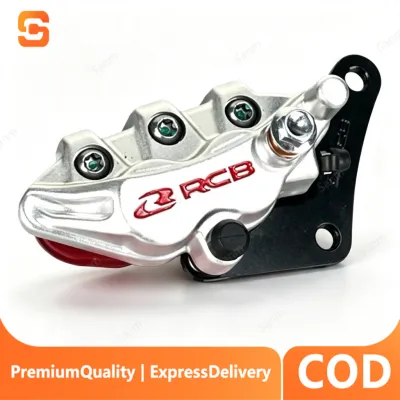
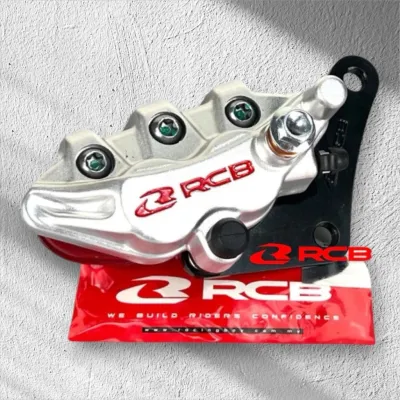
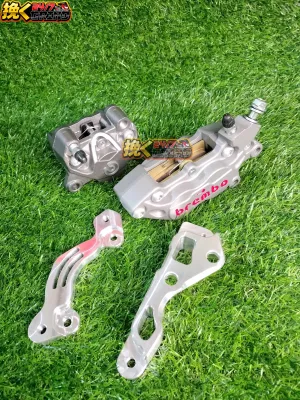
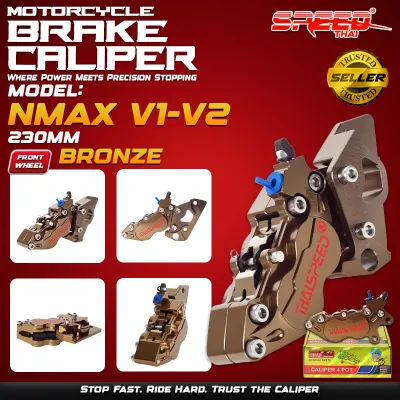
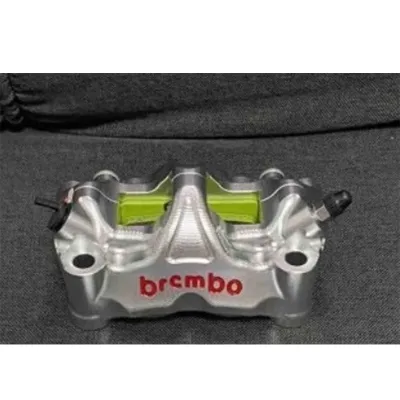
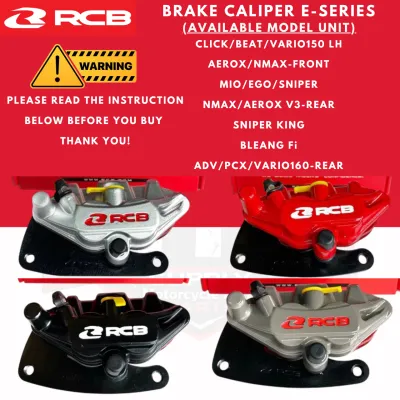
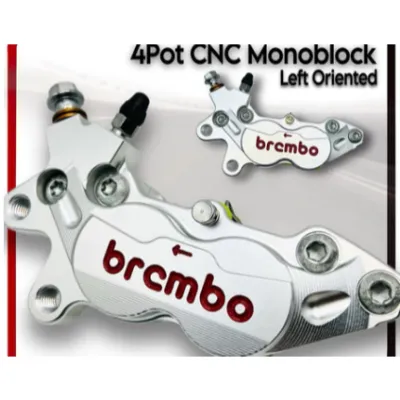
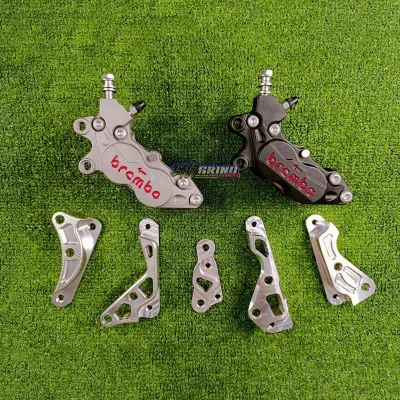
Prices are valid at publication and may change. Please refer to the product page for the latest price.
Selecting the Right Caliper for NMAX V2: Essential Fitment and Safety Checks
Braking is a safety-critical system. Before purchasing any aftermarket caliper for nmax v2, several critical technical parameters must be verified to prevent catastrophic failure on the road.

- Mounting Bracket Alignment: Aftermarket calipers rarely bolt directly onto the NMAX V2 fork legs or rear swingarm without an adapter. You must use a high-quality, CNC-machined aluminum bracket. If the bracket is off by even a millimeter, the caliper will sit crooked relative to the disc rotor. This misalignment causes uneven pad wear, localized overheating, and eventual warping of the rotor, which manifests as a pulsating brake lever.
- Piston Diameter and Brake Bias: The hydraulic ratio of your braking system is determined by the ratio of the master cylinder piston area to the caliper piston area. If you install a caliper with excessively large pistons, you will increase the volume of fluid required to move the pads. This results in a spongy, long brake lever pull. Conversely, if the piston area is too small, the brakes may feel wooden and lack stopping power. Furthermore, altering this ratio changes the braking bias between the front and rear wheels, which can cause the ABS module to miscalculate wheel lockup thresholds.
- ABS Sensor and Reluctor Ring Clearance: The Yamaha NMAX V2 relies on magnetic wheel speed sensors and slotted reluctor rings to monitor wheel rotation. When installing a new caliper and bracket, you must ensure there is adequate physical clearance between the sensor, the ring, and the new hardware. Any contact can destroy the sensor instantly. Even a slight displacement of the sensor relative to the reluctor ring can disrupt the signal, triggering an ABS error light on your dashboard and disabling the anti-lock safety function entirely.
- Banjo Bolt Angles and Line Routing: Stock brake hoses are molded and routed to fit the OEM caliper's specific banjo bolt position. Aftermarket calipers often place the fluid entry port at a different angle. You must verify that your brake hose can route cleanly without kinking, twisting, or rubbing against moving parts like the front suspension forks or the rear tire. In many cases, upgrading to a custom-length braided stainless steel brake line is necessary to ensure safe routing and maximum pressure retention.
- Professional Installation Mandate: Because any error in the braking system can lead to severe injury or vehicle damage, always consult your vehicle's manual and have all caliper installations, system bleeding, and bolt torque verifications performed by a qualified motorcycle mechanic. Proper bleeding is especially critical on ABS-equipped scooters like the NMAX V2, as trapped air bubbles in the ABS modulator can cause sudden brake failure.
Comparing Brake Caliper Brand Categories for the NMAX V2
To make an informed decision, it is helpful to categorize the available market options into three distinct tiers: OEM/Direct Replacements, Premium Aftermarket, and Budget/Regional Brands. Each tier serves a different rider profile and comes with its own set of trade-offs regarding cost, performance, and long-term durability.
OEM and Direct Replacement Options
The factory-installed caliper on the Yamaha NMAX V2 is engineered to meet strict safety and durability standards. Choosing a genuine Yamaha replacement parts kit ensures that every dimension, seal compound, and mounting point matches the original design perfectly. This is the baseline choice for maximum reliability and convenience.
The primary benefit of OEM components is their predictable, long-term reliability under typical Philippine riding conditions—from the intense summer heat to heavy monsoon downpours. Spare parts such as piston seals, slide pins, and replacement pads are readily available at authorized Yamaha 3S shops across the country, making maintenance straightforward.
However, OEM calipers are produced via mass-market casting methods, which prioritize cost-efficiency over weight reduction and aesthetic flair. They also feature a relatively progressive, soft initial bite designed to prevent novice riders from panic-locking the wheels, which performance-oriented riders might find lacking.
Premium Aftermarket Brands
For riders seeking a substantial upgrade in stopping power and cosmetic appeal, premium global brands represent the pinnacle of braking technology. These manufacturers utilize advanced engineering techniques, such as forging or high-precision CNC machining from solid blocks of billet aluminum, resulting in a much stiffer caliper body that resists flexing under hard braking.
These premium calipers feature high-temperature piston seals that maintain their elasticity and sealing properties even during aggressive riding down steep mountain passes or during track sessions. The materials used offer superior heat dissipation, reducing the risk of brake fade when the fluid gets hot.
While the initial investment for a premium caliper is significantly higher—often requiring additional purchases like custom CNC brackets, braided lines, and matching master cylinders—the long-term value is found in their rebuildability. High-end brands offer dedicated rebuild kits containing fresh seals and pistons, allowing the caliper to last the lifetime of the scooter.
Budget and Regional Aftermarket Brands
In the Philippine motorcycle community, highly stylized CNC-machined calipers from regional Southeast Asian brands are incredibly popular. These options offer an appealing balance of sharp, anodized aesthetics and affordable pricing, making them highly attractive for riders on a budget.
However, quality control in this segment can vary widely. While some reputable regional brands manufacture reliable components with decent tolerances, lesser-known or unbranded alternatives may suffer from structural weaknesses. Common issues include soft aluminum alloys used for mounting tabs, which can strip under torque, and low-grade rubber seals that degrade quickly when exposed to tropical humidity and brake fluid, leading to dangerous fluid leaks.
To use these budget options safely, always purchase from established regional brands that have official distributor representation in the Philippines. Inspect the caliper thoroughly before installation for any machining burrs or uneven anodizing, and read long-term community feedback specifically regarding seal life and piston retraction consistency.
How to Verify Authenticity and Avoid Counterfeit Calipers
The popularity of premium brake upgrades has unfortunately led to a massive influx of counterfeit calipers in the local market. Using a fake caliper is an extreme safety hazard; these imitation parts are often made from cheap cast metals disguised as CNC billet aluminum, which can crack or shear completely under the high hydraulic pressures of emergency braking.
To protect yourself and your NMAX V2, employ these strict verification practices:
- Serial Number and QR Code Verification: Genuine premium manufacturers print unique serial numbers or place scratch-off QR codes on their packaging. Before installing the product, scan the code or enter the serial number directly on the manufacturer’s official global website to verify its authenticity.
- Visual and Tactile Inspection: High-quality calipers feature flawless craftsmanship. Look for crisp, clean CNC tool marks, uniform anodizing, and precisely machined chamfered edges. Counterfeit units often display sloppy paint finishes, uneven color anodizing, and rough casting marks hidden under a painted logo. Furthermore, authentic logos are typically laser-etched or engraved into the metal, whereas fakes often rely on cheap stickers or easily scratched-on paint.
- Packaging and Documentation: Authentic performance parts are packaged securely in high-grade boxes with custom-molded foam or protective inserts. They include comprehensive documentation, including installation manuals, specific torque specifications, and warranty cards. If a seller offers a "loose" caliper wrapped only in bubble wrap, it is highly likely to be a counterfeit.
Always purchase your braking components from authorized physical dealers, official online brand stores, or highly reputable motorcycle specialty shops. Be extremely wary of listings on general online marketplaces that offer premium brand calipers at a fraction of their standard retail price—if the deal seems too good to be true, it is almost certainly a dangerous counterfeit.
Frequently Asked Questions (FAQ)
Do I need to upgrade the master cylinder when changing the caliper?
Whether you need to upgrade your master cylinder depends entirely on the total piston surface area of your new caliper compared to the stock unit. If you install a multi-piston aftermarket caliper (such as upgrading from a single-piston to a four-piston setup) without changing the master cylinder, the stock master cylinder will have to displace more fluid to push those larger pistons. This results in a spongy, soft brake lever that must be pulled almost to the handlebar grip before the brakes engage.
To maintain a firm, responsive lever feel and precise modulation, you must match the hydraulic ratio. If your new caliper features significantly larger pistons, consult a qualified mechanic to calculate the ideal master cylinder piston diameter (typically upgrading to a 14mm or radial master cylinder) to ensure optimal braking performance.
Will an aftermarket caliper affect my NMAX V2's ABS?
The anti-lock braking system (ABS) on the Yamaha NMAX V2 operates independently of the caliper itself. The ABS electronic control unit (ECU) reads data from the wheel speed sensors and the slotted reluctor rings to detect when a wheel is about to lock up, at which point it modulates hydraulic pressure. As long as your aftermarket caliper, mounting bracket, and brake lines are installed correctly without obstructing or shifting the ABS sensor and reluctor ring, the ABS system will function normally.
However, keep in mind that high-performance aftermarket calipers and aggressive brake pads provide a much sharper initial bite and greater clamping force. This changes the overall braking dynamics of your scooter. While the ABS will still intervene when wheel slip is detected, the threshold and feel of that intervention may change, requiring you to practice braking in a safe, controlled environment to adapt to the new feedback.
Community discussion
Share your experience or ask a question. Comments are reviewed before publication.