
The Yamaha Mio Sporty remains one of the most iconic and enduring automatic scooters on Philippine roads. For daily commuters navigating congested urban corridors, maintaining a healthy transmission is the key to keeping this reliable workhorse running smoothly. Finding the right cvt set for mio sporty is not about chasing track-ready top speeds; instead, it is about securing a balanced, durable setup that can handle stop-and-go city riding, heavy passenger loads, and intense tropical heat.
To optimize your Mio Sporty for the daily grind, the best CVT set option is a high-quality OEM replacement or a mild, daily-oriented aftermarket kit. These configurations prioritize smooth low-to-mid range acceleration, thermal stability, and long-term durability. By focusing on reliable components rather than aggressive racing parts, you ensure that your scooter remains fuel-efficient, predictable, and ready for the demands of daily commuting.
Understanding CVT Demands for Daily Commuting in the Philippines
Daily commuting in major Philippine cities presents a unique set of challenges for any automatic scooter transmission. Urban routes are characterized by prolonged idling, frequent stop-and-go crawling, and sudden bursts of acceleration to keep pace with traffic. In these conditions, the Continuously Variable Transmission (CVT) operates under continuous friction without the benefit of high-speed airflow to cool the internal components.
Products mentioned in this guide
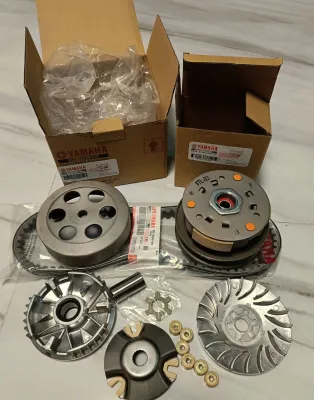
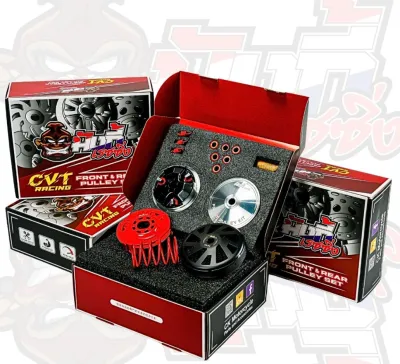
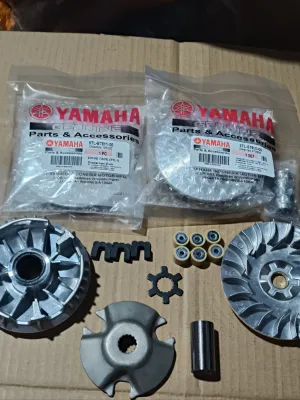
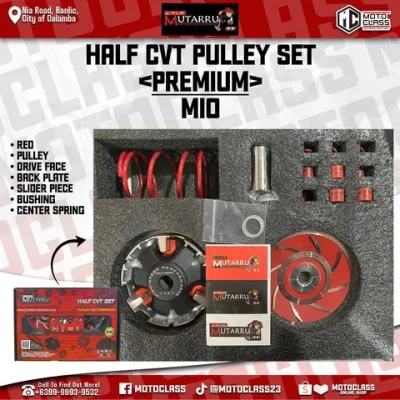
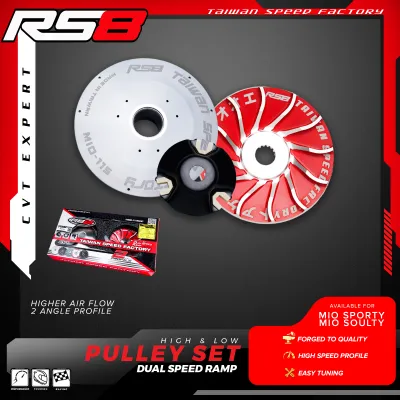
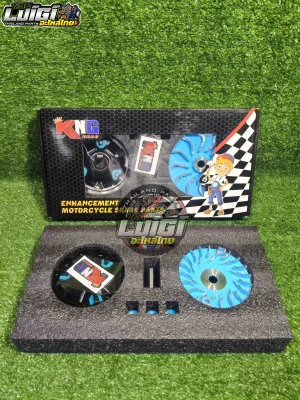
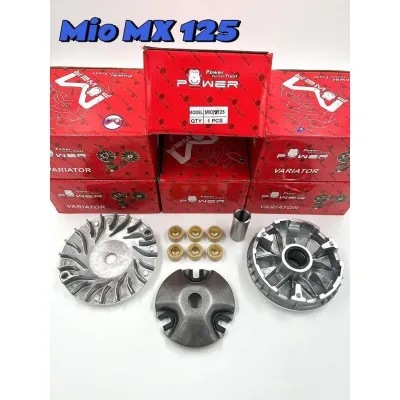
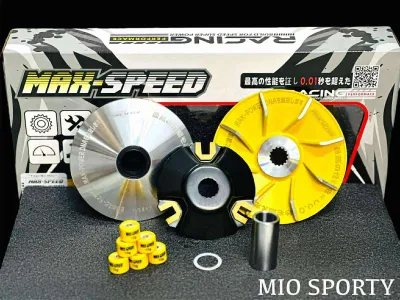
Prices are valid at publication and may change. Please refer to the product page for the latest price.
Because the Mio Sporty utilizes a dry CVT system, it relies on ambient air drawn through a small cooling duct to keep temperatures down. During heavy traffic jams on roads like EDSA or Commonwealth Avenue, the lack of forward motion limits this cooling capacity. The internal temperature of the CVT casing can spike dramatically, accelerating the wear of the rubber drive belt and causing the friction material on the clutch shoes to degrade.
High humidity and sudden tropical downpours add another layer of stress. Water, road grime, or fine dust entering the CVT housing can cause immediate belt slippage and accelerate the wear of the variator rollers and pulley faces. If your daily route involves navigating flooded streets or dusty bypass roads, your CVT components must be robust enough to maintain grip and resist contamination.
For a daily commuter, the ideal CVT setup must strike a careful balance between fuel economy and throttle response. A setup that revs too high before engaging will waste fuel and create excessive engine noise, while a setup that shifts too early will leave the scooter sluggish when trying to overtake jeepneys or climb steep flyovers. Durability and predictable power delivery must always take precedence over maximum top speed.
Key Components to Evaluate in a CVT Set
To make an informed decision when purchasing a CVT set, it is essential to understand how each individual component functions and how they wear over time. A complete CVT set typically bundles several critical parts that work in unison to transfer power from the engine to the rear wheel.

Drive Belt (V-Belt)
The drive belt is the sole link transferring rotational force from the front pulley (engine side) to the rear pulley (wheel side). When evaluating a drive belt, look for manufacturer specifications detailing its exact width, length, and cog angle. Daily-use belts should be constructed from high-grade rubber compounds reinforced with high-tensile aramid or Kevlar fibers, which resist stretching and cracking under high thermal loads.
Roller Weights (Flyballs)
Roller weights sit inside the movable drive face of the front pulley. As engine speed increases, centrifugal force pushes these rollers outward along precision-engineered ramps, forcing the pulley faces closer together and shifting the belt to a higher gear ratio. The mass of these rollers dictates the RPM at which this shift occurs. Heavier rollers promote lower engine RPMs and better fuel economy during steady cruising, while lighter rollers keep the engine in its power band longer for faster acceleration.
Clutch Assembly & Springs
The rear clutch assembly consists of the clutch shoes, clutch bell, small tension springs, and a large contrast spring (center spring). The small tension springs control the RPM at which the clutch shoes expand and grab the clutch bell to move the scooter. The large contrast spring keeps constant lateral pressure on the rear pulley faces, ensuring the belt does not slip under heavy loads. For daily commuting, these springs must have moderate tension ratings to prevent harsh, jerky engagement in slow traffic.
Pulley Faces (Drive & Driven)
The aluminum faces of the front and rear pulleys guide the belt as it moves up and down. Over thousands of kilometers, the constant friction of the belt can wear physical grooves into these metal faces. If you feel flat spots or hesitations during acceleration, inspect these faces for uneven wear. Replacing worn pulley faces is crucial, as putting a brand-new belt on grooved pulleys will cause the new belt to wear out prematurely.
OEM Replacements vs. Mild Aftermarket Upgrades
When upgrading or servicing your Mio Sporty’s transmission, you will generally choose between original equipment manufacturer (OEM) parts and aftermarket kits. Understanding the trade-offs of each path is vital for matching your budget and riding style.
OEM (Original Equipment Manufacturer) Parts
Yamaha Genuine Parts are engineered specifically for the Mio Sporty’s original engine characteristics. Choosing an OEM CVT set ensures exact factory fitment, predictable service life, and quiet operation. Because these parts undergo rigorous quality control, they offer unmatched reliability for riders who want a hassle-free, standard commuting experience. The primary benefit of OEM components is their balanced design, which optimizes fuel efficiency and smooth power delivery out of the box.
Mild Aftermarket Upgrades
Mild aftermarket kits, designed specifically for daily use, offer subtle performance adjustments. These kits often feature slightly optimized ramp angles on the front pulley and marginally lighter roller weights. These modifications improve low-end throttle response, making it easier to zip through tight traffic gaps. High-quality daily aftermarket sets focus on enhancing responsiveness without subjecting the engine to excessive stress or significantly reducing fuel mileage.
Racing and Track Setups
It is highly recommended to avoid aggressive racing or track-oriented CVT setups for a daily commuter. These kits often utilize extremely lightweight roller weights, stiff 1500 RPM or 2000 RPM springs, and aggressive high-angle pulleys. While they deliver explosive acceleration, they force the engine to run at very high RPMs even at low speeds. This results in poor fuel economy, increased engine vibration, rapid wear of the belt and rollers, and a noisy, uncomfortable ride that quickly becomes tiresome during a long daily commute.
Recommended CVT Configurations for Stop-and-Go Traffic
If you decide to customize your CVT set for better performance in heavy city traffic, you must select components that complement each other. A mismatched transmission will perform poorly and wear out quickly.
Roller Weight Strategy
The stock Yamaha Mio Sporty (carburetor-fed, 5TL engine generation) typically utilizes 10.5-gram or 11-gram roller weights from the factory. For a daily commuter seeking slightly better acceleration without sacrificing fuel economy, dropping the roller weight to a balanced 9.5 grams or 10 grams is a highly effective strategy. This minor adjustment allows the engine to rev slightly higher during initial takeoff, helping you pull away from traffic lights quickly, while still allowing the transmission to shift fully during cruising speeds. Always consult your specific model’s service manual to confirm the original OEM weight before purchasing replacements.
Belt Selection Criteria
When purchasing a replacement drive belt, always verify the exact part number (such as the standard 5TL-E7641-01 or its verified equivalent) to ensure proper length and width. Avoid unbranded or generic belts, as they often lack the internal reinforcement needed to survive tropical heat. Look for reputable brands that feature anti-counterfeit packaging, holographic seals, or verified serial numbers. A high-quality belt designed for daily commuting should explicitly state its heat-resistance properties and material composition.
Spring Tension Balance
To maintain smooth operation, your rear contrast spring must match your roller weights. For a daily commuter, a 1000 RPM contrast spring is generally the maximum recommended tension. This rating provides enough clamping force to prevent the belt from slipping when climbing steep bridges or carrying a pillion passenger, without putting excessive lateral strain on the belt. Using a stiffer spring (such as 1500 RPM or higher) on a stock engine will cause the belt to run hot, accelerate wear, and hurt your fuel economy.
Pre-Purchase Checklist
Before finalizing your purchase of a CVT set, run through this verification checklist to avoid compatibility issues:
- Model Verification: Confirm your scooter is a standard carburetor Mio Sporty, as CVT components differ from newer fuel-injected models like the Mio i 125.
- Engine State: Ensure the CVT kit is rated for your engine's displacement (stock 115cc vs. modified/bored-up engines).
- Component Completeness: Verify if the kit includes new slide pieces (sliders) for the ramp plate, as worn sliders cause annoying rattles and uneven pulley movement.
- Pricing Reference: Expect to spend between ₱1,500 and ₱3,500 for a reputable daily aftermarket CVT kit, while a complete package of Yamaha Genuine Parts typically ranges from ₱2,500 to ₱4,500 at authorized dealerships.
Installation, Break-In, and Safety Boundaries
Working on a motorcycle’s transmission carries inherent safety and mechanical risks. Proper installation techniques and post-installation care are critical to ensuring your new CVT set operates safely and lasts for thousands of kilometers.
Professional vs. DIY Installation
While replacing a CVT set is a popular project for experienced garage mechanics, it requires specialized tools to prevent damage. You will need a dedicated pulley holder (Y-tool), a clutch spring compressor, and a calibrated torque wrench. A common and costly mistake is using an impact wrench (air or electric gun) to tighten the pulley nuts without verifying the torque specs. Over-tightening can easily strip the soft threads of the crankshaft, while under-tightening can cause the front pulley nut to back off while riding, causing catastrophic engine damage. If you do not possess these specialized tools, have the installation completed by a qualified professional mechanic.
The Break-In Period
Newly installed CVT components require a dedicated break-in period to bed in properly. For the first 100 to 150 kilometers of riding, avoid sudden full-throttle acceleration, high-speed runs, or carrying heavy loads. This gentle initial usage allows the new V-belt to seat evenly into the pulley angles and lets the new clutch shoes wear slightly to match the inner curve of the clutch bell. Skipping this step can lead to premature belt glazing or uneven clutch engagement.
Routine Inspection Intervals
To keep your transmission performing at its best, establish a regular maintenance schedule. Open the CVT cover and inspect the system every 5,000 kilometers. Use a dedicated brake and parts cleaner to wash away accumulated clutch dust and road grime, ensuring the cleaner is safe for rubber components and oil seals. During this inspection, check the rollers for flat spots, look for cracks or fraying along the edges of the drive belt, and ensure the slide pieces move freely.
Safety Warning
Mixing mismatched aftermarket parts from different manufacturers without understanding their physical tolerances can lead to sudden belt failure or transmission lockup. Always prioritize safety by referring to your Mio Sporty’s factory service manual for exact torque values, wear limits, and assembly steps. If you experience unusual vibrations, high-pitched squealing, or a sudden loss of acceleration after installing new parts, stop riding immediately and inspect the transmission before proceeding.
Frequently Asked Questions (FAQ)
How often should I replace the CVT belt on my Mio Sporty?
Under normal riding conditions, manufacturers generally recommend replacing the CVT drive belt every 15,000 to 20,000 kilometers. However, for scooters driven daily in heavy, stop-and-go city traffic under intense tropical heat, the belt may wear out much faster. It is highly recommended to perform a visual inspection of the belt every 5,000 kilometers. Replace the belt immediately if you notice any cracking between the teeth, fraying of the side cords, or if the belt’s physical width has worn down past the service limit specified in your owner’s manual.
Will a lighter roller weight improve my fuel consumption?
No, installing lighter roller weights will generally increase your fuel consumption rather than improve it. Lighter rollers require the engine to spin at a higher RPM to generate the centrifugal force needed to shift the front pulley. While this higher RPM improves initial acceleration and throttle response—making it easier to navigate through slow-moving traffic—the engine must work harder and consume more fuel during steady-speed cruising. For the best daily commuting fuel economy, it is best to stay close to the stock roller weight.
Can I mix OEM rollers with an aftermarket drive belt?
Yes, you can safely use OEM roller weights alongside a high-quality aftermarket drive belt, provided the belt matches the exact dimensions and specifications required for the Mio Sporty. The CVT system is modular, and combining a durable, reinforced aftermarket belt with standard OEM rollers is a very common setup for riders who want factory-smooth acceleration with enhanced belt durability. Just ensure that all components are clean, free of grease, and installed to the correct torque specifications.
Community discussion
Share your experience or ask a question. Comments are reviewed before publication.