
Finding the right heavy-duty car ramps for SUVs and pickup trucks in the Philippines requires balancing high weight capacity, wide track width, and durable materials suited for tropical humidity. Standard passenger car ramps are simply not built to handle the sheer mass and wider wheelbases of popular local utility vehicles like the Toyota Hilux, Mitsubishi Montero Sport, Ford Ranger, or Isuzu D-Max. Using inadequate lifting equipment poses severe safety risks to both the vehicle and the person working beneath it. To choose the best heavy-duty ramps, you must look beyond generic marketing labels and focus on verified technical specifications. The ideal ramp set must support the vehicle’s heaviest axle weight with a comfortable safety margin, accommodate wide all-terrain or mud-terrain tires without sidewall overhang, and offer a gentle approach angle that prevents front bumper damage. This comprehensive guide details the critical engineering differences, material choices, and essential safety protocols required to safely elevate large vehicles in a home garage or workshop environment.
Why Standard Ramps Are Unsafe for SUVs and Pickup Trucks
Standard passenger car ramps are designed for compact sedans and light hatchbacks with modest curb weights and narrow tire profiles. When you attempt to drive a midsize SUV or a dual-cab pickup truck onto these consumer-grade ramps, you push the equipment past its structural limits. The primary hazard stems from the Gross Vehicle Weight Rating (GVWR) and uneven axle weight distribution. Larger vehicles carry a significant portion of their weight over the front axle, where heavy diesel engines, transmissions, and steel bull bars reside. A standard ramp rated for a total vehicle weight of 2,000 kilograms may buckle under the concentrated front-axle load of a fully equipped off-road rig.
Tire width and tread design present another major safety conflict. Standard ramps typically feature narrow tracks measuring 8 inches (approximately 203 millimeters) or less. In contrast, modern SUVs and pickup trucks in the Philippines commonly run on all-terrain or mud-terrain tires with widths ranging from 265 millimeters (10.4 inches) to 285 millimeters (11.2 inches) or more. Forcing a wide tire onto a narrow ramp causes the tread to overhang the structural side walls. This overhang concentrates the vehicle’s weight on the unsupported outer edges of the ramp, leading to rapid structural deformation, tire sidewall pinching, or a catastrophic roll-off.
Products mentioned in this guide
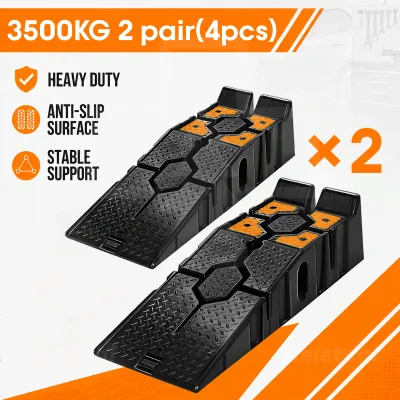
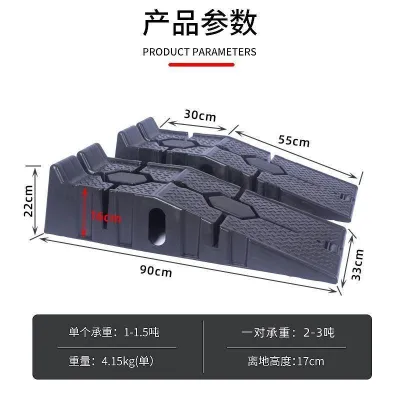
Prices are valid at publication and may change. Please refer to the product page for the latest price.
Furthermore, approach angles and ground clearance play a decisive role in ramp compatibility. While SUVs and trucks generally have higher ground clearance than sedans, many modern models feature low-hanging plastic front air dams, aerodynamic bumpers, or aftermarket skid plates. Standard ramps often have a steep, short incline designed to save storage space. Attempting to drive a large vehicle up a steep incline can cause the front bumper or undercarriage components to scrape against the ramp before the tires make contact. This not only damages expensive bodywork but can also push the ramps forward, causing them to slip out of alignment.
Essential Specifications to Verify Before Buying
Before purchasing any heavy-duty car ramps from local automotive supply stores or online marketplaces, you must carefully cross-reference the product specifications with your vehicle’s documentation. Never assume compatibility based on generic product titles or category terms.

Weight Capacity and Safety Margins: Always check whether the advertised weight capacity is rated “per pair” or “per ramp.” For instance, a ramp set labeled with a 12,000-pound (approximately 5,443 kilograms) capacity usually refers to the total weight of the vehicle it can safely support, meaning each individual ramp is rated for 6,000 pounds. To ensure maximum safety, always add a 20% to 30% safety margin above your vehicle’s actual front-axle weight. If your pickup truck’s front axle weighs 1,800 kilograms, choose a ramp set rated for at least 2,300 kilograms of front-axle load to account for dynamic forces during the climb.
Tire Width and Track Limits: Measure the actual physical width of your tire tread from outer edge to outer edge, keeping in mind that aggressive off-road tread blocks often bulge wider than the nominal sidewall measurement (e.g., 265/70R17). The usable width of the ramp’s driving surface must be at least 1 inch wider than your tire tread on both sides. This extra space prevents the tire sidewalls from rubbing against the raised safety lips of the ramp, which can damage the tire rubber and compromise steering control during ascent.
Lift Height and Approach Angle: The lift height determines how much working clearance you will have under the vehicle, typically ranging from 6 to 8 inches (150 to 200 millimeters). However, a higher lift requires either a longer ramp or a steeper incline. For heavy, long-wheelbase vehicles, a gentle approach angle between 11 and 17 degrees is highly recommended. A longer, more gradual slope ensures that the front bumper clears the ramp structure and allows for a smooth, controlled climb without requiring excessive engine throttle.
Material and Structural Design: Do not judge a ramp’s strength solely by the material name. High-density polyethylene (HDPE) ramps must feature dense, injection-molded structural ribbing on the underside to distribute weight evenly across the ground. For steel ramps, look for heavy-gauge structural steel plates with fully welded internal gussets, cross-members, and a durable powder-coated finish to resist corrosion. Inspect the weld quality and thickness of the metal; thin sheet metal can bend under the concentrated load of a heavy SUV. Always check your vehicle manufacturer’s instructions and the ramp’s product label before attempting to elevate the vehicle. If instructions conflict or the correct support points are unclear, stop immediately and consult a qualified professional.
Types of Heavy-Duty Ramps Suited for Larger Vehicles
Understanding the distinct categories of heavy-duty ramps allows you to select the style that best fits your garage space, vehicle weight, and maintenance habits.
Heavy-Duty Resin and Engineered Plastic Ramps
Modern high-density resin and engineered plastic ramps have become highly popular among DIY enthusiasts due to their excellent strength-to-weight ratio. These ramps are lightweight, making them easy to carry, position, and hang on a garage wall when not in use.
In the tropical, high-humidity climate of the Philippines, plastic ramps offer a distinct advantage over steel because they are completely rust-proof and impervious to moisture. However, when selecting resin ramps for heavy SUVs or pickup trucks, it is critical to verify that the manufacturer has incorporated UV stabilizers into the polymer blend. Prolonged exposure to intense tropical sunlight can degrade cheap plastics, making them brittle and prone to cracking under load. Always inspect the underside of the ramp to ensure it features a dense, grid-like honeycomb pattern, which is essential for preventing the plastic from flexing or bowing under a heavy vehicle. They are generally much easier to maneuver and store in a home garage compared to heavy metal alternatives.
Steel and Aluminum Ramps
For heavy-duty applications, modified off-road rigs, or professional workshop environments, metal ramps provide unmatched structural rigidity and maximum weight tolerances.
Solid steel ramps are incredibly robust and can easily support heavily modified pickup trucks equipped with steel bull bars, dual batteries, winches, and heavy underbody armor. However, steel ramps are heavy and cumbersome to move around a home garage. In the humid Philippine climate, they require diligent maintenance; if the protective powder coating is scratched or chipped during use, moisture will quickly lead to rust and compromise the structural integrity of the welds. Aluminum ramps offer a lighter, rust-resistant alternative with high strength, but they generally command a higher price point. Regardless of the metal chosen, ensure the driving surface features aggressive, raised traction patterns, such as punched holes or serrated rungs. Smooth metal surfaces become extremely slippery when wet from tropical rain or coated in engine oil, presenting a major safety hazard.
Multi-Piece and Extendable Ramps
Multi-piece and extendable ramps are specialized solutions designed for vehicles with exceptionally low front bumpers, extended wheelbases, or low-hanging aftermarket body kits.
These modular systems feature a detachable incline section that can be removed once the vehicle’s tires have successfully transitioned onto the flat top platform. Removing the slope section gives you unobstructed side access to the undercarriage, making tasks like oil changes, transmission servicing, or suspension work much easier. Additionally, the extended length of these ramps provides an incredibly low approach angle, preventing any scraping of front splitters or air dams. When using multi-piece ramps, you must strictly verify the locking mechanisms, heavy-duty pins, or interlocking joints before driving onto them. Any play or misalignment in the joints under the weight of a 2.5-ton vehicle can cause the sections to separate, leading to a sudden drop.
Safe Setup and Driving Techniques for Heavy Vehicles
Even the highest-quality heavy-duty ramps can fail or cause accidents if they are set up incorrectly or if proper driving protocols are ignored. Elevating a heavy SUV or pickup truck requires strict adherence to safety procedures.
Surface Preparation: Always position your ramps on a flat, level, and solid concrete or asphalt surface. Never attempt to use car ramps on soft soil, grass, gravel, or sloped driveways. The concentrated weight of a heavy vehicle can easily force the ramp to sink unevenly into soft ground, causing the ramp to tilt, slide, or collapse entirely. Additionally, ensure the ground is free of loose debris, sand, or oil spills that could reduce the ramp’s grip on the floor.
Traction and Anti-Slip Measures: When a heavy vehicle’s tires first make contact with the ramp’s incline, the rotational force of the wheels can push the ramps forward, causing them to slide away on smooth garage floors. To prevent this dangerous sliding, place heavy-duty rubber utility mats or specialized anti-slip pads underneath the entire base of the ramps. Many high-quality resin ramps come equipped with rubber feet on the underside, but adding a dedicated rubber mat provides an extra layer of friction and protects your garage floor from scratches.
Driving Technique: Before driving onto the ramps, align them perfectly straight with your front tires. If your vehicle is equipped with four-wheel drive (4WD), engage the 4WD Low range to provide smooth, controlled low-speed torque without needing to press the accelerator pedal aggressively. Always use a spotter standing safely to the side of the vehicle—never directly in front or behind—to guide your alignment. Creep forward slowly and steadily in your lowest gear. Do not rush or use sudden bursts of throttle, as this can cause the tires to spin or overshoot the ramps. Stop immediately the moment you feel the tires settle into the curved cradle at the top of the ramp against the built-in wheel stops.
Secondary Support Systems: Ramps are designed solely to lift the vehicle, not to serve as the sole safety support while you are working underneath. Once the vehicle is positioned on the flat top platform, immediately engage the parking brake firmly. Place heavy-duty wheel chocks snugly behind both rear tires to prevent any rolling. Finally, place high-capacity jack stands under the vehicle’s designated frame points or pinch welds, adjusting them so they sit just millimeters below the frame. This redundant safety setup ensures that if a tire slips or a ramp suffers a structural failure, the jack stands will catch the vehicle, protecting your life. Always consult your vehicle’s owner’s manual to verify the correct lifting and support points.
Inspection and Maintenance for Long-Term Safety
To ensure your heavy-duty car ramps remain safe for repeated use over many years, you must establish a routine inspection and maintenance schedule.
Pre-Use Visual Inspections: Before every single use, perform a thorough visual inspection of both ramps. For resin and plastic ramps, look closely for hairline cracks, stress whitening (where the plastic turns a lighter shade of white due to bending), or deformation in the internal honeycomb structure. For steel and aluminum ramps, check the welds for any signs of cracking, look for bent metal plates, and ensure the rubber anti-slip feet are still intact. If you detect any structural compromise, discard the ramps immediately; never attempt to repair or weld a damaged car ramp.
Cleaning Protocols: After completing your vehicle maintenance, wash away any mud, clay, road grime, engine oil, or brake fluid from the ramp surfaces. In the Philippines, vehicles often accumulate heavy mud and volcanic ash during the rainy season. Leaving these contaminants on the ramps can degrade the plastic polymer or accelerate rust on metal components. Use a mild detergent, water, and a stiff-bristled brush to clean the traction patterns thoroughly, ensuring the ramps maintain maximum tire grip for future use.
Proper Storage: Store your ramps in a dry, cool, and shaded area, such as a garage shelf or tool cabinet. Avoid leaving plastic ramps in direct sunlight, as ultraviolet (UV) radiation breaks down the polymer chains over time, leading to micro-cracking and material embrittlement. For metal ramps, keeping them away from moisture and rain prevents the onset of rust, ensuring the structural welds remain strong and dependable.
Frequently Asked Questions (FAQ)
Can I use heavy-duty car ramps on an uneven or sloped driveway?
No, you must never use car ramps on an uneven, sloped, or inclined surface. Placing ramps on a slope drastically alters the vehicle’s center of gravity and weight distribution, putting excessive lateral stress on the ramps that they were not designed to handle. This increases the risk of the ramps sliding out from under the tires or collapsing sideways. Furthermore, a sloped surface makes it highly difficult to secure the vehicle with wheel chocks, greatly increasing the hazard of a runaway vehicle. Always locate a flat, level, and solid concrete surface before elevating your vehicle.
Do I still need jack stands if my vehicle is resting on heavy-duty ramps?
Yes, using jack stands is a non-negotiable safety requirement even when your vehicle is resting securely on heavy-duty ramps. While high-quality ramps are designed to support the vehicle’s weight, they are mechanical devices subject to environmental wear, material degradation, and accidental tire slippage. Placing high-capacity jack stands under the vehicle’s designated frame points provides a critical secondary safety barrier. In the event of a ramp failure, tire deflation, or accidental vehicle movement, the jack stands will prevent the vehicle from crushing you. Never put any part of your body under an elevated vehicle without secondary safety supports in place.
How do I accurately measure my tire width for ramp compatibility?
To determine if your tires will fit safely on a specific ramp, start by checking the tire size code printed on the sidewall (for example, 265/70R17). The first number, 265, represents the nominal tire width in millimeters, which translates to approximately 10.4 inches. However, because off-road, all-terrain, or mud-terrain tires often feature aggressive side lugs that bulge outward, you should also take a physical measurement. Use a tape measure to measure the actual width of the tire tread from the outermost edge of the tread blocks to the opposite side. Ensure the usable track width of the car ramp is wider than this physical measurement by at least 1 to 2 inches to guarantee a safe, centered climb without sidewall damage.
Community discussion
Share your experience or ask a question. Comments are reviewed before publication.