
Navigating the bustling streets of the Philippines on a motorcycle requires a careful balance of agility, comfort, and safety. For daily commuters braving the dense traffic of Metro Manila or the coastal roads of Cebu, a half-face helmet is often the preferred choice due to its superior ventilation and lightweight design. However, riding with substandard headgear is a risk no rider should take, as a helmet is your primary line of defense against severe head injuries. When shopping for a certified helmet haft face riders must focus on finding a model that offers verified impact protection alongside everyday comfort. This guide breaks down the best Import Commodity Clearance (ICC) certified options available in the Philippine market across budget, mid-range, and premium price tiers to help you make an informed decision.
Why ICC Certification is Non-Negotiable in the Philippines
In the Philippines, wearing a certified motorcycle helmet is not just a personal safety choice; it is a strict legal mandate. Under Republic Act No. 10054, also known as the Motorcycle Helmet Act of 2009, all motorcycle riders and passengers are required to wear heavy-duty protective helmets while operating on any public road. To ensure these helmets actually protect lives, the Department of Trade and Industry (DTI) and the Bureau of Philippine Standards (BPS) require all imported helmets to undergo strict laboratory testing. Only helmets that pass these rigorous tests receive the official Import Commodity Clearance (ICC) sticker or the Philippine National Standard (PNS) mark.
These safety tests evaluate critical performance metrics, including impact attenuation (how well the helmet absorbs shock during a crash), penetration resistance (whether sharp objects can pierce the shell), and chin strap retention strength (ensuring the helmet remains securely on your head during an accident). Riding with an uncertified, substandard, or counterfeit helmet exposes you to catastrophic head injuries, as cheap plastic shells often shatter upon impact rather than dispersing the energy. Furthermore, operating a motorcycle with a non-compliant helmet carries severe legal penalties. Law enforcement officers and Land Transportation Office (LTO) enforcers actively inspect helmets at checkpoints; being caught with a non-certified helmet or a fake sticker results in a minimum fine of ₱1,500 for the first offense, scaling up to ₱10,000 and driver’s license confiscation for subsequent violations.
Products mentioned in this guide
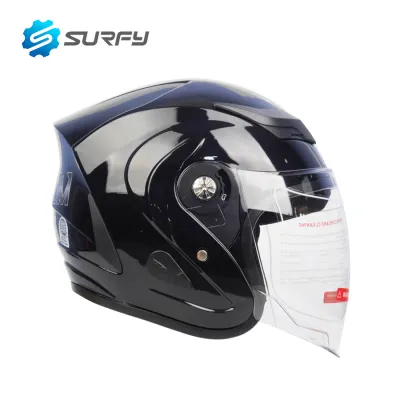
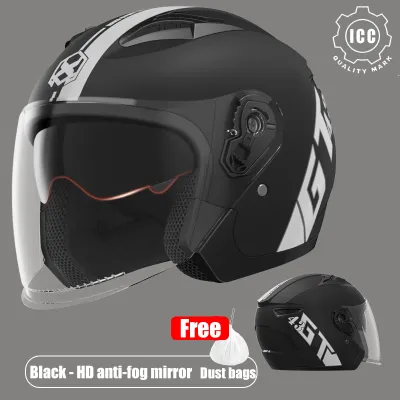
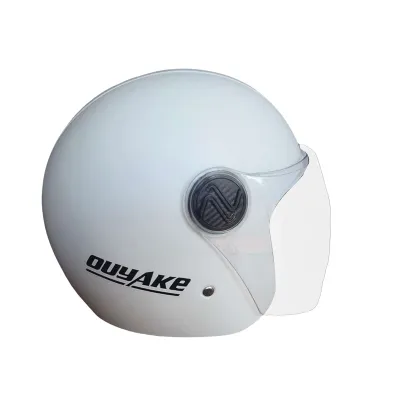
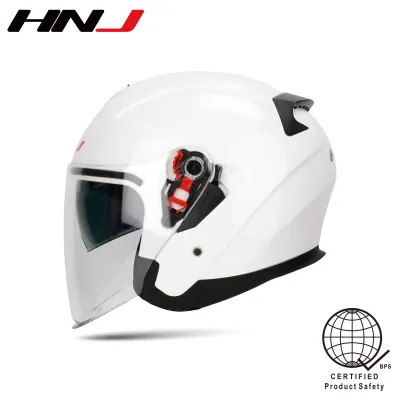
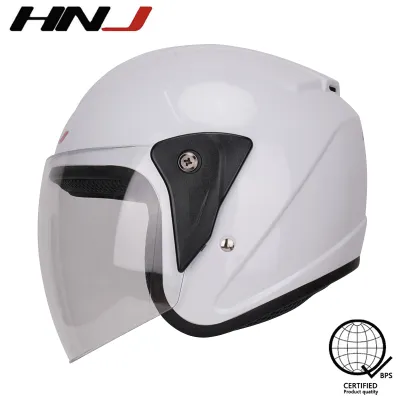
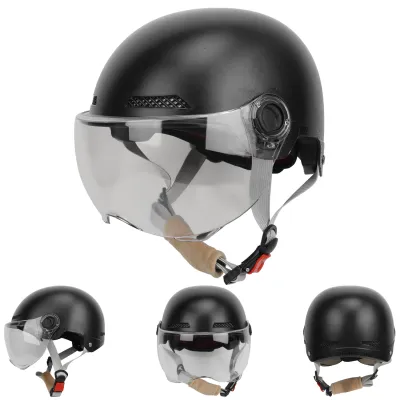
Prices are valid at publication and may change. Please refer to the product page for the latest price.
What to Look for in a Quality Half-Face Helmet
While the ICC sticker guarantees that a helmet meets baseline safety standards, choosing the right model requires evaluating several technical specifications to ensure it matches your specific riding habits. The outer shell material is your primary barrier against impact. Entry-level helmets typically use ABS thermoplastic, which is highly durable but can be relatively heavy. Mid-range and premium options often utilize advanced polycarbonate, fiberglass composites, or carbon fiber, which offer superior energy dissipation and a significantly lighter weight, reducing neck fatigue during long rides.

Beneath the outer shell lies the Expanded Polystyrene (EPS) liner. Look for helmets featuring multi-density EPS, which is engineered to absorb both low-speed and high-speed impacts by using different foam densities in strategic areas. Sizing and fit are equally critical; a helmet must fit snugly around your head without causing painful pressure points. To find your correct size, measure the widest part of your head—about 2.5 centimeters above your eyebrows—and compare it to the manufacturer’s sizing chart. Before purchasing, always check the applied product’s label and the manufacturer’s instructions to ensure a proper fit, as a loose helmet can easily slip off during a fall.
Given the tropical climate of the Philippines, an efficient ventilation system is essential. Opt for helmets with multi-channel ventilation that draws fresh air in through front intakes and exhausts hot, humid air out the back. Additionally, prioritize visors with scratch-resistant and UV-resistant coatings to protect your eyes from road debris and intense sunlight. A dual-visor system, featuring a clear outer shield and a retractable internal sun visor, is highly convenient for transitioning between bright daylight and dark underpasses. Finally, ensure the interior comfort liner is fully removable, washable, and hypoallergenic, allowing you to maintain hygiene and prevent odors caused by sweat.
Budget-Friendly ICC-Certified Helmet Haft Face Options
For riders seeking reliable protection on a tight budget, the entry-level market in the Philippines offers several certified options that meet national safety standards without breaking the bank. These helmets are ideal for short city commutes, low-speed suburban riding, and daily errands.
SEC Rise
The SEC Rise is a highly popular entry-level choice, typically priced in the budget-friendly band of ₱1,500 to ₱2,200. Designed for the practical daily commuter, it features a durable ABS thermoplastic shell and a simple yet effective single-visor setup. Its lightweight design helps minimize neck fatigue during slow-moving traffic jams, while the inner lining is removable for easy washing. However, the ventilation system is relatively basic, which may result in heat buildup during extended midday rides, and the wind noise reduction is minimal at higher speeds.
Gille GTS
Another competitive option in this price tier is the Gille GTS, which usually ranges from ₱1,800 to ₱2,500. This model stands out by offering a dual-visor system at a budget price point, allowing riders to drop down an internal sun shield with a simple side switch. The outer shell is made of impact-resistant polycarbonate, and the helmet features decent top vents to assist with airflow. The primary trade-off is its slightly bulkier shell profile and a slightly heavier weight compared to single-visor budget models, making it best suited for short-to-medium city trips.
Note: Always verify current retail prices and stock availability with official brand flagship stores or authorized physical dealers, as promotional discounts and seasonal inventory changes may affect local pricing.
Mid-Range ICC-Certified Helmet Haft Face Models
Moving into the mid-range segment, which generally spans from ₱2,500 to ₱5,000, riders gain access to significantly improved aerodynamics, better material construction, and enhanced comfort features. These helmets are tailored for daily commuters who spend more time on the road and occasionally travel on faster peripheral highways.
LS2 OF600 Copter
The LS2 OF600 Copter is a standout mid-range performer, typically positioned in the ₱3,500 to ₱4,800 price band. It is highly regarded for its exceptional ventilation, featuring large, open-mesh top intakes that are perfect for the hot and humid Philippine climate. The shell is constructed from LS2’s proprietary Kinetic Polymer Alloy (KPA), offering high penetration resistance and flexibility for energy absorption. It features a dual-visor system with an optically correct outer shield and a smooth drop-down sun visor. The main trade-off is that the massive ventilation ports can let in more wind noise at highway speeds, making it ideal for urban environments rather than high-speed touring.
Spyder Phoenix
The Spyder Phoenix, priced between ₱2,800 and ₱3,800, is a locally designed favorite that offers a sleek, aerodynamic profile and a comfortable fit tailored to Asian head shapes. It features a dual-visor design with a quick-release outer shield mechanism, allowing for fast visor swaps without tools. The interior lining uses premium moisture-wicking fabrics that keep the rider cool and dry. While the build quality is excellent, some riders note that the eye port is slightly narrower than other models, which can marginally restrict peripheral vision compared to more open designs.
Premium ICC-Certified Helmet Haft Face Investments
Premium half-face helmets, ranging from ₱5,000 to over ₱10,000, are designed for riders who demand the absolute best in terms of material technology, long-distance comfort, and acoustic refinement. These models are favored by maxi-scooter owners, long-distance tourers, and heavy daily commuters who prioritize durability and premium ergonomics.
HJC i30
The HJC i30 is a benchmark premium half-face helmet, generally priced between ₱6,000 and ₱8,500 in the local market. It features an advanced polycarbonate composite shell designed using CAD technology to ensure a lightweight, superior fit. The helmet is equipped with HJC’s Advanced Channeling Ventilation System (ACS), which flushes heat and humidity out of the helmet with incredible efficiency. The outer visor is Pinlock-ready, allowing riders to install an anti-fog insert for rainy-season riding, and the interior uses a premium, moisture-wicking, antibacterial fabric. The primary trade-off is the premium price tag, but the investment is easily justified by its outstanding durability and long-term comfort.
KYT NF-J
The KYT NF-J, typically retailing from ₱5,000 to ₱7,500, brings racing-derived aerodynamics to the half-face category. Developed with wind-tunnel testing, its shell shape minimizes drag and lift at higher speeds, making it incredibly stable on the highway. It features a dual-visor system, a highly secure micrometric retention buckle, and a plush, removable interior that accommodates eyewear. While it offers superb stability and style, the shell size is slightly larger than average, which may require a larger under-seat storage compartment on some scooters.
Quick Comparison of Recommended Half-Face Helmets
To help you quickly evaluate these options, the table below summarizes the key specifications and target use cases for each recommended model. All listed helmets are verified to meet safety standards and carry the necessary certification for legal road use in the Philippines.
| Model Name | Price Tier | Shell Material | Key Feature | Best For |
|---|---|---|---|---|
| SEC Rise | Budget (₱1,500 – ₱2,200) | ABS Thermoplastic | Lightweight, simple design | Short city commutes |
| Gille GTS | Budget (₱1,800 – ₱2,500) | Polycarbonate | Dual-visor system | Budget-conscious daily riding |
| LS2 OF600 Copter | Mid-Range (₱3,500 – ₱4,800) | Kinetic Polymer Alloy (KPA) | Massive open-mesh ventilation | Hot, humid urban commuting |
| Spyder Phoenix | Mid-Range (₱2,800 – ₱3,800) | Polycarbonate | Aerodynamic Asian-fit shell | Daily highway and city mixed riding |
| HJC i30 | Premium (₱6,000 – ₱8,500) | Advanced Polycarbonate | Pinlock-ready, ACS ventilation | Long-distance touring and heavy daily use |
| KYT NF-J | Premium (₱5,000 – ₱7,500) | Thermoplastic | Wind-tunnel tested aerodynamics | High-speed stability and maxi-scooter riding |
How to Spot Fake ICC Stickers and Buy Safely
As demand for certified helmets remains high, counterfeiters frequently produce fake ICC stickers to sell substandard helmets illegally. Riding with a fake sticker puts your life at risk, as the helmet itself has not undergone any legitimate safety testing. To protect yourself, always inspect the physical characteristics of the ICC sticker. Genuine ICC stickers issued by the Bureau of Philippine Standards (BPS) feature a distinct holographic background that shifts color when tilted under light, clear and crisp serial numbers, and a unique QR code that can be scanned using a smartphone to verify the manufacturer and model registration.
To ensure you are purchasing a genuine, certified helmet, avoid buying from unregistered street vendors or suspiciously cheap online listings that bypass standard retail pricing. Instead, purchase your gear from authorized physical dealers, official brand flagship stores, or verified distributors on reputable online marketplaces. When buying online, look for the official “Mall” or “Brand Store” badges, and cross-reference the seller’s name with the official distributor list provided on the brand’s official website. Always check the helmet’s packaging for the original user manual, warranty card, and a matching serial number on the box.
Frequently Asked Questions (FAQ)
Is a half-face helmet legal for highway riding in the Philippines?
Yes, half-face helmets are legal for highway riding in the Philippines, provided they meet the safety standards set by the Department of Transportation (DOTr) and the Land Transportation Office (LTO). The helmet must carry a genuine ICC or PNS certification sticker, and it must be properly secured with the chin strap fastened at all times. While full-face helmets offer superior jaw and facial protection at highway speeds, a certified half-face helmet remains fully compliant with national road laws.
Can I use a tinted visor on my half-face helmet legally?
Under Philippine land transportation guidelines, riders are permitted to use tinted visors during daylight hours to reduce sun glare. However, using heavily tinted, mirrored, or dark smoke visors during nighttime or heavy rain is illegal and highly dangerous due to severely reduced visibility. If you frequently ride during both day and night, the most practical and legally compliant solution is to use a helmet with a clear outer visor and a built-in, drop-down internal sun visor that can be retracted instantly when darkness falls.
How often should I replace my half-face helmet?
As a general industry standard, motorcycle helmets should be replaced every three to five years from the date of first use, or five years from the date of manufacture, even if they appear to be in perfect condition. Over time, the protective EPS liner naturally degrades due to exposure to sweat, hair oils, extreme heat, and environmental pollutants, losing its ability to absorb impacts effectively. Additionally, you must replace your helmet immediately if it has been involved in any crash or dropped from a significant height, as the EPS liner is designed to deform once to absorb impact energy and cannot protect you a second time.
Community discussion
Share your experience or ask a question. Comments are reviewed before publication.