
Quick Guide: What Makes a Raincoat Safe for Motorcycle Riding?
Riding a motorcycle during the rainy season in the Philippines presents unique challenges that standard rain gear simply cannot handle. When you are traveling at 60 km/h or higher in a sudden downpour, the wind forces water against your clothing with intense pressure. A casual, everyday raincoat designed for walking will quickly fail under these conditions. The fabric will balloon, the seams will leak, and the material may even tear due to aerodynamic drag.
Motorcycle-specific rain gear is engineered to withstand high wind resistance, physical abrasion, and high-speed water impact. Unlike casual outerwear, riding raincoats feature tailored fits that minimize flapping, reinforced stitching to resist tearing, and heavy-duty materials that do not easily degrade under friction. Choosing gear designed specifically for riding is a critical safety decision that directly affects your control of the motorcycle and your comfort on the road.
When evaluating a raincoat for motorcycle riding, several safety and functional features are non-negotiable:
Products mentioned in this guide
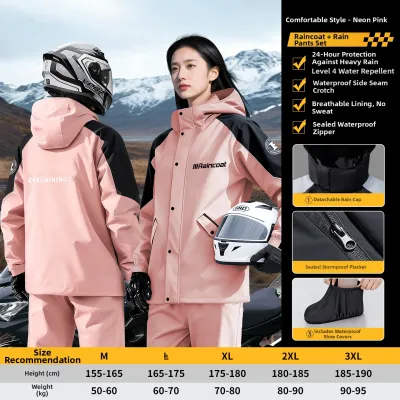
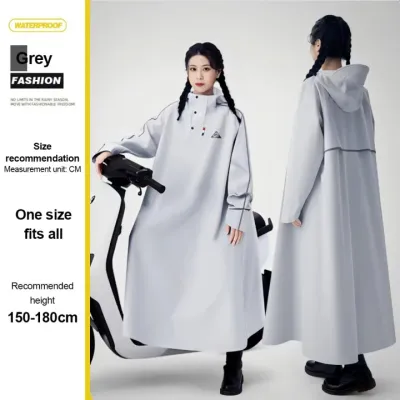
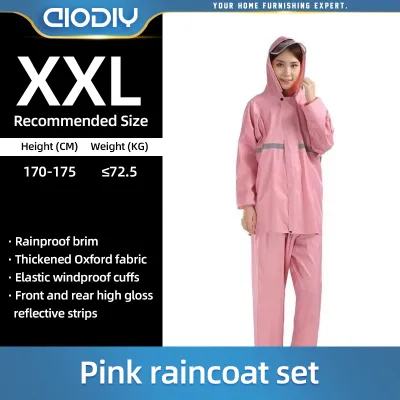
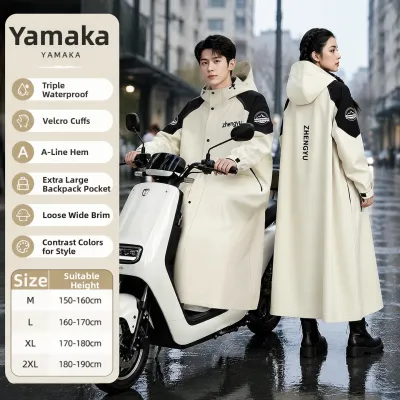
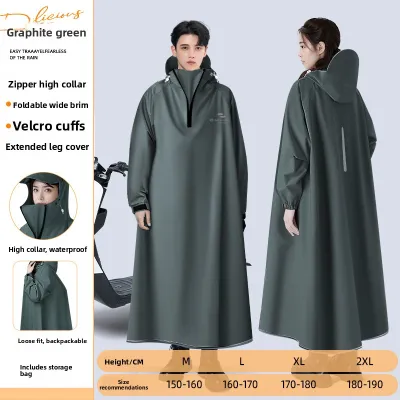
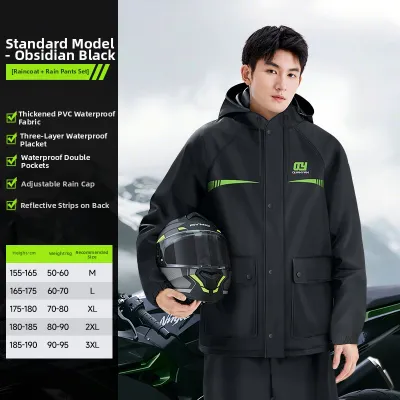
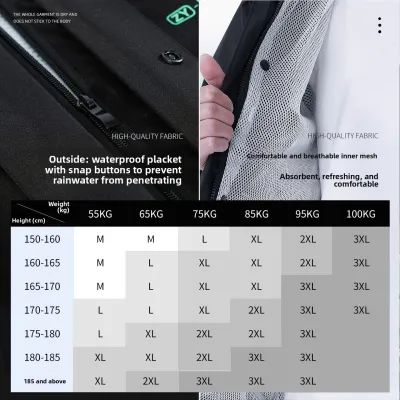
Prices are valid at publication and may change. Please refer to the product page for the latest price.
- Fully Taped or Heat-Sealed Seams: Every stitched seam must be sealed on the inside with waterproof tape to prevent water from being forced through the needle holes.
- High-Visibility Reflective Elements: Heavy rain severely limits visibility for all motorists. Large retroreflective panels on the back, chest, and sleeves are essential to ensure other drivers can see you.
- Secure Closures: Double storm flaps over zippers, adjustable collar seals, and tight wrist closures are necessary to block water ingress at high speeds.
For most riders, a two-piece rain suit consisting of a separate jacket and pants offers the best balance of safety, weather protection, and physical mobility. While one-piece suits provide absolute sealing, they can be difficult to put on quickly on the roadside. Ponchos, on the other hand, should be restricted to low-speed, short-distance scooter commutes, as their loose fabric poses significant safety hazards at highway speeds.
Recommended Raincoat Styles for Different Riding Scenarios
The ideal raincoat for your daily ride depends heavily on your motorcycle type, typical riding speed, and commute distance. Your riding posture also plays a major role in how water interacts with your gear. For example, an upright posture on a scooter or underbone motorcycle exposes your lap and chest differently than a forward-leaning stance on a sport or naked bike, where water can pool quickly in the crotch area or run down the back of your neck. Understanding these dynamics helps you choose the style that matches your daily route.

Two-Piece Rain Suits (Jacket and Pants)
Two-piece rain suits are the most versatile and popular option for daily commuters and long-distance riders alike. Having a separate jacket and pants allows you to adapt to changing weather conditions easily. If you encounter a light drizzle or a damp road after the rain has stopped, you can wear just the jacket to stay dry from road spray without overheating in the full suit. This configuration also makes quick roadside stops and restroom breaks significantly less cumbersome than wearing a full-body suit.
One of the most critical areas to examine on a two-piece suit is the overlap zone between the jacket and the pants. When you sit on a motorcycle, your jacket naturally rides up, and your pants slide down slightly. To prevent water from seeping into this gap, look for a jacket with an extended drop-tail hem that covers your seat, combined with high-waisted rain pants. A high waist ensures that even in a sporty, forward-leaning riding position, the jacket hem remains well below the waistband of the pants, keeping your midsection completely dry.
Additionally, high-quality two-piece suits feature robust adjustment points at the wrists, upper arms, waist, and ankles. These are typically heavy-duty Velcro straps or snap buttons. Tightening these closures prevents the fabric from flapping violently in the wind at high speeds, which reduces rider fatigue and prevents the material from tearing over time. Securing the ankles also keeps the pants from riding up your boots, maintaining a solid barrier against road spray.
Motorcycle Rain Ponchos
Motorcycle-specific rain ponchos are designed for a very narrow and specific use case. They are best suited for scooter riders traveling short distances at low speeds, such as navigating inner-city streets or neighborhood roads. Ponchos are incredibly quick to put on and can easily drape over a backpack or even extend forward to cover the front cowl of a scooter, keeping your legs and hands relatively dry. They are also highly packable, making them convenient to store under the seat of a small automatic motorcycle.
However, riding with a poncho at high speeds carries severe safety risks. Because a poncho is open at the bottom and loose by design, high winds can cause the fabric to billow out like a parachute. This aerodynamic drag can destabilize your motorcycle, making steering difficult and dangerous, especially when passing large vehicles. More critically, loose, flapping fabric runs the risk of getting caught in the moving parts of your motorcycle, such as the rear wheel, chain, sprocket, or belt drive, which can lead to a sudden wheel lock and a serious crash.
If you decide that a poncho is suitable for your low-speed commute, you must choose one designed with specific safety features. Look for models that include built-in thumb loops to keep the front fabric secured over your handlebars, as well as adjustable waist belts or leg straps. These straps anchor the loose material tightly against your body, preventing the wind from lifting the poncho and blocking your vision or tangling in the wheels.
One-Piece Riding Suits
One-piece riding suits, often referred to as rain overalls, provide the ultimate level of waterproofing. Because the jacket and pants are integrated into a single continuous garment, the waist gap is completely eliminated. This design removes the risk of water pooling in your lap and seeping through the zipper or crotch seam, which is a common failure point in two-piece suits during prolonged exposure to heavy downpours.
Despite their superior protection, one-piece suits come with notable practical drawbacks, particularly in a hot and humid tropical climate. Putting on a one-piece suit on the side of the highway during a sudden downpour requires a high level of flexibility and patience, as you must slide your boots through the entire length of the suit. Furthermore, because these suits seal your body completely, they trap body heat and sweat. Without high-end breathable membranes, riding in a one-piece suit in tropical humidity can make you feel as wet from sweat as you would have been from the rain.
For these reasons, one-piece suits are primarily recommended for long-distance touring riders, adventure riders, and highway commuters who face hours of continuous, heavy rain on open provincial roads. If your journey involves long stretches at sustained speeds where stopping to adjust gear is not an option, the absolute waterproof security of a one-piece suit outweighs the convenience of a two-piece system.
Critical Features to Check on the Product Tag and Seams
When shopping for a motorcycle raincoat, it is easy to be misled by attractive designs or vague marketing claims of absolute waterproofing. Shifting your focus to physical construction details and verifiable specifications on the product tag will help you identify a truly durable and reliable garment.
Seam Construction
To manufacture a raincoat, pieces of fabric must be stitched together. Every single stitch creates a tiny hole in the waterproof material. Under the pressure of wind-driven rain, water will inevitably find these holes and leak inside. To prevent this, high-quality motorcycle raincoats feature heat-sealed or taped seams.
Before purchasing, turn the garment inside out and physically inspect the interior. You should see a clear, flexible polyurethane (PU) tape hot-pressed over every single stitched seam. Pay close attention to high-stress areas such as the shoulders, underarms, and the crotch of the pants. If you see bare stitching with no tape, or if the tape is thin, bubbling, or peeling at the edges, the garment will leak in heavy rain.
Waterproof Ratings vs. Reality
Many reputable gear manufacturers list a hydrostatic head rating on the product tag, measured in millimeters (mm). This rating indicates how much water pressure the fabric can withstand before moisture penetrates.
- 5,000 mm: Suitable for light rain and short commutes at moderate speeds.
- 10,000 mm: The recommended baseline for daily motorcycle commuters facing heavy, wind-driven rain.
- 20,000 mm and above: Professional-grade protection designed for long-distance touring and extreme storm conditions.
While these ratings are a helpful benchmark, they only measure the fabric itself. A fabric rated at 20,000 mm is useless if the seams are poorly taped or if the Durable Water Repellent (DWR) coating on the outer surface fails. The DWR coating causes water to bead up and roll off the fabric. If the DWR wears off, the outer fabric will absorb water—a state known as “wetting out.” While the inner waterproof barrier may still keep water from reaching your skin, the heavy, water-logged outer layer will completely block air circulation, causing rapid sweat buildup inside.
Collar and Cuff Design
Water entry often occurs at the openings of the garment rather than through the fabric itself. The collar is a major entry point; rainwater running down your helmet can easily seep into your neck. Look for a raincoat with a high, adjustable collar that seals tightly against the base of your helmet. A soft fleece or microfiber lining on the inside of the collar is also important to prevent skin chafing when you turn your head to check your blind spots.
Similarly, the main front zipper must be shielded. A quality riding raincoat will feature a double storm flap—a wide strip of waterproof fabric that folds over the zipper and secures with Velcro or snap buttons. This creates a physical labyrinth that blocks horizontal rain from reaching the zipper teeth. The cuffs should feature wide, adjustable elastic or Velcro bands that allow you to create a tight seal around your gloves.
Reflectivity and Visibility
Rain, road spray, and fog drastically reduce visibility on the road. In a heavy downpour, other drivers may not see you until they are dangerously close. Because of this, high-visibility features are a vital safety component of any motorcycle raincoat.
Avoid raincoats that are entirely black or dark gray unless they feature massive, high-quality reflective panels. Opt instead for bright, high-visibility colors like neon yellow, orange, or bright green. Ensure the raincoat has wide retroreflective strips across the upper back, shoulders, chest, and the sides of the legs. These strips reflect headlight beams back to other drivers, making your silhouette visible from 360 degrees even in low-light, torrential rain.
Sizing, Layering, and Visibility for Tropical Downpours
Selecting the correct size and managing your layers is crucial to maintaining safety, comfort, and control of your motorcycle during a tropical storm. Proper integration with your existing riding gear ensures that water does not find a way inside through gaps at your wrists, ankles, or neck.
Sizing Over Armor
Motorcycle raincoats are designed to be worn as an outer protective shell over your regular riding gear, including your armored jacket and riding pants. If you purchase a raincoat in your standard t-shirt size, it will likely be too tight when worn over your armor. A tight raincoat restricts your shoulder, elbow, and knee mobility, making it difficult to steer, lean, or react quickly to road hazards.
When buying, check the manufacturer’s sizing guide carefully. Many brands specifically design their motorcycle rain gear to be “over-fit,” meaning they have already factored in the bulk of armor, allowing you to buy your standard size. However, if the brand does not specify this, you should generally size up by one or two sizes. Put on your full armored riding gear before trying on or measuring for a raincoat to ensure you have complete freedom of movement in your arms and shoulders.
Managing Tropical Humidity
In the Philippines, the rainy season brings wet weather, but the ambient temperature often remains warm and highly humid. Wearing a completely sealed, non-breathable plastic raincoat will quickly trap your body heat and sweat. Within minutes of riding, you can become completely soaked from your own perspiration, leading to discomfort and distraction.
To manage this, look for raincoats that incorporate strategic ventilation. Features like back exhaust vents shielded by storm flaps, mesh inner linings that keep the waterproof fabric from sticking to your skin, and underarm zippered vents (pit zips) allow hot air to escape while keeping rain out. Additionally, avoid wearing heavy cotton shirts under your riding gear; instead, opt for lightweight, moisture-wicking synthetic base layers that dry quickly and help regulate your body temperature.
Footwear and Glove Integration
To prevent water from funneling into your boots and gloves, you must follow the correct overlapping sequence when putting on your gear.
For your lower body, always wear your rain pants over the shafts of your riding boots. If you tuck your pants inside your boots, rainwater running down your legs will drain directly into your footwear, filling your boots with water. Ensure the pants have adjustable ankle straps or zippers to seal the hem tightly against the boot to prevent road spray from blowing upward.
For your upper body, the glove-to-sleeve interface depends on the design of your gloves. If you wear short-cuff gloves, tuck them under the sleeves of your rain jacket, and tighten the wrist Velcro. If you wear long-gauntlet gloves, you can wear them over the sleeves, but in extremely heavy rain, water running down your arms can seep into the gauntlet opening. In this scenario, it is often safer to pull the jacket sleeves over the gauntlet cuffs and secure them tightly to create a shingle effect that sheds water outward.
Pre-Ride Inspection
Before the peak of the rainy season arrives, perform a quick pre-ride inspection of your rain gear. Lay the garments flat and inspect the inner seam tape for any signs of cracking, peeling, or dry rot (delamination). Check all zippers, Velcro straps, and snap buttons to ensure they function smoothly and hold securely.
To verify the condition of the outer waterproof barrier, perform a simple water bead test. Spray a small amount of clean water onto the dry outer fabric of the raincoat. If the water beads up and rolls off effortlessly, the DWR coating is active and functioning. If the fabric absorbs the water and darkens, the DWR has worn off. You can restore this barrier by applying an aftermarket, spray-on DWR treatment designed specifically for outdoor and motorcycle apparel, following the product’s application instructions.
Frequently Asked Questions (FAQ)
Can I use a regular hiking raincoat for motorcycle riding?
A regular hiking raincoat is not suitable for motorcycle riding. Hiking gear is designed for low-speed walking and lacks the wind resistance, aerodynamic tailoring, and physical durability required to withstand highway speeds. At riding speeds, a hiking jacket will balloon, flap violently, and pull at your neck, which causes rider fatigue and distracts you from the road. Furthermore, hiking pants do not feature the reinforced seat and crotch seams needed to endure the friction and pressure of sitting on a motorcycle saddle, leading to rapid wear and water leakage.
How do I prevent my motorcycle raincoat from smelling musty?
To prevent your raincoat from developing a musty smell or growing mold, never fold it up and store it in your under-seat compartment or top box while it is still wet. After every ride, turn the raincoat inside out and hang it on a wide hanger in a shaded, well-ventilated indoor area to air dry completely. Avoid placing the gear in direct sunlight, near heaters, or in a clothes dryer, as extreme heat can melt, crack, or peel the internal polyurethane seam tape and degrade the outer waterproof coatings. Always consult the manufacturer’s care label for specific washing and drying instructions.
Should I buy a raincoat with a built-in thermal liner?
In the warm, tropical climate of the Philippines, a raincoat with a built-in thermal liner is highly impractical and will quickly cause you to overheat. While rain can bring slightly cooler road temperatures, the humidity remains high, making heavily insulated gear uncomfortable for daily riding. It is much more practical to purchase a lightweight, unlined waterproof shell. If you occasionally ride in cooler upland areas like Baguio or along high-altitude mountain passes, you can easily layer a separate, removable fleece jacket or thermal base layer underneath your rain gear for modular temperature control.

Community discussion
Share your experience or ask a question. Comments are reviewed before publication.