
Quick Guide to Choosing a Motorcycle Coffee Holder
Selecting a reliable coffee holder for motorcycle setups in the Philippines requires balancing cockpit space, container size, and structural durability. Because local riding conditions involve a mix of intense tropical heat, sudden torrential downpours, and uneven road surfaces, a basic clamp-and-go accessory is rarely sufficient. The ideal holder must match your specific handlebar geometry, provide a secure grip on your preferred beverage container, and withstand constant engine vibration without slipping.
This guide outlines the essential evaluation criteria, mounting configurations, and safety protocols necessary to choose and install a secure container mount. Rather than ranking specific commercial brands, this resource focuses on helping you analyze your motorcycle’s architecture and your daily riding habits to make an informed, safe purchase. By understanding the mechanical differences between various mounting styles and materials, you can prevent distracting spills and ensure your accessory does not compromise vehicle control.
What to Look for in a Motorcycle Coffee Holder
Evaluating an aftermarket accessory for your motorcycle requires looking beyond marketing claims and focusing on physical specifications. A cup holder must integrate seamlessly with your bike’s existing controls while enduring harsh environmental exposure. Prioritizing compatibility, adjustability, and material quality ensures the accessory remains functional and safe over thousands of kilometers.
Products mentioned in this guide
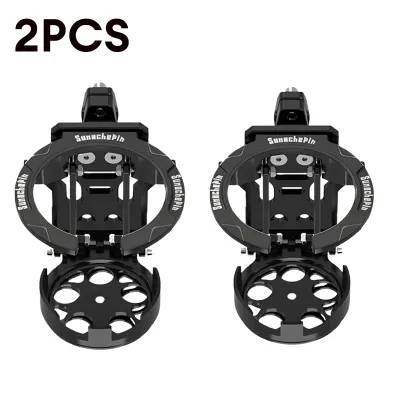
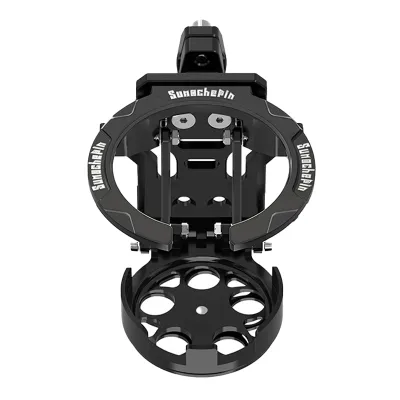
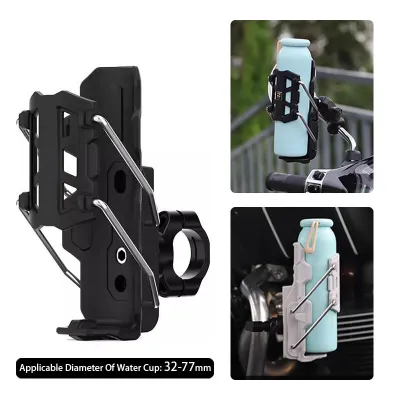
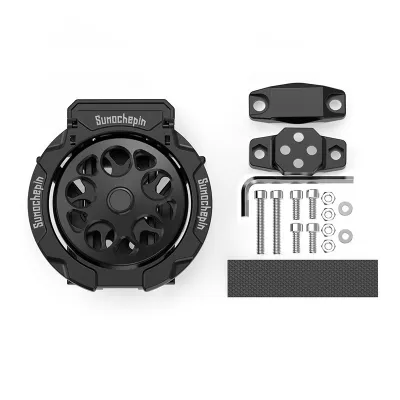
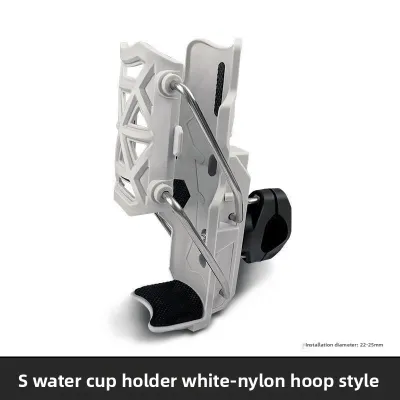
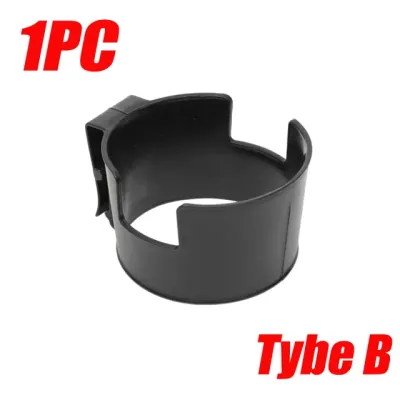
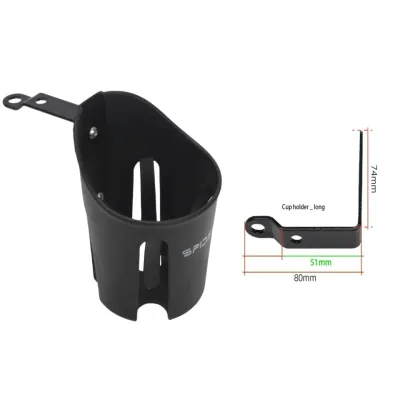
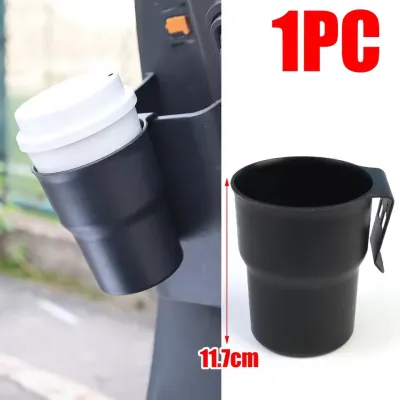
Prices are valid at publication and may change. Please refer to the product page for the latest price.

Mounting Compatibility and Handlebar Dimensions
Before purchasing any cup holder, you must determine the exact dimensions of your preferred mounting point. Handlebars are not uniform; they vary in outer diameter depending on the motorcycle make, model, and style. Common tubular handlebar diameters include 22 millimeters (7/8 inch) for most standard underbones, backbones, and scooters, and 28.6 millimeters (1-1/8 inch) for fat bars found on adventure or dual-sport motorcycles.
To find your handlebar’s exact measurement, use a vernier caliper or wrap a flexible measuring tape around the exposed metal tube to calculate the circumference, then divide by 3.14 (pi). You must also check for available horizontal clearance along the bar. Avoid forcing a mounting bracket onto tapered sections, bent curves, or areas crowded with control cables, brake hoses, and electrical wiring harnesses. Always cross-reference your measurements with the manufacturer’s specified clamp range printed on the product packaging or listed in the technical specifications.
Furthermore, you must verify your specific vehicle model, year, and handlebar interface against the accessory documentation. Never assume a product is compatible simply because it is marketed as a universal motorcycle accessory. If your motorcycle features fully enclosed plastic fairings or non-standard cast handlebars—as seen on many modern automatic scooters—traditional handlebar clamps cannot be used, and you will need to explore alternative mounting points.
Cup Capacity and Adjustability
Your choice of cup holder must accommodate the specific drinkware you plan to carry on your daily commute or weekend tours. Motorcycle cup holders generally fall into two design categories: fixed-ring designs and adjustable jaw mechanisms. Fixed-ring holders feature a solid circular frame, often lined with foam or rubber, which works well for standard-sized aluminum beverage cans or tapered paper coffee cups but offers zero flexibility for larger containers.
Adjustable jaw mechanisms utilize manual thumbscrews, spring-loaded tension arms, or ratcheting clamps to expand or contract the holder’s inner diameter. This adjustability is crucial if you regularly switch between a slim water bottle, a standard 12-ounce paper coffee cup, or a wide-base vacuum-insulated travel tumbler. Carrying a container that does not match the holder’s physical dimensions introduces significant risk; a loose cup can bounce out of the holder when hitting speed bumps, while an oversized container can deform the mount or slip out due to a high center of gravity.
To ensure a secure fit, measure the outer base diameter of your most frequently used travel mug or flask. Compare this measurement directly to the minimum and maximum opening widths specified by the cup holder manufacturer. If you prefer using disposable paper cups from local coffee shops, look for holders that feature flexible internal rubber tabs or a tapered basket design, which help stabilize top-heavy, flexible containers.
Material and Weather Resistance
Daily riding in the Philippines subjects aftermarket accessories to extreme environmental stress. The combination of high relative humidity, intense ultraviolet (UV) radiation from the tropical sun, and corrosive salty air in coastal regions will rapidly degrade low-quality materials. Cheap plastics can become brittle and crack within months of outdoor exposure, while untreated steel components will rust after a single monsoon downpour.
When evaluating cup holders, prioritize materials known for their durability and corrosion resistance. Marine-grade stainless steel, CNC-machined anodized aluminum, and UV-stabilized high-impact polycarbonates or ABS plastics are highly resilient options. Anodized finishes provide an oxide layer that resists scratching and corrosion, while marine-grade metals prevent rust even when exposed to acidic rain and road grime.
To protect your investment, verify material and weather-resistance claims by reviewing official product labels, material safety data sheets, or manufacturer specifications. Do not rely solely on visual appearance, as painted mild steel can easily be mistaken for anodized aluminum, and untreated plastics can look identical to UV-resistant polymers. Choosing high-grade materials ensures the clamping mechanism retains its structural integrity and clamping force over years of exposure.
Common Motorcycle Coffee Holder Mounting Styles
Motorcycle cup holders are available in several distinct mounting configurations, each designed to suit different cockpit layouts, riding postures, and aesthetic preferences. Understanding the trade-offs of each style allows you to select a configuration that fits your motorcycle’s geometry without interfering with your physical control of the bike.
Handlebar-Mounted Cup Holders
Handlebar-mounted cup holders are the most popular and widely available style on the market. These systems utilize a rigid metal or composite clamp that bolts directly onto an exposed, straight section of the handlebar. This placement keeps your beverage highly visible and within easy reach, allowing you to grab or replace your drink quickly during brief stops at traffic lights.
However, handlebar mounts have notable drawbacks that you must consider before installation. They consume valuable space on your handlebars, which can limit your ability to mount other essential electronics such as phone holders, GPS navigators, or action cameras. Additionally, because handlebars are directly connected to the front fork assembly, they transfer engine and road vibrations directly to the cup holder. If your beverage container does not have a completely leak-proof, locking lid, this vibration can cause hot liquids to splash onto your hands, controls, or instrument cluster.
When installing a handlebar-mounted holder, you must establish a clear safety boundary. Ensure the bracket and the cup do not compress or pinch any throttle cables, clutch lines, or front brake hoses. The mount must be positioned so that it does not block your view of the instrument panel or interfere with your hands as you operate the throttle, front brake lever, or handlebar switch cubes.
Mirror Stem or Fork-Mounted Holders
For riders of underbone motorcycles, modern automatic scooters, or sportbikes with fully faired cockpits, exposed handlebar space is often non-existent. Mirror stem and fork-mounted holders offer an elegant alternative by utilizing existing structural bolts on the front end of the motorcycle. Mirror stem mounts typically attach to the threaded mirror base or clamp directly around the thin metal mirror stalk using a specialized small-diameter bracket.
This mounting style frees up valuable space on the center of your handlebars and often places the beverage lower down, closer to the motorcycle’s steering axis. Keeping the weight lower can minimize the impact on steering feel, especially when carrying heavier insulated flasks. Fork-mounted holders, which clamp onto the exposed upper tubes of the front suspension, are another robust option popular among cruiser and custom motorcycle riders.
Despite their convenience, these alternative mounting points require careful verification during installation. You must ensure that the added weight of a filled beverage container does not cause the mirror stem to rotate, loosen, or vibrate excessively, which could compromise your rearward visibility. For fork-mounted options, you must verify that the clamp does not interfere with the front suspension’s travel under hard braking or contact the radiator, front fender, or fairings when the forks compress.
Tank Bags and Saddlebag Cup Holders
If you prefer long-distance touring, adventure riding, or operating a scooter with limited front mounting options, soft-mount cup holders integrated into luggage systems are an excellent choice. These holders are often built directly into the side pockets of magnetic or strap-on tank bags, or they can be attached to the exterior webbing of saddlebags and tail bags using heavy-duty nylon straps, buckles, or hook-and-loop fasteners.
Soft-mount holders excel at dampening high-frequency engine vibrations, significantly reducing the risk of beverage spillage. They also keep your drink shielded from direct wind blast, which helps maintain the temperature of your beverage for longer periods. Because they are integrated into your luggage, they do not clutter your handlebars or mirrors, preserving the clean, original look of your motorcycle’s cockpit.
The primary trade-off with luggage-integrated holders is accessibility. Because these mounts are located on your fuel tank or behind your seating position, it is generally unsafe to reach for your beverage while the motorcycle is in motion. You will need to bring the vehicle to a complete stop in a safe parking area to take a drink. Additionally, you must ensure that the straps, buckles, or backing plates of the cup holder do not rub against your fuel tank or painted fairings, as road dust trapped underneath can act as an abrasive and scratch your motorcycle’s finish.
Safe Installation and Riding Practices
Installing an aftermarket cup holder involves more than just tightening a few bolts. Because any object mounted to your motorcycle’s steering or control area can impact vehicle handling, you must follow strict installation protocols and safety boundaries to prevent accidents or mechanical interference.
Checking Clearances and Steering Movement
Your primary safety consideration when installing any handlebar, mirror, or fork-mounted accessory is maintaining unrestricted steering movement. Immediately after mounting the cup holder—and before placing any beverage container inside it—you must perform a comprehensive lock-to-lock steering check. This test must be conducted while the motorcycle is securely parked on its center stand on level ground.
Slowly turn the handlebars fully to the left until they hit the steering stop, then turn them fully to the right. Throughout this entire range of motion, the cup holder, its mounting bracket, and your chosen beverage container must not make physical contact with the front fairing, windshield, fuel tank, turn signals, or instrument cluster. Additionally, verify that the holder does not pinch, pull, or bind any control cables, electrical wires, or hydraulic brake hoses.
If you detect any physical contact, resistance, or cable tension at any point during the lock-to-lock test, stop the installation immediately. Do not attempt to ride the motorcycle with restricted steering or compromised cable routing. Reposition the mounting bracket to a different location on the handlebar or adjust its angle until the handlebars can move freely from stop to stop without any interference. If your motorcycle has modified handlebars or aftermarket controls, refer to your original vehicle service manual to ensure all cable routing clearances remain within factory specifications.
Securing the Mount to Prevent Vibration Loosening
Motorcycles produce continuous, high-frequency vibrations from both the engine and road surface irregularities like potholes, expansion joints, and speed humps. Over time, these vibrations can cause mounting bolts to back out, leading to the cup holder slipping, rotating, or detaching completely while you are riding. A detached cup holder at speed is a severe safety hazard for you and trailing traffic.
To prevent vibration-induced loosening, always use the rubber shims, plastic inserts, or grip tape supplied by the manufacturer. These inserts serve a dual purpose: they protect your handlebar’s anodized or chrome finish from metal-on-metal scratching and significantly increase the friction between the clamp and the bar, preventing the mount from rotating under the weight of a full beverage. For added security on metal-to-metal threads, consider applying a single drop of medium-strength (blue) thread-locking compound to the mounting bolts.
When tightening the fasteners, always adhere to the manufacturer’s specified torque limits if provided in the instruction manual. Overtightening can strip the threads of aluminum brackets or crush thin-walled tubular handlebars, compromising their structural integrity. Finally, make the cup holder a permanent part of your pre-ride inspection routine. Before every ride, give the holder a firm physical shake to ensure the bracket remains tight and the clamping mechanism is secure.
Maintaining Your Motorcycle Cup Holder
Keeping your cup holder clean and mechanically sound is essential for long-term reliability and hygiene. Road grime, dust, insect splatters, and sticky beverage spills can accumulate quickly inside the holder, creating a breeding ground for bacteria and causing adjustable mechanical parts to bind or seize.
Regularly clean the cup holder using mild dishwashing soap, warm water, and a soft microfiber cloth or sponge. Gently scrub away any dried coffee spills, road salt, or dirt buildup, paying close attention to adjustable joints, springs, and thumbscrews. Avoid using harsh chemical solvents, gasoline, kerosene, or abrasive scrubbing pads, as these substances can strip protective anodized coatings, discolor plastic components, or dissolve rubber liners. Always consult the product’s care instructions before applying any cleaning agents or lubricants.
After washing, thoroughly dry the holder with a clean towel or allow it to air-dry completely in a shaded area. If your cup holder features adjustable mechanical joints or metal springs, you can apply a small amount of dry silicone spray lubricant to keep the mechanisms operating smoothly; avoid wet lubricants, as they tend to attract road dust and grit. Periodically inspect the entire assembly for signs of material fatigue, such as hairline cracks in plastic mounts, deep scratches that could lead to aluminum oxidation, or worn-out rubber liners that reduce clamping grip. Replace any damaged or severely worn components immediately to ensure your beverage remains safely secured on future rides.
Frequently Asked Questions (FAQ)
Can I use a standard car cup holder on my motorcycle?
You should not attempt to use a standard automotive cup holder on a motorcycle. Car cup holders are designed for enclosed, climate-controlled cabins where they are shielded from high-velocity wind, direct rain, and extreme vibration. They typically rely on simple gravity slots, adhesive backing, or weak plastic clips intended to hook into car air vents, none of which can withstand the physical forces experienced on an open motorcycle.
Attempting to mount a car cup holder using makeshift adapters, zip ties, or adhesive tape is highly dangerous. The assembly can easily detach at highway speeds or when hitting a pothole, spilling hot liquid onto your controls or falling onto the road. To ensure your safety and the safety of others, always use a dedicated, purpose-built motorcycle cup holder designed with robust mechanical clamps and weather-resistant materials.
Will a motorcycle coffee holder fit large insulated tumblers?
Whether a motorcycle cup holder can accommodate a large insulated tumbler depends entirely on the holder’s physical specifications and design. Many standard, budget-friendly cup holders are optimized for typical 12-ounce to 16-ounce paper coffee cups, standard aluminum cans, or slim plastic water bottles. Large vacuum-insulated tumblers often feature wide, heavy bases and top-heavy profiles that can exceed the physical dimensions and weight capacity of basic holders.
If you plan to carry a large insulated tumbler, you must measure the outer base diameter of your specific flask and compare it to the holder’s maximum expandable width before purchasing. Look for heavy-duty, adjustable cup holders specifically rated for larger diameters and heavier payloads. Additionally, ensure that your mounting point is strong enough to support the weight of a fully filled tumbler without rotating or slipping under vibration.
Community discussion
Share your experience or ask a question. Comments are reviewed before publication.