
Finding a certified half-face helmet in the Philippines requires balancing budget constraints with strict safety standards. Whether you are navigating the congested streets of Metro Manila or cruising along provincial highways, your helmet is your primary line of defense. On Philippine roads, a half-face helmet must carry either a Philippine Standard (PS) mark or an Import Commodity Clearance (ICC) sticker to be considered legally compliant and physically safe. While premium helmets offer advanced lightweight composites and superior ventilation, entry-level certified models provide the exact same legally mandated baseline of impact protection. Investing in a certified helmet ensures you meet local traffic laws while safeguarding your life against unpredictable road hazards.
Why PSB and ICC Certifications Are Your Non-Negotiable Baseline
In the Philippines, motorcycle safety gear is heavily regulated to protect riders from severe head trauma. The Bureau of Philippine Standards (BPS) under the Department of Trade and Industry (DTI) issues the PS mark and the ICC sticker to verify that a helmet has undergone rigorous safety testing. These tests evaluate the helmet’s ability to absorb high-velocity impacts, resist penetration from sharp objects, and remain securely fastened during a crash. While international standards like Singapore’s PSB, Europe’s ECE, or the United States’ DOT are excellent indicators of quality, local law specifically mandates physical PS or ICC markings for road legality.
To verify these certifications, you must conduct a thorough physical inspection of the helmet before riding. A genuine ICC sticker is holographic, featuring a unique serial number and tamper-evident properties that prevent it from being transferred to another helmet. The PS mark is typically printed or embossed on a label permanently attached to the helmet’s retention strap or inner lining. Additionally, reputable manufacturers often print certification details directly on the back of the outer shell and include official documentation within the original packaging.
Products mentioned in this guide
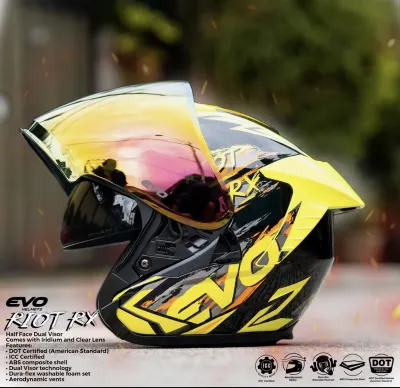
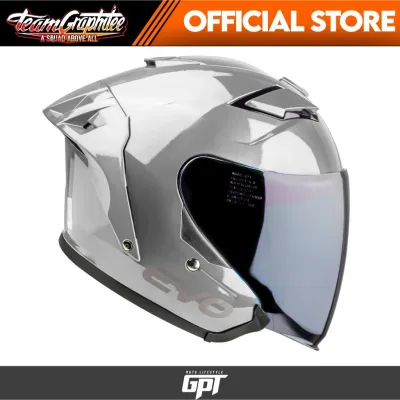
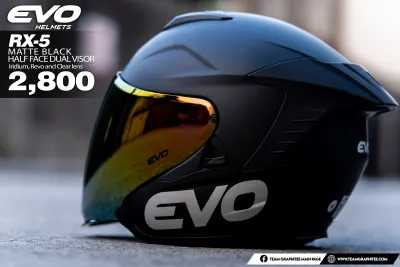
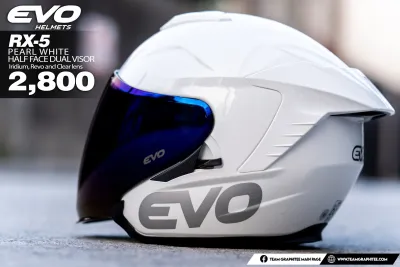
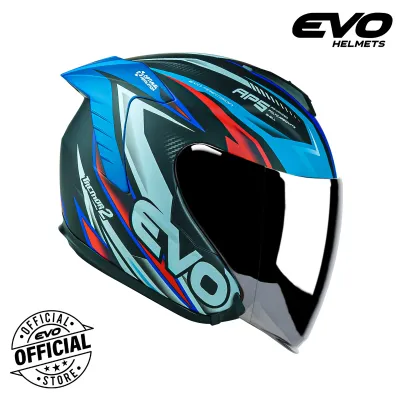
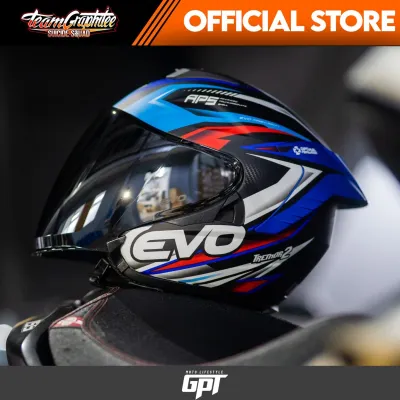
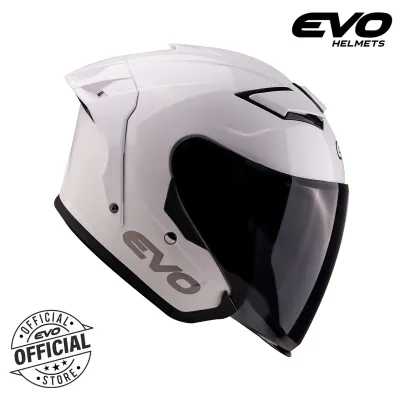
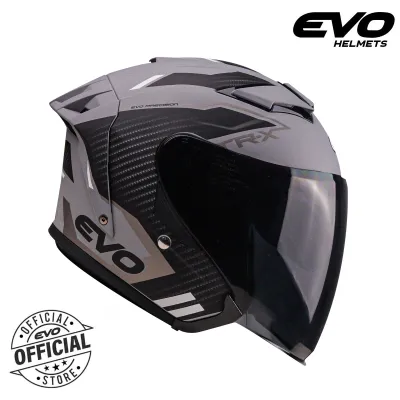
Prices are valid at publication and may change. Please refer to the product page for the latest price.
Purchasing uncertified “novelty” or purely aesthetic half-face helmets poses an extreme safety risk. These non-compliant helmets, often referred to locally as “nut shells,” are typically constructed from thin, brittle plastics and lack the critical Expanded Polystyrene (EPS) foam liner required to absorb impact energy. In the event of a collision, a novelty helmet can easily shatter, offering virtually zero protection to the skull and brain. No amount of financial savings can justify the risk of using an uncertified helmet, as head injuries remain the leading cause of fatalities among motorcyclists in the country.
How to Prioritize Your Helmet Budget
When establishing a budget for a new half-face helmet, understanding where your money actually goes can help you make an informed purchase. The primary cost drivers in helmet manufacturing include the raw materials used for the outer shell, the complexity of the visor mechanisms, and the quality of the interior comfort liners. Entry-level helmets generally utilize injection-molded thermoplastic or Acrylonitrile Butadiene Styrene (ABS) plastics, which are highly durable but slightly heavier. As you move up the price scale, manufacturers introduce lightweight fiberglass composites, Kevlar, or carbon fiber, which significantly reduce overall weight while maintaining exceptional structural integrity.

To maximize your budget, you must distinguish between non-negotiable safety features and optional convenience upgrades. Non-negotiable features include a valid safety certification sticker, a robust and fully functional retention system (such as a reinforced micrometric buckle or double D-ring), and a clear, distortion-free visor that provides a wide field of vision. Optional upgrades include dual-visor systems (with an integrated drop-down sun shield), quick-release visor mechanisms, pre-cut speaker pockets for Bluetooth communication systems, and complex graphic designs. While these upgrades enhance daily convenience and style, they do not increase the core impact-absorption capability of the helmet.
If you are working with a highly restricted budget, the most practical approach is to prioritize a basic, solid-color certified helmet over one with flashy graphics or unnecessary accessories. A plain white or black helmet with a standard clear visor and a certified shell is far safer than an uncertified model decorated with aggressive racing graphics. By stripping away cosmetic extras, you can allocate your entire budget toward securing a high-quality, certified shell and a reliable retention strap. This decision framework ensures that every peso spent directly contributes to your physical protection on the road.
What to Expect Across Different Price Tiers
Entry-Level: Securing the Safety Baseline
Entry-level certified half-face helmets, typically priced below ₱2,500, focus entirely on meeting the minimum legal and physical safety requirements. In this price bracket, you will primarily encounter shells constructed from high-impact ABS plastic or standard thermoplastics. These materials are highly effective at dispersing impact energy but result in a slightly heavier helmet compared to premium composites. The visor systems in this tier are usually basic single-shield configurations featuring standard plastic ratchet mechanisms that require manual adjustment.
Popular budget-friendly options, such as verifying the latest certified evo half face helmet models, compete heavily in this entry-level space. Riders looking at these options must carefully inspect the physical helmet upon delivery to confirm that the holographic ICC sticker or PS mark is present and untampered. While these entry-level models may feature basic, non-removable interior padding and slightly higher wind noise at highway speeds, they deliver the essential legal compliance and impact protection required for daily commuting.
Mid-Range: Upgrading Comfort and Daily Usability
Stepping up to the mid-range tier, which generally spans from ₱2,500 to ₱5,000, introduces significant improvements in rider comfort and daily usability. Helmets in this category often feature multi-density EPS liners, which provide targeted impact absorption across different zones of the head. The aerodynamic shaping of the outer shell is also more refined, incorporating wind-tunnel-tested contours that minimize drag and lift, thereby reducing neck strain during extended rides. Visor systems frequently receive upgrades, such as tighter rubber gaskets that seal out rainwater and wind noise more effectively.
One of the most valuable upgrades in the mid-range tier is the inclusion of fully removable, washable, and hypoallergenic interior liners. In the hot and highly humid tropical climate of the Philippines, sweat and road grime quickly accumulate inside a helmet, leading to unpleasant odors and potential skin irritation. Being able to easily detach and wash the cheek pads and crown liner ensures long-term hygiene and comfort. This tier represents the sweet spot for daily commuters who require a durable, comfortable helmet that can withstand the rigors of daily wear without breaking the bank.
Premium: Advanced Materials and Aerodynamics
Premium half-face helmets, priced above ₱5,000, are characterized by the use of advanced composite materials such as fiberglass, Kevlar, or pure carbon fiber. These materials allow manufacturers to construct extremely strong outer shells that are exceptionally lightweight, drastically reducing the physical strain on the rider’s neck muscles during long-distance touring. The ventilation systems in premium helmets are highly sophisticated, utilizing deep channels carved into the inner EPS liner to actively pull cool air in and exhaust hot, humid air out.
In addition to advanced materials, premium helmets offer high-end convenience features that enhance the overall riding experience. These include integrated, optically correct drop-down sun visors that can be deployed with a simple lever, premium micrometric retention buckles made of stainless steel, and pre-molded pockets specifically designed to house Bluetooth communication speakers. While these features provide an unmatched level of luxury, convenience, and weight reduction, it is important to remember that the core safety baseline remains comparable to certified lower-tier options. A premium price tag buys comfort, reduced weight, and advanced features, but a certified budget helmet remains fully capable of protecting your head in an accident.
Hidden Costs and Verification Steps Before Checkout
When purchasing a half-face helmet online or from a physical retail store, there are several hidden costs and critical verification steps you must consider before finalizing your purchase. If you are buying through online marketplaces or e-commerce platforms, always calculate the shipping fees for bulky items, as helmet boxes are large and can incur high delivery charges. Furthermore, familiarize yourself with the seller’s return and exchange policies. Many retailers strictly enforce hygiene-related return policies that prohibit the exchange of helmets once they have been worn, making it vital to measure your head accurately and reference the manufacturer’s official sizing chart before placing an order.
To avoid falling victim to counterfeit products, you must exercise extreme caution when browsing online listings. The market is flooded with cheap, uncertified helmets bearing fake ICC or PS stickers that look remarkably convincing to the untrained eye. To protect yourself, only purchase from official brand flagship stores, authorized physical dealerships, or highly reputable specialty riding gear shops. If a price seems suspiciously low compared to the manufacturer’s suggested retail price, it is highly likely that the product is a counterfeit or a damaged unit that has bypassed quality control.
Another critical verification step is checking the helmet’s manufacturing date, which is typically printed on a white label underneath the comfort liner or stamped onto the chin strap. Expanded Polystyrene (EPS), the shock-absorbing foam inside the helmet, naturally degrades over time due to exposure to ambient moisture, temperature fluctuations, and environmental pollutants. Even if a helmet has never been worn and has sat on a retail shelf for years, its protective capabilities will have diminished. Avoid purchasing “new old stock” helmets that are more than three years old from their manufacturing date, as their remaining usable lifespan will be significantly shortened.
Maximizing the Lifespan of a Budget Helmet
Proper maintenance is essential to ensure that a budget-friendly half-face helmet remains safe, comfortable, and hygienic throughout its usable life. To clean the interior, carefully remove the detachable cheek pads and crown liner if your model allows it. Hand-wash these fabric components in lukewarm water using a mild baby shampoo or a gentle soap explicitly authorized by the manufacturer’s care instructions. Avoid using harsh laundry detergents or bleach, as these chemical agents can break down the adhesives and foam backing of the comfort pads. Allow the liners to air-dry completely in a well-ventilated indoor space; never use a high-heat clothes dryer or expose them to direct sunlight, which can warp the materials.
For the exterior shell and visor, use a soft microfiber cloth dampened with warm water to gently wipe away dust, mud, and splattered insects. If stubborn grime persists, use only mild, non-abrasive cleaners that are explicitly labeled as safe for polycarbonate or ABS plastics. Never use household glass cleaners, gasoline, or industrial solvents, as these chemicals can chemically degrade the outer shell’s polymer structure, making it brittle and prone to cracking upon impact. When storing your helmet, place it in a cool, dry area away from direct sunlight, high humidity, and extreme heat. Avoid hanging your helmet by its retention strap on your motorcycle’s handlebar or leaving it inside a hot, parked car, as extreme heat can compromise the integrity of the inner EPS liner.
Finally, adhere strictly to the industry-standard replacement guidelines to guarantee your safety on the road. A helmet should be replaced every three to five years from the date of first use, or five years from its manufacturing date, even if it has never been involved in an accident. More importantly, you must replace your helmet immediately after any physical impact or drop from a height of more than a few feet, regardless of whether there is visible damage. The inner EPS liner is designed to compress upon impact to absorb energy; once compressed, it loses its protective capability permanently and will fail to protect your head in a subsequent collision.
Frequently Asked Questions (FAQ)
Can I legally ride in the Philippines with a half-face helmet?
Yes, riding with a half-face (open-face) helmet is fully legal in the Philippines under Republic Act No. 10054, also known as the Motorcycle Helmet Act of 2009. However, the helmet must meet specific legal requirements: it must carry a valid, untampered ICC sticker or PS mark issued by the Bureau of Philippine Standards, and it must cover the top, sides, and back of your head. Additionally, the retention strap must be securely fastened under your chin at all times while the motorcycle is in motion. Wearing an unfastened helmet or a non-compliant novelty helmet can result in heavy fines and confiscation of your driver’s license by traffic law enforcers.
Are second-hand certified helmets a good way to save money?
No, purchasing a second-hand helmet is highly discouraged and represents a dangerous compromise on safety. Even if a used helmet looks pristine on the outside and carries a genuine ICC sticker, you have no way of verifying its history. The helmet may have been dropped from a significant height or involved in a minor collision, causing the internal EPS liner to compress and lose its shock-absorbing capabilities without showing any external cracks. Furthermore, the interior padding of a used helmet has already molded to the previous owner’s head shape, which can prevent it from fitting your face securely, and the materials may have degraded due to improper storage, sweat, or chemical exposure.
Community discussion
Share your experience or ask a question. Comments are reviewed before publication.