
Cruising down the scenic coastal roads of La Union or navigating the dense traffic of Metro Manila on a classic motorcycle demands gear that matches your ride’s aesthetic. However, finding a safe retro helmet vintage option shouldn’t mean sacrificing modern head protection. While classic lines and minimalist silhouettes look exceptional, your helmet is first and foremost a life-saving piece of safety equipment. Balancing style, safety certifications, and your hard-earned Philippine Pesos requires a clear understanding of what makes a helmet road-legal and protective.
Non-Negotiable Safety Standards for a Retro Helmet Vintage Option
Before falling in love with a sleek, low-profile helmet design, you must distinguish between certified protective gear and uncertified “novelty” or “costume” helmets. Novelty helmets often feature the classic dome shape of the 1960s but lack the internal safety components required to absorb impact forces. In the Philippines, riding with an uncertified helmet is illegal under Republic Act No. 10054 and exposes you to severe safety risks.
To ensure your vintage-style helmet is road-legal, look for the mandatory local compliance marks. Every helmet sold in the country must bear either an Import Clearance Certificate (ICC) sticker or a Philippine Standard (PS) mark sticker issued by the Bureau of Philippine Standards (BPS). These stickers prove the helmet has passed stringent local impact, penetration, and retention tests.
Products mentioned in this guide
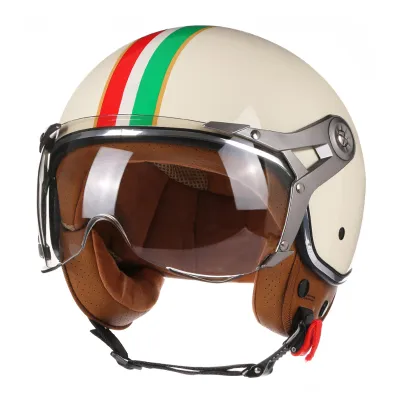
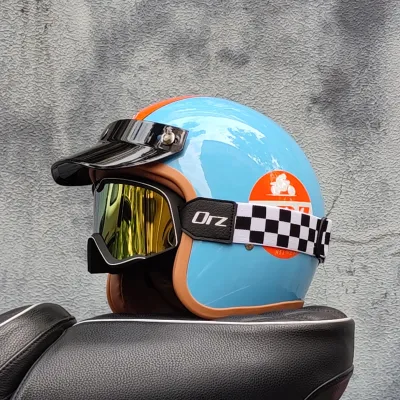
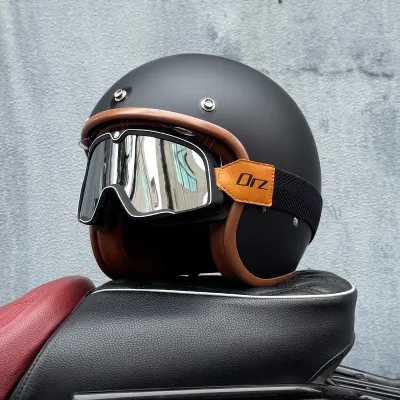
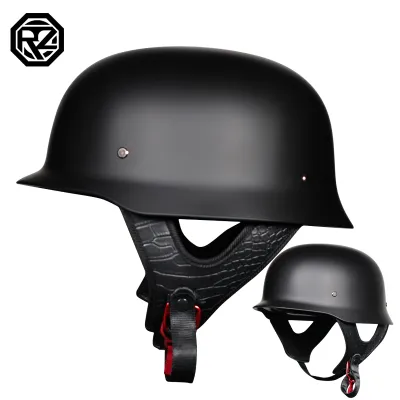
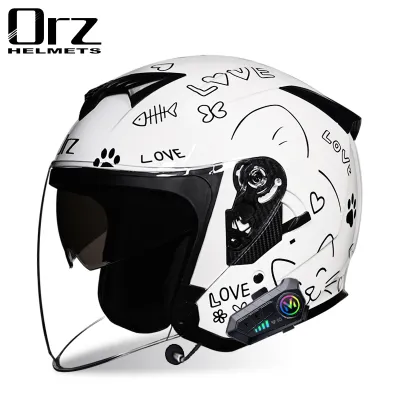
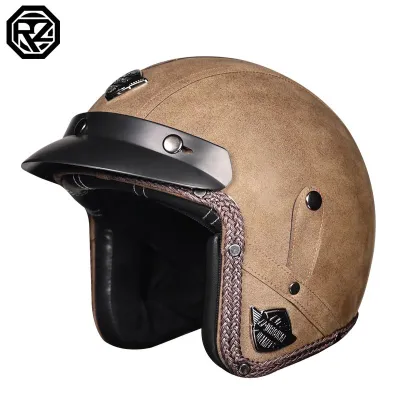
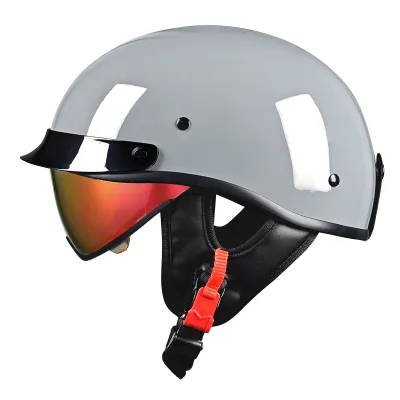
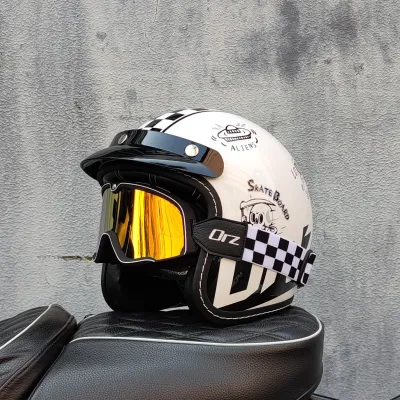
Prices are valid at publication and may change. Please refer to the product page for the latest price.
In addition to local marks, reputable retro helmets carry recognized international safety standards. The most common are the European Union’s ECE 22.05 or ECE 22.06 standards, and the United States’ DOT (FMVSS 218) certification. ECE 22.06 is a highly rigorous standard that tests helmets at multiple impact angles and speeds, providing a superior level of real-world protection.
Physically verifying these certifications is a straightforward process. The ICC or PS mark is typically a holographic sticker affixed to the rear of the helmet shell, which should show a unique serial number under close inspection. International certifications like DOT or ECE are usually permanently sewn into the chin strap webbing or printed directly onto the outer shell underneath the clear coat. Avoid any helmet where these labels are easily peeled off or look like simple paper stickers.
The core of helmet safety lies beneath the paint and chrome trim. A certified helmet features a high-density Expanded Polystyrene (EPS) foam liner designed to crush progressively during an impact, slowing your head down and absorbing kinetic energy. Uncertified novelty helmets often contain nothing more than thin, soft comfort foam, which offers zero protection against traumatic brain injuries.
How to Allocate Your Budget for a Retro Helmet Vintage Design
When shopping for a retro helmet vintage design, setting a clear budget helps you filter out unsafe options while maximizing value. The primary rule of budget allocation is simple: prioritize structural integrity and safety certifications over cosmetic finishes and brand prestige. A basic, certified helmet will always protect you better than an expensive, uncertified one with hand-painted pin-striping.

Understanding the primary cost drivers in helmet manufacturing helps you make informed trade-offs. The outer shell material is the largest factor; high-impact ABS thermoplastic is highly affordable to manufacture, while fiberglass, carbon fiber, and advanced organic composites command a premium. Visor mechanisms, the quality of the optical shield, and the complexity of the interior lining also influence the final retail price.
To stay within your budget, identify features where you can comfortably compromise. For instance, genuine leather edge trim, custom brass hardware, and intricate metalflake paint schemes add significant cost but do not improve safety. You can easily opt for synthetic leather accents, standard steel buckles, and solid paint colors to save several thousand pesos while keeping the exact same protective shell and EPS liner.
If a premium fiberglass retro helmet is outside your current price range, employ a practical downgrade strategy. Instead of purchasing an uncertified or counterfeit fiberglass helmet from an unknown brand, switch to a certified ABS shell model from a reputable manufacturer. High-quality ABS helmets offer excellent impact protection and full certification at a fraction of the cost of composite materials.
Beware of the hidden costs of opting for extremely cheap, uncertified helmets. Ultra-low-priced options often suffer from poor aerodynamic design, causing severe wind buffeting and neck strain during highway rides. Furthermore, cheap interior padding degrades rapidly in the humid Philippine climate, leading to a loose fit, distracting helmet movement, and the premature need for a replacement.
Key Features to Expect at Different Budget Levels
To help you navigate the local market, we have categorized retro helmets into two primary budget tiers. Understanding what features are realistic at each price point prevents overpaying and ensures you get the best possible comfort and utility for your budget.
Entry-Level Retro Helmets
In the entry-level tier, which typically ranges from ₱1,500 to ₱4,000, you will primarily find helmets constructed from high-impact ABS thermoplastic. While slightly heavier than fiberglass, ABS is incredibly durable and provides excellent impact resistance. These helmets are ideal for daily city commuting, low-speed cruising, and budget-conscious riders who want a classic look without a high price tag.
Visor configurations in this budget range are usually basic but functional. Many entry-level retro helmets feature a classic three-snap system on the brow, allowing you to attach a bubble shield, a flat visor, or a retro peak visor. If the helmet includes a built-in shield, it is typically a simple flat visor without advanced features like Pinlock anti-fog lens compatibility or specialized optical correction.
The interior lining of an entry-level helmet is generally functional and straightforward. You can expect standard moisture-wicking fabrics designed to handle tropical humidity, though the padding may only be partially removable. It is crucial to verify that the cheek pads can be removed for washing, as keeping your helmet clean is essential for skin health in hot weather.
When evaluating an entry-level option, pay close attention to the build quality of the retention system. Most models in this range use a convenient micrometric quick-release buckle. Ensure the mechanism operates smoothly, clicks securely into place, and does not slip when you pull firmly on the strapped helmet.
Mid-Range and Premium Vintage Helmets
Stepping up to the mid-range (₱4,000 to ₱10,000) and premium (₱10,000 and above) tiers introduces advanced materials like fiberglass, carbon fiber, and multi-composite shells. These materials are significantly lighter than ABS, which greatly reduces neck fatigue during long weekend rides to popular destinations like Marilaque or Tagaytay. Composite shells also disperse impact energy more efficiently across a wider surface area.
The interior comfort of premium helmets is a major step up. These models feature fully removable, washable, and hypoallergenic liners crafted from technical fabrics that actively cool your skin. The cheek pads are often multi-density foam, 3D-cut to contour precisely to your facial structure, which ensures a snug fit that does not loosen easily over time.
Visor technology in this tier is highly sophisticated. You will find optically correct, distortion-free shields that prevent eye strain during long rides. Many premium retro helmets also incorporate integrated, drop-down inner sun visors, allowing you to transition seamlessly from bright afternoon sunlight to night riding without changing shields. Some models also feature pre-installed anti-fog lenses or are fully compatible with Pinlock inserts.
Finally, premium vintage helmets justify their cost through exquisite styling and hidden modern conveniences. You will find authentic details like hand-stitched genuine leather trim, brushed metal visor mechanisms, and debossed branding. More importantly, they feature clever, low-profile ventilation channels carved directly into the EPS liner, providing excellent airflow in tropical heat while preserving the clean, uninterrupted silhouette of a classic helmet.
Fitment, Sizing, and Avoiding Online Purchase Traps
Finding a helmet with the perfect retro aesthetic is meaningless if it does not fit your head correctly. To measure your head size, wrap a flexible measuring tape around your head about one inch above your eyebrows and ears. Compare this measurement in centimeters to the specific manufacturer’s sizing chart, as sizing can vary significantly between different brands.
In addition to circumference, you must consider your head shape. Most retro helmets are designed around an intermediate oval or round oval internal shape. If you have a rounder head shape and wear an intermediate oval helmet, you may experience painful pressure points on your forehead, even if the overall size measurement is correct.
When purchasing a helmet from online marketplaces, exercise caution to avoid common sizing and authenticity traps. Always review the seller’s return and exchange policies before making a purchase, ensuring they allow size swaps if the helmet does not fit perfectly upon arrival. Check customer reviews for photos of the actual packaging and certification stickers to verify that you are buying from an authorized dealer.
Factor in shipping costs and potential import duties, especially when ordering specialized retro gear from overseas sellers. Be wary of listings with prices that seem too good to be true, as counterfeit helmets with fake ICC or DOT stickers are common on unverified online storefronts. Buying from established, physical motorcycle gear shops in the Philippines remains the safest way to guarantee authenticity and try on different sizes.
Lastly, never purchase second-hand or “authentic vintage” helmets from previous decades for actual road use. While a genuine 1970s helmet looks fantastic on a shelf, the internal EPS safety liner degrades, hardens, and loses its impact-absorbing capabilities over time, even if the helmet was never in an accident. Always ride with a modern, newly manufactured helmet that meets current safety standards.
Frequently Asked Questions (FAQ)
Are open-face retro helmets safe for highway riding?
Certified open-face (three-quarter) retro helmets provide excellent skull protection and a classic look, but they leave your face, chin, and jaw completely exposed. Statistics show that a significant percentage of helmet impacts occur in the chin and face area. For high-speed highway riding or navigating heavy traffic, a retro-styled full-face helmet offers vastly superior protection against impacts, wind blast, flying gravel, and road debris. Open-face models are best reserved for low-speed, relaxed urban riding.
Can I add a modern drop-down sun visor to a classic helmet?
You should never drill, cut, or physically modify the shell or EPS liner of a certified helmet to install aftermarket accessories like drop-down visors. Modifying the helmet’s structure compromises its integrity, voids its safety certifications, and can cause it to fail during an accident. If you require a drop-down sun visor, you must purchase a retro helmet that includes this feature as a factory-installed, certified component from the manufacturer.

Community discussion
Share your experience or ask a question. Comments are reviewed before publication.