
Quick Answer: Which Option Suits Your Daily Ride?
Under wet weather and dense traffic conditions in the Philippines, maintaining the integrity of your Yamaha Aerox V2’s Anti-lock Braking System (ABS) is a primary safety concern. For critical ABS and braking components, choosing OEM (Yamaha Genuine Parts) is the most reliable option. OEM parts guarantee exact fitment, precise tooth spacing, and flawless communication with the ABS electronic control unit (ECU).
Reputable aftermarket alternatives are acceptable only if OEM parts are out of stock or if you are looking for specific performance upgrades, provided the brand is highly verified and matches original specifications. Avoid cheap, unbranded alternatives, as any minor manufacturing defect can disable your ABS, posing severe safety risks on unpredictable roads.
Defining the "Sensor Disc": ABS Tone Ring vs. Brake Rotor
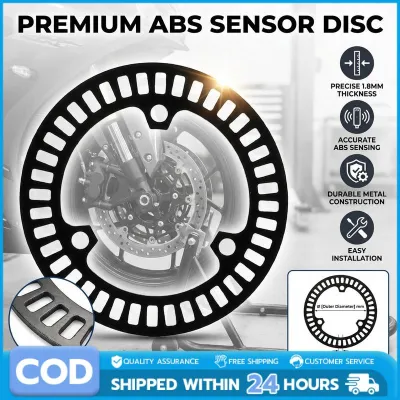
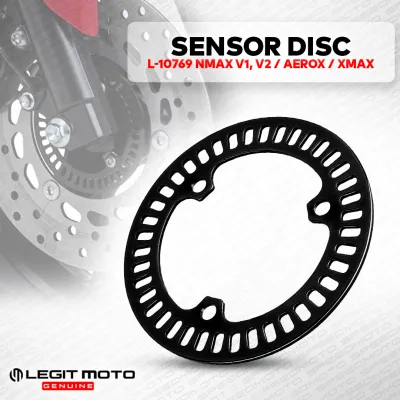
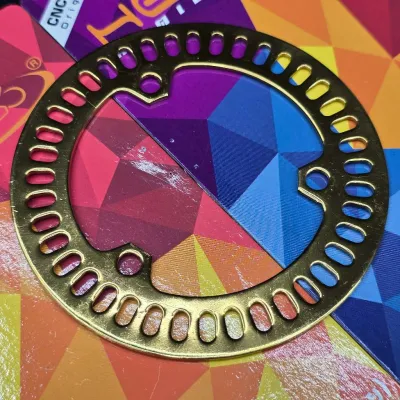
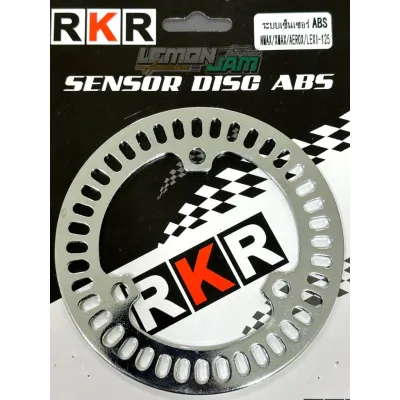
In the local motorcycle community, the term “sensor disc” is often used loosely, which can cause confusion when ordering replacement parts. It generally refers to two distinct components on an ABS-equipped Yamaha Aerox V2: the ABS sensor ring (also known as the tone ring, reluctor ring, or ABS plate) and the brake rotor (brake disc) itself.
Products mentioned in this guide
Prices are valid at publication and may change. Please refer to the product page for the latest price.

The ABS sensor ring is a thin, slotted metal plate mounted alongside the brake rotor. The ABS sensor uses these slots to measure wheel speed. On the other hand, the brake rotor is the thick steel disc that the brake pads clamp onto to stop the vehicle.
To diagnose which part you need, observe your scooter’s behavior. If your ABS warning light is flashing or stays lit, but your physical braking feels smooth and responsive, the issue likely stems from a damaged, bent, or dirty ABS sensor ring, or a misaligned sensor. However, if you experience a pulsing brake lever, squealing noises, or visible scoring and warping on the braking surface, the entire brake rotor assembly requires replacement. Knowing this distinction prevents you from purchasing an entire brake rotor assembly when only a budget-friendly sensor ring is needed, or vice versa.
The Case for OEM Yamaha Genuine Parts
Choosing Yamaha Genuine Parts (OEM) for your Aerox V2 ensures that you are installing a component engineered specifically for your scooter’s braking dynamics. The primary advantage of OEM parts lies in their metallurgical consistency and precise manufacturing tolerances. The ABS sensor ring relies on exact tooth spacing and depth to generate a clean electromagnetic signal for the ABS module. Even a fraction of a millimeter of deviation can cause the ABS ECU to miscalculate wheel speed, leading to premature ABS intervention or system failure.
OEM brake rotors and sensor rings are designed to work in perfect harmony with the factory-calibrated ABS module, ensuring predictable braking performance under emergency situations. Furthermore, OEM parts use high-grade alloys treated to withstand high thermal loads without warping.
The main drawback of OEM parts is their premium pricing, which generally sits at the higher end of the market scale. In the Philippines, sourcing these parts can also be challenging due to occasional stock shortages at authorized Yamaha 3S shops or “casa” service centers.
To protect yourself from counterfeit products, which are common in the local market, always inspect the packaging for the genuine Yamaha holographic label, verify the part number (such as those starting with the B6H model prefix), and purchase exclusively from authorized dealerships or highly reputable distributors.
Navigating Aftermarket Alternatives
The aftermarket landscape for the Yamaha Aerox V2 is vast, ranging from premium, internationally certified performance brands to cheap, unbranded imports. When exploring aftermarket options, it is helpful to categorize them clearly. Reputable aftermarket brands often manufacture components that meet or exceed OEM standards, using advanced materials like SUS410 stainless steel for brake rotors to improve heat dissipation and rust resistance.
Conversely, unbranded or generic alternatives sold on online marketplaces often bypass strict quality control. Using these low-cost options carries significant risks; inconsistent slot spacing on a cheap tone ring can easily confuse the ABS sensor, causing the system to throw an error code and disable ABS entirely.
When evaluating any aftermarket brand, use a strict checklist:
- Verify that the product listing explicitly states compatibility with the Yamaha Aerox V2 (or NVX 155 V2).
- Check the material specifications (e.g., high-grade stainless steel for rotors).
- Look for a manufacturer warranty or return policy.
Some premium aftermarket brands offer floating brake rotors with integrated sensor rings, which can improve braking feel and reduce unsprung weight. However, these performance upgrades must be carefully verified to ensure that the rotor thickness and sensor ring alignment do not alter the critical distance between the sensor tip and the ring.
Head-to-Head Comparison for Daily Commuting
For daily commuters navigating the stop-and-go traffic of Metro Manila or traveling provincial highways, reliability under diverse weather conditions is non-negotiable. The humid tropical climate of the Philippines, coupled with heavy monsoon rains and flooded streets, subjects braking components to severe environmental stress. Low-grade metals will rust quickly, and rust buildup inside the slots of a sensor ring can disrupt the magnetic reading of the ABS sensor.
| Evaluation Dimension | OEM Yamaha Genuine Parts | Reputable Aftermarket Brands | Cheap/Unbranded Alternatives |
|---|---|---|---|
| Fitment Accuracy | Flawless; 100% plug-and-play with zero modification required | High; usually matches OEM dimensions but requires model verification | Poor; frequent alignment issues or bolt-hole mismatches |
| ABS Signal Reliability | Perfect; calibrated precisely to the Aerox V2 ECU parameters | Reliable; high-quality brands maintain tight tooth tolerances | Erratic; inconsistent slot spacing frequently triggers ABS error lights |
| Material Durability | High; excellent thermal stability and corrosion resistance | Good to Excellent; premium alloys often resist rust better than OEM | Low; highly susceptible to warping under heat and rapid rusting |
| Relative Price Point | Premium (₱1,500 – ₱3,500+ depending on full rotor assembly) | Moderate to Premium (₱800 – ₱4,000+ for high-end floating rotors) | Very Low (₱200 – ₱600) |
| Warranty & Support | Dealer-backed; reliable return policies through authorized channels | Limited manufacturer warranty; dependent on local distributor | None; high risk of receiving defective items with no recourse |
ABS Signal Reliability
The ABS system on the Aerox V2 operates on incredibly tight tolerances. The Hall-effect sensor mounted near the wheel hub detects the passing of metal teeth and gaps on the sensor ring, translating this into a digital frequency that represents wheel speed. If the sensor ring is slightly warped, or if the spacing between the slots varies even slightly due to poor aftermarket manufacturing, the ECU interprets this as wheel slippage. This can trigger the ABS pump to engage erratically, causing the brake lever to pulse violently and reducing your stopping power when you need it most.
Material Durability
Daily exposure to road grime, acidic rain, and standing floodwaters in the Philippines demands high-quality, corrosion-resistant metals. OEM parts and premium aftermarket options utilize specialized stainless steel alloys that resist oxidation. Cheap alternatives often use low-grade mild steel with basic surface plating that quickly wears away. Once rust develops inside the sensor ring slots, it alters the magnetic properties of the teeth, leading to sensor read errors.
Decision Matrix
For riders who prioritize daily safety, hassle-free maintenance, and long-term reliability, OEM Yamaha Genuine Parts remain the gold standard. Reputable aftermarket brands are a viable alternative if you are looking to upgrade to a high-performance floating rotor or if OEM parts are unavailable. Cheap, unbranded sensor rings or rotors should be avoided entirely, as the potential savings do not justify the risk of brake system failure.
Safety Checks and Installation Guidelines
Braking and ABS systems are critical safety assemblies. A single loose bolt or misaligned sensor can lead to a catastrophic loss of control. Therefore, before purchasing or installing any new sensor disc or rotor, always consult your motorcycle’s original manufacturer instructions and service manual.
Before starting the installation, perform a thorough pre-installation check. Verify that the part number matches your specific Aerox V2 model year and ABS configuration. Inspect the new sensor ring or brake rotor for any signs of transit damage, such as bent teeth or surface warping. Even a minor bend in the tone ring will cause signal failure.
During installation, adhere strictly to professional safety boundaries:
- Torque Specifications: Always use a calibrated torque wrench to tighten the brake rotor mounting bolts to the exact torque specification specified in the Yamaha service manual. Never rely on hand-tightening or impact wrenches, which can stretch or shear the bolts.
- Thread Locker: Apply a high-quality medium-strength thread-locking compound (such as blue Loctite) to the rotor bolt threads to prevent them from backing out due to road vibrations.
- ABS Sensor Gap: Check the air gap between the ABS sensor tip and the sensor ring using a feeler gauge. This clearance must fall within the manufacturer's specified range (typically 0.8 mm to 1.2 mm). An incorrect gap will prevent the sensor from reading the wheel speed.
- Cleanliness: Ensure the sensor tip is completely clean and free of metallic debris or grease, which can block the magnetic field.
If you do not possess a torque wrench, feeler gauges, or the mechanical experience required to perform these checks safely, do not attempt the installation yourself. Strongly consider having the assembly installed by a qualified motorcycle technician at a professional service center.
Once the installation is complete, perform a mandatory post-installation safety test. Find a safe, flat, traffic-free area to conduct a low-speed test ride. Accelerate slowly to around 15 km/h and verify that the ABS warning light on your dashboard turns off (which indicates the ECU is receiving a valid speed signal). Gently apply the brakes to ensure there is no unusual lever pulsation, squealing, or dragging. Gradually test the brakes under controlled conditions to confirm the system is operating perfectly before returning to public roads.
Frequently Asked Questions (FAQ)
Can I install a non-ABS brake disc on an ABS-equipped Aerox V2?
No, you should never install a standard, non-ABS brake disc on an ABS-equipped Yamaha Aerox V2. Standard brake discs lack the necessary mounting points and integrated tone ring required by the ABS sensor. If you attempt to bypass or remove the sensor ring, the ABS ECU will immediately detect a loss of wheel speed signal. This will trigger a permanent ABS warning light on your instrument panel and disable the anti-lock braking system entirely, reverting your scooter to conventional brakes.
Disabling a factory safety feature significantly increases your risk of wheel lockup and skidding during emergency stops, especially on wet or sandy roads in the Philippines. Additionally, modifying or disabling safety systems can have legal and insurance implications in the event of an accident.
How do I know if my ABS sensor ring is damaged or failing?
A failing or damaged ABS sensor ring on your Aerox V2 typically presents several clear diagnostic warning signs. The most common symptom is the ABS indicator light on your dashboard staying illuminated or flashing while riding. You may also experience erratic speedometer readings, as the Aerox V2 utilizes the wheel speed sensors to calculate your traveling speed.
In some cases, a damaged ring with bent teeth can cause the ABS pump to activate erratically at low speeds, resulting in an unexpected pulsing sensation in the brake lever even during gentle stops. To verify the issue, conduct a visual inspection of the sensor ring. Look for missing or bent teeth, heavy rust accumulation, or packed dirt and road debris inside the slots. Before replacing the disc, always check the ABS sensor tip for dirt and ensure the wiring harness is undamaged and securely connected.
Community discussion
Share your experience or ask a question. Comments are reviewed before publication.