
For daily driving in the Philippines, the best shift knob materials are high-performance polymers like Delrin or premium perforated leather. These materials strike an ideal balance between thermal insulation and reliable grip, ensuring you can comfortably shift gears even after your vehicle has been parked under the intense tropical sun. While metallic options offer a sleek, mechanical aesthetic, their high thermal conductivity makes them highly impractical and often painful to touch in local climate conditions.
Why Tropical Climate Dictates Your Shift Knob Choice
The cabin of a vehicle parked outdoors in the Philippines acts as a highly efficient greenhouse. With ambient temperatures frequently exceeding 34°C, the interior air temperature can easily climb past 60°C within an hour of direct exposure. The windshield and side glass allow shortwave solar radiation to enter, which is then absorbed and re-radiated as longwave heat by the dashboard, steering wheel, and center console.
Because the shift knob is a primary touchpoint in manual or sequential automatic vehicles, its material properties directly influence your driving comfort and safety. A driver must be able to make decisive gear changes without hesitation. If the knob is too hot to touch, or if high relative humidity causes your palms to sweat and slip, your control over the vehicle is compromised.
Products mentioned in this guide
![Gear Shift Knob Sparco Black - 8cm | Car Racing Styling Universal Shift Knob | Easy to Install [🇵🇭Ready Stock]](https://img.lazcdn.com/g/ff/kf/S2feb3930672141c3bd3fb0e28ff692c7d.jpg_400x400q80.jpg_.webp)
![Gear Shift Knob Sparco Silver - 8cm | Car Racing Styling Universal Shift Knob | Easy to Install [🇵🇭Ready Stock]](https://img.lazcdn.com/g/ff/kf/S62408c6b61204c1fac09f568a29bfd72A.jpg_400x400q80.jpg_.webp)
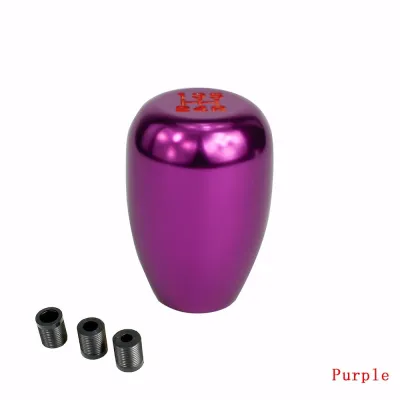
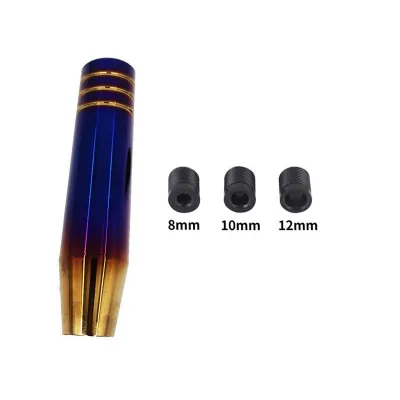
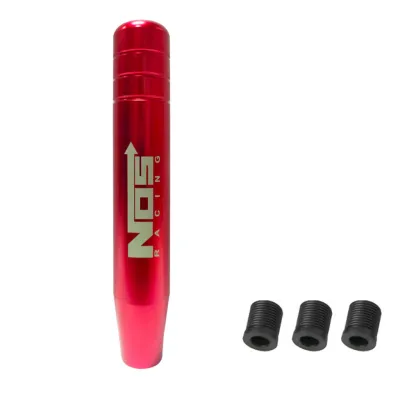
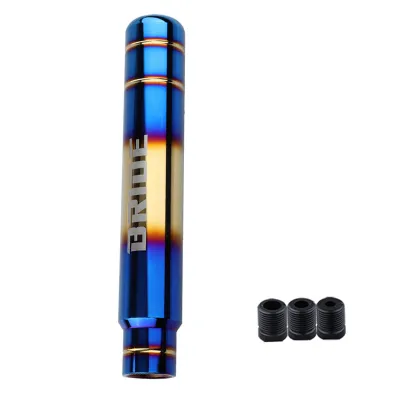
Prices are valid at publication and may change. Please refer to the product page for the latest price.
Consider the stark contrast between a vehicle stored in a shaded, air-conditioned garage and one parked on an asphalt lot during midday. The garage-kept car remains at a manageable temperature, allowing almost any material to feel comfortable initially. However, the street-parked car presents an immediate physical challenge, requiring materials that do not rapidly store or transfer solar heat to human skin.
Material Breakdown: Leather, Metal, Carbon Fiber, and Resin
Leather and Alcantara: Grip and Moisture Management
Genuine leather remains a classic choice for automotive interiors due to its natural texture and low thermal conductivity. It does not get searingly hot in the sun, nor does it freeze during rare cold snaps. For the humid Philippine climate, perforated genuine leather is particularly effective because the tiny punctures allow for minor airflow, reducing the accumulation of sweat between your palm and the knob.

Synthetic leathers, or polyurethane (PU) alternatives, offer a similar initial feel at a lower price point. However, lower-grade synthetic materials are prone to cracking and peeling when exposed to high cabin temperatures and the acidic oils from human hands over several years.
Alcantara, a premium synthetic suede, provides exceptional dry grip and a luxurious, sporty aesthetic. However, its high-nap surface can act like a sponge for ambient moisture in extremely humid conditions, sometimes feeling slightly damp or greasy if hand oils accumulate. To maintain its soft texture and prevent matting, Alcantara requires more frequent, specialized cleaning than standard leather.
Aluminum and Metal Alloys: The Heat Conduction Challenge
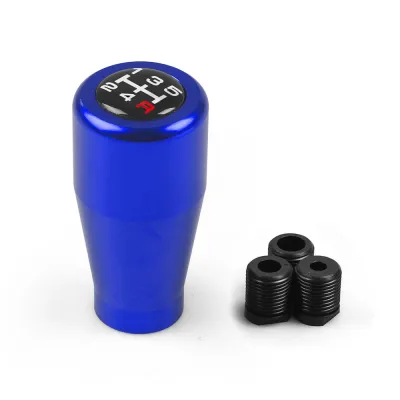
Metal shift knobs made of aluminum, stainless steel, or brass are highly popular in the aftermarket community due to their solid weight and mechanical aesthetic. A weighted metal knob can make gear shifts feel incredibly smooth and positive by using kinetic momentum to slide the transmission linkages into place.
The primary drawback of bare metal in a tropical climate is its high thermal conductivity. Metal absorbs solar radiation rapidly and transfers that heat to your hand instantly upon contact, which can cause severe discomfort or even minor skin burns after hours of sun exposure.
If you are committed to a metal knob for your daily driver, look for specific design mitigations. Knurled or heavily textured finishes reduce the surface area in direct contact with your skin, while also providing mechanical grip when your hands are sweaty. Alternatively, some manufacturers offer hybrid designs where a metal core is wrapped in a thermal barrier like silicone or leather.
Carbon Fiber: Thermal Insulation and Modern Aesthetics
Genuine carbon fiber is a composite material consisting of thin carbon filaments bound together by a polymer resin. Unlike solid metal, carbon fiber is an excellent thermal insulator, meaning it does not retain or transfer heat easily, making it comfortable to touch even after hours of parking in an open lot.
It is important to distinguish between genuine carbon fiber and inexpensive hydro-dipped plastic. Hydro-dipped alternatives are simply standard ABS plastic with a printed pattern, which lacks the structural integrity and premium feel of real composite weaves, though they do share similar low thermal properties.
Most carbon fiber shift knobs feature a high-gloss clear coat that protects the weave from UV damage. This glossy surface can become quite slippery when exposed to sweaty hands in humid weather. For daily driving in the Philippines, a matte-finished carbon fiber or a dry carbon weave offers a much more secure grip without sacrificing the material’s modern, high-tech appearance.
Resin, Acrylic, and Delrin: Weight, Heat, and Customization
Delrin, a brand name for polyoxymethylene (POM) or acetal resin, is a high-performance engineering thermoplastic widely used in racing and daily driving applications. It possesses extremely low thermal conductivity, meaning it remains neutral to the touch regardless of cabin temperature, and it is highly resistant to wear, chemicals, and physical impacts.
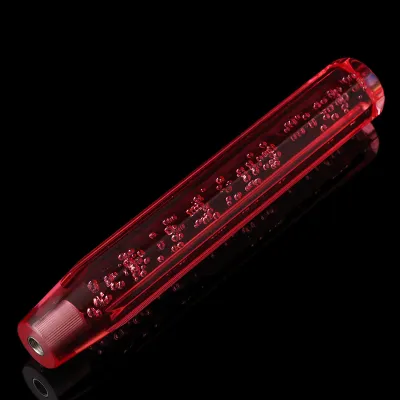
Cast acrylic and epoxy resins are also highly popular, especially for custom, colorful, or artistic shift knobs. These materials can be molded into various shapes, colors, and patterns, allowing for deep personalization of your vehicle’s interior.
While Delrin typically comes in a smooth, matte finish that provides excellent dry and wet grip, highly polished acrylic resins can become slick in high humidity. Choosing a contoured shape, such as a teardrop or a lobed ergonomic design, can help compensate for any surface slipperiness by allowing your fingers to physically hook around the knob.
How to Choose the Right Shift Knob for Your Vehicle
When selecting a replacement shift knob, you must verify your vehicle’s specific model, year, and shifter interface. Manual transmissions typically use threaded shafts, with common Japanese sizes including M10x1.25 (Mitsubishi, Mazda, Nissan) and M10x1.5 (Honda), while Toyota and Subaru often utilize M12x1.25. Some European vehicles and automatic shifters use non-threaded push-on shafts secured by a retaining clip or set screws.
Never attempt to force a shift knob with an incorrect thread pitch onto your shifter shaft, as this can permanently strip the threads and require a costly replacement of the entire shifter assembly. Always consult your vehicle’s original documentation or a qualified professional to confirm compatibility. If you use an adapter, ensure it is made of high-quality brass or aluminum rather than cheap plastic, which can strip under heavy shifting pressure. For any interior modification or disassembly of the shifter assembly, consult your original-vehicle instructions. If you are uncomfortable with the installation process or if your vehicle features complex electronic lockout mechanisms, seek qualified professional installation before proceeding.
The weight of a shift knob significantly alters how your transmission behaves. A heavy weighted knob (typically between 300g and 500g) acts as a counterweight, using momentum to smooth out the notchiness of the gear gates. This can make daily commuting in stop-and-go traffic feel less fatiguing. Conversely, a lightweight knob (under 150g), such as one made of Delrin or carbon fiber, provides raw, unassisted feedback from the gearbox, allowing you to feel the exact engagement of the gears.
The shape of the knob should match your natural driving style. Spherical knobs are ideal for drivers who grab the shifter from the top or use a rotational grip. Teardrop, cylindrical, or ergonomically contoured knobs are better suited for drivers who push and pull the shifter from the side, providing a natural resting place for the palm and fingers.
| Material Type | Heat Resistance (Sun Exposure) | Grip in High Humidity | Maintenance Level | Durability |
|---|---|---|---|---|
| Leather / Alcantara | High (Stays warm, not hot) | Moderate to High (Requires dry hands) | High (Needs regular cleaning) | Moderate (Can wear or peel) |
| Bare Metal | Very Low (Gets extremely hot) | Low (Slippery when sweaty) | Low (Wipe down only) | Very High (Virtually indestructible) |
| Carbon Fiber (Glossy) | Moderate (Warm, not burning) | Low to Moderate (Slick surface) | Low (Wipe down only) | High (Resists scratching) |
| Delrin / Resin | High (Stays comfortable) | Moderate (Matte is better than gloss) | Low (Easy to clean) | High (Resists wear and impact) |
Maintenance Tips to Preserve Grip and Finish
The combination of high humidity and daily driving means sweat, skin cells, and hand oils will inevitably accumulate on your shift knob. For genuine leather or Alcantara, use only pH-balanced cleaners that are explicitly label-authorized for automotive upholstery. Apply the cleaner to a soft microfiber cloth rather than spraying it directly onto the knob, and gently wipe the surface to lift dirt without soaking the material.
For metal, carbon fiber, and polymer knobs, a simple solution of mild dish soap and warm water applied with a damp microfiber cloth is highly effective. Be sure to dry the knob completely with a clean towel afterward to prevent water spots or mineral buildup. Always follow the manufacturer’s care instructions, and verify that any cleaner used is safe for the specific material of your knob.
Avoid using harsh household chemical sprays, bleach, or alcohol-based hand sanitizers directly on your shift knob. Alcohol can quickly dissolve the protective clear coats on carbon fiber, dry out and crack genuine leather, and degrade the surface of certain synthetic polymers. If you must sanitize your hands while driving, ensure they are completely dry before touching the controls.
Regardless of the material you choose, minimizing the heat buildup inside your cabin is the best way to protect your interior components. Using a high-quality, reflective windshield sunshade when parked outdoors blocks direct solar radiation from reaching the center console. Additionally, high-quality ceramic window tints can significantly reduce infrared heat transfer, keeping the entire cabin—including your shift knob—at a much more comfortable temperature.
Frequently Asked Questions (FAQ)
Will a heavy weighted shift knob damage my manual transmission?
A moderately weighted shift knob (up to 500 grams) will not damage a healthy manual transmission during normal daily driving. The weight of the knob helps smooth out gear changes by utilizing momentum. However, damage can occur if you rest your hand heavily on the shift lever while driving, as this constant pressure can push the shift forks against the rotating synchronizer sleeves inside the gearbox, leading to premature wear. Always guide the shifter into gear and then return your hand to the steering wheel.
How can I prevent my shift knob from getting too hot in the sun?
The most effective way to prevent a shift knob from absorbing extreme heat is to block direct sunlight using a reflective windshield sunshade. You can also place a small, light-colored cloth cover or even a clean microfiber towel over the shift knob when parking outdoors. Choosing naturally insulating materials like Delrin, resin, or leather rather than bare aluminum or steel is the best long-term solution for tropical climates.
Is a spherical (ball) shape better than a teardrop shape for daily driving?
Shape preference is entirely subjective and depends on how you physically interact with your shifter. A spherical knob is highly versatile, offering a uniform grip regardless of whether you hold it from the top, side, or at an angle, making it excellent for quick, intuitive gear changes. A teardrop or contoured cylindrical shape provides more surface area to support the palm of your hand, which can reduce hand fatigue during long commutes in heavy traffic.
Community discussion
Share your experience or ask a question. Comments are reviewed before publication.