
Finding the right spark plug for Mitsubishi Mirage G4 engines requires balancing upfront cost against long-term performance and durability. For most drivers, iridium spark plugs offer the absolute best overall balance of longevity, consistent engine performance, and long-term fuel efficiency. While copper plugs are the most budget-friendly option upfront, they demand frequent replacements that quickly add up in labor costs. Platinum plugs serve as a reasonable middle-ground alternative, but they lack the extreme temperature resistance of iridium.
The ultimate choice for your vehicle depends on your maintenance habits, your budget, and whether you prefer DIY garage work or paying for professional mechanic labor. Because the Mirage G4 relies on a small, highly efficient engine, maintaining a strong and consistent spark is critical to preserving its signature fuel economy. Investing in the correct plug material ensures your engine runs smoothly under all driving conditions.
Verify Your Mirage G4 Engine Specifications First
Before purchasing any replacement parts, you must verify the exact ignition specifications required for your specific vehicle model year. Most Mirage G4 models in the market are powered by the 1.2-liter, three-cylinder 3A92 engine. However, specifications such as thread diameter, pitch, reach, and heat range can vary depending on production years, regional emissions standards, or subtle design updates.
Products mentioned in this guide
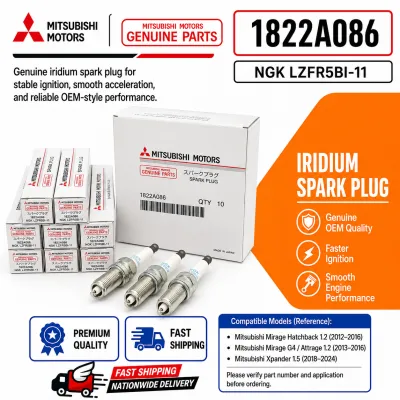
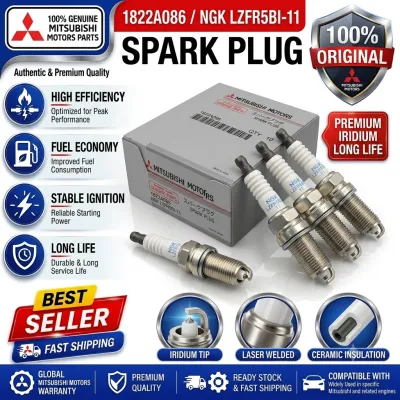
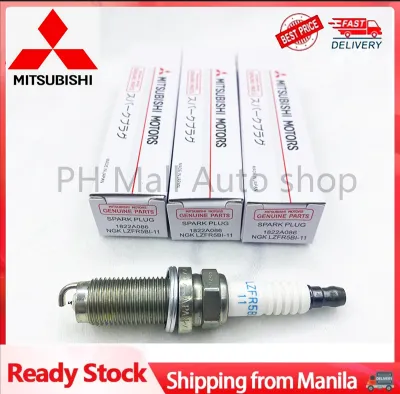
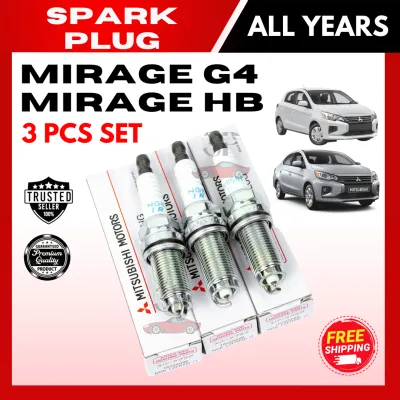
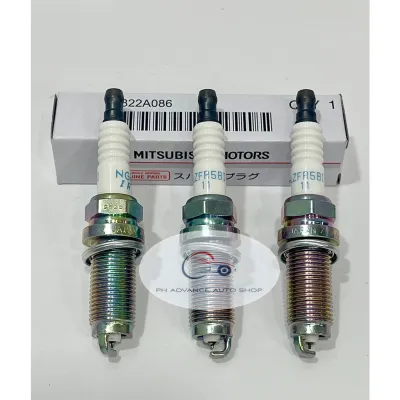
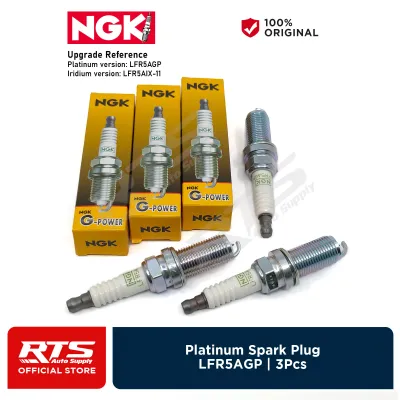
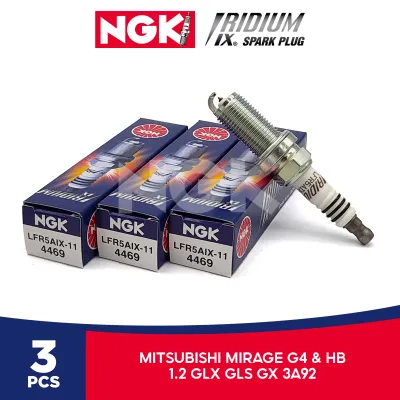
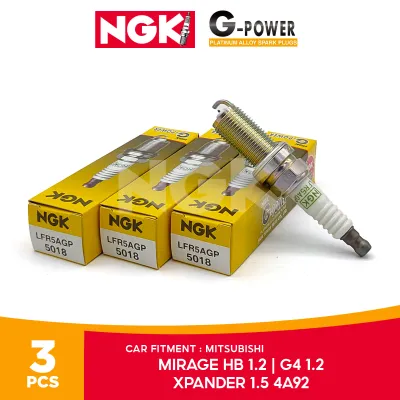
Prices are valid at publication and may change. Please refer to the product page for the latest price.
To prevent compatibility issues, consult your vehicle’s owner’s manual or locate the vehicle emission control information label on the underside of the hood. This label provides the exact recommended spark plug part numbers and gap specifications. Never guess these dimensions or assume that all model years use the exact same plug, as installing a plug with the incorrect thread length can cause catastrophic piston or valve damage.
If your Mirage G4 is still covered under the manufacturer’s warranty, check the warranty terms before installing aftermarket parts. Some warranties require the use of specific Original Equipment Manufacturer (OEM) branded parts to maintain active coverage. Using non-certified components can sometimes complicate future warranty claims at the dealership.
Copper vs Platinum vs Iridium: Core Material Differences
To understand why different plugs perform the way they do, it helps to look at the physical and chemical properties of the metals used in their electrodes. The choice of material directly dictates how well the plug conducts electricity, how it handles extreme heat, and how quickly it wears down.

Copper Spark Plugs
Copper spark plugs are often referred to as standard or traditional plugs. In these designs, the solid copper core is typically clad in a nickel-alloy outer layer to form the center electrode. Copper is an exceptional conductor of electricity and heat, allowing the plug to run relatively cool and deliver a strong spark under heavy loads.
However, nickel alloy has a much lower melting point than precious metals. To prevent the electrode from wearing down too quickly under the intense heat of combustion, manufacturers must design copper plugs with a relatively thick center electrode. This thicker design requires more voltage to jump the gap and is highly susceptible to rapid electrode wear, resulting in a short operational lifespan.
Platinum Spark Plugs
Platinum spark plugs represent the first major upgrade from traditional copper. These plugs feature a small platinum disc welded to the tip of the center electrode. Because platinum is significantly harder than nickel alloy and has a higher melting point, it resists spark erosion and chemical wear much more effectively.
This added durability allows manufacturers to create a thinner center electrode tip, which concentrates the electrical charge and requires less voltage to fire. Platinum plugs are available in single or double platinum configurations; double platinum designs feature platinum on both the center and ground electrodes, further extending the plug’s service life and improving ignition reliability.
Iridium Spark Plugs
Iridium is a premium precious metal recognized for its extreme hardness and exceptionally high melting point. It is roughly six times harder and eight times stronger than platinum, making it incredibly resistant to the harsh, high-temperature environment inside your engine’s cylinders.
This extreme strength allows manufacturers to engineer an ultra-fine center electrode tip, often measuring just 0.4 mm to 0.6 mm in diameter. This fine-wire design concentrates the spark energy with immense precision, requiring significantly less voltage from the ignition coils to jump the gap. The reduced electrical demand lowers stress on your vehicle’s ignition system while promoting faster, more complete combustion.
Performance, Fuel Efficiency, and Lifespan of a Spark Plug for Mitsubishi Mirage G4 Compared
Evaluating a spark plug for Mitsubishi Mirage G4 driving requires looking at how these materials perform across three critical dimensions: engine performance, fuel economy, and overall service life.
Performance
The finer electrode tip of an iridium plug improves spark focus, which directly translates to a more stable engine idle and more reliable cold starts. Because the Mirage G4 utilizes a three-cylinder engine, any minor drop in combustion efficiency in a single cylinder is immediately felt as an annoying engine vibration or hesitation. Iridium plugs minimize these fluctuations, ensuring smooth power delivery across the entire RPM range.
Fuel Efficiency
While a brand-new set of copper, platinum, or iridium plugs will initially deliver similar fuel economy, their long-term performance differs dramatically. As copper electrodes wear down, the gap widens, leading to weaker sparks and incomplete fuel combustion. Iridium plugs maintain their precise shape and gap for tens of thousands of kilometers, ensuring your engine continues to burn fuel at factory-spec efficiency long after other materials would have degraded.
Lifespan
The operational lifespan of each spark plug type is determined by its resistance to electrode wear. Standard copper plugs typically require replacement every 20,000 to 30,000 kilometers. Platinum plugs generally last between 50,000 to 80,000 kilometers, while high-quality iridium plugs can easily exceed 100,000 kilometers before needing a replacement. Always check the specific manufacturer packaging for exact mileage ratings, as individual driving habits will affect overall longevity.
Long-Term Cost and Value for Drivers in the Philippines
When shopping for auto parts in the Philippines, it is easy to focus solely on the upfront shelf price. Copper plugs are the cheapest option per piece, platinum occupies the middle tier, and iridium represents the highest initial investment. However, evaluating the total cost of ownership reveals a very different financial picture.
Most vehicle owners in the Philippines rely on professional mechanics at local service centers or dealerships to perform routine maintenance. Every visit to the shop incurs labor fees. If you choose cheap copper plugs, you may have to pay for labor three or four times to match the lifespan of a single set of iridium plugs, making the “cheap” option far more expensive over time.
This calculation is especially important for ride-hailing drivers, such as those operating Grab cars, where vehicle downtime directly translates to lost daily income. Minimizing the frequency of maintenance visits by choosing long-lasting materials keeps your vehicle on the road and earning money.
Furthermore, local driving conditions in the Philippines are notoriously demanding on ignition components. Drivers frequently face intense, stop-and-go traffic in congested metropolitan areas, combined with high ambient temperatures and tropical humidity. This continuous idling increases engine operating temperatures and accelerates carbon accumulation on the electrodes, making the durability and wear resistance of iridium plugs highly practical for local climates.
Final Decision: Which Spark Plug Should You Buy?
To make the best purchase decision for your Mitsubishi Mirage G4, consider your budget, driving patterns, and maintenance preferences. Use the following guidelines to select the right material:
- Choose Copper if: You are on a strict upfront budget, prefer doing your own routine garage maintenance frequently, or are preparing the vehicle for immediate sale and want to ensure it has fresh plugs without investing in premium parts.
- Choose Platinum if: You want a reliable, mid-tier upgrade over standard copper that extends your replacement intervals without paying the higher premium associated with top-tier iridium.
- Choose Iridium if: You want the longest possible interval between replacements, prioritize consistent long-term fuel efficiency, drive frequently in heavy city traffic, and want to minimize repeated mechanic labor costs.
- Verify first if: Your Mirage G4 is still under a manufacturer's warranty, or if you are unsure about the correct heat range and thread dimensions for your specific engine variant.
Safe Installation and Maintenance Boundaries
Replacing spark plugs is a highly critical task that requires strict adherence to safety protocols to prevent severe engine damage. First and foremost, you must let the engine cool down completely before attempting to remove the old plugs. The cylinder head of the Mirage G4’s engine is made of aluminum, which expands when hot; unscrewing a plug from a hot aluminum head can easily strip or gall the delicate threads, resulting in an expensive cylinder head repair.
When installing new plugs, always use a calibrated torque wrench to tighten them to the manufacturer’s exact specifications. Over-tightening can stretch the plug shell or damage the threads, while under-tightening can cause combustion gases to leak, leading to poor heat dissipation and potential engine damage. Hand-thread the plugs first to ensure they are properly aligned before applying any tools.
If engine misfires, rough idling, sluggish acceleration, or check engine lights persist after you have installed correctly gapped and torqued spark plugs, stop operating the vehicle and consult a qualified mechanic. These persistent symptoms often indicate deeper issues within the ignition coils, spark plug wires, fuel injectors, or engine sensors that require professional diagnostic tools to resolve safely.
Frequently Asked Questions (FAQ)
Can I mix different spark plug brands or materials in my Mirage G4?
No, you should never mix different spark plug brands, materials, or heat ranges in the same engine. The three-cylinder engine in your Mirage G4 relies on balanced, identical combustion across all cylinders. Mixing different types of plugs can cause uneven combustion, engine misfires, rough idling, and potential long-term engine damage. Always replace spark plugs as a complete, identical set.
How do I know if my current spark plugs need replacing?
Common symptoms of worn spark plugs include a rough or vibrating idle, difficulty starting the engine, sluggish acceleration, and a noticeable drop in fuel economy. A flashing or solid check engine light can also indicate an ignition misfire. A physical inspection of the old plugs may reveal heavy carbon fouling, oil residue, or a visibly worn and rounded center electrode.
Do iridium spark plugs require manual gap adjustment?
High-quality iridium spark plugs typically come pre-gapped from the factory for specific engine applications. You should avoid manually adjusting the gap using standard coin-style gapping tools, as the fine-wire iridium center electrode is extremely delicate. Applying pressure to the tip can easily snap or chip the precious metal. If you must verify the gap, use a wire loop gauge with extreme care.
Community discussion
Share your experience or ask a question. Comments are reviewed before publication.