
Applying a high-quality tire dressing is the defining final step of any thorough vehicle detailing session, providing that deep, rich contrast that makes clean alloy wheels stand out. However, using the wrong applicator can quickly turn this satisfying task into a frustrating chore, leaving unsightly lint stuck to the sticky rubber or, worse, smearing greasy silicone residue across delicate wheel finishes. To achieve a flawless, professional-grade finish without staining your rims, the optimal choices from The Rag Company are their low-to-medium GSM (grams per square meter) edgeless microfiber towels, such as the Edgeless 300 or their specialized low-pile utility weaves. These specific towels provide the structural firmness required to spread viscous dressings evenly into textured rubber sidewalls while ensuring no hard edges or loose fibers contact your sensitive alloy wheels.
In the tropical climate of the Philippines, where high humidity and intense heat accelerate how detailing chemicals cure, selecting the correct application medium is even more critical. Excess product applied with an improper towel will not cure correctly, leading to “sling”—the messy splattering of oily dressing along your clean door panels once the vehicle is driven. By understanding the mechanical and material characteristics of premium microfiber, you can select the perfect towel from The Rag Company’s lineup to keep your tires looking pristine and your wheels free of stains.
Key Traits of an Ideal Tire Dressing Microfiber Towel
Selecting a microfiber towel for tire dressing application requires a completely different mindset than choosing a towel for delicate paintwork buffing or waterless washing. While ultra-plush, high-GSM towels are excellent for absorbing water and trapping dust on clear coats, they are highly unsuitable for rubber sidewalls. Understanding the physical dynamics of microfiber construction will help you identify why specific low-profile weaves are superior for this demanding task.
Products mentioned in this guide
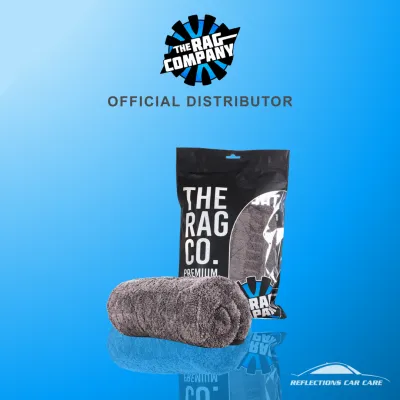
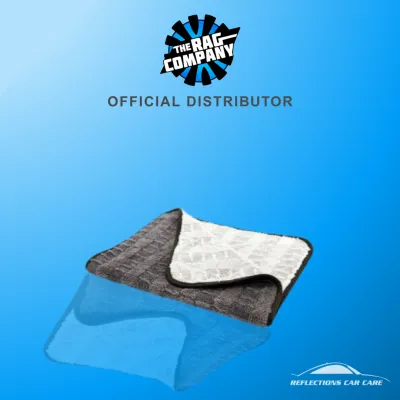
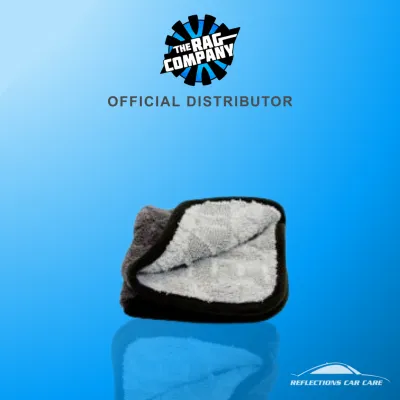
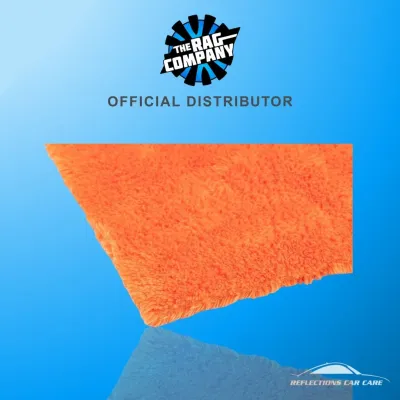
Prices are valid at publication and may change. Please refer to the product page for the latest price.
Pile Height and Weave Structure
Tire rubber is inherently rough, featuring embossed lettering, safety warnings, ribbed patterns, and sipes that can act like sandpaper on delicate fabrics. High-pile, plush microfiber towels (typically those above 400 GSM with long, open loops) will easily snag on these textured surfaces, tearing the micro-filaments and leaving a trail of fuzzy lint across the tire.
To prevent this, an ideal tire dressing towel must feature a short-pile, low-nap, or flat-weave structure. These tight, closed-loop weaves provide the necessary surface resistance to glide smoothly over rubber without catching. Furthermore, a low-pile towel limits the amount of product that can sink deep into the core of the fabric. This ensures that the tire dressing remains on the surface of the towel, allowing for an even, economical spread across the tire rather than wasting expensive product inside the towel’s inner fibers.
Edge Construction for Alloy Safety
The boundary where the tire bead meets the alloy wheel lip is a critical zone during application. Traditional microfiber towels often feature overlocked stitched edges using polyester thread, or they are finished with a thick fabric piping. These hard edges can easily collect abrasive road grit during the wiping process, and when pressed against sensitive painted, clear-coated, or polished alloy wheels, they can inflict micro-scratches and swirl marks.
To eliminate this risk, look for towels featuring ultrasonic-cut edgeless designs or laser-cut borders. The Rag Company is renowned for its precise ultrasonic cutting technology, which melts the edge of the polyester-polyamide blend to create a perfectly soft, seamless border. This edgeless construction allows you to work flush against the rim flange with complete confidence, ensuring that even if the towel edge rubs against the wheel, there are no hard threads to scratch or mar the finish.
Cost-to-Performance Ratio
Tire detailing is a chemically aggressive process. Most modern tire dressings are formulated with heavy silicones, gloss agents, and UV blockers designed to bond tenaciously to rubber. When these products are wiped with a microfiber towel, the silicone polymers wrap around the microscopic split fibers, making them incredibly difficult to wash out completely.
Over time, repeated exposure to these dressings will cause the microfiber filaments to clog, stiffen, and lose their natural absorbency. Because of this inevitable chemical degradation, using your most expensive, high-end paintwork towels for tires is a poor financial decision. The ideal tire dressing towel must be highly affordable and sold in multi-packs, allowing you to build a dedicated, low-cost rotation of utility towels that can be retired and replaced without significant expense.
Which The Rag Company Towels Fit the Task?
The Rag Company offers an extensive catalog of microfiber products, but matching their specific lines to tire dressing requires evaluating pile depth, blend ratios, and cost. By focusing on utility and medium-weight edgeless categories, you can find the perfect balance of performance and value.

Medium-GSM Edgeless Options
For general tire dressing application and subsequent wheel face wipe-downs, medium-GSM edgeless towels (ranging from 300 to 350 GSM) provide an exceptional balance of product control and durability. The Rag Company’s Edgeless 300 is a premier example of this category. Composed of a high-quality circular-knit split microfiber, this towel offers a closed-loop design that resists snagging on tire lettering while providing enough density to absorb excess dressing without letting it seep through to your hands.
Another excellent option is the Creature Edgeless, which features a dual-pile design: a short, tight loop on one side and a slightly longer, plush pile on the other. This dual-pile configuration is highly versatile; you can use the short-pile side to work the tire dressing into the rubber pores, and then flip the towel to the plush side to gently buff away any overspray or residue from the alloy wheel face.
When selecting these options, always verify the product label to ensure they are listed as true edgeless towels. Because these medium-GSM options have excellent structural integrity, they can be folded multiple times to create a firm, controllable pad that keeps your hand steady and away from the dirty tire bead. However, once these towels are introduced to tire dressing, they must be permanently isolated from paintwork duties to prevent cross-contamination.
Standard Multi-Purpose and Utility Weaves
If you manage a high-volume detailing shop or prefer a highly economical approach, lower-cost utility weaves are the ideal workhorses. The Rag Company’s Edgeless 245 is a commercial-grade utility towel designed specifically for heavy-duty cleaning and application tasks. With a lower GSM, these towels are thinner and firmer, making them incredibly easy to maneuver into tight gaps between the tire and the wheel rim.
The low-pile terry weave of the Edgeless 245 is highly resistant to linting, even when subjected to aggressive friction on rough off-road tire sidewalls. While they lack the plush feel of premium paint towels, they carry a highly competitive cost-per-towel ratio, making them easily replaceable when they eventually become saturated with cured silicone.
To help you build a dedicated tire-detailing rotation, evaluate the following comparison matrix of key dimensions across The Rag Company’s suitable lines:
| Towel Line / Series | GSM | Pile Type | Edge Style | Best Suited For |
|---|---|---|---|---|
| Edgeless 245 | 245 | Ultra-low, flat-weave terry | Ultrasonic Edgeless | Aggressive off-road treads, high-volume detailing, budget rotations |
| Edgeless 300 | 300 | Short-pile, closed-loop | Ultrasonic Edgeless | Standard passenger tires, precise bead-line control, daily maintenance |
| Creature Edgeless | 350 | Dual-pile (one short, one medium) | Ultrasonic Edgeless | Low-profile tires, dual-action application and wheel face buffing |
| FTW (Flat Towel Weave) | 350 | Closed-loop twist | Suede-edge border | Smooth sidewalls, high-viscosity dressings, maximum lint-free performance |
Application Techniques to Protect Alloy Wheels and Avoid Lint
Even the highest-quality microfiber towel can fail to deliver clean results if used with poor technique. To keep tire dressing off your expensive alloy wheels and ensure a completely lint-free finish on the rubber, you must employ precise handling and adapt to environmental factors.
Precision Folding and Edge Control
Never bunch a microfiber towel into a loose, messy ball when applying tire dressing. A bunched towel has unpredictable, floppy edges that can easily flop over and smear greasy dressing onto your clean alloy wheels. Instead, use the classic quarter-fold method:
- Lay the 16" x 16" (approximately 40 x 40 cm) towel flat on a clean surface.
- Fold it in half, then fold it in half again to create a neat, square pad that is exactly one-quarter of the original size.
- This folding technique provides you with eight distinct, clean faces to work with, as well as a highly structured, straight edge.
Hold the folded pad firmly between your fingers, using the straight, folded edge of the microfiber as your guide. This allows you to trace the tire bead—the narrow gap where the rubber meets the metal rim—with surgical precision. Apply light, even pressure, letting the short-pile microfibers push the dressing into the tire’s molded lettering and sidewall grooves. Avoid aggressive scrubbing, which generates unnecessary friction that can degrade the towel’s fibers and cause premature linting.
Managing Product Load and Sling in Tropical Climates
Detailing in the Philippines presents unique environmental challenges. The combination of high ambient temperatures and elevated relative humidity directly impacts how tire dressings dry and cure. Solvent-based dressings evaporate much slower in high humidity, while water-based dressings can remain wet and runny for extended periods if applied too heavily.
To prevent product sling, always apply your chosen tire dressing directly to the folded microfiber towel in a thin, controlled line, rather than spraying or pouring it directly onto the tire. This prevents overspray from drifting onto your clean wheels or brakes.
Always work in a shaded area out of direct sunlight to prevent the dressing from flash-drying unevenly on the warm rubber. Spread the product in thin, layered coats, allowing the rubber to absorb the dressing naturally. After waiting 10 to 15 minutes for the dressing to bond, take a clean, dry section of your utility towel and perform a final buffing pass over the entire sidewall. This crucial step removes any unabsorbed surface residue, leaving a dry-to-the-touch finish that will not attract road dust or sling onto your body panels.
Washing and Isolating Tire Detailing Towels
Proper maintenance is essential to extend the lifespan of your microfiber investment and, more importantly, to protect your vehicle’s delicate surfaces from devastating cross-contamination.
Strict Isolation Rules
Tire dressings contain heavy silicones and oils that are designed to resist water. If you wash your tire dressing towels in the same load as your paint-safe drying towels, glass towels, or interior microfibers, these silicone residues will transfer through the wash water. This cross-contamination will leave a greasy, hydrophobic film on your drying towels, causing them to smear water and leave blinding halos on your windshield.
To prevent this, establish a strict color-coding system. Dedicate a specific color—such as black, grey, or dark blue—exclusively for tires, wheels, and engine bays. Store these soiled towels in a separate, labeled bin, and never mix them with your delicate paint or glass microfiber towels during storage or the laundry cycle.
Washing Parameters for Heavy Soils
Cleaning towels caked in road grime and silicone dressing requires a targeted washing protocol. Before washing, always check the care labels and manufacturer instructions on your The Rag Company products.
- Detergent Selection: Use a dedicated, heavy-duty microfiber detergent. Avoid standard household detergents that contain dyes, perfumes, or optical brighteners, as these additives clog the microscopic split fibers.
- Water Temperature: Wash in warm water (maximum 60°C or 140°F). Warm water is essential to help emulsify and break down stubborn silicone polymers and road oils.
- No Softeners: Never use fabric softeners or dryer sheets. These products coat the microfiber filaments in a water-repellent layer, permanently destroying their absorbency.
- Drying: Air-dry the towels in a clean, dust-free indoor environment, or tumble-dry them on an ultra-low heat setting. High heat will melt the polyester fibers, turning a soft towel into a scratchy hazard.
Retirement and Downgrade Criteria
Microfiber towels are durable, but they do not last forever when subjected to harsh tire chemicals and rough rubber surfaces. Over time, the fibers will inevitably become clogged with cured silicone, causing the towel to feel stiff, hydrophobic, or rough to the touch. When a towel loses its softness and starts shedding lint, it must be retired from primary tire dressing duties.
Do not discard them immediately. Instead, downgrade these worn towels to lower-risk detailing tasks. They are still perfectly suitable for cleaning dirty wheel barrels, wiping down suspension components, cleaning exhaust tips, or wiping up grease in the engine bay. Once they are completely saturated with heavy grease and road tar, discard them responsibly.
Frequently Asked Questions (FAQ)
Can I use premium drying towels for tire dressing?
No, using premium, high-GSM drying towels for tire dressing is highly inefficient and costly. These towels feature long, dense loops designed to absorb massive amounts of water. When used with thick tire dressings, they will absorb excessive amounts of expensive product, leading to waste and uneven application. Furthermore, the long fibers are highly prone to snagging on tire lettering, causing severe linting, and the heavy silicone residues are nearly impossible to wash out of dense, high-GSM weaves.
How do I remove tire dressing stains from my alloy wheels?
If tire dressing accidentally transfers or slings onto your alloy wheels, act quickly to prevent it from baking onto the surface under the hot sun. First, check your wheel manufacturer’s care instructions, as sensitive finishes like matte black, bare polished aluminum, or anodized coatings require specialized care. Use a dedicated, pH-neutral wheel cleaner and a soft microfiber detailing towel or a soft-bristled wheel brush. Spray the cleaner onto the affected area, let it dwell for a minute to emulsify the silicone oils, and gently wipe it away. Always test any new cleaner on an inconspicuous area of the wheel first to verify compatibility and prevent chemical etching.
Community discussion
Share your experience or ask a question. Comments are reviewed before publication.