
Selecting a high-quality motorcycle cover waterproof enough to withstand the Philippine wet season is essential for protecting your two-wheeler from severe weather damage. The best waterproof motorcycle cover for heavy rain in the Philippines must feature a heavy-duty, multi-layer construction with a high hydrostatic head rating (preferably 2000mm or higher), heat-sealed or taped seams, a durable polyurethane (PU) or polyvinyl chloride (PVC) inner coating, and built-in ventilation panels to combat high tropical humidity. Balancing robust water exclusion with effective wind security and moisture dissipation ensures your motorcycle remains fully protected, dry, and free from corrosion.
Why Standard Covers Fail During Philippine Heavy Rain
The Philippine climate presents a demanding environment for outdoor motorcycle storage, characterized by torrential monsoon downpours, sudden tropical depressions, and consistently high ambient humidity. Standard “water-resistant” covers are typically constructed from single-layer, untreated nylon or low-grade polyester fabrics. While these materials can repel a light drizzle, they quickly saturate under sustained heavy rain. Once the fabric is saturated, the physical weight of water pooling on flat surfaces creates hydrostatic pressure, forcing moisture directly through the weave of the fabric and onto the motorcycle.
Another primary failure point of standard covers is seam construction. Standard covers are assembled using basic industrial stitching without any secondary sealing. Every needle hole along the seams acts as a microscopic pathway for water. During a heavy downpour, water accumulates along these stitched lines and slowly drips onto critical areas of the motorcycle, such as the instrument cluster, handlebar switches, and electrical connectors.
Products mentioned in this guide
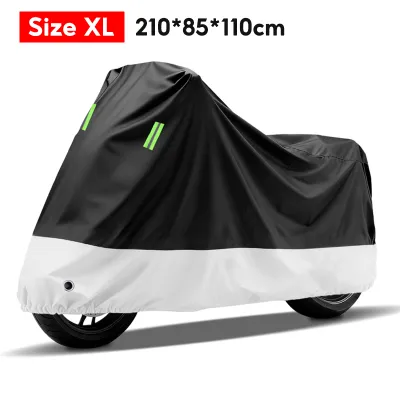
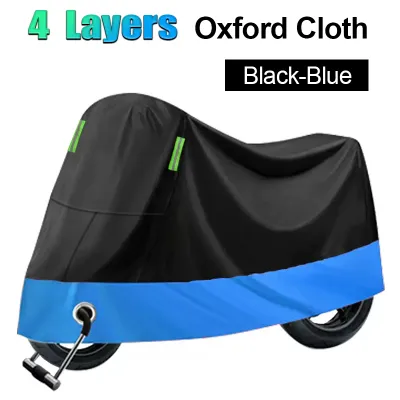
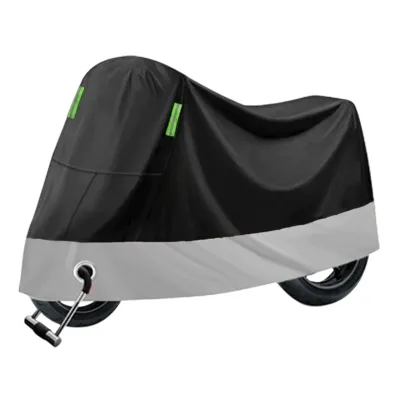
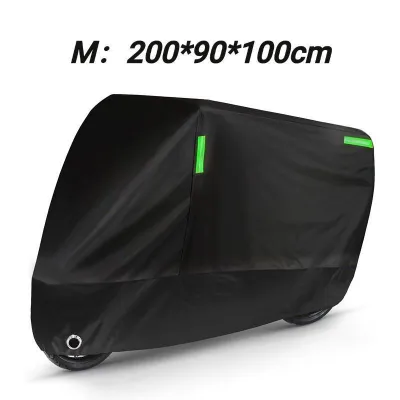
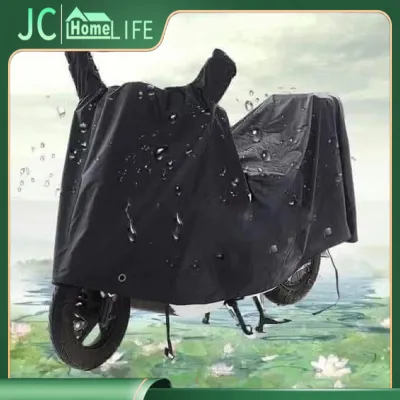
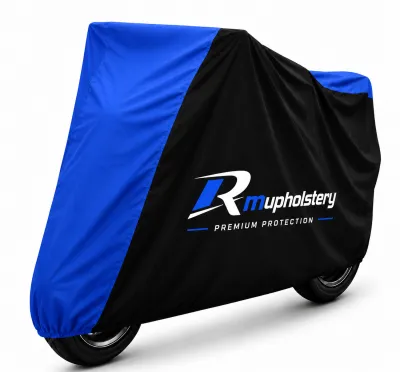
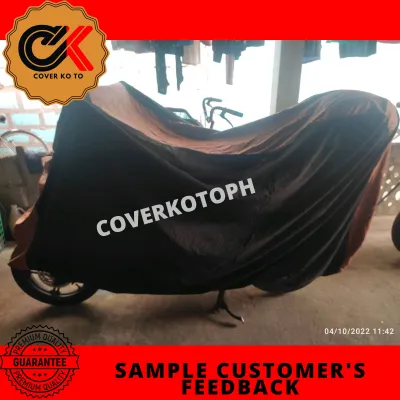
Prices are valid at publication and may change. Please refer to the product page for the latest price.
Furthermore, the combination of heavy rain and high tropical humidity creates a severe greenhouse effect under non-breathable covers. When the sun emerges after a downpour, the temperature under a sealed cover spikes rapidly. Any trapped moisture evaporates, turning into hot water vapor that cannot escape. This trapped humidity accelerates the oxidation of metal parts, leading to rapid rust formation on chrome, steel frames, bolts, and drive chains. It also fosters the growth of mold and mildew on leather seats, vinyl trim, and rubber grips.
To prevent these issues, a successful protective strategy requires a cover that balances absolute water exclusion with breathability and wind resistance. The cover must keep external water out while allowing internal moisture vapor to escape freely. Additionally, it must remain securely anchored to the vehicle during high-wind events to prevent physical damage.
Essential Features of a Truly Waterproof Motorcycle Cover
Material and Coating
When evaluating a waterproof cover, look closely at the material specifications rather than relying on generic marketing terms like “Oxford cloth” or “polyester.” The base fabric—typically measured in Denier (D), which indicates fiber thickness (e.g., 300D or 600D)—provides the structural strength and tear resistance. However, the waterproofing comes entirely from the internal coating. Look for covers that explicitly specify a Polyurethane (PU) or Polyvinyl Chloride (PVC) inner coating. PU coatings offer excellent flexibility, water resistance, and lightweight packability, making them ideal for daily use. PVC coatings are thicker and provide extreme water resistance, but they make the cover heavier, stiffer, and more challenging to fold.

Seam Construction
Verify that the cover features heat-sealed or taped seams. In high-quality manufacturing, a specialized thermoplastic tape is applied over the stitched seams under high heat and pressure. This tape melts over the needle holes, creating an impermeable barrier that prevents water from seeping through the stitching. If a product description only mentions “double-stitched seams” without confirming that they are taped or heat-sealed, the cover will likely leak along the seams during prolonged heavy rain.
Windproof Securing Systems
Philippine rainstorms are frequently accompanied by strong winds that can easily transform a loose motorcycle cover into a sail, lifting it off the bike or blowing it away entirely. A secure cover must feature a full perimeter elastic hem at the front and rear to hug the tires tightly. Additionally, it should have adjustable heavy-duty belly straps with quick-release buckles that snap underneath the frame or engine. Reinforced metal or heavy-duty plastic grommets near the wheels are also essential, allowing you to pass a U-lock, chain lock, or bungee cords through both the cover and the wheel for added security and wind resistance.
Breathability and Ventilation
To combat the high humidity of the local climate, a waterproof cover must incorporate built-in air vents. These vents are typically positioned near the top of the cover and are protected by downward-facing fabric hoods or flaps. This design allows hot air and evaporating moisture to rise and escape from under the cover while preventing falling rain from entering. Adequate ventilation is crucial to keeping the air dry beneath the cover, protecting your bike’s electrical systems and metal finishes from condensation damage.
Reflective Elements
Safety is a critical consideration if you must park your motorcycle on the street, in a shared driveway, or in a poorly lit carport. Heavy rain significantly reduces visibility for passing motorists. A cover equipped with high-visibility reflective strips or piping along the front, sides, and rear ensures that your parked motorcycle remains visible to other drivers at night or during intense downpours, reducing the risk of accidental collisions.
Recommended Cover Types Based on Your Parking Scenario
Selecting the right cover requires matching the cover’s design and material weight to your daily routine and parking environment. A cover that performs exceptionally well for long-term storage in a fixed location may prove highly impractical for a daily commuter who needs to pack and unpack the cover multiple times a day. Understanding these trade-offs helps you choose a cover that fits your lifestyle.
Best for Long-Term Outdoor Parking
For riders who must store their motorcycles outdoors in exposed areas for extended periods, heavy-duty multi-layer covers or thick tarpaulin-style options are the most effective choice. These covers often feature a three-layer or five-layer composite construction, combining a tough outer protective layer, a waterproof middle membrane with high hydrostatic head ratings, and a soft inner lining (such as fleece or brushed cotton) to protect the motorcycle’s paint from scratches.
These heavy-duty covers must also feature robust UV-resistant outer coatings, such as aluminum-coated or UV-stabilized polymer layers. The intense tropical sun in the Philippines can degrade untreated synthetic fabrics within a few months, causing them to become brittle and tear. A UV-resistant layer reflects solar radiation, protecting both the cover fabric and the motorcycle’s plastic fairings, dashboard, and seat from fading and cracking.
The primary trade-off with these heavy-duty covers is their bulk and weight. They are thick, heavy, and difficult to fold tightly, making them highly impractical to carry on the bike. They are best suited for riders who park in a permanent outdoor spot at home where the cover can be left when not in use.
Best for Daily Commuters and Quick Stops
If you use your motorcycle for daily commuting to work or school, you need a lightweight, highly packable cover that can be deployed quickly during sudden afternoon rain showers. For this scenario, look for single-layer covers made from high-density 210D or 300D polyester or nylon with a high-quality PU coating. These materials offer reliable waterproofing against moderate to heavy rain while remaining thin and flexible.
A key requirement for commuter covers is a compact storage pouch. When folded, the cover should compress into a small package that easily fits inside a rear top box, a tail bag, a backpack, or even under the seat compartment of some scooters. Before purchasing, verify the folded dimensions and weight specifications provided by the manufacturer to ensure the cover fits comfortably within your available storage space without adding unnecessary bulk.
While these lightweight covers are highly convenient, they are generally less durable than multi-layer outdoor covers. They are more susceptible to tearing on sharp metal edges, such as footpegs or license plates, and their waterproof coatings may wear down faster under continuous daily folding and unfolding.
Best for High-Wind and Typhoon-Prone Areas
For riders living in coastal regions, high-rise residential zones, or open, elevated areas, wind resistance is just as important as waterproofing. In these environments, a standard cover can flap violently in the wind. This flapping action acts like sandpaper, dragging any dust or grit trapped on the inner lining across the motorcycle’s clear coat and plastic fairings, resulting in severe paint scratches and scuffs.
To prevent this, look for structurally reinforced covers designed specifically for high-wind environments. These covers feature a tight, contoured fit with a full perimeter elastic hem and multiple adjustable belly straps—ideally one near the front wheel, one in the middle, and one near the rear wheel. This multi-strap system distributes wind loads evenly and prevents the wind from getting underneath the fabric.
Additionally, ensure the cover has reinforced metal grommets near the wheel areas. These grommets allow you to secure the cover tightly using heavy-duty bungee cords or a dedicated lock, pulling the fabric snug against the motorcycle’s frame. A snug, stable fit minimizes fabric movement, protecting your paintwork and preventing the cover from tearing loose during severe storms.
How to Verify Waterproof Claims on E-Commerce Platforms
Decoding Terminology
When shopping for a cover on online marketplaces, it is critical to distinguish between “water-repellent” and “waterproof.” Many low-cost listings use these terms interchangeably, but they represent very different levels of protection. Water-repellent covers are treated with a hydrophobic surface coating (often a simple DWR or durable water repellent spray) that causes water to bead up and roll off during light rain. However, under sustained heavy rain or standing water, this coating quickly fails. A truly waterproof cover uses impermeable base materials and sealed seams specifically engineered to block water penetration under continuous pressure.
Checking Specifications
Avoid buying covers that rely solely on generic marketing titles like “100% Waterproof Heavy Duty Cover.” Instead, search the product description for measurable, verifiable technical specifications. Look for hydrostatic head ratings, which are measured in millimeters (mm). A rating of 1500mm to 2000mm is generally sufficient for moderate rain, while a rating of 3000mm or higher indicates excellent resistance to heavy, wind-driven rain. Additionally, check for details on the material weight (such as 300D or 600D Oxford fabric) and the specific type of inner coating applied.
Analyzing User Reviews
Customer reviews are a valuable resource for identifying real-world performance issues. When browsing online listings, filter the reviews to look for feedback written during the wet season (typically June to November in the Philippines). Use search terms within the reviews such as “leaked,” “seams,” “puddle,” or “heavy rain.” Pay close attention to reviews that describe how the cover held up during actual typhoons or prolonged downpours. Be skeptical of highly positive reviews that only mention the cover’s appearance or fit immediately after unboxing, as these do not reflect long-term waterproof performance.
Evaluating Sizing Charts
Never select a cover based purely on generic sizing labels like “Medium” or “Large,” or vague descriptions like “fits all 150cc scooters.” Instead, measure your motorcycle’s actual physical dimensions: overall length (from the edge of the front tire to the rear fender), overall width (from handlebar end to handlebar end), and overall height (from the ground to the top of the mirrors or windshield).
Crucially, you must account for any aftermarket accessories installed on your motorcycle. If your bike has a tall touring windshield, crash guards, side panniers, or a rear top box, its physical footprint will be significantly larger than the stock dimensions. You will need to add an extra allowance to your measurements and select a cover that is one or two sizes larger than what the standard manufacturer sizing chart recommends for your specific model. A cover that is too small will leave the lower portions of your motorcycle exposed to the elements, while a cover that is too tight can put excessive stress on the seams, leading to premature tearing.
Safe Usage and Maintenance to Prevent Mold and Damage
Exhaust Pipe Safety (Critical)
Placing a synthetic motorcycle cover over a hot exhaust pipe is a major safety hazard. Standard waterproof materials, including polyester, nylon, and polyurethane coatings, have relatively low melting points. If they come into direct contact with a hot exhaust pipe—which can easily reach temperatures exceeding 200°C immediately after a ride—the fabric will melt instantly. This can cause the synthetic material to fuse to the metal exhaust, ruining the finish of your pipe, destroying the cover, and creating a serious fire hazard.
To prevent this, always allow your motorcycle’s engine and exhaust system to cool down completely to ambient temperature before applying the cover. Alternatively, you can purchase a specialized cover that features verified, explicitly labeled heat-resistant inner shielding panels (typically made of heavy-duty aluminized cotton or fiberglass) in the lower rear sections. If the product documentation or label does not explicitly state a verified heat-resistance rating, you must assume the cover is not heat-resistant. In this case, always wait for the exhaust pipe to cool completely before covering the vehicle.
Proper Installation
To install the cover safely and avoid damage, always follow a front-to-back sequence. Begin by hooking the front pocket of the cover over the front wheel and pulling it up over the handlebars and mirrors. Next, pull the rest of the cover smoothly over the seat, fuel tank, and rear fender, making sure the elastic hem sits securely under both the front and rear wheels. This method prevents you from dragging the fabric over sharp components like license plates, footpegs, or footboards, which can easily snag and tear the delicate waterproof inner coating.
Cleaning and Drying
Regular maintenance is essential to preserve the waterproof integrity of your cover. Clean the cover using mild soap, lukewarm water, and a soft cloth or sponge. Never use harsh chemical detergents, bleach, or stiff-bristled abrasive brushes, as these will strip away the protective PU or PVC waterproof coatings. Additionally, never place a motorcycle cover in a washing machine or tumble dryer, as the mechanical agitation can delaminate the waterproof backing and damage the taped seams.
After cleaning, or after a heavy rainstorm, ensure the cover is 100% dry before folding and storing it. Hang the cover in a shaded, well-ventilated area to dry completely. Folding and packing a damp cover traps moisture within the folds, leading to rapid mold and mildew growth, foul odors, and eventual deterioration of the waterproof coatings.
Moisture Trapping Prevention
Never apply a waterproof cover over a wet motorcycle. If you have just ridden through a rainstorm, dry the motorcycle thoroughly with a clean microfiber towel, or allow it to air dry completely in a sheltered area before putting the cover on. Applying an impermeable waterproof cover over a wet motorcycle traps the moisture against the metal, plastic, and electrical components. Under the warm tropical sun, this trapped water evaporates and creates a highly corrosive, high-humidity environment under the cover, accelerating rust on metal parts and potentially causing electrical short circuits in sensitive switchgear.
Frequently Asked Questions (FAQ)
Can I put a motorcycle cover on a hot exhaust pipe?
No, you should never place a standard waterproof motorcycle cover on a hot exhaust pipe. Standard synthetic materials like polyester, nylon, and polyurethane will melt instantly upon contact with extreme heat, fusing to the metal and damaging both the exhaust finish and the cover. Always allow your motorcycle’s engine and exhaust system to cool completely to ambient temperature before covering the vehicle. While some high-end covers feature specialized, heat-resistant inner lining panels, you must strictly verify the manufacturer’s stated temperature limits on the product label before applying them to a warm exhaust.
How do I measure my motorcycle for the right cover size?
To find the correct cover size, use a tape measure to determine your motorcycle’s maximum physical dimensions: the overall length (from the front tire’s outer edge to the rear tire or fender), the overall width (at the widest point of the handlebars or mirrors), and the overall height (from the ground to the top of the mirrors or windshield). If your motorcycle is equipped with aftermarket accessories such as a rear top box, side panniers, crash guards, or a tall windshield, make sure to measure the bike with these items installed. Choose a cover size that matches or slightly exceeds these maximum dimensions rather than relying on generic size labels.
Will a waterproof cover trap moisture and cause rust?
Yes, a waterproof cover can trap moisture and cause rust if it is used incorrectly or lacks proper ventilation. Because waterproof materials are designed to block water from entering, they can also block evaporating ground moisture and ambient humidity from escaping, creating a highly humid environment under the cover. To prevent this, always ensure your motorcycle is completely dry before covering it, and choose a cover equipped with built-in, hooded ventilation panels that allow hot air and moisture vapor to escape. Additionally, it is good practice to remove the cover on sunny days to let both the motorcycle and the ground beneath it air out completely.
Community discussion
Share your experience or ask a question. Comments are reviewed before publication.