
For a standard underbone motorcycle like the Wave 100, upgrading to a big valve head is rarely worth the investment if your primary goal is reliable, fuel-efficient daily commuting. While the promise of increased power is highly appealing, this modification is highly conditional and best suited for dedicated track builds or heavily modified engines that already utilize big-bore cylinders. For the average rider navigating daily traffic, the high cost of supporting parts, the loss of low-end torque, and the risk of engine damage make the stock cylinder head the far more practical choice.
To make a big valve head function correctly, you cannot simply swap the cylinder head and ride away. The upgrade demands a complete system-wide overhaul, including a larger carburetor to supply sufficient fuel, a high-lift performance camshaft, stiffer valve springs, and a modified piston with deeper valve reliefs. Without these critical supporting modifications and precise professional tuning, installing a larger head will actually decrease your motorcycle’s performance and drastically shorten the lifespan of your engine.
What a Big Valve Head Actually Changes on a Wave 100
To understand why this upgrade is so complex, it helps to look at the mechanical differences between a stock cylinder head and a big valve head. The stock Wave 100 head is engineered to optimize air velocity at lower engine speeds. By keeping the intake and exhaust valves relatively small, the engine forces the incoming air-fuel mixture through a narrow passage, which speeds up the flow and ensures efficient combustion. This high velocity is what gives the stock Wave 100 its responsive low-end torque and legendary fuel economy, making it perfect for carrying loads and climbing steep inclines at moderate speeds.
Products mentioned in this guide
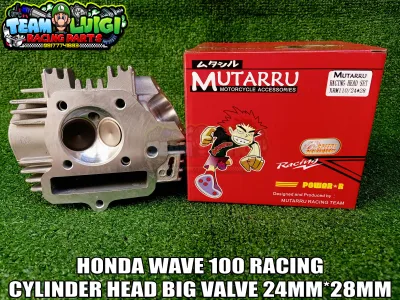
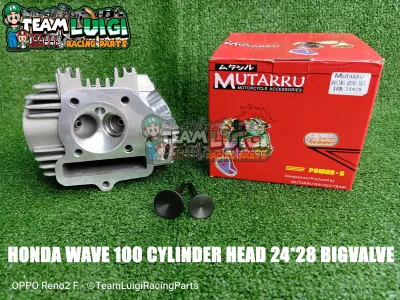
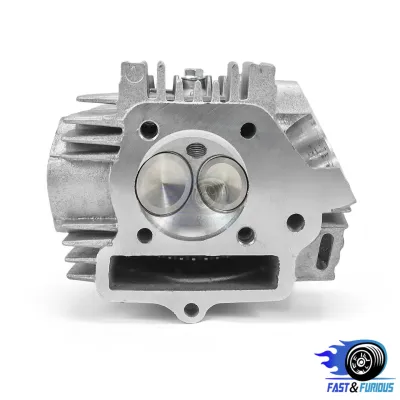
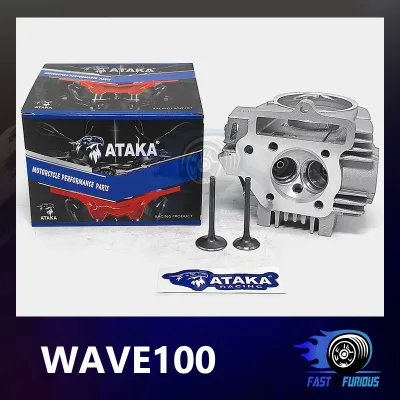
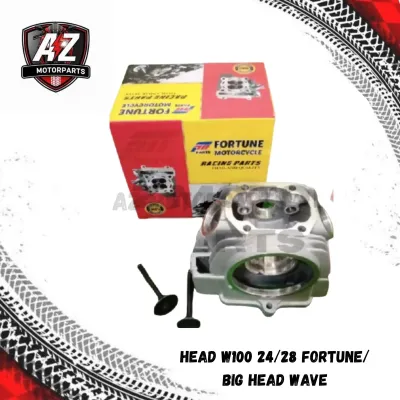
Prices are valid at publication and may change. Please refer to the product page for the latest price.
A big valve head reverses this design philosophy by prioritizing airflow volume over velocity. By increasing the physical diameter of both the intake and exhaust valves, along with widening the internal ports, the head allows a much larger volume of air and fuel to enter the combustion chamber. However, this larger cross-sectional area causes the speed of the incoming mixture to drop significantly at low engine revolutions. As a result, the engine loses its low-end pulling power, and you will notice a distinct sluggishness when accelerating from a complete stop.
This shift in power delivery means the performance benefits of a big valve head are only realized at high engine speeds, typically near the redline. At these high RPMs, the stock head would normally choke due to restrictive airflow, whereas the big valve head allows the engine to keep breathing and pulling. However, to sustain this high-RPM airflow, the engine must be supplied with a matching volume of fuel and must be able to expel the exhaust gases just as quickly. If the fuel delivery and exhaust systems are not upgraded to match, the engine will run dangerously lean, leading to severe overheating and eventual piston seizure.
Breaking Down the Costs and Installation Requirements
Calculating the true cost of a big valve head upgrade requires looking far beyond the price tag of the cylinder head itself. Because the stock fuel system is designed for fuel economy, its small carburetor cannot deliver the volume of fuel required by the larger intake port. You will need to purchase a larger performance carburetor and a matching intake manifold to prevent the engine from running lean. Additionally, a high-lift performance camshaft is necessary to open the larger valves wider and keep them open longer, allowing the head to perform as intended.

Another critical and often overlooked requirement is the piston. The stock Wave 100 piston has a flat or slightly domed crown with shallow valve pockets designed specifically for stock valve sizes. If you install a big valve head over a stock piston, the larger valves will physically strike the piston crown during the valve overlap phase, resulting in bent valves, a ruined piston, and catastrophic engine failure. To prevent this, you must install an aftermarket high-compression piston with deep, pre-machined valve reliefs, or have a professional machinist modify your existing piston.
Because of these incredibly tight mechanical tolerances, qualified professional installation is absolutely essential. A mechanic must carefully measure the squish clearance—the distance between the piston crown and the cylinder head at top dead center—as well as the valve-to-piston clearance using specialized measuring tools. The cylinder head must also be properly mated to the cylinder block using high-quality gaskets to prevent compression leaks. Before undertaking any modifications, always consult your motorcycle’s original-vehicle service manual for exact torque specifications and timing alignment procedures, and keep in mind that these modifications will void any manufacturer warranties.
Real-World Trade-Offs: Fuel, Heat, and Reliability
Operating a modified Wave 100 in tropical climates presents unique challenges that do not affect stock motorcycles. In hot, humid weather and heavy stop-and-go traffic, engine temperature management becomes a critical concern. The increased combustion volume and higher operating RPMs of a big valve head generate significantly more heat than the stock configuration. Because the Wave 100 is an air-cooled motorcycle, it relies entirely on wind flow to dissipate heat; idling in traffic with a highly modified engine can quickly lead to thermal overload, oil thinning, and accelerated wear on internal components.
To combat this extreme heat, riders often have to install auxiliary cooling systems, such as an aftermarket oil cooler, which requires tapping into the engine’s oil galleries and mounting a mini radiator to the frame. This adds another layer of mechanical complexity and potential leak points to your motorcycle. Furthermore, your fuel consumption will increase dramatically. To keep the engine running cool and prevent destructive engine knocking, the carburetor must be tuned to run slightly rich, which directly sacrifices the fuel efficiency that makes the Wave 100 so economical.
Daily rideability also takes a significant hit when you install a big valve head. Because the engine loses its low-RPM intake vacuum, throttle response at low speeds can feel laggy and inconsistent. When riding through congested city streets, you will find yourself shifting gears much more frequently to keep the engine RPMs high enough to stay in the powerband. This constant shifting and high-RPM riding can make your daily commute feel exhausting and noisy, transforming a practical, low-maintenance commuter bike into a high-strung machine that requires constant attention and frequent valve clearance adjustments.
Decision Guide: Should You Upgrade or Keep Stock?
To help you decide whether to proceed with this modification or keep your engine stock, consider the following checklists based on your riding goals, budget, and mechanical experience.
Conditions Favoring an Upgrade
- Track or Racing Focus: You use the motorcycle primarily for closed-circuit racing, drag racing, or off-road events where high-RPM power is the only metric that matters.
- Existing Modifications: You have already installed a big-bore cylinder kit, a performance exhaust, and an upgraded carburetor, and the stock cylinder head is now the primary bottleneck restricting your performance.
- Flexible Budget: You have a budget that comfortably covers not just the cylinder head, but also a performance carburetor, camshaft, valve springs, piston machining, and professional labor.
- Maintenance Commitment: You are willing to perform more frequent oil changes, regular valve clearance checks, and constant tuning adjustments to keep the modified engine running safely.
Conditions Favoring the Stock Head
- Daily Commuting: The motorcycle is your primary mode of transportation, and you rely on it to get to work or school reliably every single day.
- Strict Budget: You want to avoid cascading expenses and prefer a motorcycle that is cheap to maintain and run.
- Fuel Economy Priority: You want to maintain the excellent fuel mileage of the stock Wave 100, especially with fluctuating fuel prices.
- Quiet and Simple Ride: You prefer a quiet, smooth, and low-maintenance engine that does not require specialized tuning, premium fuel, or auxiliary cooling systems.
If you want a modest boost in performance without the high cost and reliability risks of a big valve head, there are several less invasive bolt-on upgrades available. Installing a mild, high-lift camshaft designed specifically for the stock-bore cylinder head can improve mid-range acceleration without sacrificing low-end rideability. Upgrading to a high-quality, free-flow exhaust system—while ensuring it complies with local noise regulations—can improve exhaust scavenging and throttle response. Finally, meticulous tuning of your stock carburetor, combined with a high-performance spark plug, can optimize combustion efficiency for a fraction of the cost and effort.
Frequently Asked Questions (FAQ)
Will a big valve head fit a completely stock Wave 100 engine block?
No, a big valve head is not a direct drop-in replacement for a completely stock Wave 100 engine block. While the cylinder head may physically slide onto the stock cylinder studs, the larger valves will strike the flat crown of the stock piston during operation. To prevent this catastrophic metal-on-metal contact, you must install a piston with deeper valve reliefs or have your stock piston machined by a professional. Additionally, you must verify that the combustion chamber volume of the new head matches your cylinder displacement to maintain a safe compression ratio.
Do I need to change the carburetor when installing a big valve head?
Yes, upgrading your carburetor is highly recommended when installing a big valve head. The stock Wave 100 carburetor is designed to optimize air velocity for small valves and cannot supply the volume of air and fuel required by the larger intake port at high RPMs. Running a stock carburetor on a big valve head will choke the engine’s performance and, more importantly, cause the engine to run dangerously lean. A lean air-fuel mixture leads to extreme combustion temperatures, which can cause severe engine knocking, spark plug damage, or a seized piston.
Can I use the stock exhaust with a big valve head upgrade?
While the stock exhaust pipe will physically bolt onto the new cylinder head, it will act as a severe bottleneck and neutralize any performance gains. A big valve head is designed to move a much larger volume of gas through the engine. If the exhaust system cannot expel these spent gases quickly, backpressure will build up in the combustion chamber, preventing a fresh air-fuel charge from entering. To get the full benefit of the upgrade, you should pair the head with an aftermarket exhaust system featuring a larger header pipe diameter that matches the new exhaust port.
Community discussion
Share your experience or ask a question. Comments are reviewed before publication.