
If you want to play music, follow navigation prompts, or take hands-free calls in an older vehicle, choosing the right audio adapter is the fastest and most cost-effective upgrade you can make. The decision between a Bluetooth receiver and an FM transmitter comes down to your car’s existing dashboard ports and your tolerance for audio interference. If your vehicle has a functional 3.5mm auxiliary (AUX) input, a Bluetooth receiver will deliver clean, static-free sound. If your vehicle only has an FM radio and a 12V accessory socket, a car bluetooth fm transmitter is the most practical way to bridge the gap between your smartphone and your car’s speakers.
Selecting the wrong device can lead to frustrating audio static, messy cable clutter, or even a drained car battery. Understanding how your car’s electrical system and audio inputs interact with these adapters ensures you get the best possible sound quality without risking damage to your vehicle’s electronics.
Quick Answer: Which Car Audio Adapter Should You Choose?
Deciding between these two devices requires a quick inspection of your vehicle’s dashboard. Your choice should be guided by your hardware availability, your audio quality expectations, and your daily driving environment.
Products mentioned in this guide
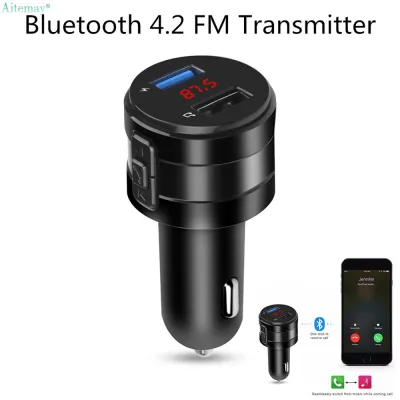
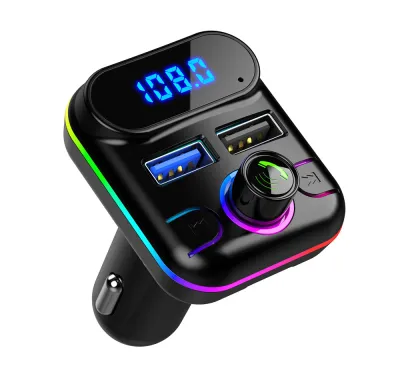
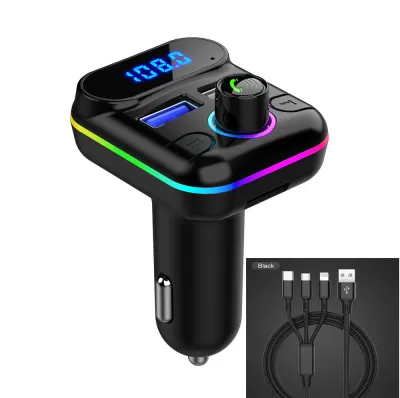
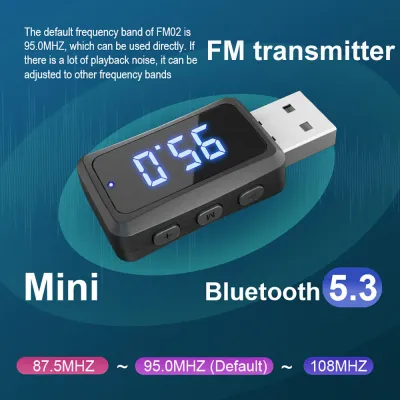
Prices are valid at publication and may change. Please refer to the product page for the latest price.
Choose a Bluetooth Receiver (AUX Adapter) if:
- Your car has an accessible AUX-in port: This physical jack is usually located on the stereo faceplate, inside the center console, or near the glove box.
- You prioritize high-fidelity sound: Direct wired connections bypass the crowded radio spectrum, eliminating background hiss, static, and audio dropouts.
- You want a low-profile installation: Many AUX receivers are highly compact and can be tucked away neatly out of sight.
Choose an FM Transmitter if:
- Your car lacks an AUX-in port: If your dashboard only features a CD player, cassette deck, or basic radio tuner, an FM transmitter is your primary wireless option.
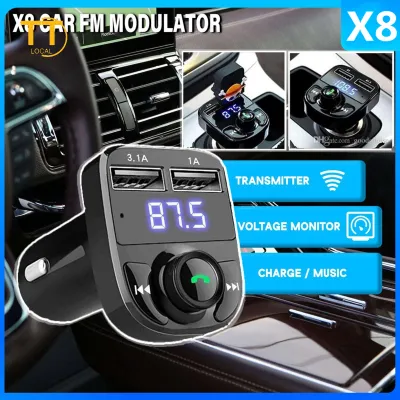
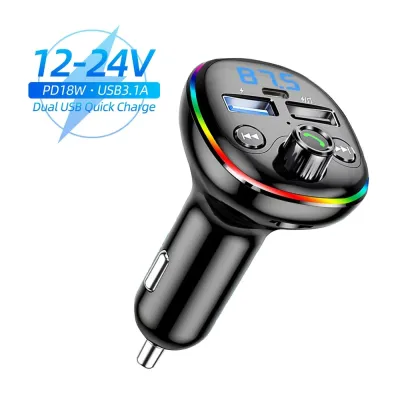
- You need a plug-and-play, multi-functional device: These units plug directly into your 12V accessory socket (cigarette lighter) and often feature built-in fast-charging USB ports, voltage displays, and microSD card slots.
- You want a centralized control hub: Many FM transmitters feature physical dials, volume knobs, and call buttons that are easy to reach while driving.
Before purchasing either device, verify that your car’s AUX port is clean and functional, and check whether your 12V accessory socket remains powered when the engine is turned off. Some vehicles keep the 12V socket active continuously, which can slowly drain your car battery if an adapter is left plugged in overnight.
How They Work: The Core Difference in Audio Routing
To understand why these devices perform differently, it helps to look at how they route audio signals from your smartphone to your car’s amplifier. While both devices connect to your phone wirelessly via Bluetooth, they use entirely different methods to deliver that audio to your car’s sound system.

Bluetooth Receiver (AUX Adapter)
A Bluetooth receiver acts as a direct bridge. First, your smartphone sends a digital audio stream over Bluetooth to the receiver. The receiver’s internal digital-to-analog converter (DAC) processes this digital stream into an analog electrical signal. Finally, this analog signal travels directly through a physical 3.5mm AUX cable into your car’s stereo system. Because the signal remains entirely within a shielded copper wire once it leaves the receiver, it is protected from external electromagnetic interference.
FM Transmitter
An FM transmitter uses a more complex, multi-step conversion process. Your smartphone transmits the digital audio stream via Bluetooth to the transmitter. The transmitter converts this signal into an analog format and then uses an internal radio modulator to broadcast it as a low-power FM radio signal. Your car’s external radio antenna picks up this weak broadcast from the airwaves, and your car’s radio tuner decodes it just like a commercial radio station. Because this method relies on open-air radio waves, the signal is vulnerable to any external broadcasts sharing or bordering the same frequency.
Ultimately, the fundamental difference lies in the final delivery method: a wired analog connection versus an over-the-air wireless radio broadcast. This distinction affects everything from sound clarity to connection stability.
Sound Quality: Direct Wiring vs. Radio Broadcasting
For many drivers, sound quality is the deciding factor. The physical limitations of radio waves mean that FM transmitters face an uphill battle when compared to the direct line-in connection of a Bluetooth receiver.
Bluetooth Receiver Audio Profile
Because a Bluetooth receiver uses a physical AUX cable, it preserves a wide dynamic range and a full frequency response (typically 20 Hz to 20 kHz). This direct connection allows for deep, punchy bass, clear mid-range vocals, and crisp high frequencies. There is no artificial compression applied to the signal after it leaves the receiver, resulting in a clean sound profile that is virtually indistinguishable from a standard wired headphone connection. If your car has a high-quality factory sound system or aftermarket speakers, an AUX receiver will allow those components to perform to their full potential.
FM Transmitter Audio Profile
FM radio broadcasts are physically limited by the bandwidth constraints of the FM band. Commercial FM radio signals are typically capped at a high-frequency limit of 15 kHz, meaning some of the fine detail in your music is lost. Additionally, FM transmitters must compress the audio signal to prevent over-modulation, which can make music sound flat or muddy.
Most notably, FM transmitters suffer from an inherent background hiss, also known as white noise or a noise floor. This hiss is caused by the radio frequency modulation process and is particularly noticeable during quiet sections of a song, podcasts, or phone calls.
Environmental Factors and Audio Adjustments
You can mitigate some of the sound quality issues of an FM transmitter by adjusting your hardware volume levels and car stereo equalizer (EQ) settings.
- The 80/20 Volume Rule: Set your smartphone's volume to approximately 80% to 90%, and set the FM transmitter's volume to its maximum clean level (usually around 90%). This maximizes the audio signal strength relative to the background static. Use your car's physical volume knob to make final listening adjustments.
- Equalizer Tweaks: If the background hiss is highly distracting, slightly lowering the treble or high-frequency settings on your car's EQ can help mask the static, though this will also reduce the brightness of your music.
Safety Note: Always make equalizer adjustments, switch playlists, or tune radio frequencies while your vehicle is safely parked. Attempting to program an FM transmitter or adjust complex audio menus while navigating traffic increases the risk of distracted driving.
Setup and Compatibility: What Does Your Car Actually Need?
Before buying any adapter, you must evaluate your vehicle’s interior layout, port locations, and power delivery. Both devices have unique physical requirements that can impact your daily driving experience.
Hardware Requirements
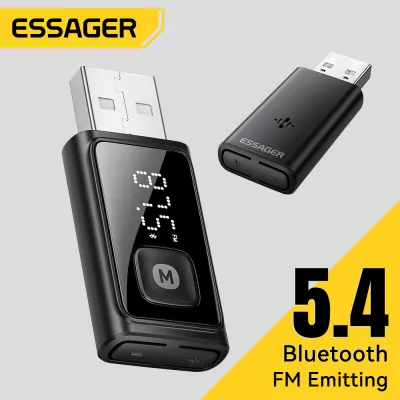
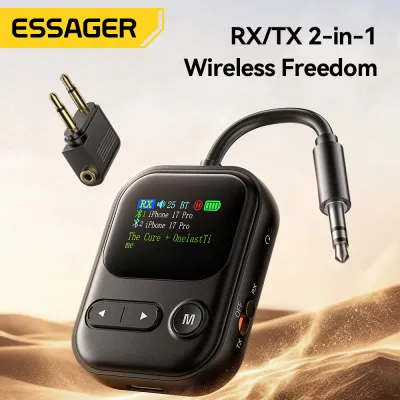
A Bluetooth receiver requires two things to operate: a 3.5mm AUX-in port and a power source. While some premium receivers run on internal rechargeable batteries, most require a constant USB power source. If your car has an AUX port but no nearby USB port, you will need a 12V-to-USB adapter to power the receiver.
An FM transmitter is a self-contained unit that only requires a standard 12V accessory socket. It does not need an AUX port, making it highly compatible with older vehicle models that only feature a standard FM/AM radio console.
Installation Steps
Setting up a Bluetooth receiver is straightforward:
- Plug the receiver's power cable into a USB port or 12V adapter.
- Connect the 3.5mm audio cable from the receiver to your car's AUX port.
- Turn on your car's ignition, set the stereo source to "AUX," and pair your phone to the receiver via your phone's Bluetooth settings.
Setting up an FM transmitter requires an extra step to coordinate with local airwaves:
- Plug the transmitter into your car's 12V accessory socket.
- Turn on your car radio and scan the FM band to find a frequency that is completely empty—meaning you hear only static, with no music or talk radio bleeding through.
- Match the frequency display on the FM transmitter to the exact frequency on your car radio.
- Pair your smartphone to the transmitter via Bluetooth and begin playing audio.
Cable Management and Aesthetics
Because Bluetooth receivers often require both a power cable and an audio cable, they can introduce visible clutter to your dashboard. You may have cables dangling across your climate controls or gear shifter. Using adhesive cable clips or choosing a receiver with a short, coiled cable can keep the cabin looking tidy.
FM transmitters are usually self-contained, single-piece units that plug directly into the 12V socket. While this eliminates dangling wires, the physical size of the transmitter can sometimes be an obstacle. Depending on where your car’s 12V socket is located, a bulky transmitter might block nearby cup holders, interfere with your hand clearance while shifting gears, or cover up climate control buttons. Measure the clearance around your 12V socket before choosing a model with a large screen or rigid neck.
Power Considerations
Most FM transmitters draw power directly from the 12V socket and include built-in USB charging ports, allowing you to charge your phone or other devices simultaneously. However, you must check your vehicle’s manual to determine if your 12V socket is “switched” or “always-on.”
In many vehicles, the 12V socket loses power the moment you turn off the engine. In other vehicles, the socket remains active indefinitely. If your socket is always-on, leaving an FM transmitter or a USB-powered Bluetooth receiver plugged in when the car is parked can slowly drain your battery. Over several days of disuse, this constant draw can leave you with a dead battery.
Connectivity and Interference: Dealing with Static and Dropouts
How and where you drive plays a massive role in how well these adapters perform. Signal interference can turn a pleasant drive into an annoying listening experience.
Bluetooth Receiver Stability
Because a Bluetooth receiver relies on a physical wire to deliver audio to your car’s amplifier, it is entirely immune to external radio frequency interference. You can drive past high-power broadcast towers, through tunnels, or deep into rural areas without experiencing a single pop, hiss, or drop in audio quality. Any connection dropouts are limited to standard Bluetooth range limitations (which are rarely an issue inside a car cabin) or temporary processing delays on your smartphone.
FM Transmitter Vulnerabilities
FM transmitters are highly sensitive to their radio environment. Because they are low-power consumer devices, their broadcast signal can easily be overpowered by commercial radio stations.
In the Philippines, driving through densely populated urban areas like Metro Manila, Metro Cebu, or Davao City presents a major challenge for FM transmitters. The FM radio spectrum in these metropolitan zones is crowded with high-power commercial broadcasts. As you drive from one neighborhood to another, a frequency that was perfectly clear when you started your trip may suddenly become occupied by a local station, resulting in loud static, overlapping audio, or sudden signal dropouts.
Similarly, driving through mountainous regions—such as the roads leading to Baguio or through provincial highlands—can cause radio signals to bounce and shift, leading to unexpected interference as your car’s antenna picks up distant station bleed-over.
Mitigation Strategies
If you use an FM transmitter, you must be prepared to manually retune the device when traveling long distances.
- Find the Extremes: The very bottom (87.5 MHz to 88.5 MHz) and the very top (107.0 MHz to 108.0 MHz) of the FM band are often the best places to look for unused frequencies, as commercial stations are less densely packed at the edges of the dial.
- Remove the Antenna: If you rarely listen to traditional AM/FM radio, unscrewing your car's physical external antenna mast can significantly reduce the amount of external radio signals your car picks up, allowing your FM transmitter's signal to dominate without competition.
Side-by-Side Comparison: Bluetooth Receiver vs. FM Transmitter
This comparison table summarizes the key differences between the two technologies to help you evaluate which adapter fits your vehicle and preferences.
| Feature / Dimension | Bluetooth Receiver (AUX Adapter) | FM Transmitter (12V Adapter) |
|---|---|---|
| Sound Quality | High fidelity; clear, full-range audio with no background hiss. | Moderate quality; prone to compression and background static. |
| Primary Car Requirement | Functional 3.5mm AUX-in port. | Functional 12V accessory socket and FM radio. |
| Interference Risk | Extremely low; immune to external radio signals. | High; susceptible to commercial radio station bleed-over. |
| Setup Complexity | Low; plug in power, connect AUX cable, and pair. | Moderate; requires finding and matching an empty FM frequency. |
| Extra Features | Minimal; usually limited to play/pause or voice assistant buttons. | High; often includes fast-charging USB ports and voltage readers. |
| Aesthetics & Cables | May require managing both power and audio cables. | Self-contained unit, but can block console controls. |
| Average Price Range | ₱350 to ₱1,200 | ₱400 to ₱1,500 |
Final Decision Framework: Match the Adapter to Your Car
To make your final decision, look at your car’s dashboard layout and consider your typical driving route.
Go with a Bluetooth Receiver if:
- Your vehicle has a working AUX port.
- You live or commute in a highly congested city with crowded radio waves.
- You listen to high-bitrate audio files, acoustic music, or detailed podcasts where background hiss would be highly distracting.
- You want a simple, set-and-forget connection that does not require constant frequency adjustments.
Go with an FM Transmitter if:
- Your vehicle's stereo only has an FM/AM radio and has no AUX-in port.
- You need a centralized device that can charge your smartphone and play music at the same time.
- You primarily drive in rural or suburban areas where the FM spectrum is relatively open and static-free.
- You prefer a single, self-contained device that plugs directly into the dashboard without extra cables hanging around.
What if Neither Option Fits?
If your car’s 12V socket is broken, poorly positioned, or if your AUX port is damaged, these plug-and-play adapters may not work reliably. In these situations, avoid attempting to force a damaged port to work. Instead, consult your vehicle’s owner’s manual to locate alternative fuse panels or port configurations, or seek professional assistance from an automotive technician.
A professional car audio installer can help you explore more permanent solutions, such as installing a hardwired Bluetooth integration kit behind your factory dashboard or upgrading your entire head unit to a modern aftermarket receiver with built-in Bluetooth, Apple CarPlay, or Android Auto. While these upgrades require a larger upfront investment (typically starting around ₱5,000 to ₱15,000 including installation), they provide a seamless, high-quality audio experience that increases the long-term utility of your vehicle.
Frequently Asked Questions (FAQ)
Can I use both a Bluetooth receiver and an FM transmitter at the same time?
While you can physically plug both devices into your car if you have both an AUX port and a 12V socket, doing so is redundant. Your smartphone can typically only stream audio to one active Bluetooth connection at a time. Using both simultaneously will cause audio routing confusion on your phone and clutter your dashboard with unnecessary hardware. Choose the single best method that matches your car’s ports.
Do these adapters drain the car battery when the engine is off?
This depends entirely on how your vehicle’s electrical system is wired. If your car’s 12V accessory socket or USB ports lose power when you turn off the ignition, the adapters will shut down safely. However, if your ports remain active when the engine is off, leaving these devices plugged in will continue to draw a small amount of current. Over several days of inactivity, this constant drain can weaken or completely deplete your car battery. If you are unsure, unplug the adapter when parking your car for extended periods.
Why does my FM transmitter keep producing static even on an empty frequency?
If you hear static on a frequency that has no active radio station, the issue is likely caused by electromagnetic interference from your car’s own electrical system, such as the alternator or ignition coils. This interference can travel through the 12V socket’s wiring. To minimize this, ensure the transmitter is firmly seated in the socket to maintain a solid ground connection. If the static persists, try testing a different empty frequency at the far ends of the FM spectrum, or consider switching to a wired Bluetooth receiver if your car has an AUX port.
Community discussion
Share your experience or ask a question. Comments are reviewed before publication.