
Quick Answer: Which Bluetooth Solution Should You Choose?
If you want to modernize your vehicle’s audio system, upgrading your car player bluetooth capability is one of the most cost-effective modifications you can make. The ideal choice between a Bluetooth receiver and an FM transmitter depends entirely on your vehicle’s existing dashboard interfaces and your personal performance priorities.
A Bluetooth receiver (AUX/USB) is the superior choice for sound quality and connection stability, provided your car has an accessible, functioning AUX or USB input. By routing the audio signal directly through a physical cable, these devices bypass the wireless interference and audio compression that often plague radio-based solutions. This results in a cleaner, richer sound profile that is highly reliable for both music streaming and hands-free navigation prompts.
An FM transmitter serves as the most practical and versatile fallback for older vehicles that lack any auxiliary input ports. It is also an excellent option for drivers who prioritize multi-device charging, as these units typically plug into the 12V cigarette lighter socket and feature multiple built-in USB ports. While you sacrifice some audio fidelity, an FM transmitter ensures that almost any legacy car radio can be converted into a wireless media hub without requiring expensive dashboard modifications.
Products mentioned in this guide
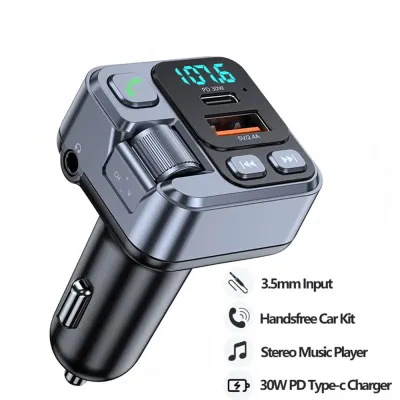
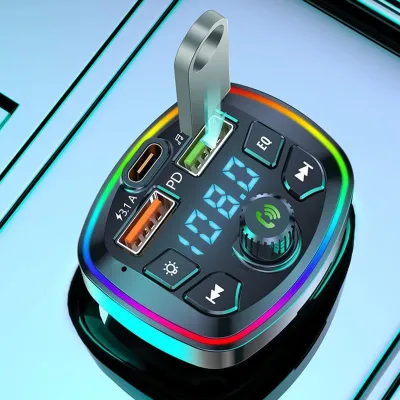
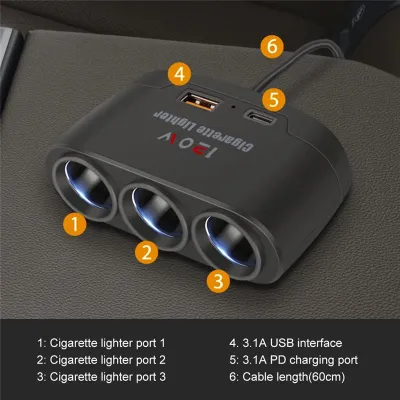
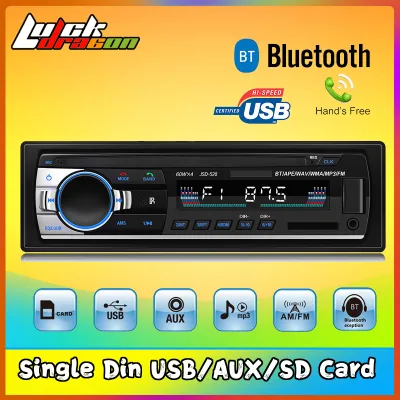
![[Manila spot delivery] 12V Bluetooth V2.0 JSD520 Car Stereo In-dash SD USB MP3 MMC WMA Car Radio Player 1 Din FM Aux Input Receiver Player](https://img.lazcdn.com/g/p/c8f18b1461ac9d48942a5d4912f2a259.jpg_400x400q80.jpg_.webp)
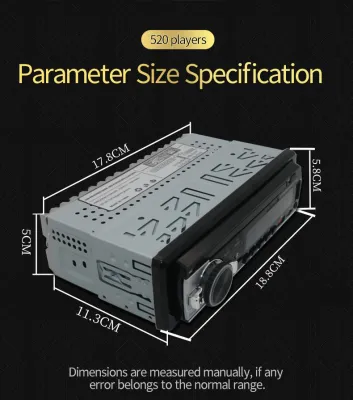
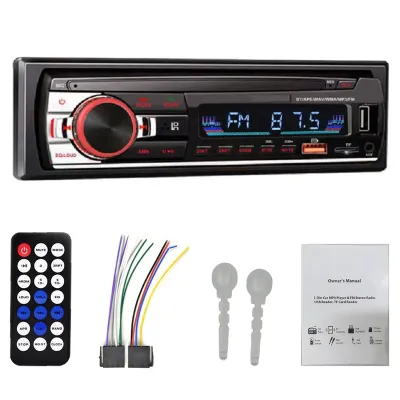
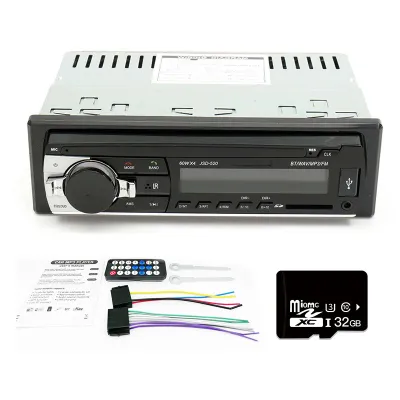
Prices are valid at publication and may change. Please refer to the product page for the latest price.
How Bluetooth Receivers and FM Transmitters Work to Upgrade Your Car Player Bluetooth
To make an informed decision for your car player bluetooth setup, it helps to understand how these two devices handle wireless signals. Both options solve the exact same problem—bridging the gap between your smartphone’s digital library and your car’s analog speakers—but they use completely different pathways to deliver that audio.

Bluetooth receivers act as a direct bridge. The device pairs with your smartphone wirelessly, receives the high-quality digital audio stream, and immediately converts it into an analog signal. It then sends this signal directly into your car’s stereo system through a physical 3.5mm auxiliary cable or a digital USB connection. Because the final leg of the journey is entirely wired, the car’s built-in amplifier receives a clean, uncompressed audio feed that is processed just like a CD or a direct line-in connection.
FM transmitters, on the other hand, introduce an extra wireless step. The transmitter pairs with your phone via Bluetooth, but instead of using a physical cable to connect to the stereo, it converts the audio into a low-power, short-range FM radio broadcast. You must then tune your car’s built-in radio receiver to the exact frequency broadcast by the transmitter. Your car’s antenna picks up this local signal, treating the transmitter as if it were a nearby commercial radio station.
Sound Quality: Wired Connection vs. Radio Frequencies
Audio fidelity is often the deciding factor for drivers who enjoy detailed music reproduction or rely heavily on clear spoken-word podcasts and navigation instructions. The physical differences in how these two devices transmit audio lead to vastly different listening experiences on the road.
Bluetooth Receivers (Superior Fidelity)
Routing your audio through a physical AUX or USB cable completely bypasses the open airwaves, protecting your music from external radio interference. This direct connection delivers a full-range sound with punchy bass, clear mid-tones, and crisp highs, free of any background hiss. To maximize this audio quality, verify if both your smartphone and the receiver support advanced audio codecs, such as AAC or aptX, before making a purchase. These codecs compress the wireless signal more efficiently, preserving greater musical detail before the receiver converts it to analog and sends it down the cable.
FM Transmitters (Prone to Interference)
FM radio technology has inherent physical limitations. The FM band has a restricted frequency response, which naturally compresses the audio signal and reduces its dynamic range, often resulting in muddy bass and flat vocals. Additionally, FM transmitters are highly susceptible to radio frequency (RF) interference, static, and signal bleeding from actual commercial radio stations.
Environmental Factors
Your driving environment plays a massive role in how well an FM transmitter performs. If you regularly drive through dense urban areas like Metro Manila, the local FM dial is incredibly crowded with powerful broadcast signals. As you travel, these local stations can easily override your transmitter’s low-power signal, causing sudden bursts of static, loud hums, or audio dropouts. This forces you to constantly search for and retune the device to a new, unoccupied frequency, which can quickly become a frustrating daily chore.
Installation, Power, and Daily Convenience
Before purchasing any aftermarket audio accessory, you must verify your vehicle’s exact model, year, and available dashboard interfaces by checking your original vehicle documentation. Never assume compatibility based on generic product descriptions. The physical layout of your dashboard and your tolerance for cable clutter will heavily influence which device fits your daily routine.
Bluetooth Receivers
These devices require both an available AUX or USB input port and a reliable power source. They generally fall into two power categories:
- USB-Powered: These units draw power directly from an active USB port or a separate 12V-to-USB adapter. They turn on and off automatically with your car's ignition, providing a seamless "set-and-forget" experience. However, they do require careful cable routing to keep your dashboard looking clean.
- Battery-Powered: These receivers offer excellent cable management since they do not need to be constantly plugged in, but they require periodic recharging. Be aware that in tropical climates like the Philippines, cabin temperatures can easily exceed 50°C when parked under direct sunlight. This extreme heat can degrade internal lithium-ion batteries rapidly or even pose safety risks, making USB-powered receivers the safer and more durable choice for hot climates.
FM Transmitters
The primary appeal of an FM transmitter is its absolute simplicity. It plugs directly into your car’s 12V cigarette lighter socket, requiring no auxiliary ports or dangling cables. Because they occupy the 12V socket, manufacturers almost always equip these devices with built-in USB charging ports, allowing you to power your phone or dashcam simultaneously. The daily friction, however, lies in the tuning process. You must ensure your car radio remains perfectly synced to the transmitter’s chosen frequency, which can require frequent trial-and-error adjustments as you move between different regions.
Connectivity and Call Reliability on the Road
Hands-free calling is not just a matter of convenience; it is a critical safety and legal consideration. For instance, under local regulations like the Anti-Distracted Driving Act in the Philippines, holding a phone while operating a vehicle is strictly prohibited. Both receivers and transmitters maintain a highly stable wireless connection to your phone, but they differ significantly in how they capture and transmit your voice.
Microphone Placement and Call Clarity
- Receivers: Many high-quality AUX Bluetooth receivers feature a separate, clip-on microphone connected by a thin wire. This design allows you to mount the microphone high up on your dashboard, steering column, or sun visor—placing it much closer to your mouth. This proximity ensures your voice is captured clearly while minimizing the pickup of ambient cabin noise.
- Transmitters: Because FM transmitters are designed as single, solid units, their microphones are permanently built into the body of the device. This means the microphone is located wherever your 12V socket is positioned—often low down on the center console, near the gear shifter, or tucked away under the climate controls. This distance, combined with vibrations from the road and engine bay, often results in a muffled, distant, or echo-prone voice quality for the person on the other end of the line.
Safety and Distraction
Adjusting an FM transmitter to find a clear frequency or struggling to hear navigation prompts through static while driving creates a dangerous manual and cognitive distraction. A Bluetooth receiver’s wired audio path offers a highly reliable, interference-free connection that requires zero interaction once configured. This set-and-forget nature keeps your eyes on the road and your hands on the wheel, making it the safer option for daily commutes.
Feature Comparison at a Glance
To help you quickly evaluate which device aligns with your vehicle’s layout and your personal preferences, use the following comparison table as a checklist against your car’s available ports and your daily driving needs.
| Feature | Bluetooth Receiver (AUX/USB) | FM Transmitter (12V) |
|---|---|---|
| Audio Quality | Direct and clean; bypasses radio static | Compressed; prone to RF interference and static |
| Installation Requirement | Must have an active AUX or USB input port | Only requires a standard 12V accessory socket |
| Power Source | USB port or internal rechargeable battery | Direct draw from the 12V cigarette lighter socket |
| Call Quality & Mic Placement | Often features a clip-on, high-mounted external mic | Built-in mic; often located low on the console |
| Extra Features | Minimalist; focused purely on audio routing | Often includes fast-charging USB ports and voltage displays |
| Best Use Case | Daily commuters prioritizing high-fidelity music | Older vehicles lacking any modern auxiliary inputs |
Always use this table to cross-reference your vehicle’s physical dashboard layout before purchasing any new hardware, ensuring that your chosen device can be safely mounted without blocking essential controls.
Final Verdict: How to Choose the Right Upgrade for Your Car
Rather than looking for a universal winner, you should choose the upgrade path that matches your vehicle’s physical limitations and your specific driving habits.
Choose a Bluetooth Receiver if:
- Your vehicle's head unit features an accessible, functioning 3.5mm AUX or USB input.
- You prioritize high-fidelity music streaming with deep bass and minimal background hiss.
- You make frequent hands-free phone calls and require a clear, high-mounted microphone to block out road noise.
- You prefer a seamless, automatic connection that requires absolutely no manual tuning or frequency adjustments when you start the engine.
Choose an FM Transmitter if:
- Your car is an older model that completely lacks an auxiliary input or USB port on the factory head unit.
- You frequently drive different older vehicles, such as company cars or rental units, and need a highly portable, plug-and-play solution.
- You need to consolidate your power sources and require extra, high-speed USB charging ports for your phone, dashcam, or passenger devices without purchasing separate multi-port adapters.
Verify Before You Buy
Before finalizing your purchase, perform these essential checks to ensure a safe and successful installation:
- Check 12V Socket Behavior: Consult your vehicle's owner's manual to determine if your 12V cigarette lighter socket is "switched" (turns off with the engine) or "always-on" (constant power). If your socket is always-on, leaving an FM transmitter plugged in while the car is parked for several days can slowly drain your car battery.
- Inspect Cable Routing and Safety: Ensure that the physical placement of the 12V socket, USB ports, or AUX inputs allows you to route all power and audio cables safely. Cables must never drape across the steering wheel, wrap around the gear shifter, or interfere with your access to the handbrake and emergency controls.
- Address Ground Loop Noise: If you choose a USB-powered AUX receiver and notice a high-pitched whining noise that rises and falls with your engine's RPM, your vehicle is experiencing a ground loop. This common automotive electrical issue can be easily resolved by placing an inexpensive, plug-and-play ground loop noise isolator in-line between the receiver and your car's AUX port.
Frequently Asked Questions (FAQ)
Can I use both a Bluetooth receiver and an FM transmitter at the same time?
Using both devices simultaneously is redundant and will not improve your audio quality or signal strength. Both accessories serve the exact same primary purpose: capturing the wireless audio signal from your smartphone and routing it to your car’s stereo system. Furthermore, modern mobile operating systems are designed to stream media audio to only one active Bluetooth output device at a time. To avoid signal conflicts and unnecessary dashboard clutter, select the single device that best matches your car’s available physical ports.
Will an FM transmitter drain my car battery if left plugged in?
Whether an FM transmitter drains your battery depends entirely on how your vehicle’s electrical system is wired. In most modern vehicles, the 12V accessory socket is switched, meaning it automatically cuts power when you turn off the ignition. However, some older vehicles feature constant-power sockets that remain active even when the key is removed. If your vehicle has an always-on socket, a plugged-in transmitter will continue to draw power. While the draw is small, leaving it connected over a long weekend or an extended parking period can weaken or drain your car battery. To prevent this, simply unplug the transmitter when parking for long periods.
Do I need to pair my phone to the car stereo if I use one of these devices?
No, you do not need to pair your phone with the car’s built-in stereo system when using these aftermarket devices. Your smartphone pairs directly and exclusively with the Bluetooth receiver or the FM transmitter. The car stereo itself remains completely unaware of your phone; it simply acts as a basic audio output. The stereo only needs to be set to the correct input source—either the physical auxiliary channel (AUX) for a receiver or the specific FM radio frequency for a transmitter—to play the audio sent to it by the adapter.
Community discussion
Share your experience or ask a question. Comments are reviewed before publication.