
Determining whether a BOMX caliper or another aftermarket brand offers better stopping power depends entirely on your specific motorcycle model, riding style, and the correctness of the installation. Because braking performance relies on the complete hydraulic system rather than just the caliper, there is no universal winner. This guide breaks down the verifiable specifications, build quality indicators, and price-to-performance trade-offs to help you choose the right setup for daily riding in the Philippines, while prioritizing safety and system compatibility.
In the Philippines, motorcycle riders face unique challenges. Daily commutes involve navigating dense, stop-and-go urban traffic in intense tropical heat, followed by sudden downpours that flood streets and coat brake components in road grime. These environmental factors place immense stress on your motorcycle’s braking system. Upgrading your caliper is a popular way to seek better lever feel, but a successful upgrade requires looking beyond brand names and focusing on engineering realities.
Core Standards for Evaluating Motorcycle Brake Calipers
Evaluating an aftermarket brake caliper requires understanding the mechanical and hydraulic principles that govern stopping power. Real-world performance is determined by measurable specifications rather than marketing claims. By focusing on these core standards, you can avoid compatibility mistakes and select a caliper that truly enhances your safety on the road.
Products mentioned in this guide
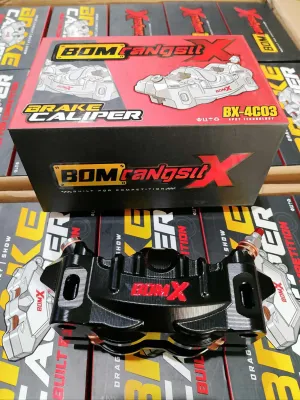
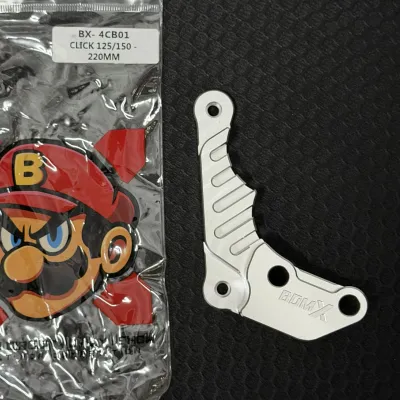
Prices are valid at publication and may change. Please refer to the product page for the latest price.
Piston count and diameter are the primary factors influencing clamping force and brake lever feel. A caliper with more pistons—such as upgrading from a single-piston to a dual-piston or four-piston design—distributes pressure more evenly across the brake pad surface. However, larger or more numerous pistons require a greater volume of brake fluid to move them. If your stock master cylinder is not designed to displace this volume, you will experience a soft, spongy brake lever that must be pulled closer to the handlebar before the brakes engage.
Material composition and heat dissipation capabilities directly affect how well a caliper performs under continuous use. CNC-machined calipers generally offer higher structural rigidity than cast options, minimizing caliper flex under hard braking. In the hot, humid climate of the Philippines, efficient heat dissipation is critical to prevent the brake fluid from reaching its boiling point, which leads to sudden and dangerous brake fade.
System compatibility is the final and most crucial standard. A brake caliper is part of a closed hydraulic circuit that includes the master cylinder, brake lines, pads, and the rotor. Changing the caliper alters the hydraulic ratio of this entire system. Before purchasing any aftermarket caliper, you must verify that its fluid volume requirements align with your motorcycle’s existing master cylinder and that the mounting dimensions match your fork legs and disc rotor size.
Evaluating BOMX Calipers: Specifications and Rider Checks
When considering a BOMX caliper for your motorcycle, you must perform a series of hands-on checks and specification verifications. Because aftermarket parts are manufactured to fit a wide range of generic applications, the responsibility falls on the rider to ensure the specific model variant is safe and compatible with their vehicle. Relying on visual appeal alone can lead to severe installation issues or mechanical failure.

First, identify the exact BOMX caliper model variant you plan to purchase and locate its official specification sheet. Verify the piston configuration—whether it is a two-piston or four-piston design—and note the exact bore diameter of the pistons. Compare these measurements against your stock caliper’s specifications. If the BOMX caliper has a significantly larger total piston surface area, prepare for the likelihood that your stock master cylinder may need to be upgraded to maintain a firm, responsive lever feel.
Next, carefully inspect the mounting bracket requirements for your specific motorcycle model. BOMX calipers typically require an aftermarket adapter bracket to align correctly with your motorcycle’s fork sliders and brake rotor. You must verify the axle spacing, the mounting hole pitch on your forks, and the outer diameter of your brake rotor. An improperly aligned bracket can cause the brake pads to sit too high or too low on the rotor, leading to uneven pad wear, reduced stopping power, or dangerous binding.
Finally, review the product packaging, manual, or manufacturer labels for recommended fluid types and compatible brake pad compounds. Most modern motorcycle hydraulic systems require DOT 4 brake fluid, which has a higher boiling point than DOT 3 and is better suited for tropical climates. Ensure the caliper seals are fully compatible with the fluid you intend to use. Additionally, check the availability of replacement brake pads that match the BOMX caliper’s specific shape, as using worn-out pads or struggling to find replacements locally can leave your motorcycle out of service.
BOMX vs. Competing Aftermarket Brands: A Dimension Breakdown
Comparing BOMX calipers to other aftermarket options requires a systematic look at how different brands handle braking feel, manufacturing quality, and overall value. While some premium brands carry high price tags due to racing heritage, budget-friendly brands like BOMX aim to offer accessible upgrades for daily commuters. Understanding these trade-offs allows you to make an informed decision based on your actual riding needs.
Braking feel and modulation differ significantly between caliper designs. Some aftermarket brands engineer their calipers to provide a highly aggressive initial bite, where the brakes grab forcefully the moment you touch the lever. While this can feel powerful, it can be hazardous on wet, slippery, or unpaved Philippine roads, where a sudden lockup can cause a crash. Other calipers, including many BOMX configurations, focus on progressive modulation, allowing you to smoothly control the braking force by squeezing the lever harder, which is generally safer for daily street riding.
Build quality and durability are highly visible when comparing calipers side by side. When inspecting a BOMX caliper against competing brands, examine the quality of the exterior finish. Anodized coatings should be uniform and free of blemishes, as a durable finish protects the aluminum body from corrosion caused by road salt, rain, and humidity. Pay close attention to the piston seals; premium brands often use high-grade EPDM rubber seals that resist tearing and maintain their elasticity over years of heat cycles, preventing fluid leaks and keeping dirt out of the piston bores.
The price-to-performance ratio is where riders must calculate the true cost of an upgrade. BOMX calipers are generally priced competitively in ₱, making them an attractive option for riders on a budget. However, you must factor in the total cost of ownership. If installing a budget caliper requires you to purchase a custom mounting bracket, upgraded braided steel brake lines, and a larger master cylinder to achieve satisfactory performance, the total expense may equal or exceed the cost of a premium, direct-fit caliper kit. Weigh these costs carefully before making your purchase.
Safety Boundaries and Installation Requirements
Upgrading your motorcycle’s brake calipers is a high-stakes modification that directly impacts your safety on public roads. Brakes are your primary safety device, and any failure can result in catastrophic consequences. Because of the critical nature of hydraulic braking systems, you must adhere to strict safety boundaries and professional installation protocols before operating your motorcycle after an upgrade.
Professional installation is highly recommended for any aftermarket brake component. A qualified mechanic possesses the specialized tools, such as a calibrated torque wrench, necessary to tighten mounting bolts to the exact specifications set by the motorcycle manufacturer. Loose caliper bolts can back out under the intense vibrations of riding, causing the caliper to detach and lock the wheel, while over-tightened bolts can strip the aluminum threads on your fork legs or caliper body.
Properly bleeding the hydraulic system is a non-negotiable step in the installation process. Even a tiny bubble of air trapped inside the brake lines or caliper body will compress when you pull the brake lever, resulting in a spongy feel and a dangerous reduction in stopping power. The entire system must be thoroughly flushed and bled with fresh, clean brake fluid from a sealed container.
Before finalizing any modification, check your motorcycle manufacturer’s guidelines and local land transportation regulations regarding aftermarket brake components. If you encounter any unexpected issues during installation—such as mismatched banjo bolt thread pitches, clearance issues where the caliper body contacts the wheel spokes, or interference with ABS sensor rings—stop immediately and consult a professional mechanic.
Decision Framework: Which Caliper Setup Fits Your Ride?
Choosing the right caliper setup requires matching your specific motorcycle, budget, and riding conditions to the appropriate product category. There is no single aftermarket caliper that is perfect for every rider, so your decision should be guided by clear, condition-based rules. Use the following framework to determine which path is safest and most effective for your motorcycle.
Choose a BOMX caliper if you ride a small-displacement commuter motorcycle or scooter, are looking for a budget-friendly multi-piston upgrade, and want to customize the aesthetic look of your bike. This option is suitable if you are willing to spend the time verifying mounting bracket compatibility, checking piston displacement ratios, and ensuring that high-quality replacement brake pads are readily available in your local area.
Choose established premium aftermarket brands if you ride a larger-displacement motorcycle, frequently carry heavy loads or passengers, participate in track days, or require guaranteed compatibility with advanced braking systems. These premium options often feature extensive engineering documentation, factory-backed warranties, and direct-fit designs that do not require custom fabrication or bracket modifications, providing peace of mind for high-demand riding.
Verify your system requirements first if your motorcycle is equipped with a complex linked braking system (CBS) or an anti-lock braking system (ABS). Modifying the caliper on these integrated systems can disrupt the factory-calibrated brake bias and sensor readings, potentially disabling your safety features. If the caliper’s required master cylinder displacement ratio is unclear, or if you cannot find a certified mounting bracket for your exact motorcycle model and year, consult a qualified professional before purchasing any aftermarket parts.
Frequently Asked Questions (FAQ)
Do I need to upgrade my master cylinder when installing a multi-piston BOMX caliper?
You must check the fluid displacement specifications of both your stock master cylinder and the new BOMX caliper before installation. If you install a multi-piston caliper with a significantly larger total piston surface area than your stock caliper, your original master cylinder may not displace enough fluid. This mismatch often results in excessive lever travel and a spongy braking feel. If the volume ratio is mismatched, upgrading to a compatible master cylinder with a larger piston bore is necessary to restore a firm, responsive lever feel and ensure safe operation.
Will an aftermarket caliper affect my motorcycle's ABS system?
Yes, installing an aftermarket caliper can significantly affect your motorcycle’s Anti-lock Braking System (ABS). The ABS computer is calibrated based on the factory caliper’s fluid volume, piston response times, and specific brake pad friction characteristics. Altering these variables can cause the ABS to intervene too early, too late, or trigger system error codes that disable the ABS entirely. Before modifying an ABS-equipped motorcycle, verify that the aftermarket caliper maintains proper clearance for the ABS sensor ring and consult an authorized dealer or qualified mechanic to ensure system safety.
Community discussion
Share your experience or ask a question. Comments are reviewed before publication.