
Upgrading your motorcycle’s braking system is one of the most impactful modifications you can make for safety and performance. While Brembo is widely regarded as the gold standard in stopping power, deciding whether to invest in this premium brand or opt for alternative calipers depends on your specific riding conditions, budget, and mechanical compatibility. In the Philippines, where riders face a mix of intense tropical heat, sudden monsoon downpours, and demanding stop-and-go traffic, choosing the right caliper setup is not just about brand prestige—it is about predictable, reliable deceleration when you need it most.
To make an informed decision, you must look past marketing claims and understand the mechanical principles that govern braking performance. A caliper’s ability to stop your motorcycle relies on hydraulic leverage, structural rigidity, and heat management. By evaluating these technical specifications alongside your daily riding needs, you can determine whether a high-end aftermarket upgrade or a robust original equipment manufacturer (OEM) alternative is the right choice for your machine.
Understanding Braking Performance: Key Caliper Specifications
A motorcycle caliper’s primary job is to convert hydraulic pressure from your master cylinder into mechanical clamping force against the brake rotor. The number of pistons inside the caliper and their total surface area directly dictate this force. For instance, upgrading from a standard 2-piston caliper to a 4-piston caliper increases the contact area on the brake pads, distributing pressure more evenly across the rotor. This hydraulic leverage allows you to achieve stronger, more progressive stopping power with less effort at the brake lever.
Products mentioned in this guide
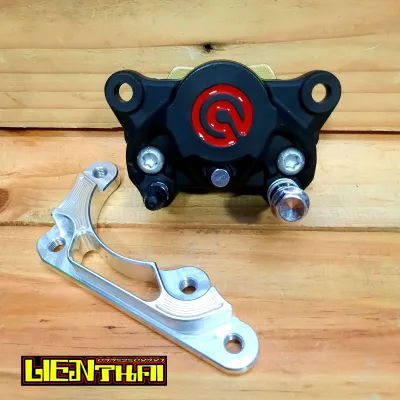
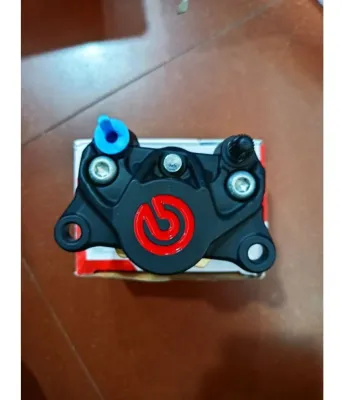
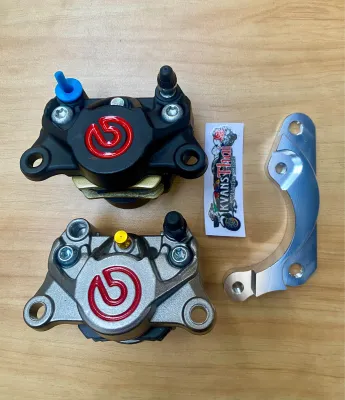
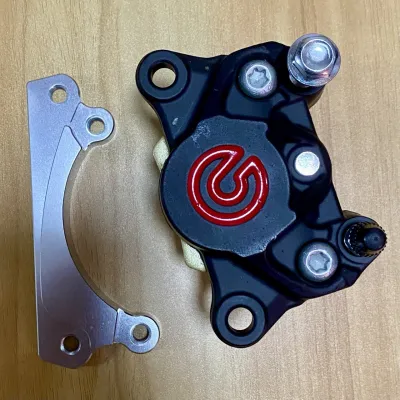
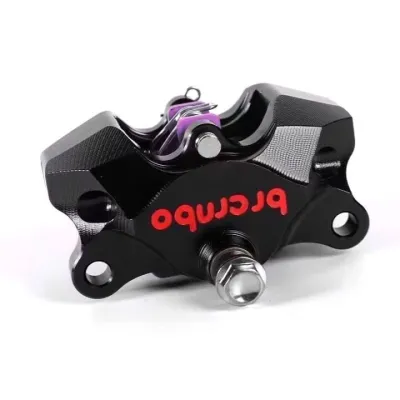
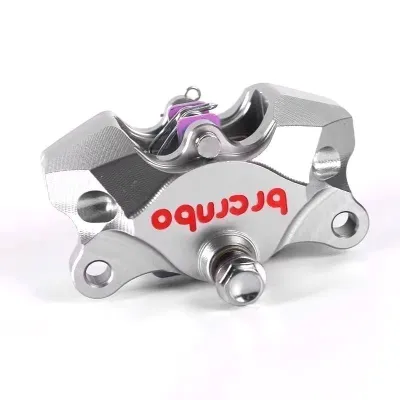
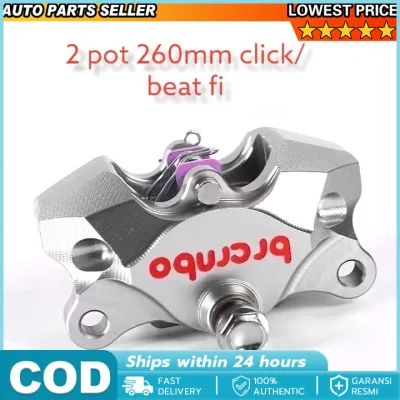
Prices are valid at publication and may change. Please refer to the product page for the latest price.
Mounting styles also play a critical role in how a caliper performs under heavy loads. Axial calipers, which mount using bolts perpendicular to the brake rotor, are common on standard and older motorcycle models. While highly reliable, axial mounts can experience minor lateral deflection under extreme braking forces. Radial calipers, secured by bolts parallel to the rotor at both ends, offer a much stiffer mounting interface. This increased rigidity minimizes caliper flex, resulting in highly stable braking and more consistent lever feedback during sudden stops.
The manufacturing process of the caliper body determines its weight, strength, and heat dissipation capabilities. Cast aluminum calipers are the most common and cost-effective option, suitable for daily commuting and general road use. However, forged or billet-machined calipers offer superior structural integrity and lower weight. These premium constructions resist expansion under high temperatures, ensuring that your brakes do not lose their firm feel even during long mountain descents or high-speed track sessions.
Evaluating Brembo Calipers: Tiers, Fitment, and Verification
When considering Brembo, it is essential to distinguish between the brand’s different product tiers. Many modern motorcycles come equipped with OEM Brembo calipers from the factory, which are designed to meet specific manufacturer budgets and production requirements. These are distinct from Brembo’s high-performance aftermarket upgrade series, such as their billet or monoblock calipers. Understanding this distinction helps you set realistic expectations regarding performance gains and overall costs, which can range from several thousand ₱ to premium price points.

Because of the brand’s global reputation, counterfeit Brembo calipers are a significant hazard in physical shops and online marketplaces. Installing a counterfeit caliper is an extreme safety risk, as substandard materials can fail catastrophically under hydraulic pressure. To protect yourself, always verify authenticity by checking the unique serial numbers, security cards, and hologram labels provided by the manufacturer. Purchasing exclusively from authorized dealers is the most reliable way to ensure you are installing genuine, safety-certified components.
Before purchasing any aftermarket caliper, you must verify the physical clearance constraints of your specific motorcycle model and year. A larger caliper body can interfere with wheel spokes, front fender mounts, or ABS sensor rings. Refer to the official vehicle documentation and the caliper manufacturer’s technical specifications to confirm mounting dimensions. If a caliper rubs against your spokes or disrupts the ABS sensor alignment, it compromises your safety and renders the upgrade unusable.
Assessing Alternative Brands: Value and Direct Fitment
While Brembo is a dominant force in high-performance braking, alternative brands like Nissin and Tokico offer exceptional reliability and value. These manufacturers supply the original braking systems for a vast majority of Japanese and European motorcycles. Opting for an OEM-equivalent caliper from these brands often guarantees direct, bolt-on compatibility without the need for custom adapter brackets. This direct fitment simplifies the installation process and preserves the original engineering geometry of your motorcycle’s front end.
Long-term maintenance is another critical factor when comparing caliper brands. Premium aftermarket calipers sometimes require specialized replacement seals, pistons, and rebuild kits that can be difficult to source locally. In contrast, widely distributed brands like Nissin have a robust supply chain, making spare parts and local service support highly accessible. Ensuring that you can easily obtain rebuild kits is vital for maintaining consistent braking performance over years of daily exposure to tropical humidity and road grime.
For riders who prioritize daily commuting over track-level performance, the cost-to-performance ratio of alternative brands is highly compelling. Navigating congested city streets at moderate speeds does not require the extreme heat tolerance of a race-spec monoblock caliper. A well-maintained OEM or high-quality alternative caliper provides more than enough stopping power for daily road hazards, allowing you to allocate your budget to other essential maintenance items like high-quality tires or regular fluid changes.
Decision Framework: Which Caliper Setup Fits Your Riding Style?
Choosing the right caliper setup requires a realistic assessment of your riding habits, budget, and existing motorcycle components. If you regularly participate in track days, ride a high-displacement sportbike, or demand the absolute highest level of lever feedback and modulation, investing in an aftermarket Brembo caliper is highly beneficial. However, to fully realize these performance gains, you must be prepared to upgrade your entire braking system, including matching the master cylinder, installing braided steel lines, and fitting high-performance rotors.
For riders who use their motorcycles for daily commuting, long-distance touring, or light weekend leisure, alternative brands or OEM replacements are generally the more practical choice. These calipers deliver dependable, predictable stopping power under normal road conditions while keeping long-term maintenance costs manageable. They offer a straightforward, cost-effective path to restoring or slightly improving your braking performance without requiring extensive modifications to your motorcycle’s hydraulic system.
Before making any purchase, you must verify that your current master cylinder is compatible with the fluid displacement requirements of your new caliper. Installing a larger, multi-piston caliper without upgrading your master cylinder can result in a dangerously spongy lever feel, as the master cylinder may not move enough fluid to actuate the larger pistons effectively. Always consult manufacturer sizing charts and compatibility guides to ensure your master cylinder, brake lines, and calipers operate in perfect hydraulic harmony.
Installation Safety and System Compatibility Boundaries
Modifying your motorcycle’s hydraulic braking system directly impacts your safety on the road. Because of the critical nature of these components, professional installation by a qualified mechanic is highly recommended for any caliper upgrade or replacement. If you are unsure about torque specifications, proper alignment, or hydraulic bleeding procedures, stop immediately and consult a professional workshop. Incorrectly installed calipers can lead to uneven pad wear, rotor damage, or sudden brake failure.
System compatibility extends to the brake fluid you use to fill and bleed the system. Always refer to your motorcycle’s original-vehicle instructions and the caliper manufacturer’s specifications to identify the correct fluid type, typically DOT 4 or DOT 5.1. Never mix glycol-based fluids with silicone-based DOT 5 fluid, as doing so will cause the internal rubber seals to swell and degrade, leading to complete hydraulic failure. Additionally, inspect your brake lines for any signs of cracking, swelling, or leakage before finalizing the installation.
Once your new caliper is installed, you must perform a mandatory bedding-in procedure before riding at normal road speeds. This process involves performing a series of gentle, controlled stops from moderate speeds to gradually heat the brakes and transfer a thin layer of pad material onto the rotor. Proper bedding-in ensures optimal friction, prevents premature brake fade, and extends the lifespan of both your new brake pads and rotors.
Frequently Asked Questions (FAQ)
Do I need to upgrade my master cylinder when installing larger calipers?
Yes, you often need to upgrade your master cylinder when moving to calipers with larger or more numerous pistons. The relationship between the master cylinder bore size and the caliper piston volume determines the hydraulic leverage and lever travel of your braking system. If you pair a small-bore master cylinder with large-piston calipers, the master cylinder will not displace enough fluid, resulting in a spongy lever that must be pulled close to the handlebar grip to achieve stopping power. Always check the caliper manufacturer’s sizing charts to ensure your master cylinder and caliper are hydraulically matched.
Can I mix different brake pad compounds with aftermarket calipers?
You can use different brake pad compounds, but you must ensure they are compatible with both your caliper and your brake rotor material. Sintered metal pads offer excellent initial bite and high-temperature performance, making them ideal for aggressive riding, but they generate more heat and accelerate rotor wear. Organic or semi-metallic pads provide a softer lever feel and are gentler on rotors, but they may fade under extreme heat. Always consult the caliper manufacturer’s recommendations and your rotor specifications to select a pad compound that matches your riding environment and safety requirements.
Community discussion
Share your experience or ask a question. Comments are reviewed before publication.