
Navigating the busy streets of Manila, Cebu, or Davao requires reliable protection that keeps you cool under the tropical sun. If you are shopping for a motoman half face helmet in the Philippines, balancing safety compliance with your personal budget is the most critical decision you will make. A certified open-face helmet offers the ideal mix of ventilation for humid daily commutes and the essential impact protection required by law. By understanding what features are available at different price points, you can secure a road-legal helmet that matches your riding habits without overspending.
Why PSB and ICC Certifications Are Non-Negotiable
In the Philippines, motorcycle safety is governed strictly to reduce road accident risks, making official certifications the absolute first filter for any helmet purchase. The Land Transportation Office (LTO) enforces the mandatory use of protective helmets under Republic Act No. 10054. Under this law, every rider and passenger must wear a helmet that bears either the Philippine Standard (PS) mark or the Import Commodity Clearance (ICC) sticker. These labels are not mere decorative decals; they prove that the helmet has undergone rigorous impact, penetration, and retention tests conducted by the Bureau of Philippine Standards (BPS).
Riding with an uncertified helmet, or one carrying counterfeit stickers, exposes you to immediate legal and financial consequences. LTO officers and local traffic enforcers regularly conduct checkpoints where they inspect riding gear. Being apprehended without a valid PSB or ICC certified helmet results in statutory fines and the potential confiscation of your driver’s license. More importantly, uncertified helmets often use cheap, brittle plastics that shatter upon impact, failing to protect your head during a collision. No amount of upfront savings can justify the extreme physical risk of wearing substandard gear on public roads.
Products mentioned in this guide
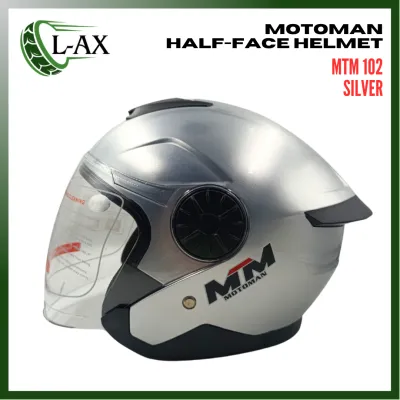
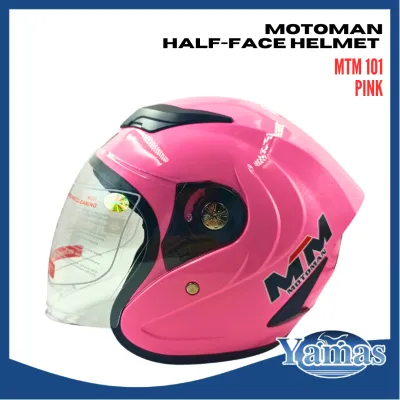
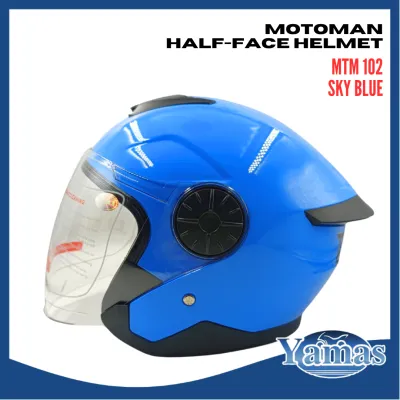
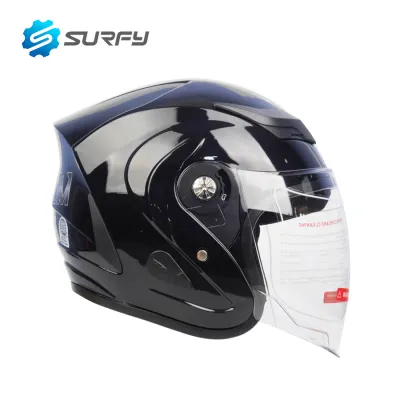
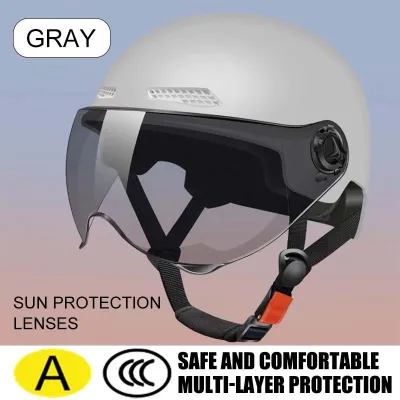
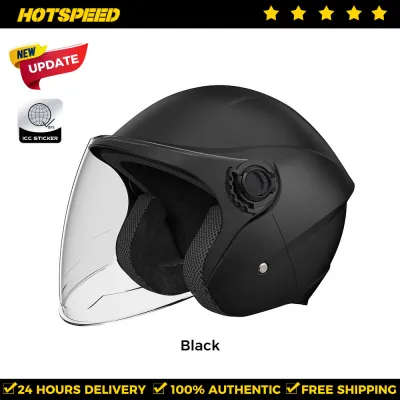
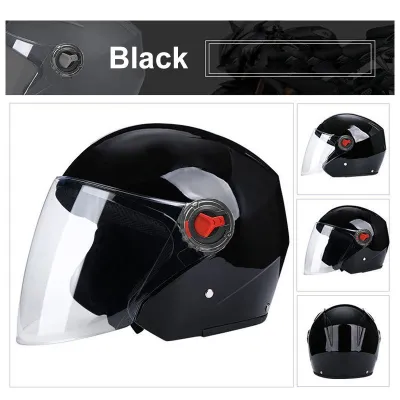
Prices are valid at publication and may change. Please refer to the product page for the latest price.
Choosing a Motoman Half Face Helmet: What to Expect at Different Budgets
When shopping for a motoman half face helmet, understanding how features scale with price helps you set realistic expectations. While safety remains constant across all certified models—as every approved helmet must pass the same baseline testing—the materials, build quality, and comfort features vary significantly between entry-level and mid-range tiers. Knowing these distinctions prevents you from overpaying for unnecessary extras or settling for a helmet that lacks the comfort needed for your daily route.

Entry-Level Tier: Essential Protection and Basic Comfort
At the entry-level price point, typically ranging under ₱1,500, helmets focus primarily on meeting baseline safety requirements while keeping manufacturing costs low. The outer shell is almost universally constructed from standard Acrylonitrile Butadiene Styrene (ABS) plastic, which is tough and impact-resistant but tends to be slightly heavier than advanced composites. Inside, you will find a single-density Expanded Polystyrene (EPS) foam liner designed to absorb and distribute shock during an impact.
The functional components at this budget tier are straightforward and utilitarian. Visor mechanisms usually rely on a basic plastic ratchet system, which allows for a few fixed positions but may feel stiff or wear down over time with heavy use. Ventilation is typically limited to simple, non-adjustable top intake vents and rear exhaust ports that provide basic airflow but may struggle to keep you completely cool during heavy traffic jams in high humidity.
When buying an entry-level helmet, your primary focus should be on fitment and build integrity rather than premium features. Ensure the helmet fits snugly around your temples and cheeks without causing painful pressure points, as a loose helmet can easily slip off during an accident. Check the overall weight to ensure it does not strain your neck during your average ride duration, and inspect the interior padding to verify that it offers sufficient cushioning for short to medium commutes.
Mid-Range Tier: Enhanced Comfort and Daily Commuting Features
Stepping up to the mid-range tier, which generally spans from ₱1,500 to ₱3,500, introduces noticeable upgrades in material refinement and rider ergonomics. The outer shells in this category often utilize advanced ABS blends or polycarbonate materials, resulting in a lighter overall weight without sacrificing structural integrity. The internal safety liner is frequently upgraded to a multi-density EPS configuration, which is engineered to absorb both low-speed and high-speed impacts more effectively.
One of the most significant upgrades in mid-range helmets is the quality of the visor system and aerodynamics. Many models feature quick-release visor mechanisms that allow you to swap shields without tools, along with dual-visor setups that include an integrated drop-down sun shield to protect your eyes from intense daytime glare. The shell shapes are also more aerodynamically optimized, reducing wind drag and minimizing the annoying whistling noise that can cause rider fatigue at higher speeds.
Interior comfort is highly prioritized in this tier, making these helmets far better suited for long daily commutes in the Philippine climate. The inner comfort liners are typically made of moisture-wicking, hypoallergenic fabrics that draw sweat away from your skin. Crucially, these pads are fully removable and washable, allowing you to maintain hygiene and prevent the buildup of bacteria and unpleasant odors caused by sweat and rain. Improved ventilation channels carved directly into the EPS liner ensure a continuous stream of fresh air across your scalp, keeping you significantly cooler during hot afternoon rides.
How to Verify Authentic PSB/ICC Marks Before and After Purchase
The prevalence of counterfeit safety gear in online marketplaces makes physical verification a crucial step for every rider. Genuine PSB and ICC stickers issued by the Department of Trade and Industry (DTI) possess specific security features designed to prevent duplication. Authentic stickers feature a distinct holographic background that shifts colors when tilted under direct light, clear and sharp printing of the DTI logo, and a unique serial number printed at the bottom.
When inspecting a helmet, look closely at how the certification sticker is applied to the shell. Genuine stickers are made of a tamper-evident material that self-destructs or tears into pieces if anyone attempts to peel and transfer them to another helmet. If the sticker appears perfectly smooth at the edges but has bubbles underneath, or if it looks like a simple printed decal integrated into the helmet’s graphic paint job, it is highly likely to be a counterfeit.
To ensure absolute safety, you can cross-check the certification details before finalizing your purchase. Many authorized distributors and official brand portals provide access to their product registration databases. You can verify the manufacturer’s name and the specific helmet model against the official list of certified brands maintained by the Bureau of Philippine Standards. If a seller refuses to provide clear, close-up photos of the physical ICC or PSB sticker on the specific unit they plan to ship, you should look for another vendor.
Hidden Costs and Accessories to Factor Into Your Budget
When planning your purchase, the sticker price of the helmet is rarely the final amount you will spend. If you are ordering your riding gear online, shipping fees can add a significant premium to your total bill. Because helmet boxes are bulky and require protective packaging to prevent damage during transit, courier services often charge volumetric rates rather than simple weight-based fees, especially if you reside in provincial areas outside of Metro Manila.
Additionally, maintaining comfort and safety throughout the year requires investing in a few essential accessories:
- Replacement Visors: A scratched visor severely compromises your visibility at night or during heavy downpours. Budgeting for a spare clear or smoke-tinted visor ensures you can replace a damaged shield immediately.
- Anti-Fog Inserts or Sprays: The sudden temperature drops during afternoon rain showers in the wet season can cause your visor to fog up instantly. An anti-fog insert or treatment is a highly recommended safety upgrade to maintain a clear line of sight.
- Balaclavas and Inner Caps: Wearing a breathable balaclava absorbs sweat before it reaches your helmet's lining. This simple accessory keeps your helmet smelling fresh for longer and reduces how often you need to wash the internal pads.
Always calculate the combined cost of the helmet, estimated shipping fees, and any immediate accessories you need before clicking the checkout button. This comprehensive budgeting ensures you do not compromise on essential upkeep items that directly affect your daily riding comfort and safety.
Smart Buying Channels and Delivery Inspection
To guarantee you receive a genuine, road-legal product, you must choose your purchasing channels carefully. Whenever possible, visit physical authorized motorcycle accessory dealers or official flagship stores on major e-commerce platforms. Buying directly from authorized channels ensures that the helmet has been stored and handled correctly, and it guarantees that you will have access to official warranty support and genuine replacement parts like visors and cheek pads.
Once your helmet is delivered, perform a thorough unboxing inspection before removing any tags or discarding the packaging. Place the helmet under bright lighting and check the entire outer shell for hairline cracks, deep scratches, or uneven molding spots that could indicate a manufacturing defect or shipping damage. Test the visor mechanism by opening and closing it several times, ensuring it locks securely in place and releases smoothly without excessive force.
Finally, inspect the chin strap and buckle assembly, which are critical for keeping the helmet on your head during an impact. Verify that the quick-release buckle or double-D ring system functions flawlessly and that the strap stitching is robust and free of loose threads. If the helmet fails any part of this physical inspection, or if the ICC sticker appears damaged or missing, do not wear it. Immediately document the issues with photos and videos, and contact the seller to initiate a return or exchange under their buyer protection policy.
Frequently Asked Questions (FAQ)
Are half-face helmets legal for all motorcycle types in the Philippines?
Yes, standard half-face (open-face) helmets are legal for general use on public roads in the Philippines, provided they carry a genuine PSB or ICC certification sticker. The Land Transportation Office (LTO) mandates that all motorcycle riders wear certified protective helmets regardless of engine displacement. However, if you ride a high-displacement motorcycle on expressways, a full-face helmet is highly recommended by safety experts due to the increased wind pressure, debris, and higher travel speeds. Always check the latest LTO administrative orders and expressway guidelines, as specific tollway operators may enforce their own safety gear recommendations for big bikes.
How often should I replace my Motoman half-face helmet?
As a general rule, you should replace your helmet every three to five years from the date of first use, or within seven years from the manufacturing date. Over time, the internal Expanded Polystyrene (EPS) liner gradually degrades due to exposure to sweat, hair oils, UV rays, and extreme tropical heat, reducing its ability to absorb impacts. Most importantly, you must replace your helmet immediately after any accident or significant drop, even if there is no visible damage on the outer shell. The EPS liner is designed to compress once to absorb impact energy; once compressed, it cannot protect your head a second time.
Community discussion
Share your experience or ask a question. Comments are reviewed before publication.