
Selecting the right automatic transmission fluid (ATF) is one of the most critical decisions you can make for your vehicle’s drivetrain longevity. Caltex Texamatic 1888 is a high-performance fluid engineered to meet the demanding requirements of passenger cars, light commercial vehicles, and heavy-duty applications. In tropical climates like the Philippines, where high humidity, intense heat, and dense urban traffic place immense thermal stress on gearboxes, understanding the technical specifications of your transmission fluid is vital. By matching these properties to your vehicle manufacturer’s precise standards, you can prevent premature wear, maintain smooth shifting, and avoid catastrophic mechanical failures.
Core Specifications of Caltex Texamatic 1888 at a Glance
Caltex Texamatic 1888 is an automatic transmission fluid formulated with highly refined base oils and a robust additive package. It is designed primarily for older or specific automatic transmissions requiring fluids that meet legacy performance standards such as Dexron-IIIH or Mercon. Beyond automatic gearboxes, this versatile fluid is also frequently utilized in power steering systems and mobile hydraulic systems that specify a high-quality ATF.
Because transmission designs vary significantly across different vehicle makes and model years, you must never assume compatibility based on general product categories alone. Physical properties—such as kinematic viscosity, flash point, and chemical composition—are carefully balanced to protect specific internal components. To ensure this fluid is appropriate for your vehicle, always verify the exact specifications and approved OEM standards listed on the physical bottle label or the manufacturer’s official Technical Data Sheet (TDS) before purchase or use.
Products mentioned in this guide
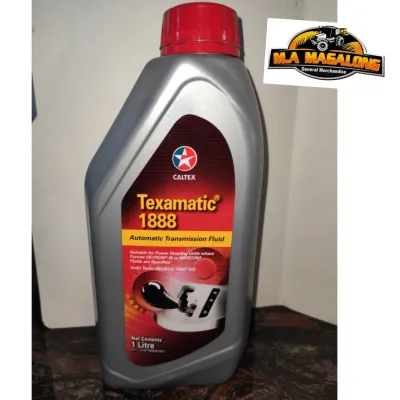
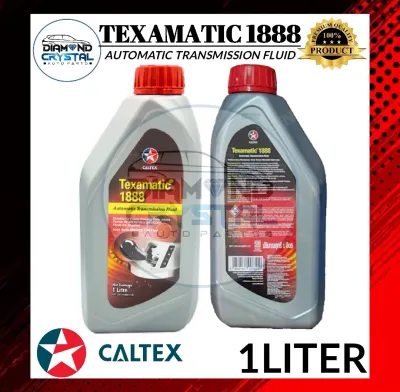
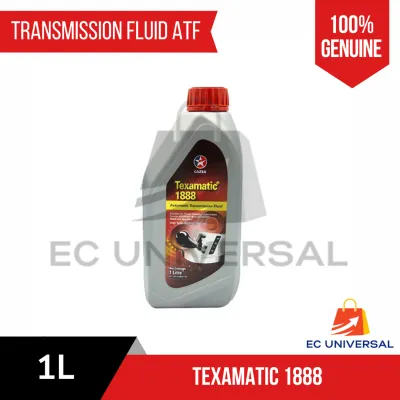
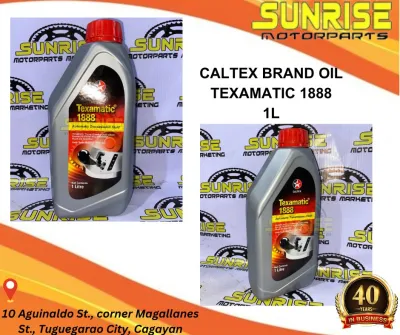
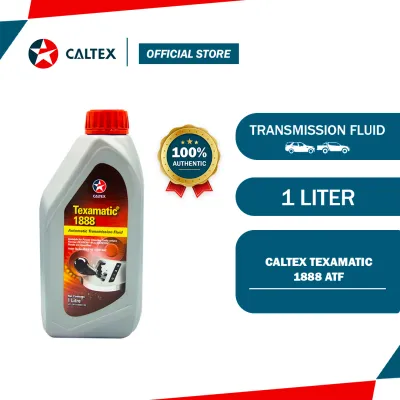
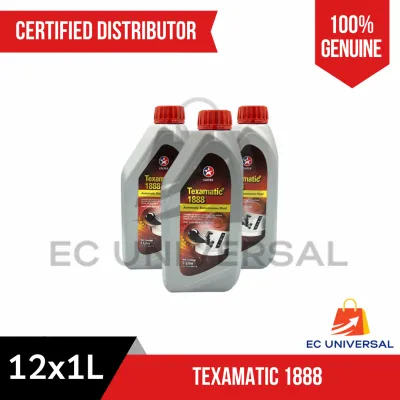
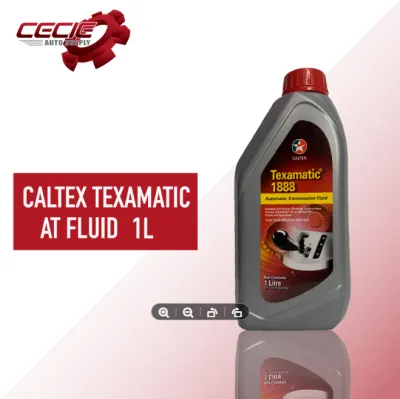
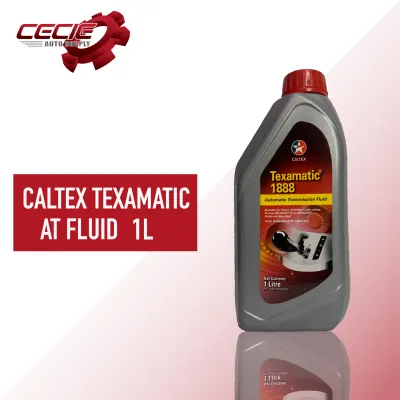
Prices are valid at publication and may change. Please refer to the product page for the latest price.
Decoding the Specs: Viscosity, Friction, and Protection
To understand how Caltex Texamatic 1888 performs inside your transmission, it helps to look at the engineering roles that transmission fluid must fulfill. It is not merely a lubricant; it serves as a hydraulic fluid to actuate gear changes, a coolant to dissipate heat, and a protective barrier for delicate metal surfaces.

Viscosity and Temperature Stability
Viscosity represents a fluid’s resistance to flow, commonly referred to as its thickness. A transmission fluid must maintain a stable viscosity across a wide temperature spectrum. In hot, tropical environments, transmissions run exceptionally hot under stop-and-go driving conditions. If a fluid thins out too much under high heat, it cannot maintain the necessary hydraulic pressure within the valve body, leading to delayed or erratic gear shifts. High-quality ATFs use viscosity index improvers to ensure the fluid remains thick enough to protect components when hot, yet fluid enough to circulate immediately upon a cold start.
Friction Modifiers and Shift Performance
Automatic transmissions rely on wet clutches and bands to engage different gear ratios. These components require a highly specific level of friction to operate smoothly. Friction modifiers are chemical additives that control the slippage and grip of these clutch plates. If the fluid’s friction profile does not align with your transmission’s design, you may experience clutch slippage, harsh gear engagement, or a noticeable vibration known as transmission shudder. Properly balanced friction properties ensure quiet operation and consistent, seamless shifting.
Oxidation Resistance and Thermal Stability
When transmission fluid is subjected to high operating temperatures and oxygen, it undergoes oxidation. This chemical breakdown leads to the formation of harmful varnish, sludge, and carbon deposits. These contaminants can clog the tiny fluid passages inside the transmission’s valve body, leading to severe pressure drops. A fluid with high thermal stability resists oxidation, keeping the internal components clean and significantly extending the service life of both the fluid and the transmission.
Anti-Wear Protection under Heavy Loads
The gears, bearings, and hydraulic pumps inside your transmission face massive mechanical loads. Without adequate protection, metal-on-metal contact would rapidly destroy these precision-engineered parts. Anti-wear additives form a microscopic, sacrificial protective layer on metal surfaces. This barrier minimizes wear during high-load scenarios, such as carrying heavy passenger loads, towing, or navigating steep inclines, ensuring the long-term durability of the entire powertrain.
Verifying Compatibility with Your Vehicle Manufacturer's Requirements
Using an incompatible transmission fluid is one of the quickest ways to cause severe mechanical damage. Before adding or replacing any fluid, follow this systematic approach to confirm compatibility.
Locating the OEM Specification
Your first step is to consult your vehicle’s owner’s manual. Navigate to the specifications or maintenance section to find the required automatic transmission fluid (ATF) standard. This is typically represented by a specific code or specification name, such as Dexron-III, Mercon, Toyota Type T-IV, or Honda ATF-Z1.
Cross-Referencing the Product Label
Once you have identified the required standard, examine the back label of the Caltex Texamatic 1888 container. The manufacturer explicitly lists the industry standards and OEM approvals that the fluid meets. If your vehicle’s required specification is not listed on the bottle or in the official Caltex product documentation, do not use the fluid.
The Mechanical Risks of Mismatched Fluid
Modern transmissions are highly sensitive to fluid characteristics. Pouring a standard ATF into a system designed for a specialized fluid can result in immediate mechanical issues. For example, using a standard ATF in a Continuously Variable Transmission (CVT) or a Dual-Clutch Transmission (DCT) can destroy the internal belts, pulleys, or clutch packs within miles. Additionally, using an unapproved fluid will immediately void any active manufacturer or aftermarket powertrain warranties.
Knowing When to Consult a Professional
If your owner’s manual is missing, if the text is ambiguous, or if your vehicle features a specialized transmission system, do not guess. Stop and consult a certified automotive technician or visit an authorized dealership. A professional can look up your vehicle’s exact Vehicle Identification Number (VIN) to confirm the precise fluid specification required, ensuring your vehicle remains safe and road-legal.
When to Inspect or Replace Your Transmission Fluid
Regular preventative maintenance is key to protecting your vehicle’s transmission from premature wear. Monitoring the health of your fluid allows you to address issues before they escalate into expensive repairs.
Safe Fluid Inspection Steps
To check your transmission fluid safely, park the vehicle on a flat, level surface and engage the parking brake. Refer to your owner’s manual for the exact testing conditions; some manufacturers require the engine to be idling at normal operating temperature, while others specify checking the level when the engine is completely cold. Locate the transmission dipstick, pull it out, wipe it clean with a lint-free microfiber cloth, reinsert it fully, and pull it out once more to read the level.
Visual and Olfactory Indicators
Pay close attention to the fluid’s appearance and smell on the dipstick:
- Healthy Fluid: Should be relatively clear with a bright red or pinkish-red color.
- Worn Fluid: A light brown or hazy appearance indicates that the fluid is beginning to age and should be monitored closely.
- Severely Degraded Fluid: If the fluid is dark brown, black, or contains visible dark suspended particles, it has lost its protective properties and must be replaced.
- The Sniff Test: Smell the fluid on the dipstick. If it emits a distinct, acrid burnt odor, the fluid has overheated and oxidized. This is a clear sign that the fluid's additive package is depleted, and a professional fluid flush and inspection are required immediately.
Adhering to Maintenance Schedules
Always follow the service intervals outlined in your vehicle’s owner’s manual. Be aware that driving conditions play a major role in fluid degradation. If you frequently drive in heavy traffic, navigate steep inclines, or operate in high-humidity tropical environments, your vehicle falls under the “severe driving” category. This classification typically requires more frequent transmission fluid changes than the standard service intervals.
Community discussion
Share your experience or ask a question. Comments are reviewed before publication.