
A worn, stretched, or low-quality return spring for your motorcycle directly compromises your braking safety. While riders often focus on brake pads, shoes, and fluid levels, the return spring is a critical safety component that dictates how and when your brakes disengage. When this small spring loses its tension or breaks entirely, it prevents the braking system from releasing properly, leading to severe brake drag, extreme heat buildup, and a high risk of sudden wheel lock-ups.
If you suspect any degradation in your brake return spring, replacement is an urgent matter that should never be postponed. Ignoring a weak spring can quickly turn a routine daily commute into a catastrophic mechanical failure. Understanding how this component operates, recognizing the warning signs of failure, and knowing how to choose a high-quality replacement are essential steps for keeping your motorcycle safe on the road.
The Role of the Return Spring for Motorcycle Braking Systems
To understand why a failing return spring is so dangerous, you must first understand its mechanical role in your motorcycle’s braking system. When you pull your hand lever or press your foot pedal, you apply mechanical or hydraulic force to push your brake pads against the rotor, or your brake shoes against the drum. This action creates the friction required to slow down your vehicle. However, once you release the lever or pedal, that friction must be terminated instantly to maintain control and momentum.
Products mentioned in this guide
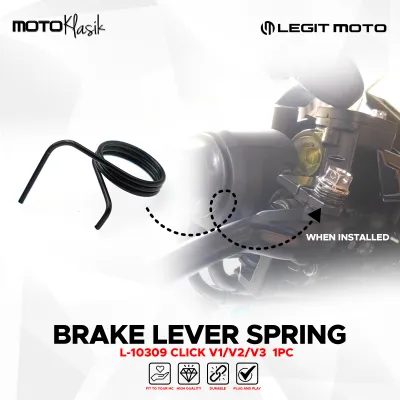
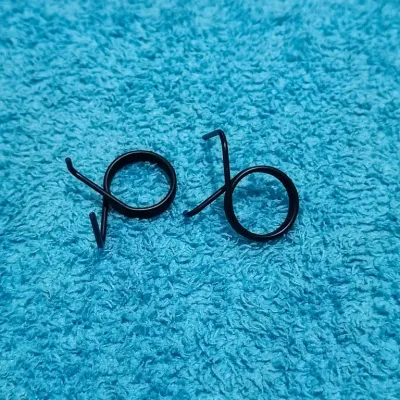
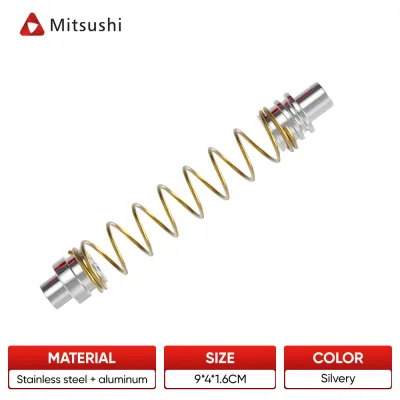
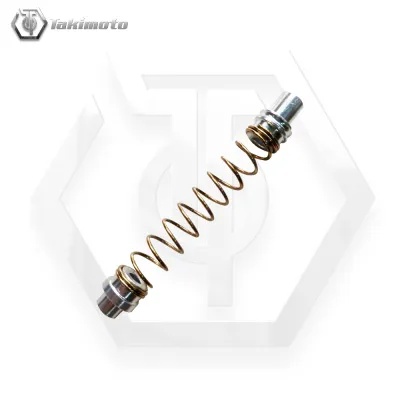
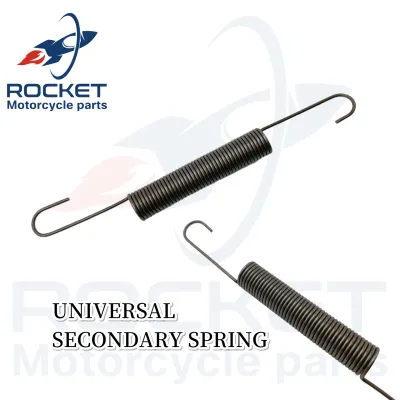
Prices are valid at publication and may change. Please refer to the product page for the latest price.
This is where the return spring for motorcycle brakes plays its vital role. In drum brake setups, heavy-duty tension springs connect the two brake shoes, actively pulling them away from the inner walls of the brake drum the moment you release the brake pedal. In disc brake systems, smaller return springs or specialized spring clips assist in retracting the caliper piston and brake pads, preventing them from dragging against the spinning rotor while also reducing brake rattle.
There is a massive performance difference between original equipment manufacturer (OEM) tension specifications and those of cheap, substandard aftermarket parts. An OEM-spec spring is engineered with precise tensile strength to overcome the residual hydraulic pressure and mechanical friction of the brake assembly. Substandard springs often lack the necessary tension from the day they are installed, failing to pull the components back to their true resting positions and leaving your brakes partially engaged.
While brake pads and discs receive the majority of maintenance attention, the release phase of braking is just as critical for overall vehicle control as the application phase. A clean, immediate release ensures that your tires maintain optimal traction and do not skid unexpectedly. Without a properly functioning return spring, the delicate balance between acceleration and deceleration is lost, leaving you vulnerable to unpredictable handling.
Critical Safety Risks of a Degraded or Substandard Spring
Using a compromised or low-quality return spring introduces several severe safety hazards that can damage your motorcycle and put your life at risk. The most common consequence of a weak spring is continuous brake drag, which leads to rapid overheating. Because the spring cannot fully retract the brake shoes or pads, they remain in constant contact with the spinning drum or rotor. This continuous friction generates extreme thermal energy, which can quickly boil your brake fluid in disc systems—causing a complete loss of hydraulic pressure known as vapor lock—or cause severe brake fade in drum systems, leaving you with no stopping power when you need it most.

This constant, unintended friction also causes highly uneven and premature wear on your braking components. Instead of wearing down evenly during controlled braking intervals, your brake linings or pads are subjected to a continuous grind. This shortens the lifespan of your brake pads and shoes, forcing you to spend more money on frequent replacements. It can also score your brake drums or warp your rotors, resulting in costly repairs that could have been avoided with a simple spring replacement.
An even more terrifying hazard is the potential for sudden brake lock-up. If a severely degraded or rusted return spring snaps while you are riding, the broken pieces can easily lodge themselves between the moving parts of your brake assembly. In a drum brake system, a snapped spring can cause the brake shoes to shift out of alignment and jam against the rotating drum. This can instantly lock your rear wheel, causing a sudden skid, a loss of control, and a highly dangerous high-side crash.
Beyond the immediate physical dangers, a dragging brake caused by a weak spring saps your motorcycle’s engine power and reduces fuel efficiency. In the Philippines, where small-displacement scooters and underbone motorcycles are the backbones of daily commuting, every bit of engine efficiency matters. A dragging brake forces your engine to work significantly harder to maintain normal speeds in heavy stop-and-go traffic. This extra strain drastically increases your fuel consumption, costing you more at the pump and placing unnecessary thermal stress on your engine.
Warning Signs That Demand Immediate Replacement
Recognizing the early warning signs of a failing return spring allows you to address the issue before a dangerous failure occurs on the road. The most immediate indicator is a sluggish physical sensation in your brake controls. When you release the hand lever or foot pedal, it should snap back to its original position instantly. If the lever feels mushy, returns slowly, or requires you to manually push or pull it back into place, the return spring has lost its essential tension and must be replaced.
Your ears can also help you diagnose a failing spring long before you perform a visual inspection. If you hear continuous metallic scraping, squealing, or rubbing sounds coming from your wheels when you are not applying the brakes, your pads or shoes are likely dragging due to a weak spring. You might also notice a distinct clicking or rattling sound when riding over bumps, which indicates that a loose or stretched spring is failing to hold the brake components securely in place.
Thermal and visual checks provide undeniable proof of spring degradation. After a short, moderate ride where you do not use your brakes aggressively, carefully place your hand near your wheel hub or brake drum. If the metal feels exceptionally hot to the touch, your brakes are dragging. Additionally, performing a quick visual inspection of the spring can reveal obvious physical damage, such as visible rust, corrosion, gaps between the spring coils, or noticeable physical deformation.
Finally, you may notice a distinct drop in your motorcycle’s overall performance. If your bike feels sluggish during acceleration, as if you are constantly riding against a strong headwind, a dragging brake is a highly likely culprit. On bikes with dual-channel systems or complex linkages, asymmetric brake drag can also cause the motorcycle to pull slightly to one side or feel unstable when you coast with the throttle closed.
Inspection Guidelines and Choosing a Safe Return Spring for Motorcycle Models
To safely inspect your brake return spring, park your motorcycle on a flat, level surface and secure it on its center stand. For external pedal return springs, you can easily check the tension by pulling on the spring with a pair of spring pullers or pliers to see if it snaps back with firm resistance. For internal drum brake springs, look through the inspection wear indicator port if your model has one, or use a flashlight to peer into the assembly gaps to check for heavy rust or loose coils without fully disassembling the system.
When it comes to buying a replacement, never compromise on quality. Always purchase OEM parts or certified, high-quality aftermarket return springs from reputable manufacturers. Avoid unbranded, ultra-cheap alternatives often found on online marketplaces, which may cost less than ₱100 but lack proper metallurgical standards. High-quality springs undergo precise heat treatment and tensile testing to ensure they can withstand millions of compression cycles and extreme operating temperatures without losing their shape.
Always verify your specific motorcycle model, year, and brake type before purchasing a replacement spring, as dimensions and mounting interfaces vary wildly between models. Before performing any maintenance, consult your vehicle’s official service manual to review the correct installation procedures and safety boundaries. If your spring replacement requires you to fully remove the brake caliper, disassemble hydraulic lines, or pull the wheel axle to open a drum brake assembly, you must seek the assistance of a qualified mechanic. Improper reassembly of these critical components can lead to total brake failure, putting your life and the lives of others at risk.
Frequently Asked Questions (FAQ)
How often should I replace my motorcycle's brake return spring?
Unlike brake pads or shoes, a brake return spring does not have a fixed mileage replacement interval. Instead, it should be replaced on a condition-based schedule. You should install a new spring whenever you observe physical stretching, heavy rust, or a loss of tension during routine inspections. Additionally, it is highly recommended to replace the return springs every time you install new brake shoes in a drum brake system, as the old springs have already undergone thousands of heat cycles and tension stress.
Can I stretch a loose return spring back to its original shape?
No, you should never attempt to stretch, bend, or alter a loose or fatigued return spring to reuse it. When a steel spring loses its tension, its internal metallurgical structure has permanently deformed and weakened. Attempting to bend or stretch it back will only degrade the steel further, making it highly brittle and prone to snapping suddenly while you are riding. Replacing the spring with a brand-new, factory-spec component is the only safe and reliable solution.
Community discussion
Share your experience or ask a question. Comments are reviewed before publication.