
Choosing the right protective gear is one of the most critical decisions an off-road motorcyclist can make, as the physical demands of riding vary wildly across different terrains. If you already own a pair of high-quality Gaerne motocross boots, or if you are considering purchasing a set, you might wonder if they can pull double duty on tight, technical enduro trails and rugged mountain paths. The short answer is yes, you can wear Gaerne motocross boots for enduro and trail riding, but doing so requires accepting a clear trade-off between maximum impact protection and off-bike mobility.
While these high-performance boots excel at shielding your lower limbs from severe impacts on a prepped closed-course track, their rigid construction and smooth soles present distinct challenges when navigating technical, unpredictable off-road terrain. For riders in tropical climates like the Philippines, where trail conditions can quickly transition from dry, hard-packed clay to deep, slippery mud, understanding these trade-offs is essential for both your safety and your long-term comfort on the bike. Evaluating how motocross-specific engineering behaves in an enduro environment will help you decide whether your current gear is sufficient or if a dedicated off-road boot is a necessary investment.
Motocross vs. Enduro and Trail: What Your Boots Actually Need
To understand how a motocross boot performs in the woods, you must first contrast the physical demands of motocross tracks with those of enduro and trail riding environments. Motocross is a high-speed, closed-course discipline characterized by groomed dirt, massive jumps, deep ruts, and intense bar-to-bar racing. On a motocross track, your feet rarely touch the ground except during accidental crashes or when dabbing in a corner. Consequently, motocross boots prioritize ultimate structural rigidity. They are engineered to prevent ankle hyperextension and hyperflexion during heavy landings, deflect flying roost and debris, and protect the lower leg from being crushed under the motorcycle. Furthermore, motocross boots feature relatively smooth, flat soles designed to slide easily over metal footpegs, allowing the rider to shift position rapidly without getting hung up on the peg teeth.
Products mentioned in this guide
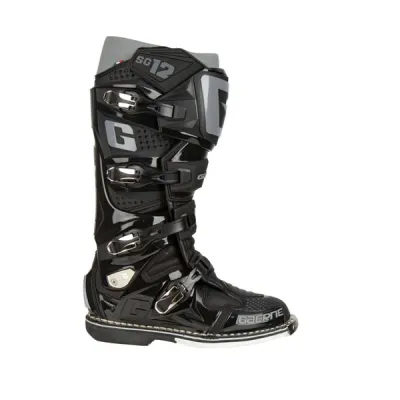
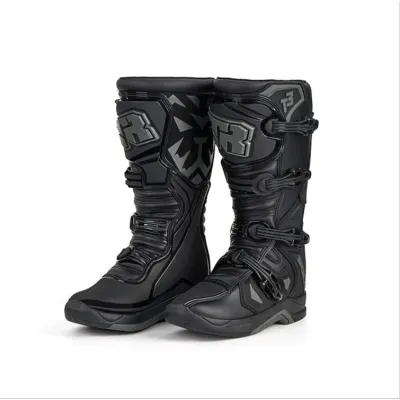
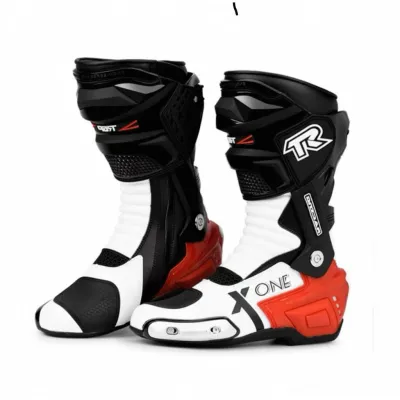
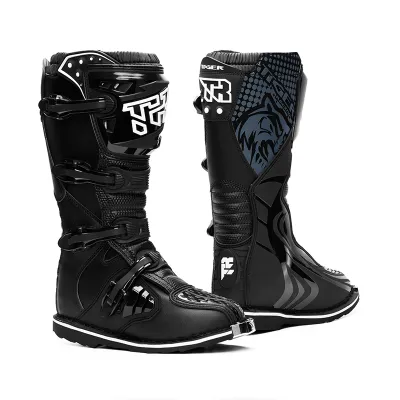
Prices are valid at publication and may change. Please refer to the product page for the latest price.
In contrast, enduro and trail riding take place in natural, untamed environments filled with unpredictable obstacles such as wet tree roots, jagged rocks, steep off-camber hills, and deep mud pools. Speed is often lower than in motocross, but the technical difficulty is significantly higher. Trail riders frequently find themselves in situations where they must dismount to scout a line, clear a fallen log, push their motorcycle up a slick clay incline, or dab their foot to maintain balance on loose rocks.
Because of these frequent off-bike scenarios, an enduro boot requires a delicate balance of robust protection and walking traction. The boot must feature a deeply treaded, high-grip sole to prevent slipping on wet, muddy, or loose surfaces. It also needs a degree of longitudinal flexibility to allow for a natural walking stride, without sacrificing the lateral ankle stability required to protect against twisting injuries. This fundamental conflict between the maximum rigid protection of motocross and the articulated flexibility with walking traction of enduro forms the basis of your buying decision.
How Gaerne Motocross Boots Perform Off the Track
When you take a standard pair of Gaerne motocross boots, such as the flagship SG-12 or SG-22 models, off the track and onto technical trails, their specialized design characteristics immediately make themselves felt. On the positive side, the protection benefits of these boots are unmatched. Gaerne is renowned for its dual-stage pivot systems and exceptionally tough thermoplastic polyurethane (TPU) shin plates and heel cups. If you clip a hidden tree stump, catch your foot on a sharp rock, or have the bike fall directly onto your leg in a rocky creek bed, a premium motocross boot provides a massive safety margin. The rigid chassis distributes impact forces away from your delicate ankle and shin bones, potentially saving you from severe fractures or ligament tears.

However, this extreme rigidity comes at a steep price when you are forced to walk. The stiff hinge mechanisms and heavy plastic overlays that protect you on the bike make walking on uneven trails incredibly awkward and tiring. Without sufficient forward ankle flexion, your calves and shins must work twice as hard to stabilize your stride, leading to rapid muscle fatigue. If you have to push your motorcycle up a steep, slick hill, the physical exertion is compounded by the boot’s stiffness, making an already exhausting task even more difficult.
This walking fatigue is worsened by the sole design of standard motocross boots. Gaerne’s motocross models typically feature flat, dual-composite rubber soles optimized for peg grip and durability. While excellent for sliding your foot on a track, these soles lack the aggressive, deep lugs needed to bite into mud, wet grass, or loose soil. If you attempt to push your bike through a muddy section or walk across a wet, mossy rock garden, these flat soles act like slick tires on ice. The lack of mechanical grip increases the risk of slipping, falling, and potentially dropping the motorcycle on yourself.
Additionally, the tropical climate of the Philippines introduces unique comfort and moisture challenges. Standard motocross boots are heavily padded and built with thick leather and synthetic materials to absorb impacts. While some models feature ventilation channels, they are not waterproof. During river crossings or sudden tropical downpours, water easily enters through the top of the boot or the seams. Once water gets inside, the dense internal padding acts like a sponge, retaining moisture and making the boots significantly heavier. In high-humidity environments, wet boots dry very slowly, which can lead to uncomfortable chafing, blisters, and unpleasant odors over the course of a long day of riding.
When to Stick with Motocross Boots and When to Switch
Deciding whether to use your existing motocross boots or purchase a dedicated enduro pair depends on your specific riding style, the terrain you frequent, and your personal safety priorities. You can comfortably stick with your Gaerne motocross boots if your off-road excursions consist primarily of fast, dry, hard-packed fire roads, sandy tracks, or flat singletrack trails where you rarely need to dismount. If you are a fast trail rider who prioritizes ultimate ankle protection and shin defense over walking comfort, or if you only ride trails occasionally between track days, keeping your motocross boots is a highly logical and cost-effective choice.
On the other hand, you should seriously consider upgrading to a dedicated enduro or trail boot if your riding habits lean toward technical “hard enduro” terrain. If you regularly navigate deep mud, wet riverbeds, steep mountain ascents, or overgrown trails that require frequent bike-pushing, trail clearing, or foot dabbing, the limitations of a motocross sole become a major safety liability. Slipping while trying to support a 110-kilogram motorcycle on a steep, muddy incline can easily result in a pulled muscle, a dropped bike, or a more serious joint injury.
As a critical safety boundary, you must never ride technical trails in worn-out motocross boots. If the soles of your boots have been worn smooth by sharp metal footpegs, their traction on natural terrain is virtually nonexistent. Before heading out on any trail ride, inspect your boots thoroughly. Check that the buckles snap shut securely, the plastic hinges operate smoothly without excessive play, and the sole still has adequate texture. If the sole is heavily grooved or worn flat, or if the structural integrity of the ankle support is compromised, it is time to either replace the boots or seek professional repair.
Gaerne Enduro and Trail Alternatives to Consider
Fortunately, you do not have to look outside the brand to find footwear tailored to off-road riding. Gaerne offers several specialized models designed to bridge the gap between track protection and trail utility. For riders who want the absolute highest level of protection but need trail-ready traction, Gaerne produces enduro-specific variants of their top-tier boots, such as the SG-12 Enduro. These models retain the industry-leading dual-stage pivot system, robust TPU shielding, and premium construction of the standard motocross boots, but they swap out the flat MX sole for an aggressive, deeply lugged rubber sole. This configuration gives you the ultimate in ankle and crush protection while providing the mechanical grip necessary to walk up muddy banks or stand securely on slippery rocks.
If you prefer a lighter, more flexible boot that is easier to walk in right out of the box, the Gaerne Fastback Endurance Enduro is an excellent alternative. This model features a single-pivot ankle system that provides solid lateral support while allowing for much greater forward and backward movement. It is significantly lighter than the SG-12, making it highly comfortable for long days in the saddle and far less tiring during walking sections, while still featuring a lugged off-road sole.
For dual-sport, adventure, or light trail riders who split their time between paved roads and unpaved paths, adventure-style boots like the Gaerne Dakar or Gaerne G-Adventure series are highly suitable. These boots are constructed with softer, more supple leather, require virtually no break-in period, and often feature waterproof and breathable membranes to keep your feet dry during river crossings or heavy tropical rains. However, you must keep in mind that these adventure boots sacrifice a significant amount of the rigid ankle stabilization and heavy impact armor found in full motocross and enduro boots. They are not recommended for high-speed riding or highly technical hard enduro where rock strikes and heavy bike drops are common.
Before purchasing any new riding boots, always perform a thorough verification check. Consult the manufacturer’s official documentation to confirm the exact specifications of the boot model you are considering. Pay close attention to the sole type—some models feature a traditional stitched-on (Goodyear welt) sole which is highly durable and easily replaceable, while others use a molded, bonded sole that offers a lower profile but is more difficult to resole. Additionally, verify the sizing and fitment guidelines, as premium Italian boots often feature a narrower, more contoured fit than standard utility or work boots. Investing in the correct model for your specific riding conditions ensures you stay protected, comfortable, and in control, no matter where the trail takes you.
Frequently Asked Questions (FAQ)
Can I change the sole on my Gaerne motocross boots for enduro use?
Yes, it is highly feasible to swap the soles on certain Gaerne motocross boots to make them more suitable for enduro riding, but this depends entirely on the construction of your specific boot model. Gaerne boots that utilize a traditional stitched-on sole, often referred to as a Goodyear welt construction, can be easily resoled by a professional cobbler or an authorized Gaerne service center. You can purchase official Gaerne Enduro replacement soles, which feature aggressive lugs, and have them stitched and glued onto your existing motocross boot chassis.
However, if your Gaerne boots feature a modern, molded or bonded sole (where the rubber is directly fused to the boot’s plastic midsole), replacing the sole is much more complex and may not be compatible with deeply lugged aftermarket options. Always consult the manufacturer’s official replacement parts catalog and seek professional advice before attempting to modify your boots, as improper sole installation can compromise the structural integrity and safety of your riding gear.
Do motocross boots keep your feet dry on wet trails?
Standard motocross boots are not designed to keep your feet dry on wet trails. Because motocross tracks are generally closed and groomed, these boots prioritize impact protection, structural support, and heat dissipation over weather resistance. They typically feature ventilation ports, mesh liners, and non-waterproof seams designed to let heat escape and allow water to drain out quickly if the boot becomes submerged.
If you ride in wet trail conditions, cross rivers, or encounter heavy tropical rain, water will inevitably seep into standard motocross boots. If keeping your feet dry is a priority, you should look for dedicated adventure or enduro boots that feature an integrated waterproof and breathable membrane. Alternatively, a highly practical and cost-effective workaround for trail riders is to wear high-quality, knee-high waterproof riding socks inside their standard motocross boots to keep their feet dry even when the boot itself becomes soaked.
Community discussion
Share your experience or ask a question. Comments are reviewed before publication.