
Imagine driving through Metro Manila traffic, watching your phone’s battery icon turn red. You plug it into a newly purchased “fast” car charger, expecting a quick boost, but thirty minutes later, the battery percentage has barely budged. This frustrating scenario happens because physical wattage is only half of the fast-charging equation.
To achieve rapid charging speeds on the road, your car charger and your smartphone must support the exact same fast-charging standard. The difference between protocols like USB Power Delivery (PD), Qualcomm Quick Charge (QC), and proprietary systems lies in how they communicate and negotiate power. Selecting the right car charger requires understanding these digital handshakes to match the charger’s output directly to your phone’s hardware.
Why Your "Fast" Car Charger Might Still Charge Slowly
When you connect your smartphone to a car charger, they do not simply transfer electricity at maximum capacity. Instead, they perform a rapid digital communication process known as a protocol handshake. During this handshake, the phone’s internal power management chip communicates with the charger’s controller to negotiate a mutually supported voltage and amperage level.
Products mentioned in this guide
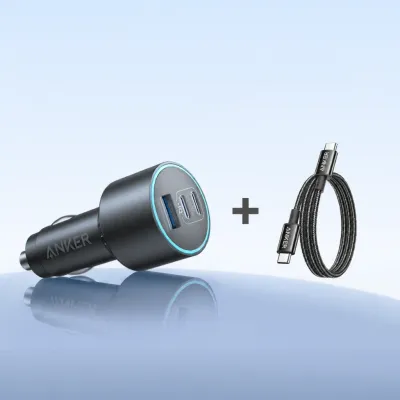
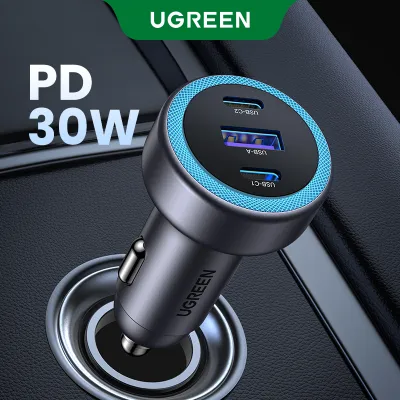
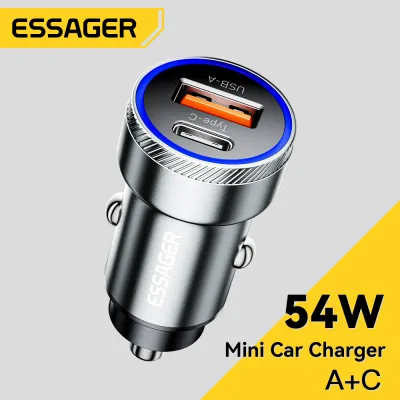
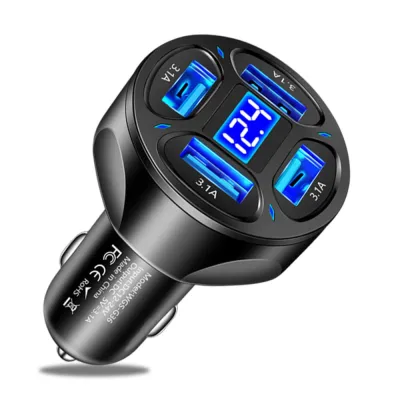
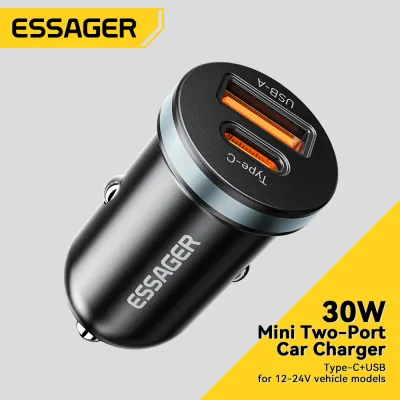
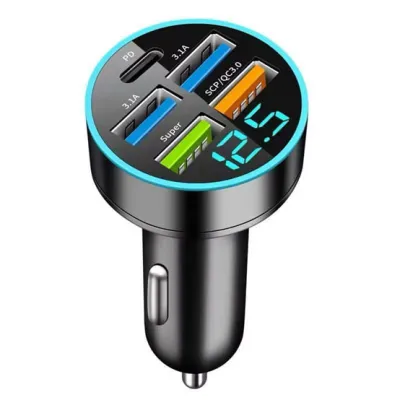
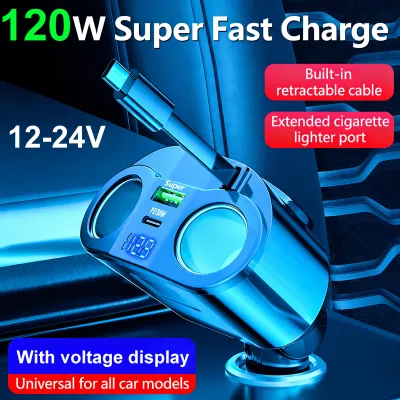
Prices are valid at publication and may change. Please refer to the product page for the latest price.
If the car charger does not support the specific protocol your phone requires, this negotiation fails. For safety, the connection defaults to a standard, non-fast charging speed—typically a baseline of 5W to 10W. Consequently, even if you purchase a charger advertised with high maximum wattage, your phone will still charge slowly if the underlying protocols do not match.
The Main Fast Charging Standards Decoded
Navigating fast-charging protocols can be confusing due to competing standards. Most modern mobile devices rely on a few dominant technologies that govern how power is delivered over USB connections.

USB Power Delivery (PD) and PPS
USB Power Delivery (PD) is the open, industry-standard protocol developed by the USB Implementers Forum. Operating exclusively over USB Type-C connections, it is universally adopted by Apple for iPhones, Google for Pixel devices, and many modern laptops.
An important extension of this protocol is Programmable Power Supply (PPS), introduced in USB PD 3.0. Standard PD operates at fixed voltage steps, whereas PPS allows the connected device to request microscopic adjustments to voltage and current in real time. This dynamic adjustment minimizes energy conversion loss inside the phone, reducing heat generation. PPS is essential for achieving the maximum fast-charging speeds on modern flagship devices, such as Samsung’s Super Fast Charging.
Qualcomm Quick Charge (QC)
Qualcomm Quick Charge is a standard developed for devices powered by Qualcomm Snapdragon processors. Historically, QC was the dominant fast-charging standard for Android devices, utilizing traditional USB Type-A ports to deliver power by stepping up voltages.
While pure QC-only chargers are becoming less common as the industry shifts toward USB-C, many multi-port car chargers continue to include a USB-A port that supports Quick Charge 3.0 alongside a USB-C PD port. This dual-protocol design ensures backward compatibility, allowing older Android models or budget-friendly devices to fast-charge.
Proprietary Brand Standards
Several smartphone manufacturers utilize proprietary fast-charging technologies, such as Oppo’s VOOC, OnePlus’s Warp Charge, Huawei’s SuperCharge, and Xiaomi’s HyperCharge. These systems often achieve high wattages by pumping high current at lower voltages, requiring specialized internal circuitry and custom cables.
Third-party car chargers rarely support these proprietary protocols due to licensing restrictions. If you plug a device relying on a proprietary standard into a standard third-party car charger, the device will typically fall back to standard PD or QC speeds. To get the absolute fastest charging speeds advertised by these brands, you must use the manufacturer’s official car charger.
Wattage vs. Protocol: What Actually Determines Speed?
A common misconception is that a higher wattage rating on a car charger automatically translates to faster charging speeds. In reality, the maximum speed is governed entirely by the device being charged. Your phone’s internal power management system acts as a gatekeeper, drawing only the maximum wattage it was engineered to handle, regardless of how much power the charger can supply.
Additionally, when purchasing a multi-port car charger, look closely at how the total wattage is distributed. A product marketed as a “60W Car Charger” rarely delivers 60W from a single port. This figure usually represents the combined maximum output of all ports when used simultaneously (for example, 45W from the primary USB-C port and 15W from a secondary USB-A port).
If you connect multiple devices at once, like a phone and a dashcam, the charger redistributes the available power. Always check the single-port maximum output specifications to ensure your primary device receives sufficient wattage.
How to Choose the Right Car Charger for Your Device
Selecting the ideal charger for your vehicle requires a systematic approach to match your hardware and driving habits.
- Identify your smartphone's charging specifications: Consult your phone manufacturer's official documentation to determine its supported fast-charging protocol (such as USB PD 3.0 with PPS) and its maximum supported input wattage.
- Choose a car charger with the correct physical port configuration: For modern fast-charging protocols like PD and PPS, a USB-C port is mandatory. Ensure you use a high-quality charging cable that matches these standards. For charging demands exceeding 60W, you must use a USB-C cable equipped with an "E-Marker" chip to safely negotiate the higher current levels.
- Verify your vehicle's physical and electrical compatibility: Before purchasing a high-output charger, consult your vehicle's owner's manual to confirm the maximum wattage rating of your 12V accessory socket. Exceeding these limits by plugging in multiple high-draw devices simultaneously can blow the vehicle's accessory fuse, disabling the socket entirely.
Safety and Heat Management in Tropical Climates
Operating electrical accessories in the tropical climate of the Philippines introduces unique thermal challenges. Fast charging inherently generates heat as electrical energy is converted and stored in the phone’s battery. When high ambient temperatures and intense tropical humidity are factored in, heat levels can escalate rapidly.
If a smartphone’s internal temperature rises too high, its safety mechanisms will trigger thermal throttling, drastically reducing the charging speed to protect the battery from permanent degradation. To prevent this, avoid mounting your phone on the dashboard or windshield in direct sunlight while charging. Instead, position your phone mount near an air conditioning vent to help dissipate heat.
When shopping for a car charger, prioritize models constructed from heat-resistant, flame-retardant materials like aluminum alloy. Ensure the product features certified safety protections against over-current and overheating. Always refer to the manufacturer’s instructions for both your phone and the car charger to ensure safe operating parameters are maintained.
Frequently Asked Questions (FAQ)
Can I use a PD car charger with a Quick Charge phone?
A strictly PD-only car charger will not fast-charge a phone that only supports legacy Quick Charge (QC) standards. Because they use different communication protocols, the charger and phone will fail to negotiate a fast-charging rate and will safely default to standard 5V slow charging. However, many modern car chargers feature intelligent dual-protocol chips that support both PD and QC standards on the same port or across separate ports. Check the product specifications to ensure dual-protocol compatibility if you need to charge both Apple and older Android devices.
Does a higher wattage car charger damage my phone's battery?
No, a high-wattage car charger will not damage your phone’s battery. Your phone’s internal power management system controls the amount of power drawn from the charger. If you plug a phone rated for a maximum of 18W into a 65W PD car charger, the phone will safely draw only 18W. To ensure safety, always purchase chargers from reputable brands that feature built-in voltage regulation and safety certifications, and avoid unbranded, low-quality accessories.
Community discussion
Share your experience or ask a question. Comments are reviewed before publication.