
Quick Answer: Which Spark Plug Cable Core Is Right for You?
When addressing the electrical efficiency of an internal combustion engine, selecting the correct ignition components is vital for maintaining performance and preventing electronic damage. Finding the optimum spark plug cable for your vehicle requires understanding how the internal core material interacts with your engine’s electrical architecture. There is no single universal winner; the right cable depends entirely on your vehicle’s age, ignition system design, and original equipment manufacturer (OEM) specifications.
As a general rule, spiral core cables serve as the modern standard for daily drivers because they balance low electrical resistance with high electromagnetic interference (EMI) suppression. Carbon core cables are typically reserved for specific older, stock OEM applications that require high resistance to control spark energy. Solid core cables, offering near-zero resistance but zero interference suppression, are strictly limited to racing applications or vintage cars lacking sensitive electronic systems. Choosing the wrong type can lead to poor engine performance, severe electronic interference, or permanent damage to onboard computers.
Understanding the Three Core Types
To make an informed decision, you must first understand what occurs beneath the outer insulation of an ignition wire. The term “core” refers to the conductive material running through the center of the cable. This core is responsible for delivering high-voltage current from the ignition coil or distributor to the spark plug, and its physical composition dictates both the efficiency of the electrical flow and the management of electromagnetic interference.
Products mentioned in this guide
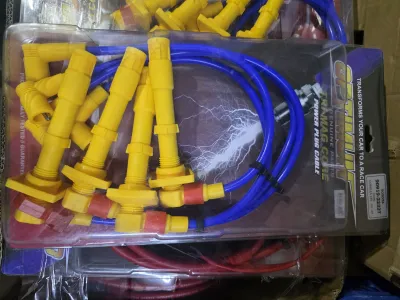
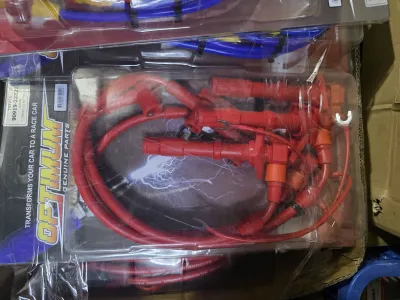
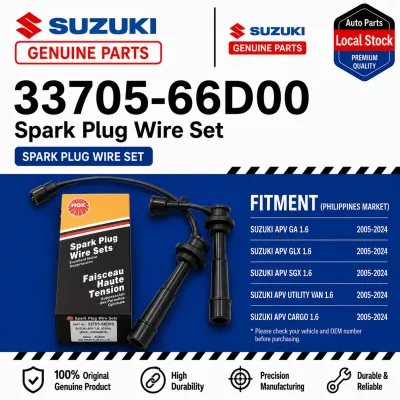
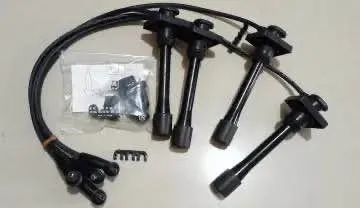
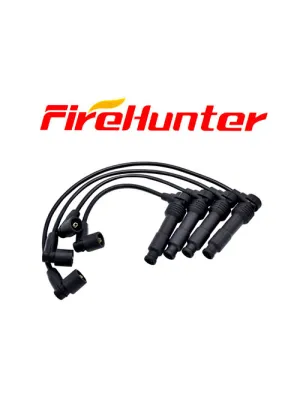
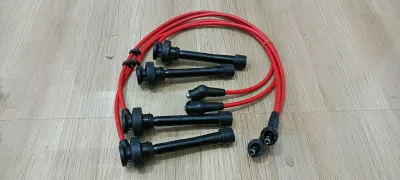
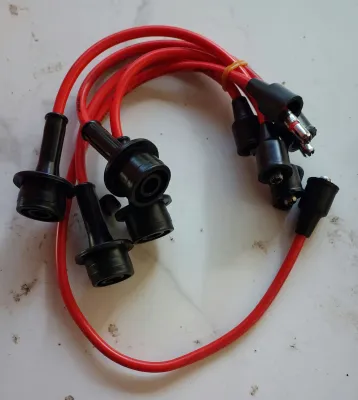
Prices are valid at publication and may change. Please refer to the product page for the latest price.

Carbon Core Cables
Carbon core cables, often referred to as resistance wires, have been the traditional choice for passenger vehicles for decades. Their construction typically features a central core made of fiberglass or latex that is thoroughly impregnated with carbon powder. This carbon-rich core is then wrapped in a protective insulating layer, usually made of silicone or ethylene propylene diene monomer (EPDM) rubber, to prevent voltage leaks.
The primary function of the carbon core is to introduce high internal resistance into the ignition circuit. This resistance acts as a natural suppressor for Radio Frequency Interference (RFI) and EMI. By slowing down the electrical discharge, these cables prevent the ignition spark from creating radio static or disrupting basic electronic components.
However, carbon core cables possess significant physical and electrical drawbacks. Carbon is inherently fragile; if the cables are bent sharply during installation, the internal carbon fibers can fracture, creating microscopic gaps that force the spark to jump internally. Furthermore, carbon core resistance naturally increases over time. When exposed to the high heat of an engine bay combined with high-humidity tropical environments, the carbon material degrades, leading to weaker sparks, rough idling, and reduced fuel efficiency.
Spiral Core Cables
Spiral core cables, also known as mag-force or monel wires, represent a major leap in ignition technology. Their construction involves a highly conductive metal alloy wire—typically copper or stainless steel—wound in a tight, precise spiral around a strong, non-conductive center core such as Kevlar or fiberglass. This wound core is then encased in high-grade silicone insulation.
The engineering behind spiral core cables is based on electromagnetic physics. When high-voltage current flows through the spiral-wound wire, it creates a magnetic field. This magnetic field acts as an inductive choke, naturally canceling out high-frequency EMI and RFI. Consequently, the cable can suppress electrical noise just as effectively as a carbon core wire, but with only a fraction of the physical resistance.
This low resistance allows a much higher percentage of the coil’s energy to reach the spark plug, resulting in a hotter, more efficient spark. Additionally, the physical durability of spiral core cables is exceptional. The metal alloy wire resists physical breakage from bending and does not degrade under thermal stress, making them highly reliable in demanding driving conditions.
Solid Core Cables
Solid core cables are the simplest and most traditional form of ignition wiring. They consist of a single, solid or stranded metal conductor—typically bare copper or stainless steel—running directly through the center of the insulation. There are no advanced internal geometries or composite materials used to suppress electrical noise.
The primary benefit of a solid core cable is near-zero electrical resistance. Because there is virtually no resistance to impede the current, the cable delivers the maximum possible spark energy from the ignition coil directly to the spark plug gap. This makes them highly effective in maximizing combustion efficiency under extreme cylinder pressures.
However, the critical limitation of solid core cables is their complete lack of EMI and RFI suppression. Without any mechanism to choke the electromagnetic field, the solid metal wire acts as an antenna, broadcasting intense radio frequency noise throughout the vehicle. This noise can disrupt car radios, scramble sensor signals, trigger false diagnostic codes, and potentially damage sensitive electronic control modules.
Key Comparison Dimensions: Conductivity, Durability, and EMI Suppression
Evaluating spark plug cables requires looking at how these core materials perform across three critical operational dimensions: electrical conductivity, physical durability, and electromagnetic suppression. Balancing these factors is essential for matching the cable to your engine’s specific requirements.
Electrical Conductivity Electrical conductivity in ignition wires is inversely proportional to electrical resistance. Solid core cables lead this category with virtually zero resistance, allowing the full voltage of the ignition coil to reach the plug instantly. Spiral core cables offer a highly efficient middle ground; their low resistance ensures that minimal energy is lost as heat, delivering a strong and consistent spark. Carbon core cables have the lowest conductivity due to their high resistance, which inherently reduces the total energy of the spark to suppress noise. As carbon wires age, this resistance continues to climb, eventually starving the spark plug of necessary voltage.
Durability and Lifespan The physical resilience of an ignition cable determines how well it withstands the harsh environment of an engine bay. Carbon core cables are the most delicate; they are highly sensitive to rough handling, and their internal resistance can double or triple after a few years of thermal cycling. Spiral and solid core cables are physically robust because their conductive elements are metallic. However, in hot, humid tropical climates, the primary threat to all cables is the degradation of the outer silicone or EPDM insulation. Severe heat and moisture cause the insulation to dry out, crack, or become porous, leading to voltage leaks and misfires.
EMI/RFI Suppression Electromagnetic suppression is non-negotiable for modern vehicles equipped with electronic fuel injection, anti-lock brakes, and complex sensor networks. Carbon core and spiral core cables excel in this category, keeping electromagnetic noise contained so it does not interfere with the Engine Control Unit (ECU) or cabin infotainment systems. Solid core cables offer no suppression whatsoever. Using them in a modern vehicle can lead to erratic engine behavior, sensor communication failures, and corrupted data streams within the vehicle’s controller area network (CAN bus).
| Core Material | Relative Conductivity | EMI/RFI Suppression Level | Physical Durability | Primary Application |
|---|---|---|---|---|
| Carbon Core | Low | High | Moderate to Low | Older OEM / Stock Vehicles |
| Spiral Core | High | High | High | Modern Daily Drivers / Performance |
| Solid Core | Extremely High | None | High | Racing / Vintage / Magneto |
How to Choose the Optimum Spark Plug Cable for Your Specific Engine
Selecting the optimum spark plug cable requires matching the cable’s internal characteristics to your vehicle’s specific ignition system and electronic complexity. Installing the wrong core type can result in poor ignition performance or costly damage to onboard computers.
Choose Spiral Core if: You drive a modern daily driver, require a reliable balance of low resistance and EMI protection, and want long-term durability. For the vast majority of vehicles manufactured over the last few decades, spiral core cables represent the safest and most effective upgrade path. They provide the low resistance needed for a hot, clean spark while ensuring that your ECU, radio, and sensors remain completely shielded from electrical noise.
Choose Carbon Core if: Your older vehicle’s OEM service manual specifically mandates it, and you want to maintain exact factory-original specifications. Some older ignition systems were designed around the high resistance of carbon cables to limit the current flow and protect delicate ignition coils or mechanical distributor points from overheating. Altering this total system resistance without modifying other components can lead to premature coil failure.
Choose Solid Core if: You are building a dedicated race car, driving a vintage vehicle without modern electronic control units, or utilizing a magneto ignition system where maximum spark energy is the sole priority. Solid core wires are highly specialized and should never be used on public roads in vehicles equipped with sensitive electronic sensors or computer controls.
Verify First if: You are unsure about your ignition system type (e.g., Coil-on-Plug vs. traditional distributor) or if your engine has aftermarket electronic management. Before making any purchase, always verify your vehicle’s model, year, engine code, and ignition interface. Many modern vehicles utilize Coil-on-Plug (COP) systems that do not use traditional spark plug cables at all, while others rely on specific wire lengths and boot angles to clear engine components. If your engine features aftermarket electronic management or modified ignition coils, consult the manufacturer’s documentation to ensure compatibility. While premium brands like Optimum produce high-quality options across different core types, the core material must always align with your engine’s electrical design. In the Philippines, a quality set of spiral core cables typically ranges from ₱1,500 to ₱5,000, making it a cost-effective investment to prevent moisture-related ignition issues during the heavy monsoon season.
Safe Installation and Maintenance Guidelines
Working with high-voltage ignition systems requires strict adherence to safety protocols and proper handling techniques. Before beginning any installation, consult your vehicle’s official service manual to verify the correct firing order and cable routing diagram. Misrouting ignition wires can lead to cross-firing, where the high-voltage field of one wire induces an unwanted spark in an adjacent wire, causing severe engine knock and potential piston damage.
When handling spark plug cables, never pull on the wire itself. Always grip the cable firmly by the rubber boot at the terminal end and twist slightly while pulling to release it from the spark plug or distributor cap. Pulling on the wire can easily separate a carbon core or damage the terminal connection of a spiral core wire, leading to immediate engine misfires.
Proper routing is critical for protecting the cables from physical and thermal damage. Keep all cables securely routed through their designated wire looms and away from hot exhaust headers, steering columns, and sharp metal edges. High temperatures can quickly melt the silicone insulation, leading to voltage arcing and dangerous electrical shorts.
In tropical environments characterized by high humidity and heavy rainfall, inspecting the boots and terminals for corrosion or moisture ingress is vital. Apply a thin layer of high-quality dielectric grease inside the rubber boots before installation, following the manufacturer’s directions. This grease acts as a moisture barrier, prevents electrical tracking, and stops the boot from baking onto the ceramic insulator of the spark plug over time.
Always establish a clear safety boundary: if your engine misfires, runs rough, or displays a check engine light immediately after installing new cables, turn off the engine and stop operating the vehicle. Do not attempt to force components or ignore the symptoms. Re-verify the firing order, ensure each cable is fully seated on both the spark plug and the coil or distributor terminal, and inspect the insulation for any signs of damage. If the issue persists, consult a qualified automotive technician to diagnose the ignition system.
Frequently Asked Questions (FAQ)
Can I upgrade my older car from carbon core to spiral core?
Yes, in most cases, you can upgrade an older vehicle from carbon core to spiral core wires. Doing so typically improves spark intensity and overall engine smoothness due to the lower electrical resistance of spiral wound wires. However, you must first verify that your vehicle’s ignition coil and ignition module are compatible with lower-resistance wires. Some vintage ignition systems rely on the high resistance of carbon core cables to limit current flow. If you install ultra-low resistance wires without checking, the increased current draw can overload and overheat the ignition coil. To safely make this transition, consult your vehicle’s documentation or use resistor-type spark plugs to maintain the necessary system balance.
Will solid core wires damage my modern car's computer?
Yes, solid core wires can cause severe and permanent damage to a modern vehicle’s computer systems. Because solid core wires have no electromagnetic interference (EMI) suppression, they emit massive amounts of radio frequency noise during operation. This electrical noise can easily disrupt the communication lines between your engine’s sensors and the Engine Control Unit (ECU). It can cause erratic idling, random engine stalls, false diagnostic trouble codes, and corrupted sensor readings. In severe cases, the high-voltage spikes induced by the unshielded wires can travel back through the sensor ground circuits and physically burn out the delicate microprocessors inside the ECU.
How do I know if my spark plug cables need replacing?
You can identify worn spark plug cables through several observable symptoms and simple diagnostic tests. Common signs of failure include a rough engine idle, hesitation during acceleration, decreased fuel efficiency, or engine misfires under load. Visually inspect the cables in a dark garage with the engine running; if you see blue sparks or arcing along the length of the wires, the insulation has failed. You should also check the boots for cracking, swelling, or internal corrosion. For a precise diagnostic check, use a digital multimeter set to ohms to measure the resistance of each cable. Compare your readings against the manufacturer’s specifications; any wire showing infinite resistance or a value significantly higher than the specified limit must be replaced immediately.
Community discussion
Share your experience or ask a question. Comments are reviewed before publication.