
Selecting the right center spring for your Honda Click 125 is one of the most effective ways to restore or fine-tune your scooter’s transmission performance. As one of the most popular automatic scooters in the Philippines, the Honda Click 125 relies heavily on its Continuously Variable Transmission (CVT) to navigate congested city streets, steep flyovers, and daily commutes. The center spring, often referred to locally as the torque spring, plays a pivotal role in determining how smoothly your scooter accelerates and how efficiently it transfers power from the engine to the rear wheel.
When looking for replacement options in the local market, riders generally choose between original equipment manufacturer (OEM) Honda Genuine Parts and various aftermarket performance springs. Making the correct choice requires a clear understanding of your daily riding conditions, your scooter’s current modifications, and how different spring stiffness ratings affect overall drivability. Whether you are dealing with a sagging stock spring or planning a comprehensive CVT upgrade, selecting a compatible and high-quality component is essential for maintaining a reliable ride.
Understanding the Role of the Center Spring in Your Click 125
The center spring is positioned within the rear pulley assembly of your scooter’s CVT system, where it exerts constant lateral pressure against the movable sliding sheave. This pressure forces the rear pulley halves together, which in turn pushes the drive belt outward to maintain optimal belt tension. By resisting the opening of the rear pulley, the center spring directly controls the rate at which the transmission shifts from a low gear ratio to a high gear ratio as your engine speed increases.
Products mentioned in this guide
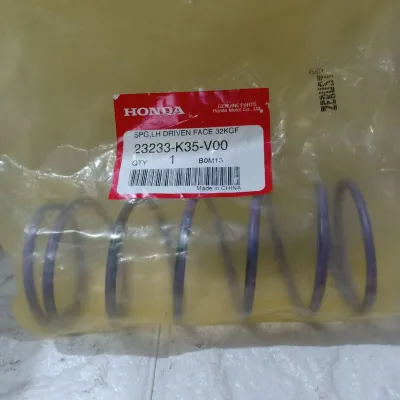
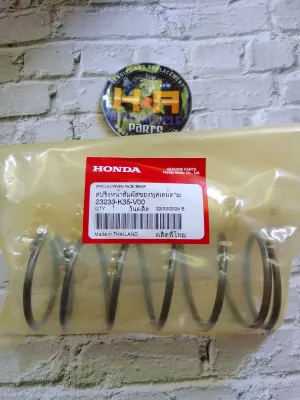
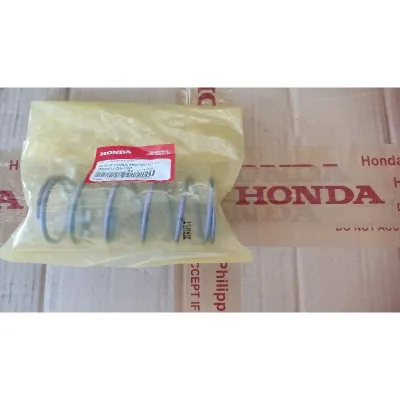
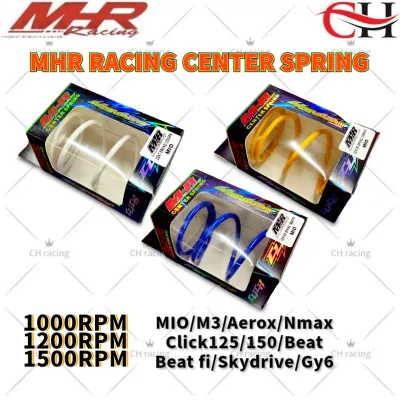
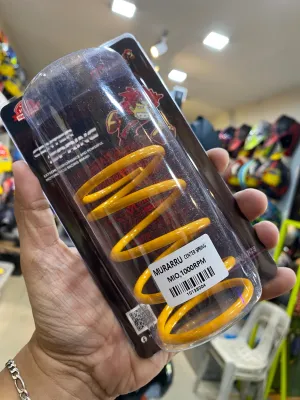
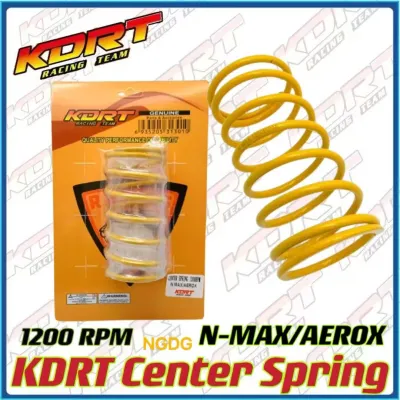
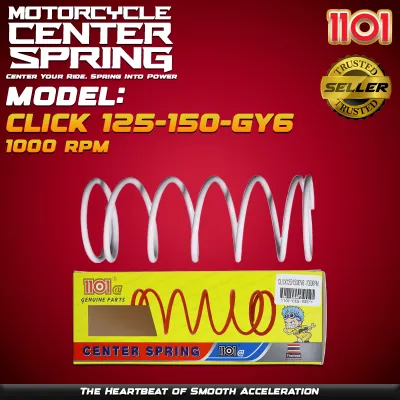
Prices are valid at publication and may change. Please refer to the product page for the latest price.
Proper belt tension is critical for preventing slippage, especially during sudden acceleration or when climbing steep inclines. If the center spring is functioning correctly, it ensures that the drive belt grips the pulley faces firmly, translating engine torque into immediate forward motion. When the spring tension matches your engine’s power output and roller weights, the CVT shifts seamlessly, providing a smooth and responsive powerband across all speed ranges.
Over time, the constant compression and high operating temperatures inside the CVT casing will cause any center spring to fatigue and sag. Common symptoms of a worn or weakened spring include sluggish take-offs from a complete stop, a noticeable delay in throttle response when overtaking, and belt slippage under heavy loads. You might also notice a drop in top speed or find that the scooter struggles to maintain momentum when climbing hills with a passenger.
Replacing a fatigued center spring is rarely an isolated task; instead, it is typically performed as part of a broader CVT maintenance routine. When a spring loses its tension, it accelerates wear on the drive belt and clutch linings due to increased friction and heat. Inspecting and replacing the spring alongside other wear-and-tear components ensures that your entire transmission operates in harmony and prevents premature failure of more expensive pulley parts.
OEM vs. Aftermarket: Evaluating Your Center Spring Options
For riders who use their Honda Click 125 primarily for daily commuting, fuel efficiency, and reliable point-to-point transportation, OEM Honda Genuine Parts are the standard recommendation. These springs are engineered specifically to match the factory engine output, weight, and gearing of the Click 125, offering a balanced performance profile that prioritizes longevity. To ensure you are purchasing an authentic OEM spring, always source your parts from authorized Honda motorcycle dealerships or verified official brand stores, as counterfeit components are prevalent in the local market.

Aftermarket center springs are designed for riders who want to customize their scooter’s acceleration characteristics or address specific performance limitations. If you frequently carry heavy cargo, ride with a backride passenger, or regularly travel through hilly areas, an aftermarket spring can help keep the transmission in a lower gear ratio longer. These springs are generally categorized by their stiffness or RPM ratings, such as 1000 RPM, 1200 RPM, or 1500 RPM, which indicate the relative engine speed required to compress the spring and initiate shifting.
Choosing between OEM and aftermarket options involves weighing distinct trade-offs regarding reliability, performance, and component wear. An OEM spring offers plug-and-play reliability, smooth power delivery, and a long service life without putting excessive stress on other CVT parts. Conversely, while a stiffer aftermarket spring can significantly improve initial throttle response and eliminate belt slip, it keeps the engine running at higher RPMs, which can increase fuel consumption, elevate operating temperatures, and accelerate the wear rate of your drive belt and roller weights.
Key Specifications to Check Before Buying
Before purchasing a new center spring, you must verify its compatibility with your specific Honda Click 125 generation. The Click 125 has evolved through several versions in the local market, commonly referred to as V1, V2 (Game Changer), and V3. While many transmission components are shared across these models, subtle variations in pulley dimensions, clutch sleeve diameters, and spring lengths can exist. Always check the product packaging or manufacturer specification sheet to ensure the spring is explicitly rated for your scooter’s model year.
Understanding how to interpret RPM ratings is crucial for selecting a spring that matches your riding habits. A 1000 RPM spring is slightly stiffer than the stock OEM spring, making it an excellent choice for riders seeking a mild boost in stop-and-go acceleration without sacrificing fuel economy. A 1200 RPM spring is a popular middle ground for daily commuters who frequently carry extra weight or navigate moderate inclines. Avoid blindly choosing a 1500 RPM or higher spring for a stock engine; an excessively stiff spring will prevent the transmission from shifting fully, resulting in high engine noise, poor top speed, and severe belt wear.
Material composition and manufacturing quality are critical factors in ensuring the spring can withstand the harsh operating environment of a scooter CVT. Look for center springs made from high-tensile silicon-chrome steel or premium alloy steel, which offer superior resistance to heat sag and mechanical fatigue. Additionally, ensure the spring features a high-quality anti-rust coating or powder finish to protect it from the high humidity and seasonal road moisture common in tropical climates. Avoid unbranded, unlabelled, or suspiciously cheap universal springs sold on online marketplaces, as these often lack proper heat treatment and can snap during operation.
How to Match the Center Spring with Other CVT Components
A scooter’s CVT operates on a delicate balance of opposing forces: the centrifugal force generated by the roller weights in the front pulley versus the mechanical spring tension of the center spring in the rear pulley. If you install a stiffer center spring without adjusting other components, the rear pulley will resist opening, preventing the belt from transitioning smoothly. To restore balance, a stiffer center spring typically requires slightly lighter roller weights to allow the engine to reach the necessary RPM to overcome the spring’s resistance.
Before finalizing your center spring selection, it is vital to inspect the condition of your drive belt and clutch springs. A stiffer center spring increases the lateral squeeze on the drive belt; if your belt is already worn, cracked, or stretched, this increased tension can cause it to snap prematurely. Similarly, your small clutch springs (trio springs) must be in good condition to ensure the clutch shoes engage the bell smoothly at the correct RPM, preventing low-speed shuddering and vibration.
If you are planning to upgrade to an aftermarket center spring, consult the tuning guidelines provided by established CVT kit manufacturers. Many reputable brands offer pre-configured transmission kits where the center spring, roller weights, and pulley face angles are designed to work together as a cohesive system. If you are mixing and matching individual components, seek the advice of a professional mechanic who specializes in automatic scooters to help you find the optimal configuration for your specific rider weight and daily route.
Installation Considerations and Safety Boundaries
Disassembling and servicing the CVT system on a Honda Click 125 requires specialized tools and strict adherence to safety protocols. The center spring is compressed under significant tension behind the clutch assembly’s main retaining nut. Attempting to loosen this nut without a dedicated clutch spring compressor tool can cause the clutch assembly to fly off violently, risking severe personal injury and damaging the threads of the input shaft or the clutch sheave.
In addition to a spring compressor, proper installation requires a clutch holding tool (flywheel holder) or an impact wrench to safely loosen and tighten the pulley nuts. It is critical to use a torque wrench to tighten all fasteners to the exact torque specifications outlined in the Honda service manual. Over-tightening can strip the crankshaft or input shaft threads, while under-tightening can cause the pulley assemblies to come loose while riding, leading to catastrophic engine and transmission damage.
Because of these safety risks and the precision required, riders without adequate mechanical experience and the proper tools should entrust the installation to a qualified motorcycle repair shop. A professional technician can inspect the entire CVT system for wear, clean the pulley faces, apply the correct high-temperature grease to the secondary sliding sheave pins, and ensure the drive belt is properly aligned. After installation, always conduct a low-speed test ride in a controlled area to check for any abnormal noises, vibrations, or belt slippage before returning to normal road conditions.
Frequently Asked Questions (FAQ)
How often should I replace the center spring on my Honda Click 125?
There is no fixed mileage interval for replacing the center spring, as its lifespan depends heavily on your riding style, payload, and operating temperatures. Instead of relying solely on odometer readings, evaluate the spring during your regular CVT cleaning and inspection, which is recommended every 8,000 to 10,000 kilometers. A mechanic can measure the free length of the spring using a vernier caliper and compare it to the service limit specified in the factory manual. If the spring has sagged below the limit, or if you experience persistent belt slippage and sluggish acceleration that cleaning does not resolve, the spring should be replaced.
Will a stiffer aftermarket center spring increase my top speed?
No, a stiffer center spring will not increase your top speed, and in many cases, it can actually reduce it. The primary purpose of a stiffer spring is to improve low-to-mid-range acceleration and prevent belt slippage under heavy loads by keeping the transmission in a lower gear ratio longer. If the spring is too stiff for your engine’s power output and roller weights, the front pulley will not be able to overcome the spring tension. This prevents the drive belt from reaching the outer edge of the front pulley, meaning the CVT cannot shift into its highest gear ratio, limiting your top-end speed.
Can I use a center spring from another scooter model on the Click 125?
You should avoid using center springs designed for other scooter models unless they are explicitly certified as cross-compatible by a reputable manufacturer. Even if a spring from another scooter looks similar in size, differences in outer diameter, wire thickness, total length, and spring rate can severely disrupt your CVT’s operation. An incompatible spring can bind inside the rear pulley sheave, prevent full pulley travel, or cause rapid wear on the drive belt. Always select a spring that is labeled specifically for the Honda Click 125 to ensure safe, reliable, and predictable performance.
Community discussion
Share your experience or ask a question. Comments are reviewed before publication.