
Finding a safe, legally compliant half face helmet for men under ₱1,500 in the Philippines is entirely achievable, provided you know what safety markers to look for and where to compromise. In a country where daily motorcycle commuting is a necessity for millions, a budget-friendly open-face helmet offers a practical balance of affordability, comfort, and protection. However, navigating the market requires a careful eye to avoid counterfeit products that fail to offer real protection during an accident.
Understanding the ₱1,500 Budget and Certification Baseline
The tropical climate, high humidity, and heavy traffic in urban centers like Metro Manila, Cebu, and Davao make a half face helmet for men a highly appealing option. These helmets provide superior ventilation compared to full-face models, keeping riders cooler during long hours on the road. They are ideal for low-to-medium-speed city riding, daily errands, and delivery work.
Despite the convenience of an open-face design, safety must never be compromised for comfort or price. Under Republic Act No. 10054, also known as the Motorcycle Helmet Act, all riders on Philippine roads are legally required to wear standard protective motorcycle helmets. These helmets must bear the appropriate certification marks to prove they have undergone rigorous safety testing.
Products mentioned in this guide
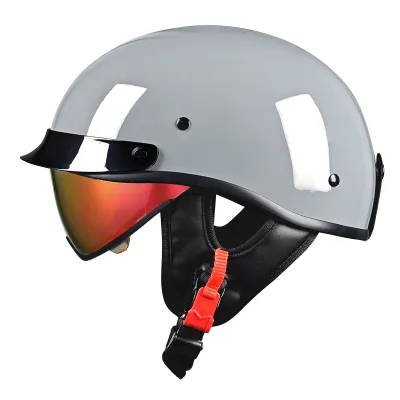
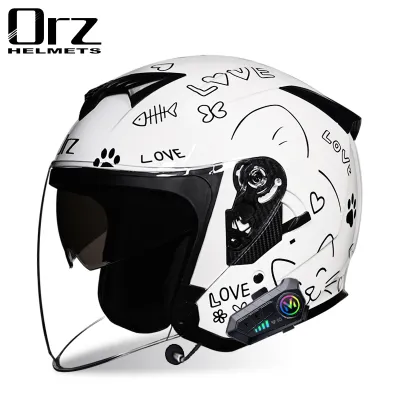
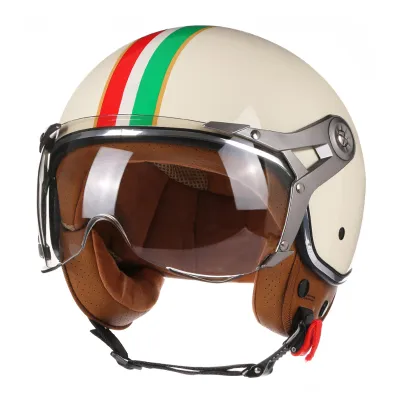
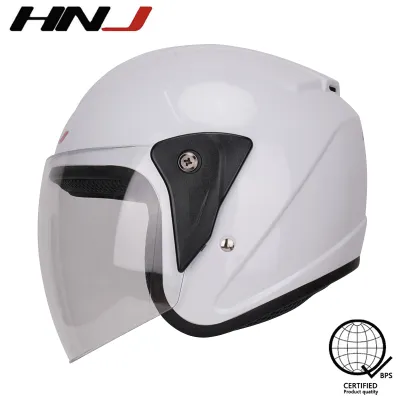
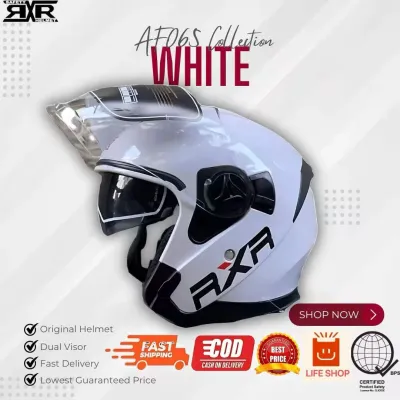
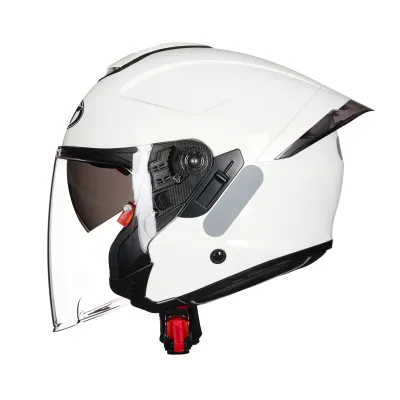
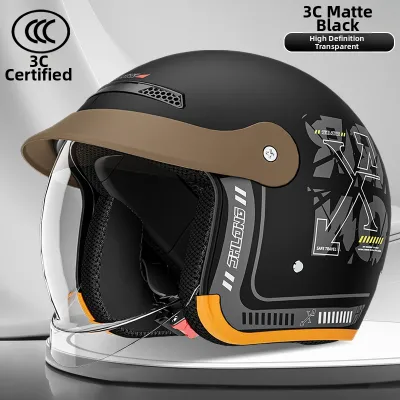
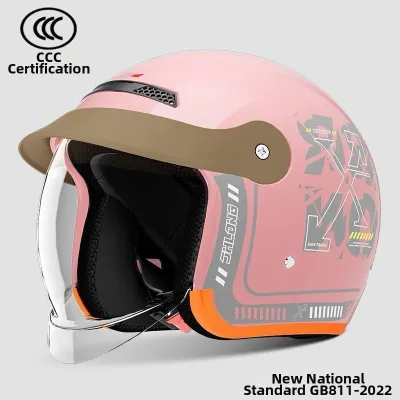
Prices are valid at publication and may change. Please refer to the product page for the latest price.
At the ₱1,500 price point, buyers are looking at the entry-level segment of the certified helmet market. It is crucial to understand that a budget of ₱1,500 will not buy premium features such as carbon fiber construction, advanced wind-tunnel tested aerodynamics, or integrated Bluetooth communication systems. Instead, this budget is dedicated entirely to fundamental safety compliance: a solid shell, an impact-absorbing liner, and a secure strap system.
When shopping with a tight budget, the core decision logic must always prioritize safety certification and proper fitment over aesthetic designs, colorful graphics, or extra accessories. A plain, single-color helmet with a genuine safety certification is infinitely more valuable than a flashy, uncertified helmet that may shatter upon impact.
How to Spot Genuine PSB and ICC Certification Marks
To ensure your helmet complies with Philippine law and provides genuine protection, you must know how to identify authentic safety marks. The Bureau of Philippine Standards (BPS) issues two types of marks: the Philippine Standard (PSB) mark for locally manufactured helmets and the Import Commodity Clearance (ICC) sticker for imported helmets.

A genuine ICC sticker is a small, rectangular metallic decal typically placed at the rear of the helmet. It features a distinct holographic background that reflects a rainbow spectrum when tilted under direct light. The sticker contains a unique serial number, the Department of Trade and Industry (DTI) logo, and the BPS certification text. The printing on a genuine sticker is crisp, clear, and highly detailed, making it difficult to replicate using standard printing methods.
In contrast, counterfeit stickers are common red flags on cheap, unbranded helmets. These fake labels are often flat, non-holographic prints that can be easily peeled off with a fingernail. Sometimes, unscrupulous sellers use low-quality printed labels that look like part of the helmet’s graphic design or are printed directly onto the packaging box. A legitimate certification mark is always a physical sticker applied directly to the helmet shell after passing inspection.
If you are unsure about the authenticity of a helmet’s certification, you can cross-reference the brand and model with the official DTI-BPS database. The Department of Trade and Industry regularly updates its list of approved helmet brands and certified importers on its official portal. If a brand or specific model does not appear on this list, or if the seller cannot provide verifiable import documentation, the helmet should be immediately rejected.
What to Expect (and Compromise On) at This Price Point
Shopping for a half face helmet for men under ₱1,500 means understanding which features are non-negotiable and which ones require some compromise. The primary non-negotiable feature is a sturdy outer shell, which is typically constructed from high-impact Acrylonitrile Butadiene Styrene (ABS) plastic or basic polycarbonate. These materials are highly effective at resisting punctures and distributing the force of an impact.
Another non-negotiable is a secure retention system. At this price point, you will typically find either a quick-release micro-metric plastic buckle or a classic double D-ring system. Both systems are highly secure when properly adjusted, but the strap must be checked before every ride to ensure it does not slip. Additionally, the helmet must feature a clear, shatterproof, optical-grade polycarbonate visor that protects your eyes from dust, wind, insects, and rain without distorting your vision.
To keep manufacturing costs low, brands make acceptable compromises on secondary features. For instance, budget helmets usually have simpler ventilation systems. Instead of multiple adjustable intake and exhaust ports, you may only get one or two fixed vents, which might offer less airflow control during sudden heavy downpours. The inner Expanded Polystyrene (EPS) liner is also typically single-density, which provides excellent impact absorption but may result in a slightly thicker and heavier helmet shell.
Interior comfort is another area of compromise. At this price point, the inner fabric padding is often basic polyester and may not be fully removable or washable. In the hot and humid Philippine climate, sweat and oil can quickly build up inside the helmet. To manage hygiene, riders should wear a breathable, washable balaclava or a moisture-wicking skull cap under the helmet. When cleaning the interior, avoid using harsh chemical solvents or household detergents, as they can permanently degrade the EPS liner or the outer shell; always refer to the manufacturer’s care instructions.
Visor mechanisms on budget helmets often rely on basic friction-fit or simple plastic ratchet designs. Over time, frequent raising and lowering of the visor can cause these mechanisms to loosen. This may require you to occasionally tighten the side screws manually using a coin or a screwdriver to prevent the visor from slipping down while riding.
Safe Purchasing Channels and Avoiding Online Counterfeits
Where you buy your helmet is just as important as the brand you choose. To ensure you are purchasing a genuine, certified product, always buy from authorized physical motorcycle accessories shops or official brand flagship stores on major online marketplaces. Established local retail chains and authorized dealers are legally obligated to sell only certified gear, giving you peace of mind.
When shopping on e-commerce platforms, you must remain vigilant against common red flags. Be highly suspicious of listings that offer well-known certified brands at prices significantly below the standard market average. If a helmet that normally retails for ₱1,800 is listed for ₱400, it is highly likely to be a dangerous counterfeit. Always look for actual customer photos in the review section to verify the presence of a genuine, holographic ICC sticker on the back of the helmet.
Additionally, remember to factor in shipping fees and handling charges when calculating your total budget. A helmet priced at ₱1,400 might exceed your ₱1,500 limit once delivery fees to provincial areas are added at checkout. Keep the total cost in mind to ensure you stay within your financial boundaries without sacrificing safety.
Before finalizing your purchase, check the seller’s warranty and return conditions. This is particularly important for online orders, as you need a clear path to return or exchange the helmet if it arrives with a defective visor mechanism, a broken buckle, or if the sizing does not match the manufacturer’s size chart.
Getting the Right Fit: Sizing Guide for Half-Face Helmets
Even the most highly certified helmet will fail to protect you if it does not fit your head correctly. A loose helmet can easily fly off during a collision, while a helmet that is too tight will cause severe headaches and distract you from the road. To find your correct size, you must measure your head circumference accurately.
Use a flexible measuring tape and wrap it around the widest part of your head, which is approximately one inch (2.5 centimeters) above your eyebrows and just above your ears. Keep the tape level from the front to the back of your head. Note the measurement in centimeters, as most helmet manufacturers use metric measurements for their sizing charts.
When trying on the helmet, apply the “snug but not painful” rule. The helmet should sit firmly on the crown of your head, and the cheek pads should press gently against your face. When you move the helmet side to side or up and down, the skin on your forehead and temples should move with it. If the helmet rotates freely without moving your skin, it is too large.
Because half face helmets lack a chin bar, they naturally feel more open and slightly looser around the jaw and cheeks compared to full-face models. This makes checking the fit around the crown of your head even more critical. Ensure there are no painful pressure points on your forehead or temples, as these areas can become highly uncomfortable during longer rides. Always compare your measurements against the specific brand’s size chart before ordering online, as sizing standards vary significantly between manufacturers.
Frequently Asked Questions (FAQ)
Is it legal to ride without a visor on a half-face helmet in the Philippines?
Under Philippine road safety guidelines, riding without proper eye protection is highly discouraged and can lead to safety citations. While the law primarily mandates wearing a certified helmet, riding with an open face exposes your eyes to flying debris, dust, insects, and sudden rain, which can cause temporary blindness and lead to accidents. If your half-face helmet does not have a built-in visor, or if you prefer to ride with the visor removed, you must wear shatter-resistant riding glasses or goggles to protect your eyes and ensure safe road operation.
Can I replace the inner padding of a budget helmet if it wears out?
For most entry-level helmets priced under ₱1,500, replacement inner padding is generally not available from the manufacturer. Unlike premium helmets that feature fully modular, replaceable liners, budget models often use fixed or semi-removable padding to keep production costs low. If the padding becomes severely worn, compressed, or unhygienic over time, it is highly recommended to replace the entire helmet. As a general safety rule, all motorcycle helmets should be replaced every 3 to 5 years, or immediately after any impact or drop, as the internal EPS liner degrades over time and can only absorb a single major impact.
Community discussion
Share your experience or ask a question. Comments are reviewed before publication.