
Selecting the right Duhan raincoat for men requires balancing heavy-duty water resistance with the intense humidity of tropical monsoon riding. While a standard plastic poncho might suffice for a quick walk, navigating wet roads on a motorcycle exposes your gear to high-speed wind, driving rain, and road spray. To stay dry and safe, you must evaluate how different Duhan models handle dynamic water pressure, wind resistance, and heat dissipation. Rather than relying on generic marketing claims, choosing the best riding gear involves analyzing material compositions, seam construction, and ergonomic fits tailored to your specific motorcycle. By understanding these technical factors, you can confidently select a raincoat that keeps you dry during torrential downpours without compromising your control or safety on the road.
Key Features to Look for in a Motorcycle Raincoat
When riding through a heavy downpour, your gear faces intense physical forces that standard rainwear cannot handle. The first line of defense is the outer shell material, which must resist water penetration while enduring wind shear and road abrasion. Two common materials used in motorcycle raincoats are Polyvinyl Chloride (PVC) and polyester treated with a Polyurethane (PU) coating. PVC is highly durable and completely impervious to water, making it an excellent barrier against heavy rain. However, PVC is heavy, stiff, and entirely non-breathable. In tropical climates, wearing a heavy PVC suit can quickly lead to excessive sweating, leaving you wet on the inside.
In contrast, polyester fabrics with a PU coating offer a balanced performance for active riders. This material is lighter and more flexible than PVC, allowing for a greater range of motion when maneuvering your motorcycle. The PU coating provides excellent hydrostatic resistance while allowing moisture vapor to escape, reducing the humid ‘sauna effect’ inside the suit. Additionally, high-quality polyester weaves offer superior abrasion resistance, which is a critical safety consideration if you slide on wet asphalt. When browsing Duhan raincoat models, verifying whether the outer shell uses a PU-coated polyester or a heavy PVC blend will help you match the gear to your local climate.
Products mentioned in this guide
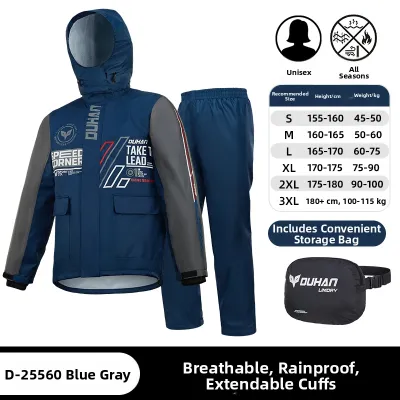
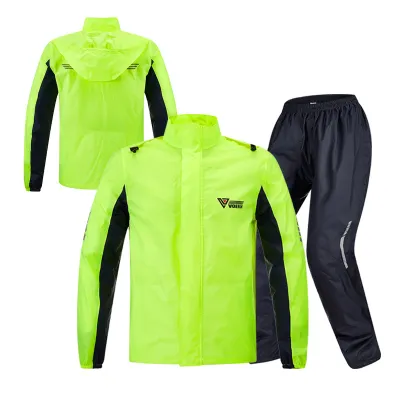
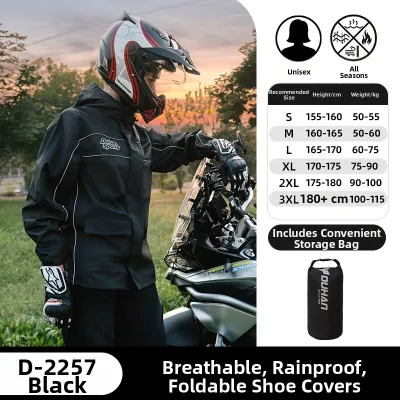
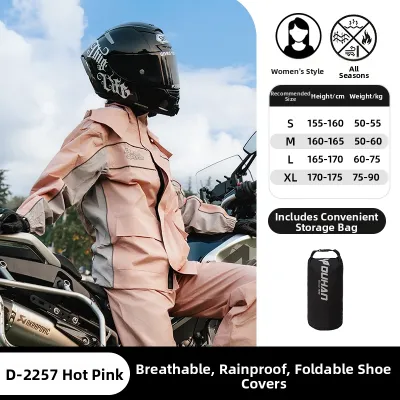
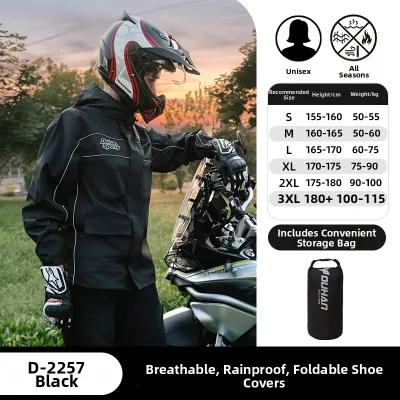
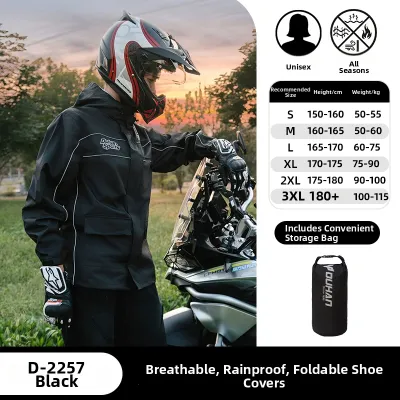
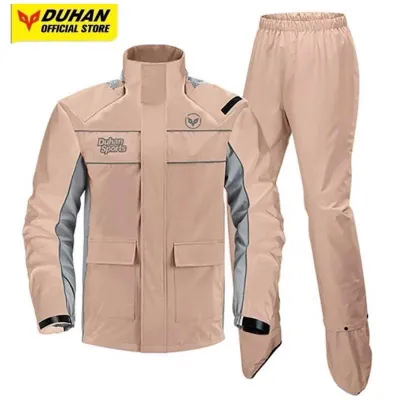
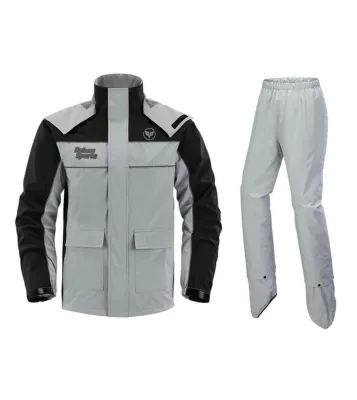
Prices are valid at publication and may change. Please refer to the product page for the latest price.
Even the most waterproof fabric will fail if water can penetrate the stitching. Every needle hole created during manufacturing is a potential leak point, especially when wind pressure forces water through the seams at high speeds. To prevent this, high-quality motorcycle raincoats feature fully taped or heat-welded seams. Taped seams involve applying a specialized thermoplastic tape over the stitched lines on the inside of the garment using heat and pressure. This creates a continuous, waterproof barrier that seals off the needle holes. When evaluating rain gear, always check the product specifications to ensure the seams are fully taped rather than just double-stitched.
Visibility drops dramatically during monsoon rains, making high-visibility features a non-negotiable safety requirement. Low-light conditions, combined with water droplets on car windshields and helmet visors, make it difficult for other motorists to spot a rider. To mitigate this risk, look for raincoats that incorporate retroreflective strips and high-visibility color panels. Retroreflective materials bounce light directly back to its source, such as a car’s headlights, making you stand out from a distance. High-visibility panels, typically in neon yellow or green, ensure you remain visible during daytime downpours. Positioning these reflective elements on the back, shoulders, and limbs is particularly effective.
Matching the Raincoat Style to Your Motorcycle and Riding Posture
The type of motorcycle you ride and your typical commuting speed should heavily influence the style of raincoat you choose. For riders on sport, standard, or adventure motorcycles, a two-piece rain suit consisting of a separate jacket and pants is generally the most effective configuration. These motorcycles require an active riding posture where your body is slightly leaned forward and your legs are wrapped around the fuel tank. A two-piece suit provides a snug, aerodynamic fit that minimizes wind drag and prevents the fabric from flapping violently at highway speeds. This tight seal is crucial for keeping water from pooling in your lap or riding up your torso.

For scooter commuters who navigate city streets at lower speeds, rain ponchos are often considered for their convenience. Ponchos are easy to slip on over your head and can cover both your upper body and your lap, sometimes extending over the front apron of the scooter to shield your legs. However, ponchos present significant safety hazards at higher speeds. The loose, open design of a poncho allows wind to catch the fabric, turning it into a sail that can destabilize your balance or block your side mirrors. Furthermore, loose fabric runs the risk of getting caught in the rear wheel or drive belt. For these reasons, even scooter riders are highly encouraged to opt for a two-piece suit if their daily commute involves highway riding.
Regardless of the style you choose, adjustable fitment points are essential for keeping water out. When riding, wind will actively try to force water through any opening in your gear. Look for raincoats equipped with adjustable hook-and-loop (Velcro) straps or elastic drawcords at the cuffs, ankles, and collar. Tightening the cuffs over your riding gloves prevents water from running down your sleeves, while securing the ankle straps around your boots stops road spray from entering your pants. A high, adjustable collar design is equally important; it should seal tightly around your neck without restricting your ability to turn your head, preventing rain from dripping down your neck.
Sizing and Fit Considerations for Riding Gear
One of the most common mistakes riders make when purchasing a motorcycle raincoat is buying their standard clothing size. A riding raincoat is designed to be worn as an outer shell over your existing protective gear, which already adds significant bulk. If you wear a padded riding jacket with elbow, shoulder, and back armor, a standard-sized raincoat will be tight, restricting your movement and putting immense stress on the seams. In some cases, you may also need to accommodate a daily commuting backpack underneath the raincoat. To ensure a comfortable and safe fit, it is generally advisable to size up by at least one or two sizes.
Furthermore, the fit of a raincoat changes dramatically once you transition from a standing position to a riding posture. When you reach forward to grip the handlebars, your arms extend, which can cause the sleeves of a poorly fitted raincoat to pull back and expose your wrists to the wind and rain. Similarly, when you bend your knees to place your feet on the footpegs, the pants will ride up your shins, exposing the tops of your boots to road spray. A proper motorcycle-specific raincoat is cut with pre-curved sleeves and extra length in the limbs to compensate for these ergonomic changes, ensuring that your wrists and ankles remain fully covered while you are actively riding.
To verify the fit before committing to a purchase, performing physical movement tests is highly recommended. If you are trying on the raincoat in a physical store, wear your usual riding jacket underneath and practice reaching forward as if gripping your handlebars, turning your head from side to side, and squatting down to simulate mounting your motorcycle. If you are purchasing online, do not rely on your standard t-shirt size. Instead, take accurate measurements of your chest, waist, sleeve length, and inseam while wearing your full riding gear. Compare these measurements against the manufacturer’s detailed size chart to ensure a proper fit.
How to Verify Authenticity and Quality Before Purchase
With the popularity of Duhan riding gear, counterfeit products and substandard imitations have become common on online marketplaces. Purchasing a fake raincoat results in poor waterproof performance and compromises your safety due to inferior materials and weak construction. To protect yourself, always look for official brand identifiers when shopping. Genuine Duhan products typically feature high-quality brand tags, holographic security stickers, or scratch-off QR codes on the packaging that allow you to verify the item’s authenticity directly on the manufacturer’s official verification portal. If a listing lacks these details or is priced suspiciously low, it is highly likely to be a counterfeit.
When browsing e-commerce platforms, it is crucial to read the product descriptions thoroughly rather than relying solely on highly edited marketing images. Look for specific technical details regarding the material composition, such as the denier rating of the polyester fabric or the presence of a PU coating. Reliable listings will explicitly state whether the seams are taped or welded, and they will often provide a specific waterproof rating, such as 10,000mm. Avoid listings that use vague terms like ‘highly waterproof’ without providing concrete specifications. Checking customer reviews can also provide valuable insights, but focus on reviews that mention real-world performance in heavy rain.
Once your raincoat is delivered, perform a thorough physical inspection before taking it out on the road. Start by examining the main zipper, which is a primary entry point for water. A quality motorcycle raincoat will feature a heavy-duty zipper protected by a wide storm flap that secures with snaps or a continuous hook-and-loop strip to block wind-driven rain. Next, turn the garment inside out and inspect the seam tape. The tape should be perfectly flat, uniform, and firmly adhered to the fabric without any lifting, bubbling, or peeling at the edges. Finally, check the overall stitching for loose threads or uneven lines, as these are clear indicators of poor quality control.
Care and Maintenance to Prolong Waterproof Performance
Proper care and maintenance are essential for preserving the waterproof integrity of your motorcycle raincoat over time. Washing machines and harsh household detergents are the primary enemies of waterproof coatings. The aggressive spinning action of a washing machine can delaminate the internal PU membrane and cause the seam tape to peel away from the fabric. To clean your raincoat safely, always opt for hand washing. Simply wipe down the exterior with a damp microfiber cloth to remove road grime, mud, and oil splatters. For deeper cleans, submerge the garment in cool water with a mild, non-detergent soap, gently agitating it by hand before rinsing thoroughly with clean water.
After washing or riding through a storm, proper drying is critical to prevent the growth of mold and mildew, which can degrade the fabric and cause unpleasant odors. Never place your raincoat in a clothes dryer, as the high heat will melt the waterproof coating and ruin the seam tape. Instead, hang the raincoat on a wide, padded hanger and allow it to air-dry in a shaded, well-ventilated area. Avoid exposing the garment to direct sunlight for extended periods, as ultraviolet (UV) rays can break down the synthetic fibers and weaken the waterproof barrier over time. Ensure both the interior and exterior are completely dry before storing the gear away.
How you store your raincoat when it is not in use also plays a major role in its longevity. Avoid folding the raincoat tightly or stuffing it into a cramped space, such as the bottom of your motorcycle’s top box or under-seat compartment, for long periods. Repeatedly folding the fabric along the same lines creates sharp creases that put stress on the waterproof coating, eventually causing it to crack and leak. Instead, store the raincoat by hanging it loosely in a cool, dry closet. If you must carry it with you on your daily commute, roll the raincoat loosely rather than folding it, and place it in a dedicated protective bag.
Frequently Asked Questions (FAQ)
Can I use a regular raincoat instead of a dedicated motorcycle raincoat?
Using a regular, everyday raincoat for motorcycle riding is highly discouraged due to safety and performance limitations. Regular raincoats are designed for walking speeds and lack the aerodynamic fit required to handle highway winds. At riding speeds, a standard raincoat will flap violently, which can distract you, fatigue your muscles, and even tear the fabric apart. Furthermore, everyday raincoats lack the necessary abrasion resistance to protect you in a slide, and they rarely feature the adjustable cuffs, ankles, and collars needed to prevent water from being forced inside by the wind.
How do I know if the waterproof rating is sufficient for heavy monsoon rain?
To determine if a raincoat can withstand heavy monsoon rain, look for its hydrostatic head rating, which is measured in millimeters (mm). For riding through intense downpours, a rating of at least 10,000mm is highly recommended. This rating indicates that the fabric can withstand the pressure of a 10,000mm tall column of water before leaking. When riding, the wind increases the dynamic pressure of the rain against your body, making high ratings essential. However, remember that even a high fabric rating is useless without fully taped seams, as water will easily penetrate the stitching under pressure.

Community discussion
Share your experience or ask a question. Comments are reviewed before publication.