
Finding the right coolant for your Ford vehicle in the Philippines requires moving past generic marketing claims and focusing strictly on manufacturer specifications. In a tropical climate characterized by intense ambient heat, high humidity, and punishing stop-and-go traffic, your engine’s cooling system operates under constant stress. To protect your engine from overheating and internal corrosion, you must select a coolant that explicitly matches Ford’s proprietary engineering standards, such as the WSS-M series codes. Relying on color matching or ‘universal’ formulas can lead to chemical incompatibility, water pump failure, and severe engine damage.
Understanding Your Ford's Coolant Specifications
To find the exact coolant your Ford requires, your first step should always be to consult your vehicle’s owner’s manual. Ford designs its engines with specific metallurgy, utilizing various combinations of aluminum, cast iron, brass, and specialized rubber seals. Consequently, the automaker assigns precise engineering specification codes—such as WSS-M97B44-D (often associated with Ford’s orange coolant) or WSS-M97B57-A1 (associated with yellow coolant)—to ensure chemical compatibility with these materials. You can typically find this alphanumeric code in the ‘Capacities and Specifications’ section of your manual, or printed directly on the pressurized coolant reservoir cap under the hood.
A common and dangerous misconception among car owners is that coolant color dictates compatibility. In the past, color was a simple way to distinguish between different chemical families, but modern coolant manufacturing has made this practice obsolete. Today, different brands use various dyes for the same chemical formulation, meaning an orange coolant from one manufacturer might use an entirely different additive package than an orange coolant from another. Relying solely on color can result in mixing incompatible chemical bases, which can lead to a thick gel forming inside your radiator, blocking vital passages and causing catastrophic engine failure.
Products mentioned in this guide
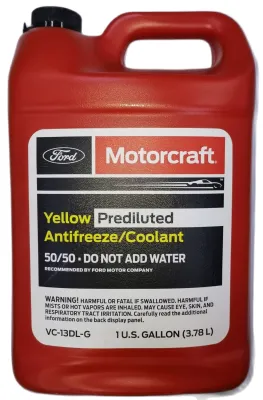
![[Yellow] Ford 4L Anti-Freeze Coolant - Genuine Motorcraft Auto Parts](https://img.lazcdn.com/g/p/5e000eea0d6f55e1cdece9a2b7c41c5e.jpg_400x400q80.jpg_.webp)
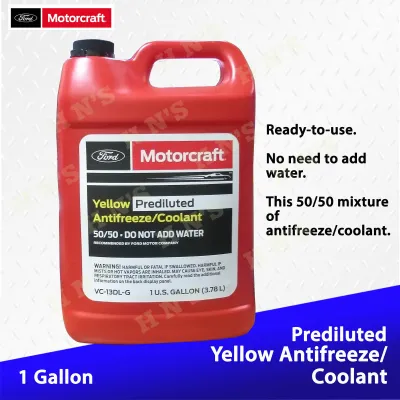
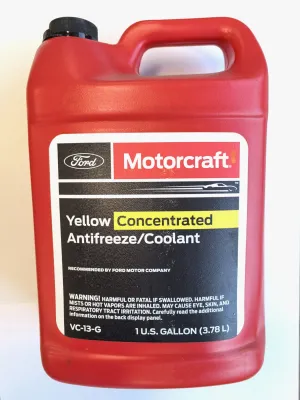
![[4L ORANGE] Coolant for Ford Ranger Ford Everest Ford Ecosport Ford Fiesta - Pro99 Brand](https://img.lazcdn.com/g/p/429661799b6728390eb4bd8f48fc921b.jpg_400x400q80.jpg_.webp)
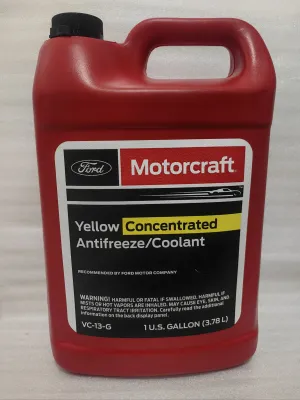
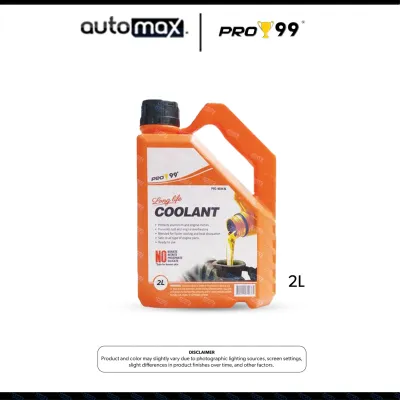
Prices are valid at publication and may change. Please refer to the product page for the latest price.
You should also exercise extreme caution when encountering generic ‘universal’ coolants on store shelves. While these products often claim to work with ‘all makes and models,’ they rarely carry the official Ford engineering certifications required for your specific model year. These multi-vehicle formulas often compromise on additive packages to achieve broad compatibility, which means they may lack the specific corrosion inhibitors needed to protect Ford’s internal water pump seals and aluminum cylinder heads. To safeguard your engine warranty and ensure long-term reliability, avoid any product that does not explicitly list your vehicle’s required Ford specification code on its back label.
Adapting Coolant Choices for Tropical Weather
Operating a vehicle in the tropical climate of the Philippines shifts your cooling system priorities compared to colder regions. In temperate countries, coolant must prevent the engine block from freezing during harsh winters, requiring a high concentration of ethylene glycol. In the Philippines, however, freeze protection is irrelevant; your primary focus must be on maximizing boil-over protection and preventing internal corrosion. High ambient temperatures, combined with heavy traffic in metropolitan areas, mean your engine regularly runs near its upper thermal limits, making efficient heat transfer absolutely critical.

When choosing between pre-mixed (50/50) coolants and concentrated formulas, convenience and water quality should guide your decision. Pre-mixed coolants are highly recommended because they are blended at the factory using demineralized, deionized water in an exact 50/50 ratio. This ensures the chemical balance is perfect and eliminates the risk of introducing contaminants into your cooling system. If you choose to purchase a concentrated coolant, you must mix it yourself using high-quality distilled water, aiming for a 50/50 ratio to maintain the correct boiling point and corrosion protection levels.
Never top up your cooling system with ordinary tap water, and avoid running your vehicle on pure distilled water without additives. Tap water in the Philippines contains dissolved minerals like calcium and magnesium, which precipitate out under high engine temperatures to form scale deposits inside your radiator tubes and engine block. This scaling acts as an insulator, severely reducing the system’s ability to dissipate heat and eventually clogging the radiator. Conversely, using pure distilled water without coolant additives leaves your engine completely unprotected against cavitation—a phenomenon where tiny vapor bubbles collapse with enough force to pit aluminum surfaces—and rapid galvanic corrosion.
Core Selection Criteria for Compatible Products
When shopping for coolant in local automotive supply stores or through reputable online marketplaces, you need a structured approach to verify product authenticity and compatibility. Begin by turning the bottle over and reading the technical specifications printed on the back label. Look for a direct statement of compliance, such as ‘Meets Ford WSS-M97B44-D’ or ‘Approved for use where Ford WSS-M97B57-A1 is required.’ If a product only lists broad marketing claims like ‘suitable for Ford vehicles’ without citing a specific engineering code, put it back on the shelf.
It is also vital to match the underlying coolant technology type to your vehicle’s factory fill requirements. Ford vehicles have transitioned through several coolant technologies over the years, including Inorganic Acid Technology (IAT), Organic Acid Technology (OAT), and Hybrid Organic Acid Technology (HOAT). For instance, newer Ford models typically require OAT or lobrid formulations that rely on organic acids for long-lasting corrosion protection without silicates or phosphates. Mixing an OAT coolant into a system designed for IAT can rapidly deplete the protective additives, leading to accelerated rust and component degradation.
Finally, inspect the physical packaging of the coolant carefully to protect your vehicle from counterfeit or substandard products. Genuine, high-quality coolants feature clear manufacturer details, including a physical address, customer support contact information, and a traceable batch or lot number printed on the bottle. Ensure that the safety seal under the cap is completely intact and shows no signs of tampering or leakage. Purchasing from authorized distributors, official brand stores, or well-established local auto parts dealers greatly reduces the risk of buying diluted or mislabeled fluids that could jeopardize your engine’s health.
Verifying Compatibility and Purchasing Safely
Before you head to the checkout counter or click the purchase button on an online marketplace, perform a final cross-reference check. Hold your vehicle’s owner’s manual next to the product label and verify that every letter and number of the specification code matches exactly. Even a single character difference in a Ford specification code can indicate a completely different chemical formulation intended for a different engine generation. Taking thirty seconds to double-check this alignment can save you from thousands of pesos in avoidable engine repair bills.
If you encounter conflicting information or if your vehicle’s manual lists a specification that seems difficult to find in local retail stores, do not guess. Reach out to a certified Ford dealership service department or a qualified automotive technician who specializes in Ford vehicles. They can access updated technical service bulletins that may list superseded or backward-compatible coolant specifications approved by the manufacturer. This professional guidance is especially valuable for older Ford models where the original factory-fill coolant specification has been phased out and replaced by a newer formulation.
Be highly vigilant against common retail red flags that suggest a product may be unsafe for your vehicle. Avoid purchasing coolant from unverified online sellers who offer major brand names at suspiciously low prices, as counterfeit automotive fluids are a persistent issue. Packaging that features blurry printing, spelling errors, missing ingredient lists, or damaged safety rings should be rejected immediately. Investing in a legitimate, properly certified coolant from a trusted source is a minor expense compared to the cost of replacing a warped cylinder head or a failed water pump.
Safe Handling and System Maintenance Boundaries
Working on your vehicle’s cooling system carries inherent safety risks that require strict adherence to proper procedures. You must never, under any circumstances, attempt to open the radiator cap or the pressurized coolant reservoir while the engine is hot or even warm. The cooling system operates under high pressure, and opening it prematurely can cause boiling liquid and steam to spray out violently, resulting in severe, life-altering burn injuries. Always allow the vehicle to sit turned off for several hours, and verify that the upper radiator hose is cold to the touch before slowly loosening the cap with a thick rag.
While topping up a slightly low reservoir is a straightforward task, you must be able to recognize when your cooling system requires professional intervention rather than a simple DIY fix. Inspect the fluid inside your reservoir regularly; if you notice a milky appearance, dark sludge, floating rust particles, or a thick brown discoloration, your system is contaminated. These symptoms often point to internal engine issues, such as a failing head gasket allowing engine oil to mix with the coolant, or severe internal corrosion that requires a professional chemical flush and system pressure test.
If you detect a sudden drop in your coolant level or notice sweet-smelling puddles forming under your engine bay, stop driving the vehicle and seek professional assistance. Modern cooling systems are sealed, meaning they should not lose significant amounts of fluid through normal evaporation. A rapid loss of coolant indicates a leak in the radiator, water pump, heater core, or hoses, which can lead to rapid engine overheating and catastrophic failure if left unaddressed. For complex tasks like a complete system flush, thermostat replacement, or leak detection, always rely on a qualified automotive service center equipped with the proper diagnostic tools and disposal facilities for toxic coolant waste.
Frequently Asked Questions (FAQ)
Can I mix two different brands of Ford-compatible coolant?
Even if two different brands of coolant both claim to meet the exact same Ford engineering specification, mixing them is generally not recommended unless absolutely necessary in an emergency. Different manufacturers use proprietary additive packages, including distinct combinations of corrosion inhibitors, anti-foaming agents, and pH buffers. Mixing these distinct chemical formulas can cause the additives to react negatively with one another, potentially leading to chemical fallout, gelation, or a significant reduction in corrosion protection. If you must add a different brand of coolant to your system, it is highly advisable to plan a complete system flush and refill with a single, consistent product as soon as possible to maintain optimal system chemistry.
How often should I check the coolant level in a tropical climate?
In the hot and humid climate of the Philippines, you should perform a visual check of your coolant level at least once every two weeks, or before embarking on any long-distance road trips. You can easily do this without opening the system by looking at the minimum and maximum markings on the translucent plastic coolant reservoir. It is best to check the level when the engine is completely cold to get an accurate reading. If you notice that you need to add coolant frequently to keep the level between the marks, do not ignore it; a consistently dropping level is a clear warning sign of a system leak that requires immediate professional inspection to prevent severe engine overheating.
Community discussion
Share your experience or ask a question. Comments are reviewed before publication.